2027 Online Game Programming and Development Degrees for Students Who Want Playable Portfolio Readiness

Co-Founder and Chief Data Scientist
Choosing an online game programming degree is really a question of outcomes: will the program help you build playable work employers can test? The Entertainment Software Association reported that 190.6 million people in the U. S. play video games, which keeps pressure on studios, toolmakers, simulation teams, and interactive media companies to hire developers who can ship functioning projects. This guide is for students comparing online degrees, certificates, and related paths. You will learn how to judge curriculum quality, costs, accreditation, portfolio expectations, salaries, and career fit before enrolling.
Key Things You Should Know
- For broad software developer, QA analyst, and tester roles, the U.S. Bureau of Labor Statistics reported a $133,080 median annual wage in May 2024, but game-specific entry roles can vary widely by studio size, location, portfolio strength, and specialization.
- College Board's 2024-25 data shows published tuition and fees averaging $11,610 at in-state public four-year colleges and $43,350 at private nonprofit four-year colleges, so online students should compare total program cost, not just per-credit tuition.
- The strongest online game programming degrees combine accredited academic study with engine-based production, version control, debugging, collaboration, and a playable portfolio such as a prototype, vertical slice, multiplayer demo, or polished capstone.
What is an online game programming and development degree, and who is it best for?
An online game programming and development degree is a college program focused on the technical side of making interactive software. It usually teaches programming, game engines, data structures, physics, graphics, tools, testing, and production workflows. Unlike a general media degree, the goal is not only to understand games but to build systems that run reliably, respond to player input, and can be evaluated by employers or collaborators.
This degree is best for students who want technical roles in game development, simulation, interactive training, extended reality, or software engineering with a game technology focus. It can also fit students who enjoy math, debugging, systems thinking, and project-based learning. Students who are primarily interested in story, character art, level layout, or user experience may want to compare a programming-focused path with an online game design degree, because design programs often emphasize player experience and content creation more than code architecture.
The table below compares common education options so readers can match the credential to their goal instead of assuming every game-related program leads to the same outcome.
| Path | Best fit | Typical strengths | Watch-outs |
| Associate degree | Students seeking a lower-cost start or transfer route | Introductory programming, math foundations, engine basics | May not be enough for competitive programming roles without a strong portfolio or transfer plan |
| Bachelor's degree | Students targeting entry-level developer, tools, QA automation, or technical designer roles | Broader computer science base, team projects, capstone portfolio | Quality varies; some programs are more design-heavy than programming-heavy |
| Certificate or bootcamp-style program | Students with prior degree experience or working developers adding game tools | Shorter timeline, engine-specific practice, focused portfolio pieces | May lack accreditation, financial aid eligibility, or deep CS preparation |
| Master's degree | Students pursuing advanced graphics, AI, research, simulation, or leadership roles | Specialization, advanced technical projects, research or production leadership | Usually not necessary for many entry-level game programming jobs |
A degree may be worth it when it gives you structured practice, feedback, accredited credit, career support, and time to build polished work. It may be a poor fit if the curriculum is mostly theory, uses outdated tools, offers little faculty review of code, or does not require playable projects.
How do online game programming degrees compare to campus-based programs for hands-on learning?
Online game programming degrees can be hands-on when they are built around frequent production work rather than passive lectures. The key question is not whether a program is online or campus-based; it is whether students use professional workflows to make, test, revise, and present playable projects.
The comparison below shows where online and campus programs often differ, and how to judge whether an online format will support real practice.
| Learning factor | Strong online program | Campus-based program | Decision point |
| Hands-on development | Cloud labs, engine assignments, recorded demos, code reviews, capstones | Physical labs, in-person critique, studio-style courses | Ask how often students submit playable builds, not just written assignments |
| Team collaboration | Git repositories, issue tracking, Discord or Slack-style collaboration, remote sprints | In-person team meetings, studio labs, local showcases | Remote collaboration can mirror modern distributed studio work if it is structured |
| Equipment access | Student-owned computer plus software licenses or virtual machines | Campus workstations, VR labs, motion capture, console labs where available | Students interested in VR, console development, or motion capture should verify remote access |
| Feedback | Recorded critiques, faculty code comments, peer playtests, asynchronous review | Live critique, lab help, informal peer support | Feedback quality matters more than delivery mode |
Online programs can be especially useful for working adults, transfer students, military learners, and students outside major game hubs. However, they require discipline. Students should expect to install engines, manage files carefully, troubleshoot hardware, and schedule collaboration across time zones.
Before choosing an online program, students should take these steps to confirm it is genuinely production-oriented:
- Ask admissions or faculty to describe at least three required playable projects and which courses produce them.
- Request examples of student capstones, reels, GitHub repositories, itch.io pages, or showcase events when available.
- Confirm whether classes include code review, bug fixing, playtesting, and revision cycles rather than one-time submissions.
- Check whether the school teaches current workflows such as version control, build deployment, agile production, and technical documentation.
What accreditation and quality standards should game programming and development programs meet?
Accreditation is the first quality filter for an online game programming degree. In the U.S., students should look for institutional accreditation from an agency recognized by the U.S. Department of Education or the Council for Higher Education Accreditation. Institutional accreditation affects credit transfer, federal financial aid eligibility, employer recognition, and access to graduate study.
Programmatic accreditation is less common in game programming than in fields such as nursing or engineering. However, some computer science, software engineering, or computing programs may hold ABET accreditation. ABET is not required for every game development job, but it can signal stronger coverage of computing fundamentals, assessment, and continuous improvement.
Quality standards go beyond accreditation. A reputable program should show how students progress from foundations to playable production. The following checklist helps separate credible programs from programs that rely heavily on marketing language:
- Institutional accreditation is current and listed on the school's official accreditation page.
- The program publishes clear course requirements, prerequisites, total credits, tuition, fees, and graduation requirements.
- Faculty have relevant experience in software development, game technology, simulation, graphics, interactive media, or computing research.
- Students complete portfolio-ready projects using current engines, programming languages, and collaboration tools.
- The school provides online student support, tutoring, library access, career services, and technical help.
- For out-of-state online students, the school explains state authorization or participation in distance education authorization agreements.
Red flags include unclear accreditation language, promises of guaranteed jobs, missing faculty information, heavy pressure to enroll immediately, vague tuition disclosures, and programs that call themselves "programming" degrees but require little coding.
What courses, tools, and portfolio projects are included in game programming curricula?
A strong game programming curriculum blends computer science with production practice. Students should expect to write code, implement mechanics, debug systems, optimize performance, and collaborate with artists or designers. The best programs make students build small games early, then increase complexity through systems, networking, AI, tools, and capstone work.
The table below summarizes common curriculum areas and the portfolio evidence each area can produce.
| Curriculum area | What students learn | Portfolio evidence to look for |
| Programming fundamentals | Variables, control flow, object-oriented programming, algorithms, debugging | Clean code samples, small prototypes, documented mechanics |
| Game engines | Unity, Unreal Engine, custom tools, scene management, asset pipelines | Playable builds, engine screenshots, project repositories |
| Math and physics | Vectors, matrices, collision, movement, rigid body behavior | Physics-based prototype, platformer controller, vehicle or projectile system |
| Graphics and rendering | Shaders, lighting, materials, optimization, GPU concepts | Rendering demo, shader breakdown, performance comparison |
| Game AI | Pathfinding, behavior trees, decision systems, procedural behavior | Enemy AI demo, navigation system, NPC behavior prototype |
| Networking and multiplayer | Client-server concepts, latency, replication, synchronization | Small multiplayer demo, lobby prototype, networked interaction test |
| Production and testing | Agile workflows, version control, bug tracking, playtesting, polish | Team capstone, sprint boards, playtest notes, bug-fix documentation |
Students interested in health games, movement-based interfaces, rehabilitation simulations, or fitness technology may also benefit from understanding human movement and biomechanics; in that case, comparing this path with the best exercise science degree online can clarify whether the primary goal is software development or human performance.
For playable portfolio readiness, students should graduate with more than screenshots. A practical portfolio usually includes these assets:
- A short playable prototype that demonstrates core mechanics within seconds.
- A larger capstone or vertical slice with a clear role description explaining what the student personally built.
- Source code samples or private repository walkthroughs that show architecture, problem solving, and documentation.
- A concise demo reel or project page with controls, platform requirements, known limitations, and build links.
- Evidence of iteration, such as playtest findings, bug fixes, performance improvements, or before-and-after design changes.
What admission requirements and prior experience do online game programming programs expect?
Admission requirements vary by institution and degree level, but most undergraduate online game programming programs look for college readiness in math, writing, and technology use. Many bachelor's programs do not require a finished game portfolio for admission, especially if they are designed for beginners, but they may require placement tests or prerequisite math.
The table below outlines common expectations by program level so prospective students can estimate readiness before applying.
| Program level | Common admissions requirements | Helpful prior experience |
| Associate degree | High school diploma or equivalent, transcripts, placement assessment | Basic computer literacy, algebra, beginner coding practice |
| Bachelor's degree | High school or transfer transcripts, GPA review, possible essays or placement requirements | Algebra or precalculus, introductory programming, game engine experimentation |
| Certificate | Varies; may require prior college credit, professional experience, or programming background | Comfort with C#, C++, Python, JavaScript, or another language |
| Master's degree | Bachelor's degree, transcripts, resume, statement of purpose, possible portfolio or prerequisites | Computer science background, software projects, linear algebra, data structures |
Students who are new to coding should not automatically rule themselves out. However, they should prepare before the first term because game programming can become frustrating if math, file management, and debugging are all new at once.
Before applying, prospective students can improve readiness through a simple sequence:
- Complete a beginner programming course in C#, C++, Python, or JavaScript and build at least one small interactive project.
- Review algebra, coordinate systems, vectors, and functions, because these appear quickly in movement, camera, physics, and collision work.
- Install a current game engine and follow a short tutorial, then modify the project instead of only copying steps.
- Create a basic portfolio page or repository, even if early projects are simple, to practice documenting work clearly.
How long do online game programming degrees take, and what do they cost?
Online game programming degrees usually follow the same credit structure as campus degrees. An associate degree often takes about two years of full-time study, while a bachelor's degree commonly takes about four years. Transfer credits, year-round enrollment, competency-based formats, and part-time schedules can change the timeline substantially.
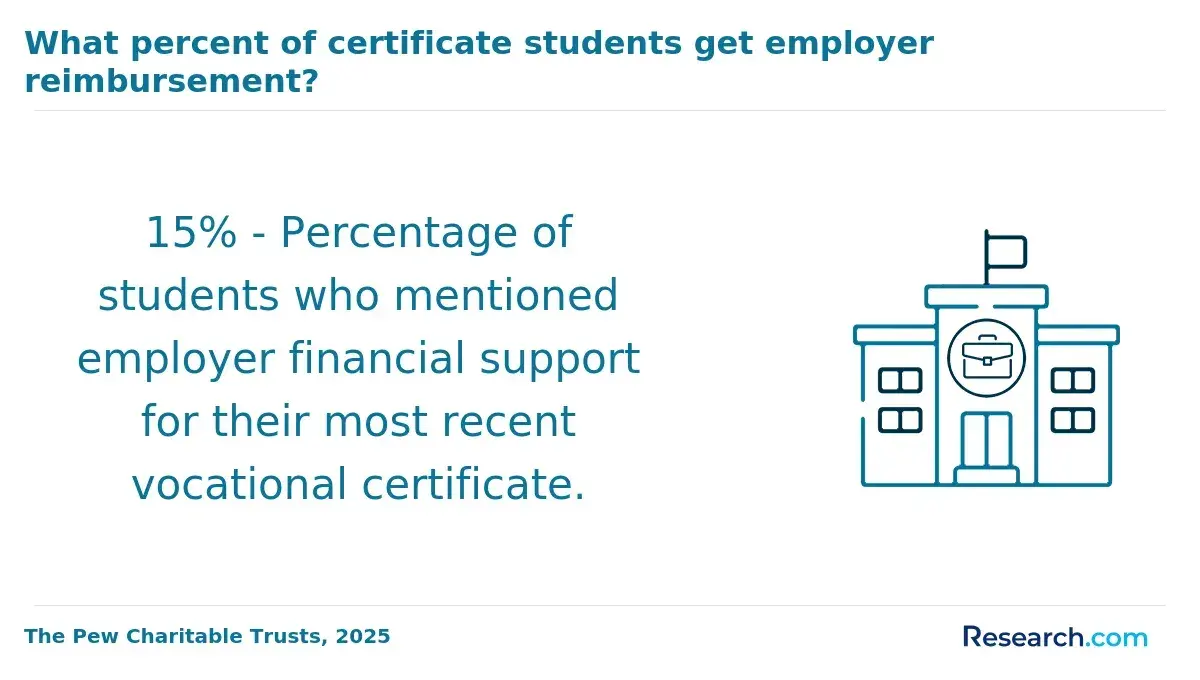
Cost depends on tuition, fees, transfer credits, residency status, software or hardware needs, and whether students qualify for financial aid. College Board's 2024-25 data reported average published tuition and fees of $11,610 for in-state public four-year institutions and $43,350 for private nonprofit four-year institutions. Those figures are not game-program-specific, but they provide a useful benchmark when comparing online programs that may advertise by credit hour.
The table below shows major cost categories students should include when estimating total price.
| Cost factor | Why it matters | How to compare programs |
| Tuition per credit | Most online degrees charge by credit, and total credits drive the baseline cost | Multiply tuition by required credits and separate resident, nonresident, and online rates |
| Mandatory fees | Technology, distance learning, graduation, and course fees can add up | Ask for a full cost sheet, not just tuition |
| Transfer credit | Accepted credits can shorten time and lower total cost | Request an unofficial transfer evaluation before committing |
| Hardware | Game engines may require a capable computer, GPU, storage, and peripherals | Compare minimum and recommended specs against your current setup |
| Software | Many tools have student or free tiers, but some courses may require paid tools | Ask which licenses are included and which are student-paid |
| Borrowing costs | Loan interest affects long-term cost | For 2025-26, federal Direct Loans for undergraduates carry a 6.39% fixed interest rate, so borrowing less can materially affect repayment |
Affordable and accelerated programs can both be smart, but they involve trade-offs. A lower-cost program may require more self-direction or fewer specialized electives. An accelerated program can reduce time away from full-time work, but it may be difficult if students are learning programming from scratch while building portfolio projects.
To reduce cost without weakening outcomes, students should consider these steps:
- Use community college transfer credits for general education and introductory programming when transfer agreements are clear.
- Choose a program that accepts prior learning, military credit, or professional certifications when appropriate.
- Compare total program cost after scholarships, grants, employer tuition assistance, and transfer credit, not just advertised tuition.
- Avoid taking on extra electives unless they directly support a portfolio goal such as multiplayer, tools programming, graphics, AI, or VR.
What entry-level and advanced careers can game programming graduates pursue?
Game programming graduates can pursue roles inside game studios, but they should also look beyond entertainment games. The same skills apply to simulation, defense training, education technology, medical visualization, architecture, automotive interfaces, live operations, and interactive media. This wider view matters because entry-level game jobs can be competitive and portfolio-driven.
The table below connects common roles with responsibilities and the kind of portfolio evidence that can help a graduate compete.
| Career path | Typical responsibilities | Portfolio signal |
| Gameplay programmer | Implement mechanics, controls, cameras, combat, interactions, and player systems | Playable prototype with responsive mechanics and readable code |
| Engine or tools programmer | Build editor tools, optimize workflows, improve runtime systems, support artists and designers | Custom tool, plugin, profiler demo, or pipeline improvement |
| Graphics programmer | Work on rendering, shaders, lighting, performance, visual effects, and GPU systems | Rendering demo with technical breakdown and performance notes |
| AI programmer | Create NPC behavior, navigation, tactical systems, procedural content, or decision logic | AI behavior demo with clear explanation of algorithms used |
| QA analyst or automation tester | Test builds, reproduce bugs, write test cases, support release quality | Bug reports, test plans, automation scripts, version tracking examples |
| Technical designer | Bridge design and engineering by scripting systems, prototyping mechanics, and tuning gameplay | Prototype showing both design intent and technical implementation |
| Simulation or training developer | Create interactive learning, safety, defense, corporate, or educational simulations | Scenario-based simulation with user feedback, scoring, or analytics |
Students who enjoy interactive learning rather than entertainment games may eventually combine development experience with instructional design. For that route, a master's in training and development online can support work in simulations, serious games, corporate learning, or educational technology after a technical foundation is in place.
Entry-level roles often include junior gameplay programmer, associate software engineer, QA tester, technical artist assistant, tools intern, or Unity/Unreal developer. Advanced roles can include senior gameplay engineer, lead tools programmer, technical director, graphics engineer, AI systems engineer, producer with technical specialization, or simulation architect.
Students should choose projects that match the role they want. A beautiful game with little original code may help a designer more than a programmer; a rough-looking prototype with strong architecture may be more useful for a technical interview if the code is well documented.
What salaries and earning potential can game programmers and developers expect?
Salary expectations should be interpreted carefully because the U.S. Bureau of Labor Statistics does not publish a single occupational category for "game programmer." The closest broad category is software developers, quality assurance analysts, and testers, which had a median annual wage of $133,080 in May 2024. This number reflects a broad software labor market, not a promise for game industry graduates.
The table below uses broad U.S. labor categories to give salary context while showing why specialization and role type matter.
| Role area | Relevant BLS context | How students should use the data |
| Software developer | Included in the broad software developers, QA analysts, and testers category with a $133,080 median annual wage in May 2024 | Useful for comparing game programming with broader software careers, especially for engine, tools, and simulation work |
| QA analyst or tester | Also included in the broad software quality category | Can be an entry route into studios, but pay and advancement depend on automation skills, technical depth, and company type |
| Computer programmer | BLS reported a $98,670 median annual wage in May 2024 for computer programmers | Helpful as a coding benchmark, though many modern jobs are classified as software development rather than programming alone |
| Special effects artist or animator | BLS reported a $99,060 median annual wage in May 2024 for special effects artists and animators | Relevant for technical art or real-time visual effects, but less directly tied to core programming roles |
Earning potential depends on more than the degree name. Employers often evaluate engine experience, code quality, math ability, shipped projects, collaboration, and whether the applicant can solve production problems. Location also matters; major game and tech hubs may offer higher pay but can also have higher living costs and stronger competition.
Students should avoid assuming that a game degree limits them to entertainment studios. Graduates with strong software foundations may apply to broader software, simulation, defense, education technology, XR, and visualization roles, which can improve resilience if the game hiring market is tight.
What certifications, specialized skills, or engines help build a playable game portfolio?
Certifications are not usually a substitute for a degree or a strong portfolio, but they can help students document specific engine or cloud skills. Employers still tend to care most about whether candidates can build, debug, optimize, and explain playable work. The best credential strategy is to pair certifications with projects that prove the skill in context.
Students should understand which tools map to which goals before spending time or money on credentials. The table below summarizes common skill areas and how they support portfolio readiness.
| Skill or tool | Why it matters | Portfolio use |
| Unity and C# | Common for indie games, mobile games, prototypes, XR, and educational simulations | 2D or 3D playable demo, interaction system, mobile prototype, VR training scene |
| Unreal Engine and C++ | Useful for high-fidelity 3D, real-time visualization, larger productions, and performance-oriented work | Gameplay system, Blueprint-to-C++ feature, environment interaction, optimization demo |
| Version control | Git, branching, commits, and issue tracking are essential for team projects | Repository history, pull request examples, documented collaboration workflow |
| Game AI | Supports enemies, NPC behavior, navigation, procedural systems, and simulation logic | Behavior tree demo, pathfinding scene, adaptive enemy prototype |
| Networking | Multiplayer work requires understanding latency, synchronization, authority, and testing | Small networked prototype with documented limitations and test cases |
| Cloud and backend basics | Live games often use authentication, analytics, leaderboards, storage, and services | Leaderboard, player data system, telemetry dashboard, backend-connected prototype |
AI is also changing game development workflows, especially in testing, procedural content, NPC behavior, tooling, and production support. Students who want deeper preparation for machine learning, generative systems, or AI engineering can compare game programming coursework with artificial intelligence degree programs to decide whether their main goal is game implementation or AI specialization.
A practical portfolio plan should focus on playable proof, not a long list of unfinished ideas. Students can build toward readiness in this order:
- Create one tiny polished game that proves the ability to finish and package a build.
- Add one systems-focused demo, such as AI, networking, tools, physics, or procedural generation.
- Build one team project that shows collaboration, version control, role clarity, and iteration.
- Write short technical breakdowns explaining the problem, approach, trade-offs, bugs, and what changed after testing.
- Remove weak or unfinished projects that distract from the strongest evidence of programming ability.
How can students choose a reputable online game programming school aligned with their goals?
Choosing a reputable online game programming school starts with goal alignment. A student who wants to become a gameplay programmer needs a different curriculum than someone aiming for technical art, instructional simulation, XR development, or graduate research. The best school is not automatically the most famous, cheapest, or fastest; it is the program that gives the student the strongest path to accredited credit, technical depth, feedback, and portfolio-ready work.
The table below gives a decision framework for comparing programs in a practical way.
| Question to ask | Why it matters | Good sign |
| Is the institution accredited? | Accreditation affects aid, transfer, and recognition | The school clearly lists recognized institutional accreditation |
| How programming-heavy is the curriculum? | Some game degrees focus more on design or art than code | Required courses include programming, data structures, engines, math, debugging, and capstone development |
| What projects will I graduate with? | Employers need evidence they can test or review | The program requires playable builds, team projects, and a final portfolio or capstone |
| Who reviews my work? | Feedback improves code quality and production habits | Faculty, peers, or industry reviewers provide structured critique |
| What support exists for online students? | Online learners need reliable access to help | Tutoring, technical support, career services, library access, and advising are available remotely |
| What is the total cost after transfer credit? | Advertised tuition can hide fees and extra terms | The school provides a complete estimate before enrollment |
Students should also consider adjacent goals. For example, if the real interest is game-based wellness, fitness applications, coaching technology, or movement analysis, an exercise science route plus technical electives may be more relevant than a pure game programming major.
Common mistakes include enrolling before verifying accreditation, choosing a program based only on game-themed branding, ignoring hardware requirements, assuming a degree alone will replace a portfolio, and borrowing without estimating total completion cost. To avoid these mistakes, students should compare at least three programs, request a degree plan, review sample student work, and ask how transfer credits affect both tuition and graduation date.
A strong final decision usually balances four factors: accredited academic value, practical coding depth, portfolio production, and career flexibility. If a program is weak in two or more of those areas, students should keep looking or consider a different credential path.
Other Things You Should Know About Game Programming & Development
It can be, especially when the institution is accredited and the student has strong playable projects. Employers often care less about delivery format and more about code quality, engine experience, collaboration, and the ability to explain technical decisions.
You do not need to be a math expert before enrolling, but you should be ready to use algebra, vectors, trigonometry, and some linear algebra. Math appears in movement, physics, cameras, graphics, AI, and collision systems.
Many 2027 online game programming degrees require a final capstone and some also require an internship or supervised practicum. A common minimum is 3 to 6 credit hours for the capstone, with playable project deliverables such as a prototype, source code, and documented testing results.
References
- Game Design and Development Curriculum for High Schoolers https://www.masterycoding.com/courses/game-design-and-development-curriculum
- Game Development Certifications: Complete Professional Guide 2026 https://generalistprogrammer.com/tutorials/game-development-certifications-complete-professional-guide-2025
- 3 elective online courses that would benefit any student https://www.sterling.academy/our-blog/bid/103701/3-elective-online-courses-that-would-benefit-any-student-0
- Game Development Degrees: What You Need to Know https://www.ivywise.com/ivywise-knowledgebase/gaming-majors/
- Video Game Designer Certifications: Best Credentials to Advance Your Career | Teal https://www.tealhq.com/career-paths/video-game-designer-certifications
- Game Development Program https://www.vertexschool.com/game-development-program
- Game Developer Salary: 6 Factors That Boost Your Game Developer Salary https://pwskills.com/blog/web-development/game-developer-salary-web-development
- Share On Social https://www.northampton.edu/news/online-vs-on-campus-degree-whats-the-best-option-for-me.html
- Game Programming Degree | Bachelor of Game Development https://www.cgspectrum.com/courses/game-programming-program
- Lesson 8: Specialized Skills & Certifications https://www.gamineai.com/courses/game-development-portfolio/lessons/lesson-8-specialized-skills-certifications