2027 Online Game Programming and Development Degrees for Students Who Want Multiplayer Developer Roles

Co-Founder and Chief Data Scientist
Choosing an online game programming degree is really a career decision: will the program build the networking, engine, systems, and portfolio skills studios expect from multiplayer developers? The stakes are high because the U. S. game audience is large and technically demanding; the Entertainment Software Association reported in 2024 that 190.6 million Americans play video games. This guide is for students comparing online degrees, certificates, and campus programs. You will learn what to study, how to evaluate quality, what it may cost, and how to connect the degree to multiplayer game jobs.
Key Things You Should Know
- For multiplayer developer roles, prioritize programs with C++, C#, data structures, networking, distributed systems, cloud services, databases, security, game engines, and a portfolio-based capstone rather than programs focused mostly on art or general game design.
- The U.S. Bureau of Labor Statistics lists a May 2024 median pay of $133,080 for software developers, quality assurance analysts, and testers, with projected 17% growth from 2023 to 2033; game-specific roles can vary widely by studio size, region, platform, and experience.
- Use accreditation, total cost, transfer credit, faculty industry experience, career services, and portfolio outcomes to compare online degrees; College Board's 2024 pricing data shows published tuition and fees vary sharply by sector, from $11,610 for public four-year in-state students to $43,350 at private nonprofit four-year institutions.
What is an online game programming and development degree and who is it best for?
An online game programming and development degree is a college program that teaches students how to build playable digital games through software engineering, game engines, interactive systems, math, and production workflows. At the bachelor's level, it may be offered as game programming, game development, computer science with a game concentration, simulation and game development, or software development with game-focused electives.
The key difference between programming and design is emphasis. Programming degrees focus on code, engines, systems, debugging, performance, tools, and technical implementation. A video game design degree usually places more weight on mechanics, level design, storytelling, user experience, and production documentation, although some programs blend design and development.
This degree is best for students who want to write code for games rather than only create concepts, artwork, or narratives. It can be a strong fit if you enjoy problem-solving, math, teamwork, iteration, and building systems that must run reliably under real player behavior. Multiplayer-focused students should be especially interested in network latency, server architecture, synchronization, live operations, scalability, and security.
The table below compares common education options so readers can decide whether an online game programming degree is the right investment or whether a different path may fit better.
| Path | Best for | Typical strength | Main limitation |
| Online bachelor's in game programming | Students seeking a structured degree and portfolio for entry-level development roles | Combines programming, engines, projects, and general education | Quality varies; some programs may be too broad for multiplayer engineering |
| Computer science degree with game electives | Students who want game roles but also want flexibility for software jobs outside games | Strong algorithms, systems, and software engineering foundation | May require self-directed game portfolio work |
| Game design degree | Students focused on mechanics, levels, narrative, and player experience | Creative production and design documentation | May not provide enough technical depth for network programmer roles |
| Certificate or bootcamp | Students with existing programming experience who need targeted engine or portfolio training | Shorter and often more focused | Usually less comprehensive than a degree and may not meet degree-preferred job postings |
| Self-study plus portfolio | Highly disciplined learners with strong project skills | Low direct cost and high flexibility | No built-in credential, advising, financial aid, or structured progression |
Students who dislike debugging, math, version control, or long technical problem-solving sessions should think carefully before enrolling. Multiplayer development is rewarding, but it is also unforgiving: small timing, architecture, or security mistakes can affect thousands of players at once.
How do online game programming degrees prepare students for multiplayer developer roles?
Online game programming degrees prepare students for multiplayer roles by combining software engineering fundamentals with applied game projects. The strongest programs do not treat multiplayer as a single elective; they build toward it through programming, algorithms, engine architecture, databases, cloud deployment, and team-based production.
Multiplayer developer roles often involve building or maintaining systems that keep many players connected in a shared game state. That can include matchmaking, replication, inventory services, authentication, leaderboards, party systems, voice or chat integration, anti-cheat tools, telemetry, and server performance optimization.
When reviewing a curriculum, look for evidence that students practice the technical workflow used in real multiplayer environments. The following elements matter because they turn classroom concepts into employable portfolio evidence:
- Networked gameplay projects that demonstrate client-server architecture, state synchronization, lag compensation, and authoritative server logic.
- Engine experience in tools such as Unreal Engine or Unity, ideally with scripting and lower-level systems work rather than only visual prototyping.
- Version control and collaboration through Git or similar tools, because multiplayer game development is rarely a solo activity.
- Testing, debugging, and profiling assignments that require students to diagnose performance, memory, latency, and reliability problems.
- Capstone or portfolio projects that can be shown to employers through playable builds, code samples, technical write-ups, and postmortems.
A degree can also help students learn the production discipline behind live multiplayer games. Studios need developers who can communicate trade-offs, document systems, respond to bugs, and work with designers, artists, producers, backend engineers, and QA analysts.
The table below shows how degree components connect to common multiplayer job expectations. Use it as a checklist when comparing course catalogs and capstone descriptions.
| Program component | Why it matters for multiplayer roles | Portfolio evidence to look for |
| Computer networking | Supports matchmaking, synchronization, latency handling, and client-server communication | Small multiplayer demo with documented network architecture |
| Data structures and algorithms | Improves performance, memory use, search, pathfinding, and scalability | Optimized systems with benchmarks or technical notes |
| Database and backend development | Supports accounts, progression, inventory, leaderboards, and analytics | Backend-connected game feature or service prototype |
| Security fundamentals | Helps reduce cheating, exploits, account abuse, and unsafe server assumptions | Technical explanation of validation, authentication, or anti-cheat design |
| Team production | Reflects studio workflows where developers coordinate across disciplines | Group project with clear role, commits, and production artifacts |
Are online game programming and development degrees respected by employers in the U.S. game industry?
Online game programming degrees can be respected by U.S. employers when they come from accredited institutions and produce strong technical portfolios. Employers in game development tend to care less about whether classes were online or on campus and more about whether the candidate can build, debug, collaborate, and explain game systems clearly.
The degree alone is rarely enough. Multiplayer studios usually evaluate candidates through a mix of resume screening, portfolio review, code samples, technical interviews, practical tests, and team-fit conversations. A strong online program should therefore help students produce public-facing evidence of skill, not just complete assignments behind a learning management system.
Students should also understand that the game industry is competitive and project-based. Hiring needs can shift with studio funding, platform cycles, live-service performance, and broader technology labor markets. The BLS software developer category is useful for salary and outlook context, but it is broader than game development and includes many industries outside entertainment software.
Use the following signs to judge whether an online program is likely to be taken seriously by employers:
- The institution is regionally or nationally accredited by an agency recognized by the U.S. Department of Education or CHEA.
- Coursework includes rigorous programming, math, software engineering, and networking rather than only introductory game tools.
- Faculty have relevant technical or industry experience and can speak to current engine and production practices.
- Students complete capstones, playable builds, code repositories, or technical portfolios that can be shared with recruiters.
- Career services include resume review, mock technical interviews, employer events, internship guidance, and portfolio coaching.
A common mistake is assuming that a degree title containing "game" automatically signals job readiness. A better approach is to read syllabi, ask for recent student project examples, and verify whether graduates move into software, QA, technical design, tools, simulation, or game development roles.
What accreditation and quality standards should online game programming programs meet?
Accreditation is the first quality filter for an online game programming degree. In the U.S., institutional accreditation affects transfer credit, graduate school eligibility, and access to federal financial aid. Programmatic accreditation is less common for game-specific degrees than for fields such as engineering, nursing, or education, so students should focus first on institutional accreditation and then evaluate curriculum quality.
The same accreditation principle applies across online education, but each field has different quality markers. For example, comparing a game programming program with a library science degree online is only useful at the institutional-accreditation level; career-specific expectations differ substantially after that.
Before applying, students should verify quality through official sources rather than relying only on advertising language. These steps reduce the risk of enrolling in a program that is expensive, nontransferable, or poorly matched to multiplayer development goals:
- Confirm the school's accreditation through the U.S. Department of Education Database of Accredited Postsecondary Institutions and Programs or the Council for Higher Education Accreditation database.
- Ask whether online students receive the same degree name, transcript language, faculty access, library access, tutoring, and career services as campus students.
- Review required courses for programming depth, including C++, C#, algorithms, computer architecture, networking, databases, and software engineering.
- Request examples of recent capstone projects, portfolio expectations, or public student showcases.
- Check transfer-credit rules, prior-learning assessment policies, withdrawal deadlines, technology fees, and hardware requirements before committing.
Quality also shows up in assessment design. Strong programs require students to build, test, revise, document, and present projects. Weak programs may overuse passive video lectures, multiple-choice quizzes, or tool tutorials without requiring substantial code.
Red flags include unclear accreditation claims, pressure-heavy admissions tactics, vague career placement promises, no published curriculum, limited access to instructors, outdated engine versions, and no portfolio requirement. If a school will not answer detailed questions about outcomes and curriculum, treat that as a warning sign.
How do online game programming degrees compare to campus-based programs for flexibility and learning?
Online game programming degrees usually offer more scheduling flexibility than campus programs, which can make them attractive for working adults, military students, parents, transfer students, and learners who do not live near a strong game development program. The trade-off is that online students must be more disciplined about practice, collaboration, and portfolio building.
Campus programs may offer easier access to labs, clubs, game jams, faculty office hours, local internships, and peer collaboration. Online programs may offer asynchronous lectures, remote team projects, cloud-based tools, recorded demos, and more flexible pacing. Neither format is automatically better; the right choice depends on learning style, schedule, budget, and career goals.
The table below summarizes the practical differences that matter most for students preparing for multiplayer developer roles.
| Factor | Online degree | Campus-based degree | Decision tip |
| Schedule | Often asynchronous or evening-friendly | Usually tied to fixed class times | Choose online if work or family obligations require flexibility |
| Collaboration | Requires intentional use of remote tools and team planning | More spontaneous peer interaction | Choose the program that offers real team projects, not just discussion boards |
| Hardware and labs | Students may need a capable personal computer and reliable internet | Campus labs may provide equipment | Compare total technology costs, not just tuition |
| Networking | Depends on virtual events, alumni access, and portfolio visibility | May benefit from local studio ties | Ask how students meet employers in either format |
| Self-management | High importance | Moderate to high importance | Online learners should build a weekly coding routine before enrolling |
Online learning can be especially relevant for multiplayer development because modern game teams often use distributed workflows. Remote collaboration through version control, issue trackers, chat tools, build systems, and documentation platforms mirrors how many technical teams already operate.
However, online students should avoid becoming isolated. Join game jams, contribute to small open-source tools, participate in class Discord or Slack communities if available, attend virtual industry events, and schedule regular portfolio reviews. Flexibility only becomes an advantage when it is paired with consistent production.
What courses and technologies are typically covered in online game programming curricula?
Online game programming curricula usually combine core computer science, game-specific development, and production courses. For multiplayer roles, the most important courses are not always the ones with "game" in the title. Networking, operating systems, databases, cloud computing, and security can be just as valuable as engine classes.
Artificial intelligence is also becoming more relevant to games through non-player character behavior, procedural content, moderation tools, analytics, and developer productivity. Students who want deeper AI preparation beyond a game curriculum may compare options such as an online artificial intelligence degree, especially if they are interested in gameplay AI, machine learning tools, or adjacent software roles.
Most strong programs include a mix of the following course areas. This list is useful when reading catalogs because course titles vary widely across institutions:
- Programming fundamentals using languages such as C++, C#, Java, or Python, with emphasis on control flow, object-oriented programming, memory, and debugging.
- Mathematics for games, including linear algebra, trigonometry, vectors, matrices, probability, and discrete mathematics.
- Data structures and algorithms for efficient gameplay systems, pathfinding, inventories, matchmaking logic, and performance-sensitive features.
- Game engine development or applied engine courses using tools such as Unreal Engine, Unity, Godot, or custom frameworks.
- Computer graphics, physics, animation systems, audio implementation, and user interface programming.
- Computer networking, distributed systems, databases, APIs, cloud services, and backend development for connected games.
- Software engineering, testing, version control, agile production, documentation, and team-based capstone development.
Students aiming for multiplayer work should pay special attention to how deeply a program covers netcode. A course that only lets students connect two players in a tutorial is not the same as a course that requires authoritative server design, packet loss handling, matchmaking, reconciliation, and scaling discussions.
Current technology trends also affect curriculum value. Cross-platform play, live-service operations, user-generated content, cloud infrastructure, anti-cheat systems, and AI-assisted development are changing what entry-level developers need to understand. A modern curriculum should teach students how to reason about these systems, not simply follow engine tutorials.
What admission requirements and prerequisites do online game programming programs usually have?
Admission requirements depend on the degree level and school. Associate and bachelor's programs typically require a high school diploma or equivalent, transcripts, an application, and sometimes placement tests. Transfer and degree-completion programs may require prior college credits. Master's programs usually require a bachelor's degree and may expect programming experience.
For undergraduate online game programming degrees, admissions teams may not require a finished game portfolio, but students who already have small coding projects are better positioned to succeed. Multiplayer development is technical, so applicants should be honest about their readiness in math, programming, and independent problem-solving.
The table below outlines common requirements by program level. Requirements vary by institution, so students should confirm details with each school before applying.
| Program level | Common admission requirements | Helpful preparation |
| Certificate | Application, prior coding or design experience may be recommended | Introductory programming and one small game prototype |
| Associate degree | High school diploma or equivalent, transcripts, placement assessment in some cases | Algebra, basic programming, digital literacy |
| Bachelor's degree | High school diploma or equivalent, transcripts, possible transfer-credit evaluation | Precalculus, programming basics, Git familiarity, problem-solving practice |
| Master's degree | Bachelor's degree, transcripts, statement of purpose, possible portfolio or coding background | Data structures, software engineering, C++ or C#, and prior project work |
Applicants can strengthen readiness before the first term by completing a structured preparation plan. The goal is not to master everything in advance, but to avoid entering a programming-heavy degree with no foundation.
- Build a small single-player project first, such as a 2D platformer, puzzle game, or simple shooter, to learn core loops and debugging.
- Learn one primary programming language used in the curriculum, preferably C++ for Unreal-focused programs or C# for Unity-focused programs.
- Practice algebra, trigonometry, and vectors because game movement, physics, cameras, and networking often depend on mathematical reasoning.
- Create a GitHub account or similar repository and learn basic version control commands before team projects begin.
- Ask admissions advisors about placement support, tutoring, withdrawal policies, and what happens if you struggle in the first programming course.
A common mistake is choosing the fastest program without checking prerequisites. Accelerated formats can be useful for experienced learners, but they can overwhelm beginners who need more time to absorb programming and math concepts.
How long do online game programming and development degrees take and what do they cost?
Online game programming degrees usually take two years for an associate degree, about four years for a full-time bachelor's degree, and one to two years for many master's programs. Completion time can change based on transfer credits, part-time enrollment, accelerated terms, prerequisite needs, and whether the student pauses for work or family reasons.
Cost varies even more than timeline. College Board's 2024 Trends in College Pricing and Student Aid reported average published tuition and fees of $11,610 for in-state students at public four-year institutions and $43,350 at private nonprofit four-year institutions. Those figures are not game-program-specific, but they show why students should compare total cost by school type, residency status, and aid eligibility.
Students should budget beyond tuition because game programming often requires capable hardware and software access. Many professional tools have student versions, but a reliable computer, broadband internet, headset, backup storage, and possible cloud or platform fees can affect total cost.
When comparing programs, look at these cost categories together rather than focusing only on advertised tuition:
- Tuition per credit and total credits required for graduation.
- Mandatory online learning, technology, lab, graduation, or portfolio fees.
- Hardware requirements, including graphics capability, memory, storage, and operating system needs.
- Books, digital materials, software subscriptions, cloud services, or exam proctoring costs.
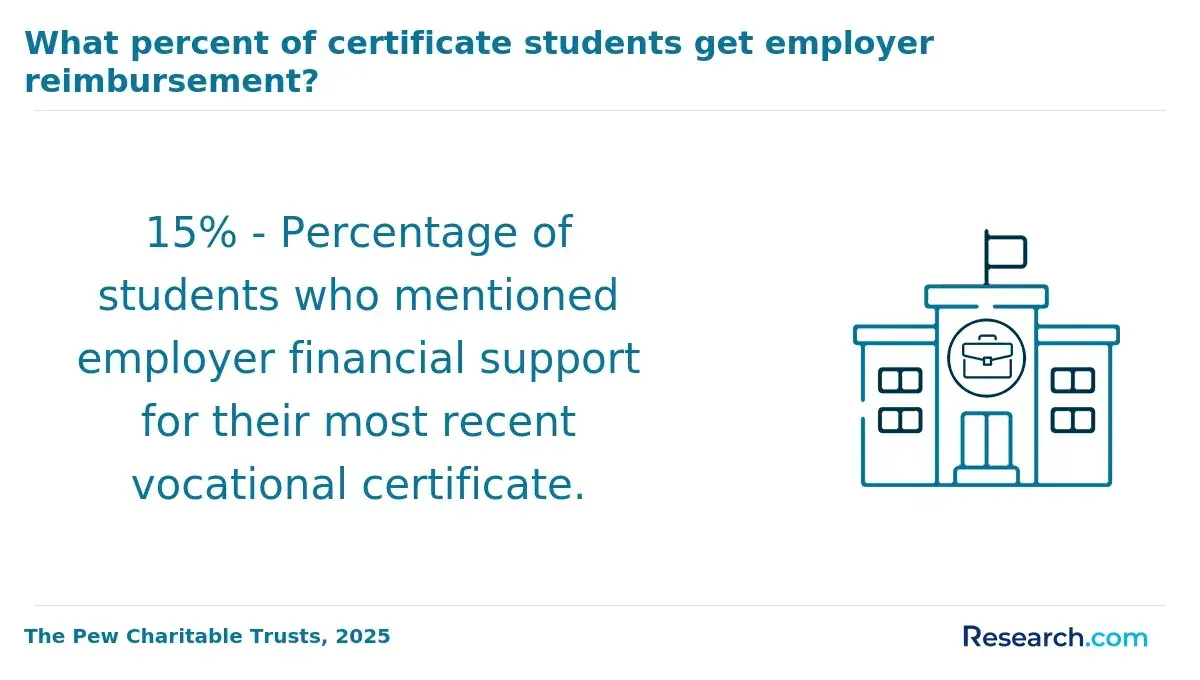
- Transfer-credit acceptance, prior-learning credit, employer tuition assistance, scholarships, grants, and federal financial aid eligibility.
The table below gives a practical timeline view. It is not a price quote, but it helps students compare degree levels and opportunity costs.
| Credential | Typical full-time length | Best use case | ROI consideration |
| Certificate | Several months to one year | Targeted skills for students who already know programming | Lower time commitment, but may not satisfy degree-preferred postings |
| Associate degree | About two years | Foundation for junior roles or transfer into a bachelor's program | Can reduce cost if credits transfer cleanly |
| Bachelor's degree | About four years | Most common degree path for entry-level software and game development roles | Stronger credential, but requires careful cost control |
| Master's degree | One to two years | Specialization, career change, or advancement for students with a technical base | Best when tied to a clear career goal or employer support |
To reduce cost, start with transfer-friendly general education credits, apply for aid early, compare public and private nonprofit options without assuming one is always better, and avoid borrowing for a program that cannot show adequate technical rigor or student support.
What entry-level and advanced career paths exist for graduates focused on multiplayer games?
Graduates focused on multiplayer games can pursue several entry-level paths, not only the title "multiplayer programmer." Many developers begin in quality assurance, tools, gameplay programming, backend support, technical design, or general software development before specializing in networked systems.
The game industry also overlaps with simulation, education technology, defense training, virtual production, sports technology, and interactive media. Students who enjoy building learning systems or simulations may find that fields such as instructional design intersect with game technology through serious games, training simulations, gamified learning, and interactive assessment.
The table below maps common roles to responsibilities and the kind of portfolio evidence that can help a graduate compete.
| Career path | Typical responsibilities | Helpful portfolio evidence |
| Junior gameplay programmer | Implement mechanics, controls, camera systems, UI behavior, and gameplay features | Playable prototype with clean code and technical notes |
| Junior network or multiplayer programmer | Support replication, matchmaking, client-server behavior, latency handling, and gameplay synchronization | Networked demo with server-authoritative logic and a written architecture breakdown |
| Backend game developer | Build services for accounts, progression, inventory, leaderboards, telemetry, and live operations | Game-connected API, database schema, and deployment documentation |
| Tools programmer | Create internal tools that help designers, artists, QA teams, or engineers work faster | Editor extension, pipeline tool, or automation script with user documentation |
| QA analyst or software tester | Test builds, reproduce bugs, document issues, and validate gameplay systems | Bug reports, test plans, automation scripts, and technical troubleshooting examples |
| Technical designer | Bridge design and engineering through scripting, prototyping, tuning, and implementation support | Prototype showing mechanics, balancing logic, and clear design intent |
Advancement often depends on technical depth and shipped-project experience. A developer may move from junior programmer to gameplay programmer, network programmer, backend engineer, senior engineer, lead programmer, technical director, or engineering manager. Some shift into platform engineering, cloud infrastructure, security, AI tools, or general software development.
Students should build a career plan around evidence rather than job titles alone. A practical multiplayer portfolio should include the following:
- At least one playable networked project that another person can test, preferably with setup instructions and known limitations.
- A technical write-up explaining architecture, trade-offs, synchronization choices, and what you would improve next.
- Readable code samples that show problem-solving, organization, comments where useful, and consistent style.
- Team project evidence, such as commit history, issue tracking, sprint notes, or a postmortem describing your contribution.
- A resume that translates class projects into employer language, including engines, languages, platforms, and systems built.
One major mistake is waiting until senior year to start a portfolio. Multiplayer systems take time to debug, and employers are more persuaded by a small polished technical demo than by several unfinished projects with no explanation.
What salaries, job outlook, and certifications are relevant for multiplayer game developers?
Salary data for "multiplayer game developer" is not always reported as a standalone federal occupation, so students should use broader software development data carefully. The U.S. Bureau of Labor Statistics reported a May 2024 median annual wage of $133,080 for software developers, quality assurance analysts, and testers. That figure includes many industries outside games, so it should be treated as labor-market context rather than a guaranteed game-industry salary.
The BLS also projects 17% growth for software developers, quality assurance analysts, and testers from 2023 to 2033, much faster than the average for all occupations. For multiplayer-focused students, this suggests that software engineering skills can remain valuable even if a first job is outside entertainment games.
Game salaries vary by role, studio, location, remote-work policy, platform, union or nonunion environment, funding cycle, and shipped experience. Entry-level candidates may begin in QA, associate engineering, tools, or gameplay roles, while experienced network and backend engineers may compete for higher-paying technical roles inside or outside games.
Certifications are not usually mandatory for game developer roles, but targeted credentials can help validate adjacent technical skills. The best certifications depend on whether the student wants engine, cloud, security, or project-management credibility.
| Certification area | Why it may help | Best fit |
| Cloud computing | Supports backend services, deployment, scalability, monitoring, and live operations | Students targeting backend or live-service roles |
| Cybersecurity fundamentals | Builds awareness of authentication, secure coding, account protection, and exploit prevention | Students interested in anti-cheat, platform security, or backend systems |
| Engine-specific credentials | Can demonstrate structured knowledge of a game engine ecosystem | Students with limited professional experience who need additional proof of tool familiarity |
| Agile or project management | Helps with production workflows, sprint planning, and team communication | Students moving toward lead, producer-adjacent, or technical coordination roles |
Students should not collect certifications at the expense of building games. For multiplayer developer roles, a working project with thoughtful documentation often carries more weight than a long list of unrelated badges.
A smart career strategy is to combine a degree, portfolio, internships or freelance projects, networking, and targeted technical practice. If a student is unsure whether game development is the only goal, choosing a program with strong general software engineering content can preserve options in cloud computing, simulation, defense, education technology, health technology, and enterprise software.
Other Things You Should Know About Game Programming & Development
It can be worth it if the program is accredited, technically rigorous, reasonably priced, and portfolio-driven. It is less likely to be worth it if the curriculum is mostly basic game design, lacks networking or software engineering depth, or leaves students without playable projects and code samples.
A strong program should cover client-server architecture, UDP networking, lag compensation, synchronization, and anti-cheat basics. Students should also study multithreading and packet handling, because multiplayer games usually rely on low-latency code, authoritative servers, and secure state updates.
Both can be useful. Unity often uses C# and is common in indie, mobile, and cross-platform projects, while Unreal uses Blueprints and C++ and is common in many high-end 3D and multiplayer productions. Choose based on your target studios, curriculum, hardware, and the kind of portfolio you want to build.
References
- 12 Entry-level Jobs in the Video Game Industry to Kickstart Your Career - Virtuos Games https://www.virtuosgames.com/news/entry-level-video-game-jobs/
- Is a Game Development Degree Worth it? https://www.gamedeveloper.com/programming/is-a-game-development-degree-worth-it-
- Comprehensive Guide Online Game Development Bachelor’s Degree https://www.computerdegreesonline.org/game-development-bachelors-degree/
- We help game developers learn and grow https://gamedev.tv/
- Game Programming Degree | Bachelor of Game Development https://www.cgspectrum.com/courses/game-programming-program
- Intro to Game Development: Course | Codecademy https://www.codecademy.com/learn/introduction-to-game-development
- Salaries in game development industry | InGame Job https://ingamejob.com/en/salaries
- 8 Best Game Development Courses for 2025: Build Your Dream Game — Class Central https://www.classcentral.com/report/best-game-development-courses/
- How to Start Your Game Development Career | OEd https://oed.com.ph/courses-to-work-in-game-development/
- Circuit Stream · Your Guide to the Different Career Pathways You Can Take in the Game Development Industry https://www.circuitstream.com/blog/your-guide-to-the-different-career-pathways-you-can-take-in-the-game-development-industry