2027 Online Game Programming and Development Degrees for Students Who Want Tools Programmer Roles

Co-Founder and Chief Data Scientist
Choosing an online game programming degree is harder when your goal is a tools programmer role, not just "game developer." Tools programmers build the editors, pipelines, automation, and engine workflows that help artists, designers, and engineers ship games faster. The opportunity is real: the Entertainment Software Association reported in 2024 that 190.6 million people in the U. S. play video games, keeping pressure on studios to improve production efficiency. This guide explains degree options, costs, skills, accreditation, portfolios, and job outcomes so you can choose a program that fits your career target.
Key Things You Should Know
- Tools programmer preparation should prioritize C++, C#, Python, engine architecture, build systems, editor scripting, asset pipelines, debugging, and collaboration with artists and designers.
- The U.S. Bureau of Labor Statistics reported a May 2024 median annual wage of $133,080 for software developers, but game tools roles vary widely by studio size, location, engine stack, and experience.
- Online bachelor's programs commonly take about four years, while certificates and master's options can be shorter; College Board's 2024 tuition benchmarks show why total cost and transfer credits matter before enrolling.
What is an online game programming and development degree and how does it prepare tools programmers?
An online game programming and development degree is a software-focused credential that teaches students how games are built, tested, optimized, and shipped. For a future tools programmer, the most important difference is that the degree should go beyond gameplay scripting. It should teach how development teams create internal software that improves production: level editors, importer/exporter tools, build automation, profiling dashboards, content validation scripts, and engine extensions.
A tools programmer sits between engineering, design, art, animation, audio, QA, and production. Instead of focusing only on player-facing mechanics, they ask questions such as: How can artists import assets with fewer errors? How can designers test balance changes faster? How can the build pipeline catch broken content before it reaches QA? A strong online program should therefore combine game programming with software engineering discipline.
The table below shows how common parts of a game programming degree connect to tools programmer responsibilities. Use it to check whether a curriculum is truly tools-oriented or mostly focused on general game development.
| Program component | What it teaches | Why it matters for tools programmers |
| Game engine programming | Runtime systems, engine architecture, scripting interfaces, and editor integration | Tools programmers often extend Unreal, Unity, proprietary engines, or internal editors |
| Software engineering | Version control, testing, design patterns, documentation, and maintainable code | Internal tools must be reliable because other developers depend on them daily |
| Asset pipeline development | Importers, exporters, validation, metadata, build steps, and content conversion | Studios need clean pipelines to move art, animation, audio, and level data into the game |
| User experience for tools | Interface design, workflow mapping, usability testing, and feedback loops | A powerful tool is not useful if artists and designers cannot use it efficiently |
| Team production courses | Agile workflows, interdisciplinary projects, milestone planning, and QA | Tools work is collaborative and requires understanding how games are actually produced |
A degree is most useful when it gives you repeated practice building tools for other people, not just solo game projects. Before enrolling, look for portfolio requirements, team-based capstones, Git-based submissions, and opportunities to build editor extensions or pipeline utilities.
Which online game programming and development majors best align with tools programmer career paths?
The best major depends on how close you want to be to engine code, production workflows, or creative design teams. A tools programmer can come from several academic paths, but some majors provide a stronger foundation than others.
The comparison below summarizes common online degree paths and how well they align with tools programmer hiring expectations. It can help you decide whether to prioritize a game-specific program or a broader computer science route.
| Major or concentration | Best fit | Trade-off to consider |
| Game programming and development | Students who want direct exposure to engines, gameplay systems, tools, and production pipelines | Quality varies; some programs are too design-heavy or portfolio-light |
| Computer science with game development electives | Students who want strong algorithms, systems, and software engineering foundations | You may need to build your own game tools portfolio outside class |
| Software engineering | Students interested in scalable tools, build systems, automation, testing, and developer productivity | May include fewer game-specific engine or asset pipeline courses |
| Simulation, interactive media, or real-time 3D | Students interested in visualization tools, real-time systems, and technical production | Curriculum may lean toward graphics, UX, or media production instead of engine tools |
| Technical art or game design with programming | Students who want to support artists and designers through scripts, workflows, and editor tools | May not go deep enough into C++, architecture, or systems programming for some tools roles |
If your goal is primarily level design, mechanics design, or player experience rather than engineering-heavy pipeline work, a game design degree online may be a better match than a programming-centered degree. Tools-focused students, however, should choose the path with the strongest coding depth and the most opportunities to build internal development utilities.
As a rule of thumb, choose a game programming major if you want a direct studio-oriented curriculum, choose computer science if you want maximum flexibility across tech sectors, and choose software engineering if you are most interested in production systems, automation, and large codebases.
How do online game programming degrees compare to campus-based programs for tools-focused roles?
Online game programming degrees can prepare students for tools-focused roles, but they require more self-direction than many campus programs. The main question is not whether online learning is "better" or "worse." The better question is whether the program gives you enough feedback, collaboration, project structure, and access to industry-standard tools.
The table below compares online and campus formats in areas that matter specifically for tools programmer preparation. Use it to identify which format fits your learning style and constraints.
| Decision factor | Online degree | Campus-based degree |
| Scheduling | More flexible for working students, caregivers, and career changers | More structured weekly schedule and in-person accountability |
| Collaboration | Depends heavily on remote team projects, Discord or Slack workflows, Git, and instructor feedback | Often easier to form teams, attend labs, and get immediate peer support |
| Hardware and software access | Student may need a capable workstation, stable broadband, and licensed tools | Labs may provide workstations, motion capture spaces, or testing devices |
| Portfolio development | Can be strong if projects are public, version-controlled, and reviewed by faculty | Can be strong if capstones involve interdisciplinary teams and showcase events |
| Networking | Requires deliberate effort through online communities, game jams, alumni channels, and internships | May offer more local studio visits, clubs, showcases, and informal faculty interaction |
Online study makes the most sense if you are disciplined, comfortable troubleshooting technical issues, and willing to build a visible portfolio outside required assignments. Campus study may be better if you need hands-on lab access, frequent in-person collaboration, or a local game development community.
For tools programmer roles, remote collaboration can actually be an advantage when used well. Modern studios rely on distributed version control, issue trackers, code reviews, and remote communication. An online program that teaches those workflows can mirror real studio practice better than a campus program that focuses only on lectures.
What courses and skills should a game programming curriculum include for future tools programmers?
A strong curriculum for future tools programmers should look more like applied software engineering for game production than a collection of isolated game projects. The most valuable courses teach students to build reliable systems that other developers use.
When comparing programs, look for courses and assignments that develop the following skill areas. These are the areas most likely to show up in tools programmer interviews, technical tests, and portfolio reviews.
- Core programming: C++, C#, Python, data structures, algorithms, memory management, debugging, and object-oriented design.
- Engine and editor development: Unreal Engine, Unity, proprietary engine concepts, editor scripting, plug-in architecture, serialization, and runtime/editor separation.
- Asset pipeline skills: content importers, exporters, validation tools, metadata systems, batch processing, digital content creation workflows, and build integration.
- Build and automation: continuous integration, command-line tools, automated testing, packaging, deployment scripts, and source control practices.
- Tool usability: workflow analysis, interface design, accessibility basics, error messaging, documentation, and user feedback from artists or designers.
- Production communication: requirements gathering, Jira-style task tracking, code reviews, technical documentation, and cross-disciplinary collaboration.
Artificial intelligence is also changing tool development. Studios are experimenting with automated test generation, content tagging, procedural workflows, and AI-assisted scripting. Students do not need to become machine learning researchers to enter tools programming, but they should understand how automation affects developer productivity and where human review remains necessary.
The strongest student projects solve a clear production problem. A simple "inventory system" may show game programming ability, but a custom dialogue editor, asset validator, animation batch processor, or build dashboard shows tools thinking.
What admission requirements and prior experience are needed for online game programming programs?
Admission requirements vary by school and degree level, but most online bachelor's programs expect a high school diploma or equivalent, transcripts, an application form, and sometimes a personal statement. More selective programs may ask for math readiness, prior programming coursework, a portfolio, or placement assessments.
Career changers should pay close attention to prerequisites. A student with no coding background may need an introductory programming sequence before attempting C++ or engine programming. A student who already has an associate degree or professional software experience should ask about transfer credits, prior learning assessment, and portfolio-based placement.
Before applying, use this sequence to reduce surprises and avoid enrolling in a program that does not match your preparation level.
- Check whether the first programming course assumes prior coding experience or starts from the basics.
- Ask whether math courses include discrete mathematics, linear algebra, or applied calculus relevant to game systems.
- Confirm whether transfer credits apply to major courses, not only general education requirements.
- Review portfolio expectations for admission, internships, capstones, or graduation.
- Ask whether online students receive the same career services, faculty access, and project review opportunities as campus students.
The same comparison mindset applies across many applied online degrees. For example, students evaluating an urban planning online degree would also need to check prerequisites, software access, internship expectations, and accreditation fit before enrolling.
One common mistake is assuming "beginner-friendly" means "career-ready." A beginner-friendly program can be a good starting point, but it still needs advanced coursework, substantial projects, and instructor feedback to prepare students for tools roles.
How long do online game programming degrees take, and what do they typically cost?
Program length depends on credential level, transfer credit, course load, and whether the student studies full time or part time. A bachelor's degree commonly takes about four years for first-time full-time students, while students with transfer credits may finish faster. Certificates can take months to about a year, and master's programs often take one to three years depending on pacing.
Cost is harder to compare because online programs may charge by credit, semester, subscription period, or residency status. College Board's 2024 Trends in College Pricing reported the following average published tuition and fees for full-time undergraduates in 2024-25, which provides a useful benchmark when evaluating online options:
- Public four-year, in-state: $11,610
- Public four-year, out-of-state: $30,780
- Private nonprofit four-year: $43,350
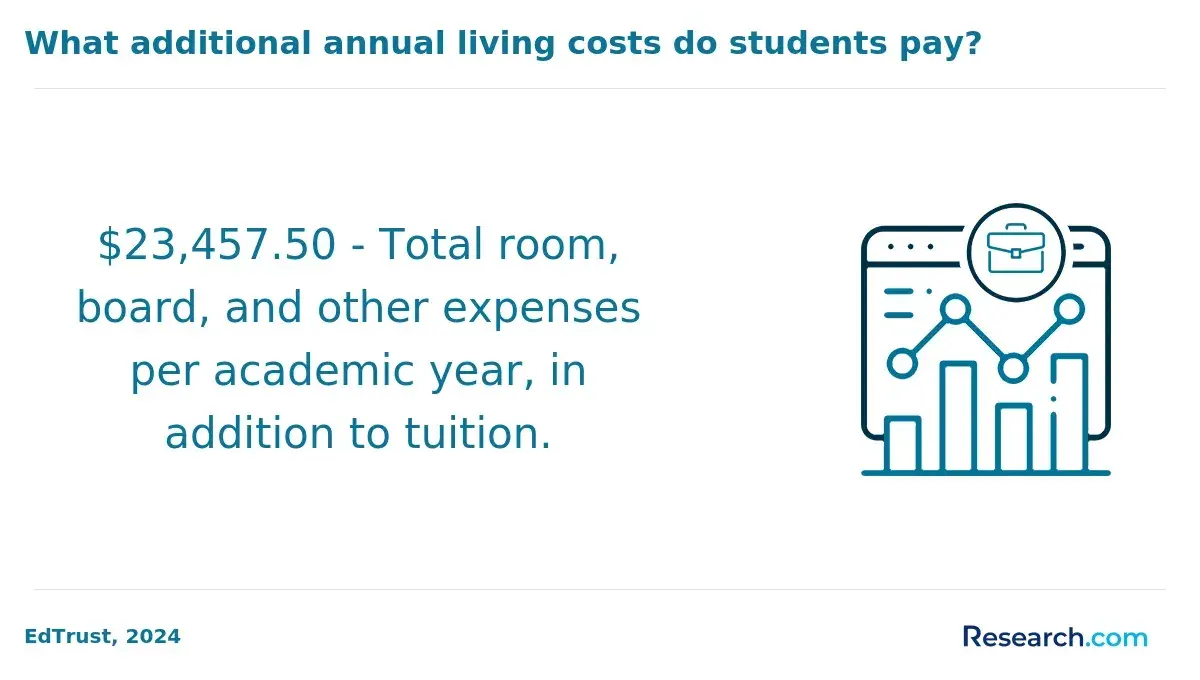
Those figures are not game-program-specific prices, and online tuition can be higher or lower. The practical lesson is that students should compare total cost, not just the advertised tuition rate. Technology fees, software subscriptions, hardware upgrades, portfolio review fees, and repeated courses can materially change the final price.
The table below summarizes typical timeline options without treating any one path as automatically better. The right choice depends on your existing credits, budget, and how quickly you can build a credible portfolio.
| Credential path | Typical time commitment | Best for | Main limitation |
| Undergraduate certificate | Shorter than a degree | Students testing the field or adding engine skills to prior coding experience | May not be enough for employers that prefer a bachelor's degree |
| Associate degree | Often about two years full time | Students seeking a lower-cost start or transfer pathway | May require transfer to reach more competitive tools roles |
| Bachelor's degree | Often about four years full time | Students seeking broad preparation and internship eligibility | Higher total cost and time commitment |
| Master's degree | Often one to three years | Students with prior programming education who want specialization | Not usually necessary for entry-level tools roles |
To manage cost, ask schools about transfer credit, employer tuition assistance, military education benefits, scholarships, federal aid eligibility, and whether required software is included. Avoid choosing the cheapest program if it lacks accreditation, career support, or enough programming depth.
How can students verify accreditation and program quality for online game development degrees?
Accreditation matters because it affects federal financial aid eligibility, credit transfer, employer recognition, and graduate school options. For U.S. students, the baseline is institutional accreditation from an accreditor recognized by the U.S. Department of Education or the Council for Higher Education Accreditation. Programmatic accreditation is less common in game development, so students should not reject a program simply because it lacks a game-specific accreditor.
Quality review should go beyond accreditation. A legitimate school can still offer a weak game programming curriculum, and a flashy program can still underdeliver on technical depth. Students should evaluate outcomes, faculty experience, portfolio standards, and how often the curriculum updates its tools and engines.
Use the following checklist before committing to an online game programming program. It is designed to catch the most common red flags before you spend time or money.
- Verify institutional accreditation through official accreditor or federal databases rather than relying only on marketing pages.
- Review required courses to confirm they include advanced programming, software engineering, engines, and production tools.
- Ask to see examples of student capstones, tool projects, or technical portfolios.
- Confirm who teaches upper-level courses and whether faculty have relevant software, game, simulation, or tools experience.
- Ask how often the program updates engine versions, development workflows, and production software.
- Check internship support, alumni outcomes, career coaching, and whether online students have equal access.
- Read transfer policies carefully, especially if you may move from an associate program to a bachelor's program.
Accreditation rules differ by discipline, which is why students should not assume every field works like game development. For example, a masters in library science may involve different professional expectations than a game programming degree, so always evaluate accreditation in the context of the career you want.
Be cautious of programs that promise employment, advertise unrealistic salary outcomes, hide total costs, or rely entirely on short tutorials without substantial coding projects. A credible program should be transparent about requirements and realistic about the competitiveness of game industry hiring.
What entry-level and advanced tools programmer roles can graduates pursue in the game industry?
Tools programmer roles exist across game studios, engine companies, outsourcing vendors, simulation firms, and interactive media teams. In the game industry, the work can be embedded in engineering, technical art, build engineering, QA automation, or production technology teams.
The table below outlines common roles and how they connect to a tools-focused education. Titles vary by employer, so read job descriptions carefully rather than relying only on the job title.
| Role | Typical responsibilities | Career stage |
| Junior tools programmer | Fixes bugs in editors, writes scripts, improves small workflow tools, documents internal utilities | Entry level |
| Game programmer with tools tasks | Builds gameplay features while supporting designers with debug menus, editors, or tuning tools | Entry to mid level |
| Technical artist | Creates art pipeline scripts, shaders, rigging tools, import/export workflows, and artist-facing automation | Entry to advanced, depending on technical depth |
| Build engineer | Maintains build systems, automation, continuous integration, release packaging, and deployment processes | Entry to mid level |
| Pipeline engineer | Designs content pipelines for assets, animation, audio, localization, and data validation | Mid level |
| Senior tools programmer | Architects internal systems, mentors developers, coordinates with production teams, and improves studio-wide workflows | Advanced |
| Engine tools engineer | Extends engine editors, profiling tools, debugging interfaces, and runtime/editor systems | Mid to advanced |
Graduates may not enter directly as tools programmers if they lack a strong portfolio. A realistic path might start with QA automation, junior gameplay programming, technical art scripting, or build support, then move toward dedicated tools work after demonstrating reliability and cross-team communication.
The best candidates can translate user pain into software requirements. If an animator says importing clips takes too long or a designer says tuning enemy behavior is slow, a tools programmer turns that complaint into a usable, maintainable solution.
What salary ranges and job outlook can tools programmers expect in the U.S. games sector?
There is no single federal occupational category for "game tools programmer," so salary analysis requires careful interpretation. The closest broad benchmark is software development. The U.S. Bureau of Labor Statistics reported a May 2024 median annual wage of $133,080 for software developers. This does not mean every tools programmer earns that amount; it is a national software benchmark that includes many industries, regions, and employer types.
Game industry compensation can be affected by studio size, platform, union or nonunion environment, location, remote policy, engine specialization, shipped titles, and the candidate's portfolio. Major markets and large studios may pay more, while smaller indie studios may offer lower cash compensation but broader responsibilities.
The outlook is generally favorable for software roles, but game industry hiring can be cyclical. BLS projected 17% employment growth for software developers from 2023 to 2033, much faster than the average for all occupations. For students, the takeaway is that software engineering skills create optionality: tools programming can lead to games, simulation, enterprise developer tools, AR/VR, visualization, or build engineering if the games market tightens.
Use salary data responsibly when evaluating return on investment. A degree may improve your preparation, but outcomes depend on portfolio quality, interview performance, internships, location, networking, and the number of entry-level openings available when you graduate.
Are certifications, portfolios, or specialized engines important for tools programmer career advancement?
Certifications are usually less important than portfolios for tools programmer roles. Employers tend to care more about whether you can write clean code, understand production workflows, debug complex systems, and build tools that other developers actually use. That said, engine certifications or cloud/devops credentials can help structure learning when they match your target role.
A strong tools programmer portfolio should demonstrate both technical depth and user empathy. The projects below are especially relevant because they show that you can improve a development workflow, not just make a playable prototype.
- Build an Unreal or Unity editor plug-in that helps designers create, validate, or tune game content.
- Create a Python or C# batch tool that processes assets, checks naming rules, or flags missing metadata.
- Publish a small build automation project that runs tests, packages builds, or reports failures clearly.
- Document a before-and-after workflow showing how your tool saves time or reduces errors for a hypothetical team.
- Include clean source control history, readable documentation, screenshots, and short demo videos.
Specialized engines matter when they match employer demand. Unreal Engine is common in AAA and real-time visualization; Unity appears often in mobile, indie, XR, and education; proprietary engines are common at larger studios. Students should learn at least one major engine deeply while also building transferable software engineering skills.
Advanced students interested in AI-assisted tools, procedural workflows, or machine learning systems may eventually explore graduate study, including an online PhD AI pathway. For most entry-level tools roles, however, a strong bachelor's-level foundation plus a focused portfolio is usually more practical than pursuing a research doctorate immediately.
Common career mistakes include building only gameplay demos, ignoring code quality, failing to document tools, and choosing projects no one else would use. A better approach is to identify a production bottleneck, build a small solution, test it with peers, and explain the trade-offs clearly in your portfolio.
Other Things You Should Know About Game Programming & Development
Many employers prefer a bachelor's degree in computer science, game programming, software engineering, or a related field, but a strong portfolio and relevant experience can also matter. Requirements vary by studio and role level.
In 2027, an online game programming degree can be highly beneficial for aspiring tools programmers. These programs often cover essential programming languages, game engines, and development environments, providing a comprehensive foundation. Additionally, online degrees offer flexibility to work on projects or internships concurrently, aiding real-world experience accumulation.
Students should know version control such as Git, a C++ IDE, a debugger, and one engine editor like Unity or Unreal before starting. Programs for tools programmer roles often expect basic scripting, command-line use, and familiarity with asset pipelines, build systems, and bug-tracking tools.
References
- The Importance of Certifications in Programming: Boosting Your Career and Skills https://algocademy.com/blog/the-importance-of-certifications-in-programming-boosting-your-career-and-skills/
- Game Development Career Pathways | CG Spectrum https://www.cgspectrum.com/career-pathways/game-development
- Circuit Stream · Your Guide to the Different Career Pathways You Can Take in the Game Development Industry https://www.circuitstream.com/blog/your-guide-to-the-different-career-pathways-you-can-take-in-the-game-development-industry
- Study to become a Game Programmer - Futuregames Warsaw https://futuregames.se/pl/program/game-programmer/
- Bachelor of Science inGame Design and Development Online or On Campus https://www.albany.edu/cehc/programs/bs-game-design-and-development
- Entry Level / New Graduates https://soleilgamestudios.com/en/careers/roles/01/
- Game Development Degrees: What You Need to Know https://www.ivywise.com/ivywise-knowledgebase/gaming-majors/
- Online Game Development Courses: The Path to Mastering Virtual Worlds and Career Success https://macrobiangames.com/blog/online-game-development-courses/
- What skills do you need to break into game development? | Learning People https://www.learningpeople.com/uk/career-insights/blog/what-skills-do-you-need-to-break-into-game-development/
- Certifications or Portfolios, what’s the most important when hiring in IT? - Nathaniel-James https://nathaniel-james.co.uk/portfolio-archive/certifications-or-portfolios-whats-the-most-important-when-hiring-in-it