2027 Online Game Programming and Development Degrees for Students Who Want Mobile Game Developer Roles

Co-Founder and Chief Data Scientist
Choosing an online game programming degree is really a career-fit decision: will the program help you build mobile games that employers and players actually value? U. S. video game spending totaled about $58.7B in 2024, according to Circana, showing that games remain a large commercial market even as hiring becomes more skills-driven.
This guide is for students targeting mobile game developer roles. You will learn what these degrees teach, how online programs compare, which schools to consider, what they cost, and how to judge whether a program is worth the investment.
Key Things You Should Know
- Online game programming degrees can prepare students for mobile game development when they include C#, C++, Unity, Unreal Engine, mobile deployment, gameplay systems, debugging, and portfolio-based production work.
- The U.S. Bureau of Labor Statistics reported a $133,080 median annual wage for software developers in May 2024, but mobile game roles vary widely by studio size, region, platform, portfolio quality, and specialization.
- College Board's 2024-2025 tuition data shows average published tuition and fees of $11,610 for in-state public four-year students and $43,350 at private nonprofit four-year institutions, so transfer credits, online fees, and project quality are central ROI factors.
What is an online game programming and development degree and how does it prepare mobile game developers?
An online game programming and development degree is a computer science-adjacent program focused on building interactive software for games. Instead of only studying general programming, students learn how gameplay systems, graphics, physics, artificial intelligence, user input, audio, networking, and production pipelines work together inside game engines.
For mobile game developer roles, the strongest programs do more than teach game theory. They require students to build playable projects for platforms such as iOS and Android, optimize performance for limited device resources, and understand how mobile players interact with touch controls, short sessions, monetization systems, and app-store requirements.
The degree can be a good fit if you want structured training, instructor feedback, access to peers, and a portfolio-building path. It may be less efficient if you already have strong programming skills, need only one specific engine skill, or want the fastest possible entry into casual mobile development through self-study and small shipped projects.
The table below summarizes common degree options so you can match the credential level to your current background and target role.
| Program type | Typical focus | Best fit for | Mobile game developer relevance |
| Associate degree | Programming fundamentals, basic game tools, introductory projects | Students seeking a lower-cost start or transfer pathway | Useful for junior testing, support, or transfer into a bachelor's program |
| Bachelor's degree | Game programming, engines, math, systems, production, portfolio | Students targeting entry-level developer roles | Usually the strongest undergraduate path for mobile gameplay or engine-adjacent roles |
| Certificate or bootcamp | Focused Unity, Unreal, mobile app, or game development skills | Career changers or degree holders filling skill gaps | Can work when paired with a strong portfolio, but may carry less academic weight |
| Master's degree | Advanced computing, design research, simulation, AI, or interactive media | Students seeking leadership, research, teaching, or specialized technical roles | Helpful for advanced systems, serious games, simulation, or technical direction |
A strong mobile-focused program should leave you with more than assignments. Ideally, you graduate with playable mobile builds, source code samples, team project experience, and a clear explanation of your technical decisions.
How do online game programming degrees compare to campus-based programs for aspiring mobile developers?
Online and campus-based game programming programs can lead to similar technical outcomes when the curriculum is rigorous and project-based. The better choice depends on how you learn, whether you need physical labs, your schedule, and how much networking support you want from the school.
For mobile development specifically, online learning can be practical because much of the work happens on personal computers, cloud repositories, game engines, and device testing tools. Campus programs may still offer advantages for motion capture labs, studio-style collaboration, local internships, and in-person critique sessions.
This comparison highlights the decision points that matter most for students trying to become mobile game developers rather than simply choosing the most convenient format.
| Factor | Online degree | Campus-based degree | How to decide |
| Schedule | Often more flexible for working adults | More fixed class and lab times | Choose online if you need to balance work, family, or location constraints |
| Collaboration | Uses version control, video meetings, discussion boards, and remote production tools | More face-to-face teamwork and studio culture | Choose the format that will help you complete team projects consistently |
| Hardware access | Student may need a capable computer and test devices | May include labs, devices, and specialized equipment | Ask what software, engine licenses, and hardware are included before enrolling |
| Portfolio development | Can be strong if courses require shipped builds and code reviews | Can be strong if projects receive frequent critique | Prioritize portfolio requirements over delivery format |
| Networking | Depends heavily on virtual events, faculty access, alumni channels, and career services | May offer easier local studio connections | Ask for employer events, internship support, and alumni examples in game roles |
Students sometimes assume online programs are easier. That can be a costly mistake. A credible online game programming degree should still require math, coding, debugging, team production, and portfolio review; if it does not, it may not build the evidence employers expect.
What accredited U.S. schools offer online game programming and development degrees focused on mobile games?
Few U.S. colleges advertise a degree exclusively in mobile game development. A more realistic search is for accredited online game programming, game development, game software development, or interactive software degrees that include mobile deployment, Unity or Unreal Engine, app development, and portfolio projects.
The schools below are examples of U.S. institutions with online programs or online-friendly pathways related to game programming and development. Program names, delivery formats, tuition, and curriculum can change, so verify details directly with the institution and confirm that the program supports mobile-focused projects before applying.
| School | Example online program area | Institutional accreditation | Why mobile-focused students may consider it |
| Southern New Hampshire University | BS in Game Programming and Development | New England Commission of Higher Education | Emphasizes programming, game engines, software development, and portfolio-oriented projects |
| Baker College | BS in Game Software Development | Higher Learning Commission | Combines software development foundations with game production concepts relevant to mobile work |
| University of Advancing Technology | Game Programming or related online technology degrees | Higher Learning Commission | Technology-focused curriculum may support game systems, engines, and interactive project work |
| Full Sail University | Game Development bachelor's pathway with online options | Accrediting Commission of Career Schools and Colleges | Career-focused structure may appeal to students seeking intensive production-style learning |
| Academy of Art University | Online game development and programming-related study | WASC Senior College and University Commission | May suit students who want programming combined with art, design, and production exposure |
Accreditation matters because it affects federal financial aid eligibility, transfer credit acceptance, and how other schools or employers may view the credential. For U.S. students, the safest starting point is institutional accreditation recognized by the U.S. Department of Education or the Council for Higher Education Accreditation.
Before shortlisting a school, ask whether students can publish mobile builds, use Android Studio or Xcode workflows, complete Unity mobile optimization assignments, and receive feedback on code quality. A degree title alone is not enough; the mobile portfolio is what makes the credential career-relevant.
What courses and technical skills are taught in online game programming programs for mobile development?
Mobile game developers need a blend of general software engineering and game-specific production skills. A good online degree should teach students how to write maintainable code, use professional tools, and solve performance problems that appear on real devices.
Most programs organize the curriculum around programming, game engines, math, design collaboration, and production. The following list shows the course and skill areas that matter most when evaluating a mobile-focused pathway.
- Programming foundations: C#, C++, Java, Python, object-oriented programming, data structures, algorithms, and debugging practices.
- Game engines: Unity and Unreal Engine workflows, prefabs or actors, scripting, physics, animation systems, lighting, input, and build settings.
- Mobile deployment: Android and iOS build processes, touch controls, screen-size adaptation, app permissions, device testing, and store-readiness basics.
- Performance optimization: memory management, frame-rate analysis, asset compression, battery-aware design, loading times, and profiling tools.
- Game systems: gameplay loops, player progression, AI behavior, procedural content, inventory systems, save systems, and multiplayer fundamentals.
- Production workflow: Git, issue tracking, agile methods, documentation, peer code review, team roles, and milestone-based development.
- User experience and visual communication: menus, onboarding, accessibility, interface hierarchy, feedback, and collaboration with artists and designers.
Students who enjoy the visual side of mobile games may also compare a graphic design degree online, especially if they are more interested in UI, branding, visual assets, or user experience than gameplay code.
AI is also becoming more important in game development, but students should treat it as an assistant rather than a replacement for programming fundamentals. Generative tools can speed up prototyping, dialogue drafting, and code suggestions, yet employers still need developers who can test, refactor, secure, and optimize what they build.
What are the typical admission requirements for online game programming and development degrees?
Admission requirements vary by school and degree level, but undergraduate game programming programs usually look for evidence that a student can handle technical coursework. Many programs are accessible to beginners, though readiness in algebra, computing basics, and problem-solving can make the first year much easier.
Prospective students should prepare for the following common requirements and placement steps. These items are not universal, so always confirm the exact policy with each school.
- High school diploma, GED, or equivalent credential for undergraduate admission.
- Official transcripts from high school and any colleges previously attended.
- Minimum GPA requirement or conditional admission process, depending on the institution.
- Math placement, college algebra readiness, or prerequisite coursework for programming-heavy tracks.
- English proficiency documentation for applicants whose prior education was not in English.
- Portfolio, coding sample, or creative work submission for some art- or production-oriented schools.
- Technology requirements, including a computer capable of running game engines and development tools.
Transfer students should pay close attention to credit evaluation. A program that accepts general education and introductory programming credits can reduce cost and time, while a program with strict residency requirements may require students to repeat courses even if they already know the material.
A common mistake is applying only to schools with exciting game-related marketing. A better approach is to check admission fit, transfer credit policy, faculty access, and whether the first-year curriculum builds the math and programming foundation needed for later mobile projects.
How long do online game programming degrees take, and what do they cost?
Most online bachelor's degrees in game programming require about 120 credits, which commonly translates to four years of full-time study. Students with transfer credits, prior learning credit, military credit, or year-round course schedules may finish sooner, while part-time students may take longer.
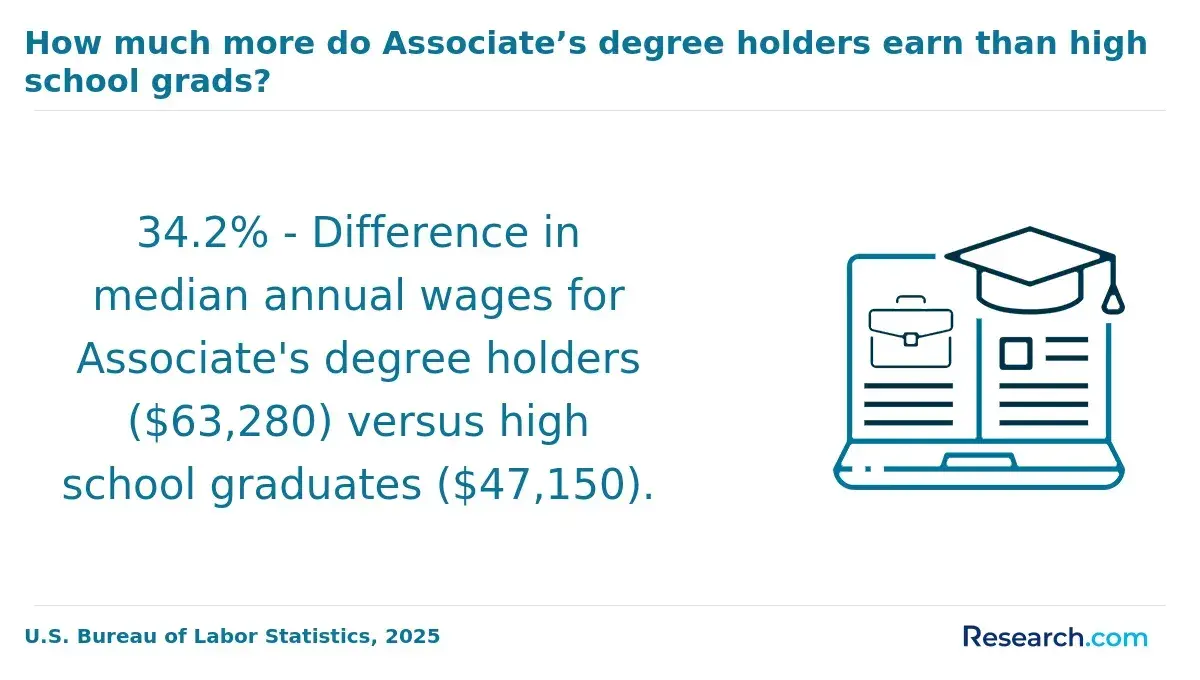
Cost depends on institution type, residency, transfer credits, online fees, software and hardware requirements, and whether the student qualifies for grants, scholarships, employer tuition assistance, or military education benefits. College Board's 2024-2025 figures provide a useful national baseline for published tuition and fees.
- Average published tuition and fees for in-state students at public four-year institutions: $11,610.
- Average published tuition and fees for out-of-state students at public four-year institutions: $30,780.
- Average published tuition and fees at private nonprofit four-year institutions: $43,350.
Those averages are not program-specific prices, but they help students interpret whether a quoted online tuition rate is unusually low, typical, or expensive. Game programs may also require a capable laptop or desktop, controller hardware, mobile testing devices, cloud storage, and software subscriptions, although many engines used in education are free or low-cost for students.
The table below shows the main time and cost variables to compare before enrollment. Use it to estimate total cost rather than looking only at per-credit tuition.
| Cost or timeline factor | Why it matters | What to ask the school |
| Transfer credits | Accepted credits can reduce both tuition and time to completion | How many credits will apply directly to the major and general education requirements? |
| Per-credit tuition | Online programs often price by credit hour | Is tuition different for in-state, out-of-state, military, or fully online students? |
| Program fees | Technology, online learning, graduation, and course fees can raise total cost | What mandatory fees are charged each term? |
| Hardware requirements | Game engines may require stronger graphics and processing capacity | What minimum and recommended computer specifications are required? |
| Course availability | Limited course rotation can delay graduation | Are major courses available every term, or only once per year? |
| Portfolio support | Career value depends heavily on completed projects | Does the program include capstone review, code review, and playable portfolio work? |
To reduce cost, start with a transfer audit, compare total program cost, apply for federal aid through the FAFSA, ask about scholarships, and avoid borrowing for a program that cannot clearly explain its career support and project outcomes.
What mobile game developer roles can graduates pursue with an online game programming degree?
An online game programming degree can support several entry-level and early-career paths, but job titles differ across studios. Small mobile studios may expect one developer to handle gameplay, UI, analytics hooks, monetization integrations, and bug fixes, while larger studios separate responsibilities across specialized teams.
The table below connects common mobile game roles with the work they typically involve. Use it to decide which electives, projects, and portfolio pieces to prioritize.
| Role | Typical responsibilities | Portfolio evidence employers may look for |
| Junior mobile game developer | Build gameplay features, fix bugs, implement UI, test builds, and support releases | Playable mobile game, clean code samples, issue-tracking history, and device-tested builds |
| Unity developer | Create 2D or 3D game systems using C#, Unity tools, prefabs, scenes, and mobile build settings | Unity project with touch controls, optimization notes, and published or shareable build |
| Gameplay programmer | Implement mechanics, controls, progression systems, AI behavior, and player feedback | Mechanic-focused demos showing responsiveness, tuning, and readable code |
| Tools or pipeline developer | Build internal tools that help designers, artists, and programmers work faster | Editor tools, automation scripts, asset pipeline examples, or documentation |
| Quality assurance automation tester | Test game builds, reproduce bugs, write test cases, and sometimes automate regression checks | Bug reports, test plans, scripting samples, and understanding of mobile device variability |
| Technical designer | Bridge design and programming by prototyping systems, scripting interactions, and tuning gameplay | Prototypes, design documentation, scripting examples, and iteration notes |
Graduates can also work outside entertainment games. Mobile game skills apply to training simulations, educational apps, advertising experiences, interactive storytelling, and gamified wellness tools. Students interested in health-focused interactive products may compare an online exercise science degree if they want stronger preparation for fitness, rehabilitation, or human performance content rather than game code alone.
The smartest career strategy is to align each project with a role. A student targeting Unity mobile jobs should not graduate with only design documents; they need playable builds, code repositories, performance notes, and a clear explanation of what they personally built.
What is the salary outlook for mobile game developers with game programming degrees?
The U.S. Bureau of Labor Statistics does not publish a separate national salary category only for mobile game developers. The closest broad benchmark is software developers, an occupation that includes many types of application and systems programmers. BLS May 2024 data reported a median annual wage of $133,080 for software developers.
That figure should be used as context, not a promise. Mobile game compensation may be lower or higher depending on experience, location, studio funding, platform specialization, technical depth, and whether the job is at an entertainment studio, tech company, simulation firm, or app developer.
The table below explains how to interpret salary expectations by career stage without assuming a degree automatically produces a specific income.
| Career stage | What typically influences pay | How students can improve competitiveness |
| Entry-level | Portfolio quality, internships, engine experience, coding tests, and ability to ship small features | Build complete mobile projects, document code, and practice technical interviews |
| Early-career developer | Released titles, feature ownership, debugging speed, team collaboration, and platform knowledge | Show measurable project contributions and learn profiling, live-ops, and analytics workflows |
| Specialist | Expertise in graphics, networking, tools, performance, monetization systems, or AI | Develop deeper technical samples beyond basic gameplay prototypes |
| Lead or senior roles | Architecture decisions, mentoring, production judgment, and cross-functional leadership | Gain experience reviewing code, planning systems, and guiding team milestones |
Salary research should always be local and role-specific. Before choosing a program, compare job postings in your target region, note the engines and languages requested, and check whether entry-level listings require a bachelor's degree, shipped projects, or both.
What is the job demand and future outlook for mobile game developers in the United States?
Demand for mobile game developers sits inside the broader software labor market, which remains stronger than many occupations but also more competitive at the entry level. The BLS Occupational Outlook Handbook projects software developer employment to grow 17% from 2023 to 2033, much faster than the average for all occupations.
For students, the key takeaway is that software skills have broad demand, but game-specific roles can be cyclical. Hiring in games may fluctuate with studio funding, platform changes, outsourcing, mergers, and live-service performance. A strong program should therefore prepare students for both mobile game jobs and adjacent software roles.
Several trends are shaping the outlook for aspiring mobile game developers:
- AI-assisted development is changing workflows for prototyping, asset iteration, dialogue support, and code suggestions, increasing the value of developers who can validate and improve AI-generated work.
- Live-ops and analytics are important in mobile games because many products evolve after launch through events, updates, experiments, and retention-focused improvements.
- Cross-platform engines such as Unity and Unreal continue to make it easier for small teams to build for multiple devices, but they also raise employer expectations for polished portfolios.
- Privacy rules, app-store policies, and platform changes can affect mobile monetization, advertising, and data tracking, making adaptable developers more valuable.
Students interested in deeper AI research, game agents, procedural generation, or advanced machine learning may eventually explore a PhD in artificial intelligence USA, though most mobile game developer roles do not require doctoral study.
The best hedge against game-industry volatility is a degree plan that builds transferable software skills. If your portfolio shows mobile games plus clean engineering practices, you can pursue game studios, app companies, simulation firms, educational technology, or interactive media teams.
How can students evaluate and choose a reputable online game programming program?
A reputable online game programming program should be accredited, technically current, transparent about costs, and serious about portfolio development. The right program is not necessarily the one with the flashiest game art; it is the one that helps you become employable for the specific technical role you want.
Use the following steps to compare programs before submitting deposits or taking on loans. This process helps you separate marketing claims from evidence.
- Verify institutional accreditation through recognized U.S. accreditation databases and confirm that the specific degree is eligible for federal financial aid if you plan to use it.
- Map the curriculum against mobile developer job postings, checking for C#, C++, Unity, Unreal, mobile deployment, version control, debugging, and performance optimization.
- Ask for examples of student capstones, playable builds, code review practices, and portfolio support rather than relying only on course titles.
- Request a full cost estimate that includes tuition, fees, books, software, hardware, transfer-credit decisions, and expected time to completion.
- Evaluate career services by asking about internship support, employer events, alumni in game or software roles, resume review, and technical interview preparation.
- Check faculty experience to see whether instructors have relevant game development, software engineering, interactive media, or mobile app backgrounds.
- Compare flexibility with accountability, including course pacing, synchronous requirements, team-project expectations, and access to instructors.
Red flags include vague accreditation language, no required programming portfolio, no clear mobile or engine coursework, unrealistic salary claims, pressure-heavy admissions tactics, and unclear transfer-credit rules. Be especially cautious if a school emphasizes dream jobs but cannot show how students build marketable technical evidence.
Students interested in serious games, educational simulations, or training apps may also compare an online masters in instructional design later in their pathway, especially if they want to design learning experiences rather than focus only on entertainment games.
The final decision should balance cost, curriculum fit, portfolio quality, and career support. If two programs are similar, choose the one that gives you more feedback on real projects and a clearer route to internships or entry-level software work.
Other Things You Should Know About Game Programming & Development
It can be worth it if the program is accredited, teaches strong programming fundamentals, includes mobile or engine-based projects, and helps you build a portfolio. It may not be worth the cost if it lacks code-heavy coursework, career support, or clear project outcomes.
Not always. Some employers hire candidates with strong portfolios, shipped projects, or equivalent experience. However, a bachelor's degree can help with structured learning, internships, HR screening, and broader software developer opportunities.
A strong mobile game development degree should cover C# for Unity, C++ for performance-heavy engines, and Java or Kotlin for Android app integration. Many programs also require coursework in algorithms, mobile UI design, and touch-based interaction, with 120 semester credits common for a bachelor’s degree.
References
- What Is A Game Developer? Required Skills, Salary, & More! - Skillcrush https://skillcrush.com/tech-jobs/game-developer/
- How to Start Your Game Development Career | OEd https://oed.com.ph/courses-to-work-in-game-development/
- Is Game Programming a Good Career Path? Opportunities, Salary, Outlook - Champlain College https://www.champlain.edu/blog/stories/game-programming-career-path/
- The Video Game Designer Job Outlook | NEIT https://www.neit.edu/blog/video-game-designer-job-outlook
- Online Game Development Courses | Learn from Top Game Devs https://www.cgspectrum.com/courses/game-development
- What to Look for in a Game Design Program https://www.princetonreview.com/college-advice/game-design/researching-game-design-programs
- Intro to Game Development: Course | Codecademy https://www.codecademy.com/learn/introduction-to-game-development
- Career Path and Salary for Video Game Designers | ComputerScience.org https://www.computerscience.org/careers/video-game-designer/career-outlook-and-salary/
- Is Game Development a Good Career? https://www.albany.edu/cehc/communications/is-game-development-a-good-career
- Game Programming Bachelor’s Degree at University of Advancing Technology https://www.uat.edu/game-programming-degree