2027 How to Compare Online Game Programming and Development Degrees by Career Alignment

Co-Founder and Chief Data Scientist
Choosing an online game programming degree is really a career-alignment decision: engine programmer, gameplay developer, technical artist, producer, or broader software role. The stakes are higher as game work blends coding, AI tools, real-time graphics, cloud systems, and portfolio-based hiring. The Entertainment Software Association reported in 2024 that 190.6 million Americans play video games, showing the size of the market graduates hope to enter. This guide helps prospective students compare programs by curriculum, cost, accreditation, portfolio value, and career outcomes before enrolling.
Key Things You Should Know
- Career alignment matters more than the degree title: gameplay programming, engine development, technical art, UX, production, and software engineering require different course mixes, tools, and portfolio projects.
- Cost comparisons should include total price, transfer credit, technology fees, and aid; College Board's 2024 data lists average published tuition and fees at $11,610 for in-state public four-year colleges and $43,350 for private nonprofit four-year colleges.
- The strongest labor-market benchmark is broader software development: BLS data published for 2024 reports a $133,080 median annual wage for software developers, with projected growth of 15% from 2024 to 2034, but game-specific roles vary widely by studio, location, specialization, and portfolio quality.
How do online game programming and development degrees differ from campus-based programs in practice?
Online game programming degrees usually teach the same core technical areas as campus programs: programming, game engines, graphics, math, software engineering, production workflows, and portfolio development. The practical difference is how students access collaboration, feedback, equipment, networking, and studio-like team projects.
An online format can be a strong fit if you are self-directed, already working, changing careers, or trying to reduce relocation and housing costs. A campus format can be better if you learn best in labs, want frequent in-person critiques, or need structured access to motion capture rooms, VR equipment, esports facilities, or local studio recruiting events.
The table below compares the decision points that most often affect career readiness, not just convenience. Use it to identify where an online program must prove it can match the practical advantages of a campus program.
| Comparison area | Online game programming degree | Campus-based game programming degree | Best fit |
| Schedule | Often asynchronous or hybrid, with deadlines and virtual meetings | Fixed class times, labs, and studio sessions | Online fits working adults; campus fits students who want a set routine |
| Team projects | Remote collaboration through Git, Discord, Jira, Trello, Slack, or engine-based version control | In-person collaboration with easier spontaneous feedback | Both can work if the program requires finished team games |
| Hardware and software | Students may need a capable computer and stable internet connection | Labs may provide high-end machines, VR gear, and specialized tools | Campus helps students who cannot afford equipment upfront |
| Networking | Depends heavily on virtual career events, alumni channels, faculty contacts, and online communities | May offer local studio visits, campus showcases, and in-person recruiting | Campus has an edge for local networking; online can work for national remote networking |
| Portfolio feedback | Can be strong if critiques are live, recorded, frequent, and project-specific | Often easier to get informal feedback from peers and instructors | Choose the format with the best critique structure |
The biggest mistake is assuming "online" automatically means weaker or easier. A rigorous online program may require weekly builds, code reviews, multiplayer testing, team milestones, and a public portfolio. A weak campus program may still fail to produce job-ready work if it lacks current engines, programming depth, or industry critique.
What game programming and development majors best align with specific career goals?
The best major depends on the role you want after graduation. "Game development" can mean writing C++ engine systems, scripting gameplay, building tools, designing levels, producing teams, creating technical art pipelines, testing software, or managing live-service content.
Use the table below to connect common degree titles with realistic career targets. Program names vary by school, so compare the curriculum rather than relying on the label alone.
| Career goal | Best-aligned major or concentration | Curriculum signals to look for | Less ideal if the program emphasizes |
| Gameplay programmer | Game programming, computer science with game development, software engineering with game concentration | C++, C#, Unity or Unreal, data structures, physics, AI for games, debugging, team projects | Mostly game design theory with limited coding |
| Engine programmer | Computer science, game engineering, simulation and real-time systems | Advanced C++, graphics programming, systems programming, linear algebra, optimization, architecture | Only visual scripting or introductory engine use |
| Technical artist | Game development with technical art, digital media technology, interactive media with scripting | Shaders, procedural tools, Python, rigging pipelines, Unreal Blueprints, Houdini or equivalent tools | Pure studio art without technical production |
| Game designer or level designer | Game design, interactive media, game development | Prototyping, systems design, level design, player psychology, scripting, playtesting, documentation | Only programming theory without design projects |
| Producer or project coordinator | Game production, interactive media management, software project management | Agile workflows, scheduling, budgeting, communication, QA cycles, live operations | Programs with no team production component |
| Broader software developer | Computer science, software engineering, applied computing | Algorithms, databases, cloud, web development, secure coding, testing, software architecture | A narrow tool-based curriculum that does not transfer beyond games |
If you want flexibility, a computer science or software engineering degree with game projects is often safer than a narrow game-only program. If you are certain you want a studio role, a specialized game programming program can be worth it when it includes strong coding depth, portfolio production, and faculty with relevant industry experience.
Students interested in adjacent emerging technologies can also compare game programming with blockchain degree programs, especially if they are drawn to virtual economies, digital ownership systems, fintech infrastructure, or secure distributed applications rather than traditional game studio work.

How can you compare online game programming curricula to ensure strong career alignment?
A career-aligned curriculum should show a clear path from fundamentals to finished projects. The most important question is not "Does the program teach games?" but "Does it build the technical evidence employers will need to see?"
Start with the role you want, then audit the curriculum against that role. A gameplay programmer needs different proof than a producer or technical artist, and a program that tries to cover everything lightly may leave you without a strong hiring signal.
Use this step-by-step review before requesting information or applying:
- Identify your target role first, such as gameplay programmer, engine programmer, technical artist, QA automation tester, or producer.
- Check whether the program teaches the programming languages and engines used in that role, especially C++, C#, Unreal Engine, Unity, Python, or scripting tools.
- Look for math and computer science depth, including data structures, algorithms, discrete math, linear algebra, physics, and software architecture.
- Confirm that students complete multiple portfolio projects, including at least one team-based game with documented responsibilities.
- Review whether projects require version control, bug tracking, code review, testing, optimization, and milestone delivery.
- Ask whether portfolio reviews involve faculty, peers, alumni, or industry professionals, not just automated grading.
- Compare electives against your career goal, such as graphics programming for engine roles or UX research for player-experience roles.
- Check whether the capstone produces a playable, public-facing artifact that you can discuss in interviews.
Common red flags include curricula built around outdated tools, programs that advertise "game design" but require little programming, vague capstone descriptions, no mention of Git or version control, and portfolios that are optional instead of required. These gaps matter because many entry-level game applicants compete with self-taught developers who can already show working prototypes.
If you are choosing between game programming and a more data-focused computing route, comparing costs and outcomes through resources such as what is the cheapest data science course in the US? can help you think beyond tuition and evaluate whether a shorter or more analytical path better fits your goals.
What accreditation and quality standards should online game programming programs meet?
Accreditation is the first quality filter because it affects credit transfer, graduate school eligibility, employer trust, and access to federal financial aid. In the United States, students should generally start with institutional accreditation from an agency recognized by the U.S. Department of Education or the Council for Higher Education Accreditation.
Programmatic accreditation is less common for game programming than for fields such as nursing, engineering, or education. Some computing programs may align with ABET standards, but many legitimate game development programs are not ABET-accredited. That means you need to evaluate additional quality markers carefully.
The table below separates essential accreditation checks from career-readiness indicators. Both matter, but they answer different questions.
| Quality factor | What to verify | Why it matters |
| Institutional accreditation | The college or university is accredited by a recognized institutional accreditor | Supports financial aid eligibility, credit transfer, and baseline academic credibility |
| State authorization | The school is authorized to enroll online students in your state | Online availability and complaint processes can vary by state |
| Program outcomes | The school publishes graduation, retention, placement, or alumni outcome information when available | Helps you judge whether students finish and move into relevant roles |
| Faculty background | Instructors have software, game studio, simulation, interactive media, or relevant research experience | Career-focused feedback depends on current technical and production knowledge |
| Portfolio expectations | The program requires playable projects, code samples, design documentation, or technical breakdowns | Employers often evaluate demonstrated work, not only transcripts |
| Student support | Online students have access to tutoring, career services, disability services, library resources, and advising | Support can affect persistence, especially in rigorous technical courses |
Do not rely only on rankings, advertising language, or screenshots of student games. Ask admissions advisors for the program catalog, sample syllabi, software requirements, capstone examples, transfer policies, and career services access for online students.
The same accreditation logic applies across online professional programs, whether you are comparing game development or a library science degree: verify institutional legitimacy first, then evaluate whether the curriculum and outcomes match the job you actually want.
How do admission requirements and application processes compare across online game programming degrees?
Admissions requirements vary by degree level and school selectivity. Bachelor's programs usually focus on high school completion, transcripts, math readiness, and general college eligibility, while master's programs may expect prior coursework in programming, computer science, mathematics, or a related technical field.
Online programs may also assess whether applicants are prepared for independent technical work. Some schools admit beginners, while others expect a programming background or portfolio. This distinction matters because starting in an advanced program without the right prerequisites can slow progress and increase cost.
The table below summarizes common admissions patterns. Always confirm the current catalog because requirements can change by state, term, and applicant type.
| Program type | Common requirements | Best for | Watch for |
| Associate degree | High school diploma or equivalent, placement testing, basic math or English readiness | Students seeking a lower-cost start or transfer pathway | Whether credits transfer cleanly into a bachelor's program |
| Bachelor's degree | Transcripts, application form, possible essay, math readiness, transfer-credit evaluation | First-time college students and career changers seeking broad preparation | Whether programming prerequisites delay access to game courses |
| Completion degree | Prior college credits or associate degree, minimum GPA, transcript review | Students returning to finish a bachelor's degree | Whether older programming or math credits still count |
| Master's degree | Bachelor's degree, programming background, statement of purpose, possible portfolio or prerequisite courses | Students with technical foundations seeking specialization | Bridge-course costs if you lack computer science prerequisites |
| Certificate | Varies widely; may require prior degree or only basic technical readiness | Students adding a specific skill without committing to a full degree | Whether the credential carries academic credit |
Before applying, gather transcripts, document any prior coding or design work, and ask for a preliminary transfer-credit review. If the program requires a portfolio, include small but polished projects rather than unfinished experiments. A simple game with clean code, a README file, version history, and a short technical explanation can be more persuasive than a large project that does not run.
Avoid applying only to programs with the fastest admissions process. Speed can be useful, but it should not replace questions about prerequisites, course sequencing, instructor access, portfolio expectations, and whether online students receive the same academic support as campus students.
What are typical program length, tuition costs, and financial aid options for online game programming?
Program length depends on degree level, transfer credits, and enrollment pace. An associate degree commonly takes about two years of full-time study, a bachelor's degree about four years, and a master's degree about one to two years after a bachelor's degree. Part-time online students may take longer, but they may also continue working while enrolled.
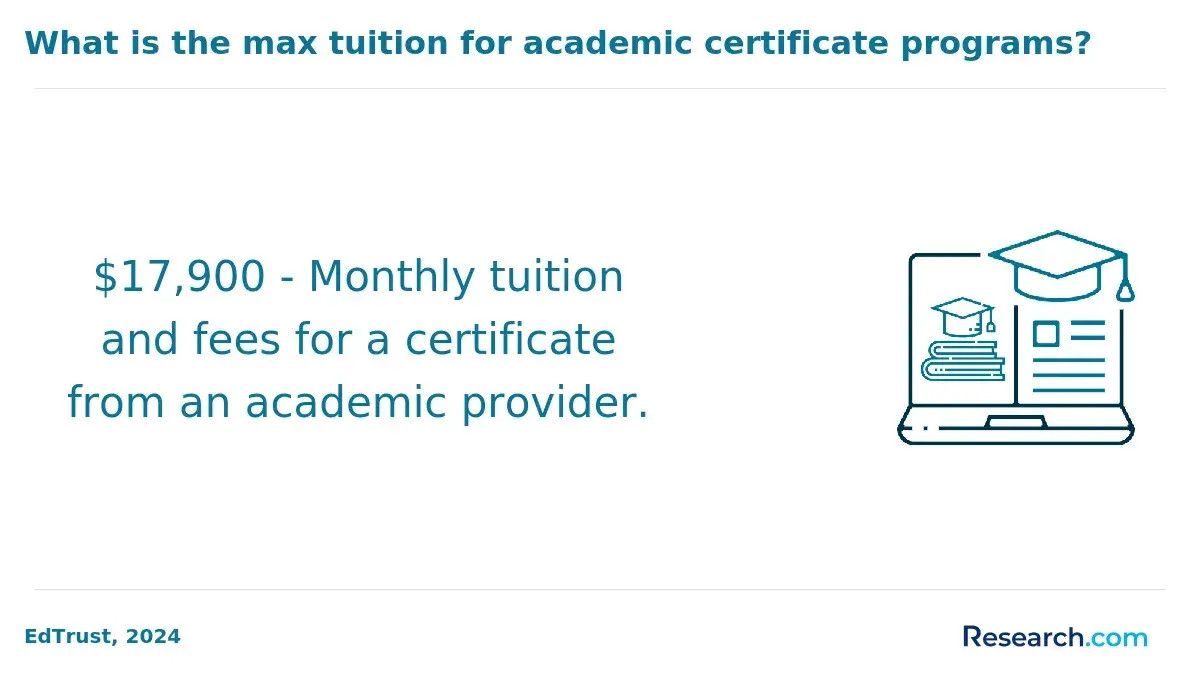
Cost should be evaluated as total cost of attendance, not just tuition. College Board's 2024 Trends in College Pricing data lists average published tuition and fees for 2024-25 at $11,610 for in-state public four-year institutions, $30,780 for out-of-state public four-year institutions, and $43,350 for private nonprofit four-year institutions. For online students, this means a public program with in-state or distance-rate pricing may offer a major cost advantage, but fees and technology requirements still matter.
When comparing costs, request a full estimate that includes the following items:
- Tuition per credit and the total credits required for the degree
- Online learning, technology, lab, graduation, portfolio, or proctoring fees
- Required hardware, such as a game-development-capable computer, graphics card, headset, drawing tablet, or VR equipment
- Required software subscriptions, engine plugins, cloud storage, asset libraries, or certification exam fees
- Transfer-credit limits, residency requirements, and whether prior learning assessment is available
- Expected cost after grants, scholarships, employer tuition assistance, military benefits, and federal student aid
Federal aid can reduce upfront cost for eligible students enrolled in accredited institutions. The maximum Federal Pell Grant for the 2024-25 award year is $7,395, but the actual amount depends on eligibility, enrollment intensity, cost of attendance, and federal rules. Students should complete the FAFSA, compare net price estimates, and avoid assuming that the lowest sticker price is automatically the lowest out-of-pocket cost.
A smart affordability strategy is to complete general education or introductory programming courses at a community college, then transfer into a bachelor's program with a strong game development sequence. The risk is that poorly matched transfer courses can add time instead of saving money, so get transfer approvals in writing before enrolling elsewhere.
Which core courses and technical skills matter most for game programming career readiness?
Game programming is a software discipline with real-time constraints. A strong program should teach students how to build, debug, optimize, and ship interactive systems, not only how to use an engine interface.
The most valuable courses are the ones that create transferable technical ability. Even if you ultimately work outside games, skills such as C++, data structures, testing, tools programming, and collaborative development remain useful in simulation, defense, education technology, AR/VR, healthcare training, and general software roles.
Look for a curriculum that develops these skill clusters in a deliberate sequence:
- Programming foundations: C++, C#, Python, object-oriented programming, memory management, debugging, and code organization
- Computer science fundamentals: data structures, algorithms, discrete math, operating systems concepts, databases, and software engineering
- Game-specific systems: gameplay loops, physics, collision detection, animation systems, AI behavior, input systems, UI, audio, and save systems
- Graphics and math: linear algebra, vectors, matrices, shaders, rendering pipelines, lighting, and performance optimization
- Production workflows: Git, branching, issue tracking, agile methods, documentation, testing, builds, and milestone planning
- Portfolio communication: technical writeups, code samples, gameplay videos, postmortems, team-role descriptions, and interview-ready explanations
Current trends make these skills even more important. AI-assisted coding, procedural generation, automated testing, and generative art tools are changing workflows, but they do not remove the need to understand architecture, performance, ethics, licensing, and debugging. Employers may value applicants who can use AI tools responsibly while still explaining and maintaining their own code.
A common mistake is building a portfolio full of game ideas but no technical evidence. For programming roles, include source-code excerpts where appropriate, performance improvements, systems diagrams, bug fixes, and a clear explanation of what you personally built.
What entry-level and advanced career paths do online game programming graduates pursue?
Graduates do not all enter the same type of studio role. Some begin in quality assurance, tools support, technical design, or junior software development before moving into gameplay or engine work. Others use game development skills in simulation, training, interactive media, educational software, or AR/VR.
The table below shows realistic paths and how they tend to progress. It is a planning tool, not a guaranteed ladder, because hiring depends heavily on portfolio quality, internships, location, networking, and the broader software market.
| Path | Common entry roles | Advanced roles | Portfolio evidence that helps |
| Gameplay programming | Junior gameplay programmer, technical designer, junior Unity or Unreal developer | Senior gameplay programmer, lead programmer, systems designer | Playable prototypes, mechanics implementation, AI behavior, UI systems, clean code samples |
| Engine and graphics | Junior engine programmer, rendering intern, tools programmer | Senior engine programmer, graphics engineer, technical director | C++ systems, rendering demos, optimization notes, profiling results, math-heavy projects |
| Quality assurance and automation | Game QA tester, QA analyst, test automation assistant | QA engineer, release manager, build engineer | Bug reports, test plans, automation scripts, reproducible defect documentation |
| Technical art | Technical artist assistant, tools artist, pipeline support | Senior technical artist, pipeline technical director | Shaders, procedural tools, rigging scripts, art-to-engine pipeline examples |
| Production | Associate producer, project coordinator, scrum assistant | Producer, senior producer, production director | Team project schedules, sprint boards, risk logs, postmortems, shipped capstone work |
| Adjacent software fields | Junior software developer, simulation developer, AR/VR developer, interactive media developer | Software engineer, systems engineer, technical lead | Transferable coding projects, databases, APIs, cloud deployment, testing, documentation |
Students should also consider whether game development is the right match for their interests and risk tolerance. Studio hiring can be competitive and project-based, while broader software roles may offer more openings across industries. If your motivation is mission-driven technology rather than entertainment, comparing related career guides such as what can you do with an environmental science degree can help you think about how education choices connect to different types of impact.
To improve entry-level readiness, build small complete games, join game jams, contribute to open-source tools, document your process, and practice explaining trade-offs. Hiring managers often want to know not only what you built, but why you made certain technical decisions and how you solved problems under constraints.
What are salary ranges and job outlook for game programmers and related development roles?
Game-specific salary data can be difficult to compare because studios use different titles, locations, bonus structures, contract arrangements, and seniority levels. The most reliable public benchmarks are broader U.S. labor categories from the Bureau of Labor Statistics, which are useful for context but should not be treated as a promise for any individual graduate.
BLS data published for 2024 reports a $133,080 median annual wage for software developers and projects 15% employment growth for software developers, quality assurance analysts, and testers from 2024 to 2034. For a prospective game programming student, this signals that strong software skills can support opportunities beyond games, especially when a program teaches transferable engineering fundamentals.
The table below uses U.S. occupational benchmarks that overlap with game programming and development. Use these figures to understand the broader market, then compare them with school outcomes, regional postings, and your target role.
| Related role category | Relevant game-industry examples | 2024 U.S. salary benchmark | How to interpret it |
| Software developers | Gameplay programmer, engine programmer, tools developer | Median annual wage of $133,080 | Best broad benchmark for coding-heavy game roles, but game studios may pay differently from big tech or enterprise software |
| Software quality assurance analysts and testers | QA analyst, test automation developer, build verification tester | Median annual wage of $102,610 | Useful for students considering QA as an entry path, especially if they develop automation skills |
| Special effects artists and animators | Technical artist, real-time effects artist, animation pipeline assistant | Median annual wage of $99,060 | Relevant for hybrid art-and-technology roles, though portfolios may matter as much as degrees |
| Computer and information technology occupations | Broader software, systems, AR/VR, simulation, and interactive media roles | Median annual wage of $105,990 | Shows the value of keeping skills transferable outside one industry |
Salary ranges are shaped by specialization. Engine, graphics, network, and tools programmers often need deeper technical preparation and may compete for higher-paying roles, while entry-level QA or associate production roles may start lower. Location also matters because major studio hubs and high-cost metros may post higher pay but come with higher living costs and stronger competition.
The safest way to evaluate return on investment is to compare program cost against multiple career scenarios. Consider a conservative entry role, a target role, and a backup software role. If a degree only makes financial sense under the most optimistic salary scenario, it may be too risky unless you have scholarships, transfer credits, employer support, or a very strong portfolio plan.
How do certificates, bootcamps, and alternative credentials compare to full game programming degrees?
A full degree is not the only way to learn game development. Certificates, bootcamps, self-paced courses, vendor training, game jams, and independent portfolios can be useful, especially for learners who already have programming experience or want a specific tool skill.
The right choice depends on your starting point and target role. A degree usually offers broader foundations and more transferability, while shorter credentials can be faster and cheaper but may not cover math, algorithms, systems programming, or general education.
The table below compares common education paths by career use case. It can help you decide whether a full online degree is necessary or whether an alternative credential may be enough.
| Path | Typical strength | Best for | Main limitation |
| Online bachelor's degree | Broad technical foundation, academic credential, portfolio sequence | Students seeking entry-level programming roles and long-term flexibility | Higher cost and longer time commitment |
| Associate degree | Lower-cost start, fundamentals, transfer potential | Students testing the field or planning to transfer | May not reach advanced game programming depth alone |
| Graduate certificate | Focused specialization | Students with a prior degree who need game-specific skills | May not help beginners lacking programming foundations |
| Bootcamp | Intensive project-based learning | Learners who already code and need structure or portfolio momentum | Quality varies and academic credit may be limited |
| Self-paced courses | Low-cost skill building | Motivated learners exploring Unity, Unreal, C#, C++, or art tools | Less external accountability and weaker credential signal |
| Game jams and open-source projects | Practical collaboration and public evidence | Students building portfolio proof alongside any formal path | Can be uneven without feedback or technical depth |
A certificate or bootcamp may make sense if you already have a computer science degree, software job, or strong coding background and only need game-engine fluency. A full degree may make more sense if you need structured fundamentals, financial aid eligibility, transfer options, internships, advising, and a credential that also works outside the game industry.
Before choosing an alternative, ask employers or alumni what evidence they value for your target role. For programming jobs, a short credential without strong projects may not be enough. For tool-specific freelance work, a focused certificate plus a polished portfolio may be more efficient than starting a four-year program from scratch.
Other Things You Should Know About Game Programming & Development
Compare the number and type of portfolio projects, required capstone work, and whether the program expects a playable game, source code, and documentation. Strong career-aligned degrees usually require 2 to 4 major projects and a final portfolio review before graduation.
When evaluating online game programming degrees for career alignment in 2027, consider the curriculum's focus on industry-relevant skills, faculty expertise, available internships, the school's industry connections, and alumni success stories. Choose programs that offer specialization in areas that match your career goals, such as AI programming or virtual reality development.
Choose game programming if you are committed to interactive media and the program still includes strong computer science foundations. Choose computer science if you want maximum flexibility across software jobs and can build game projects through electives, clubs, independent work, or a minor.
Ask about accreditation, state authorization, transfer credits, total cost, required hardware, programming languages, engine tools, capstone projects, faculty experience, portfolio reviews, career services, internship support, and examples of recent student work.
References
- Tuition & Payments Options | CG Spectrum https://www.cgspectrum.com/tuition-payment-options
- Game Developer Salaries by Country 2025-2026 https://optiveum.com/articles/game-developer-salaries-by-country/
- Is Game Programming a Good Career Path? Opportunities, Salary, Outlook - Champlain College https://www.champlain.edu/blog/stories/game-programming-career-path/
- Game Dev Financing: Explore Different Financial Aid Options https://www.m3dsacademy.com/game-dev-financing-explore-different-financial-aid-options/
- Career Path and Salary for Video Game Designers | ComputerScience.org https://www.computerscience.org/careers/video-game-designer/career-outlook-and-salary/
- Game Industry Standards https://igda.org/resourcelibrary/game-industry-standards/
- Game Programming Bachelor’s Degree at University of Advancing Technology https://www.uat.edu/game-programming-degree
- Bachelor of Science inGame Design and Development Online or On Campus https://www.albany.edu/cehc/programs/bs-game-design-and-development
- California Game Design & Development Schools: Most Expensive to Least Expensive | Animation Career Review https://www.animationcareerreview.com/articles/california-game-design-development-schools-most-expensive-least-expensive
- Comprehensive Guide Online Game Development Bachelor’s Degree https://www.computerdegreesonline.org/game-development-bachelors-degree/