2027 Online Game Programming and Development Degrees That Prepare Students for Tools and Technical Design Roles

Co-Founder and Chief Data Scientist
Choosing an online game programming degree is really a career-fit decision: do you want to build systems, tools, gameplay prototypes, and technical pipelines for interactive products? The Entertainment Software Association's latest Essential Facts report estimates that 190.6 million people in the U. S. play video games, which helps explain why studios, simulation companies, and software teams need graduates who can blend coding with design thinking. This guide explains program options, costs, admissions, skills, accreditation, career paths, and salary context so you can decide whether this degree is the right investment.
Key Things You Should Know
- Online game programming degrees are strongest for students targeting gameplay programming, tools engineering, technical design, engine scripting, QA automation, or interactive simulation roles rather than purely art-focused jobs.
- For salary context, the U.S. Bureau of Labor Statistics reports a May 2024 median annual wage of $131,450 for software developers, quality assurance analysts, and testers, but game-specific pay varies widely by role, studio size, region, portfolio strength, and experience.
- Use accreditation, portfolio support, engine-based coursework, transfer-credit policies, and real-time project work as decision filters; published tuition alone can hide major differences in total cost and career value.
What is an online game programming and development degree and who is it for?
An online game programming and development degree is a college program that teaches students how to create interactive software for games, simulations, virtual production, educational technology, training systems, and real-time applications. Unlike a general computer science degree, it usually adds game engines, physics, graphics, gameplay systems, level scripting, asset pipelines, multiplayer architecture, and production workflows.
The degree is usually best for students who want to become technical contributors rather than only game designers in the idea-generation sense. In many studios, technical design means turning design intent into working systems: scripting combat, tuning progression, building prototype levels, connecting UI behavior, and communicating with programmers, artists, and producers.
Different degree levels serve different goals, so it helps to compare them before choosing a school. The table below summarizes common options and what each one is usually designed to prepare students to do.
| Program type | Typical fit | Best use case | Possible limitation |
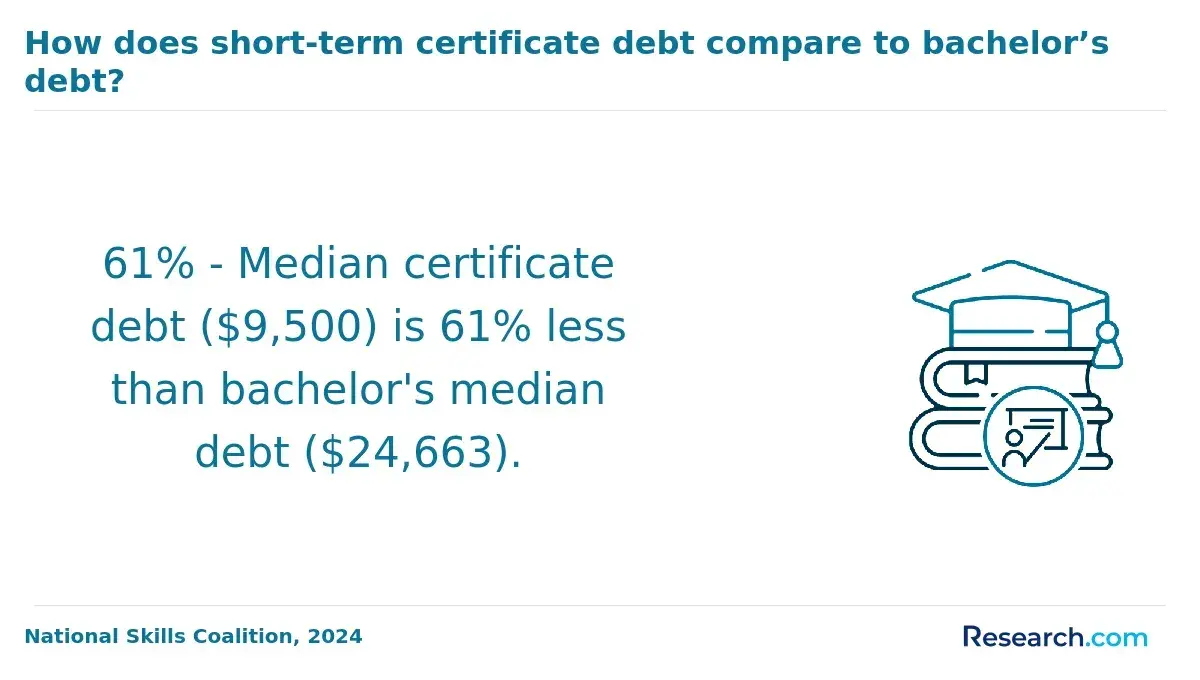
| Certificate | Career changers or current developers | Learning Unity, Unreal Engine, C#, C++, scripting, or a specific tools workflow | May not satisfy employers that prefer a degree for software roles |
| Associate degree | Students testing the field or seeking transfer credits | Building foundations in programming, math, design, and production | May be less competitive for programming-heavy studio roles without a strong portfolio |
| Bachelor's degree | Most entry-level game programming candidates | Combining software development, game systems, project work, and portfolio development | Requires more time and financial commitment |
| Master's degree | Developers seeking specialization or leadership | Advanced graphics, AI, tools architecture, simulation, research, or technical direction | Usually not necessary for many entry-level gameplay roles |
This path is a good fit if you enjoy debugging, iteration, and collaboration. It may be a weaker fit if you mainly want to write story concepts, create 2D/3D art, compose music, or manage esports operations, because those goals often align better with design, art, audio, media, or business programs.
How do online game programming degrees prepare students for tools and technical design roles?
Online game programming programs prepare students for tools and technical design roles by combining software engineering habits with hands-on engine work. A good program does not only teach students how to "make a game"; it teaches them how to build reusable systems, diagnose performance problems, document workflows, and support teams that depend on reliable production tools.
Tools roles are especially important because modern game teams depend on editors, importers, scripting systems, data tables, build pipelines, automated tests, and debugging utilities. Technical designers use many of the same systems but focus more on prototyping, tuning, and implementing playable mechanics.
The table below shows how common coursework maps to tools and technical design responsibilities. Use it to check whether a program's curriculum matches the job you actually want.
| Program component | How it prepares students | Relevant role fit |
| Engine scripting | Teaches students to implement mechanics, UI behavior, triggers, and level logic in Unity, Unreal Engine, or similar environments | Technical designer, gameplay scripter |
| Data structures and algorithms | Builds the foundation for efficient systems, tools, pathfinding, inventory logic, and runtime performance | Gameplay programmer, tools programmer |
| Editor and pipeline tools | Introduces asset import workflows, custom inspectors, validation systems, and production utilities | Tools engineer, technical artist-adjacent roles |
| Team production courses | Simulates studio-style collaboration, version control, sprint planning, bug tracking, and milestone reviews | Associate developer, technical designer, QA automation |
| Portfolio and capstone projects | Produces evidence that the student can finish interactive systems, explain design decisions, and solve technical problems | Entry-level studio and simulation roles |
AI is changing this work, but it is not eliminating the need for technical judgment. Generative tools can speed up documentation, code suggestions, test cases, and prototype assets, yet employers still need people who understand performance, architecture, debugging, data privacy, licensing, and whether an automated output actually works inside a production pipeline.
Students who want to prepare wisely should look for programs that require version control, peer reviews, playable builds, and postmortem analysis. A polished transcript matters, but a clear portfolio that shows before-and-after problem solving often carries more weight for tools and technical design interviews.
What game programming and development career paths can these degrees lead to?
Game programming and development degrees can lead to careers inside game studios, but they can also support roles in defense simulation, health training, education technology, virtual production, architecture visualization, XR, and enterprise software. This matters because the "game degree" label can be narrower than the actual skill set.
The table below compares common career paths by what the work looks like day to day. It can help you choose electives, portfolio projects, and internships that support a specific direction.
| Career path | Typical responsibilities | Portfolio evidence to build |
| Gameplay programmer | Builds player controls, combat systems, abilities, camera behavior, AI behavior, and interactive mechanics | Playable prototypes with clean code and documented systems |
| Tools programmer | Creates editor extensions, pipeline automation, asset validators, build tools, and team-facing utilities | Custom tools that reduce manual work or prevent production errors |
| Technical designer | Implements mechanics, scripts levels, tunes systems, bridges design and engineering, and tests player experience | Levels or systems with clear design goals, scripts, tuning notes, and iteration history |
| Engine programmer | Works on rendering, memory, physics, optimization, platform support, or low-level systems | C++ projects, performance demos, graphics samples, or engine modifications |
| QA automation or test engineer | Builds automated tests, reproduces defects, validates builds, and improves release reliability | Test frameworks, bug reports, automation scripts, and build validation examples |
| Simulation developer | Creates real-time training, visualization, or interactive systems outside entertainment games | Simulation projects with accuracy requirements, user goals, and technical documentation |
Students should avoid assuming that one degree title maps to one job title. Employers often hire based on demonstrated skill clusters: C++ or C#, engine fluency, debugging, collaboration, math for interactive systems, and the ability to explain technical choices to nontechnical teammates.
A practical way to plan is to build one "hero project" and two smaller supporting projects. For example, a technical designer might show a combat encounter with design notes, a dialogue or quest scripting tool, and a short tuning document that explains how player feedback changed the final version.
How do online game programming programs compare to campus-based options in flexibility and outcomes?
Online programs can be a strong fit for game programming because much of the work already happens on computers: coding, version control, game engines, testing, documentation, and collaborative production tools. The key question is not whether the program is online, but whether the online format gives students enough feedback, team production experience, and portfolio structure.
Campus-based programs may offer easier access to labs, in-person game jams, motion-capture spaces, faculty office hours, and local studio networks. Online programs may be better for working adults, military students, parents, career changers, and students who need to study without relocating.
The table below compares online and campus-based formats through the factors that most affect learning and career readiness.
| Factor | Online game programming degree | Campus-based game programming degree |
| Schedule flexibility | Often stronger, especially with asynchronous lectures and part-time pacing | Usually more fixed around class times, studio labs, and campus schedules |
| Team projects | Can work well if the school uses version control, project management tools, live critiques, and build reviews | Often easier to coordinate informally through labs, clubs, and in-person production meetings |
| Networking | Depends heavily on virtual career events, alumni access, Discord or Slack communities, and internship support | May benefit from local employer relationships, campus showcases, and nearby studios |
| Technical equipment | Student may need a capable computer, headset, stable broadband, and software access | Campus may provide labs, specialized hardware, and on-site technical support |
| Portfolio development | Can be excellent if feedback cycles are structured and frequent | Can be excellent if studios, clubs, and capstones are active and well mentored |
Online learning is not automatically easier. Students need self-direction, time management, and comfort asking for help in digital channels. A program with weak online feedback can leave students isolated, while a well-designed online program can mirror real distributed studio work.
When comparing online formats across applied fields, notice how programs handle hands-on learning. For example, exercise science degrees must solve lab and fieldwork challenges differently than software-focused game programs, where the core production environment is already digital.
What core courses and skills are taught in game programming and development degree curricula?
Strong game programming curricula start with computer science fundamentals and then apply them to real-time interactive systems. Students should expect both theory and repeated build-and-test cycles, because games expose weaknesses in performance, input handling, usability, and collaboration very quickly.
Most programs combine programming, math, design, production, and portfolio courses. The exact names vary by school, but the core skill categories are fairly consistent.
- Programming foundations: C++, C#, Python, scripting, object-oriented programming, debugging, software design, and code documentation.
- Game engines: Unity, Unreal Engine, engine architecture basics, editor workflows, prefabs or blueprints, gameplay systems, and build deployment.
- Math and physics: linear algebra, vectors, matrices, trigonometry, collision, rigid-body physics, camera movement, and simulation logic.
- Computer graphics: rendering pipelines, shaders, lighting, materials, optimization, and GPU-aware performance thinking.
- Game design implementation: mechanics, systems tuning, level scripting, UI behavior, progression systems, and player feedback loops.
- Production practice: agile workflows, Git or similar version control, bug tracking, code review, playtesting, documentation, and milestone planning.
- Portfolio development: capstone projects, playable demos, technical breakdowns, team credits, and postmortems that explain decisions and trade-offs.
Students interested in AI, analytics, recommendation systems, player behavior modeling, or live-service data may also compare this path with an online data science masters. Data science is usually less focused on engines and gameplay implementation, but it can be highly relevant for game analytics, personalization, monetization analysis, and player retention research.
A common mistake is choosing a program because it advertises popular tools without showing how deeply students use them. A stronger program should show student work, course sequences, capstone expectations, faculty expertise, and whether students graduate with finished technical projects rather than only course exercises.

What admission requirements and prior experience do schools expect for online game programming degrees?
Admission requirements depend on degree level and school selectivity. Online associate and bachelor's programs often focus on high school completion, transcripts, placement requirements, and basic readiness for college-level math and writing. More selective programs may ask for a portfolio, programming sample, essay, interview, or prerequisite coursework.
Prior experience is helpful but not always required. Students who have never coded can still succeed if the program begins with fundamentals and they are ready to practice consistently. Students with existing credits, military training, AP exams, industry certificates, or previous college coursework should ask how transfer credits are evaluated before enrolling.
Before applying, gather the materials schools commonly request and identify any gaps early. This list also helps you ask admissions advisors more precise questions.
- Official transcripts from high school, prior colleges, or both, depending on degree level.
- Proof of graduation or equivalent credential for undergraduate admission.
- Math placement, prerequisite programming courses, or readiness assessments when required.
- Portfolio, code sample, GitHub repository, playable prototype, or design sample for selective or advanced programs.
- Personal statement explaining career goals, technical interests, and why the online format fits.
- Transfer-credit evaluation, especially for students with prior college coursework or military learning.
- English-language proficiency documentation for applicants whose prior education was not in English, when required by the institution.
Students can prepare before the first term by learning basic programming concepts, installing a major game engine, practicing Git, and completing a small prototype such as a platformer, puzzle mechanic, or interactive menu system. The goal is not to become advanced before enrolling; it is to reduce friction so the first programming courses feel manageable.
Red flags include admissions teams that cannot explain technical requirements, programs that do not publish curriculum details, and schools that pressure students to enroll before providing a transfer-credit or cost estimate. A serious program should welcome questions about workload, software, faculty feedback, and career support.
How long do online game programming and development degrees take and what do they cost?
Online game programming and development degrees vary widely in length and cost. A full-time bachelor's degree commonly takes about four years for first-time students, while transfer students may finish sooner depending on accepted credits. Part-time students often take longer, but the slower pace can make sense for working adults who need income stability while studying.
For a national cost benchmark, the College Board's 2024 Trends in College Pricing report lists average published tuition and fees for 2024-25 as follows. These figures are not game-program-specific, but they help students understand how institution type can affect the starting price before aid, scholarships, fees, and living costs.
- Public four-year in-state published tuition and fees averaged $11,610 for the year.
- Public four-year out-of-state published tuition and fees averaged $30,780 for the year.
- Private nonprofit four-year published tuition and fees averaged $43,350 for the year.
Program length depends on the credential, enrollment pace, and transfer policy. The table below summarizes common timelines and the trade-off each option creates.
| Path | Common timeline | Best for | Main trade-off |
| Certificate | Several months to about one year | Focused upskilling in engines, tools, or programming languages | Less comprehensive than a degree |
| Associate degree | About two years full time | Students seeking a lower-cost start or transfer pathway | May require further study for competitive programming roles |
| Bachelor's degree | About four years full time | Students seeking broad preparation and stronger degree signaling | Higher total time and cost |
| Master's degree | About one to three years | Students specializing after a bachelor's or moving toward advanced technical roles | Best value depends heavily on prior experience and target role |
To estimate total cost, include tuition, mandatory fees, technology fees, software or engine costs, hardware, textbooks, portfolio hosting, internet, and the income impact of reducing work hours. Online students sometimes save on relocation and commuting, but they may need to buy or upgrade a computer capable of running real-time engines smoothly.
The smartest cost strategy is to compare net price, not sticker price. Ask each school for a written estimate after transfer credits and financial aid, then compare graduation requirements, portfolio support, internship access, and course availability. A lower tuition rate can become less valuable if limited course scheduling delays graduation.
How can students verify accreditation and program quality for online game programming degrees?
Accreditation is one of the most important quality checks for an online game programming degree. In the U.S., students should first verify institutional accreditation from an accreditor recognized by the U.S. Department of Education or the Council for Higher Education Accreditation. This affects federal financial aid eligibility, credit transfer, graduate school options, and employer confidence.
Programmatic accreditation is less universal in game development than in fields such as nursing or engineering, but computing-related accreditation can still be a positive signal when available. ABET accreditation, for example, may matter more for programs positioned as computer science, software engineering, or computing degrees than for design-heavy game programs.
Quality is broader than accreditation, so students should evaluate evidence of outcomes and learning design. The table below lists common quality signals and what they tell you.
| Quality signal | Why it matters | What to ask |
| Institutional accreditation | Confirms the school meets recognized academic and administrative standards | Which recognized accreditor covers the institution? |
| Published curriculum | Shows whether the degree teaches programming depth, engines, and production workflow | How many courses require original playable projects? |
| Faculty experience | Indicates whether instructors understand current tools, pipelines, and studio expectations | Do faculty have software, game, simulation, or engine development experience? |
| Portfolio support | Helps students graduate with evidence employers can evaluate | Are students required to create capstones, technical breakdowns, and public demos? |
| Career services | Can support internships, resumes, interview practice, and employer connections | What career support is specific to game, software, tools, or simulation roles? |
| Student outcomes transparency | Helps applicants understand completion, debt, and employment context | Does the school publish graduation, retention, loan, or employment data? |
Common red flags include unrecognized accreditation claims, vague "industry-ready" promises, missing faculty information, no examples of student work, limited technical course descriptions, and aggressive enrollment tactics. Be especially cautious if a school suggests that a degree alone will secure a studio job, because hiring in games is portfolio-driven and competitive.
A practical verification process is simple: confirm the institution's accreditation in official databases, review the full curriculum, inspect student capstones if available, ask how online students receive feedback, and request a total cost estimate before signing an enrollment agreement.
What salaries, job outlook, and industry demand can game programming graduates expect?
Game programming graduates enter a competitive but technically broad labor market. The strongest salary benchmarks usually come from related software occupations rather than from game-specific titles, because many game roles are grouped under larger software, digital media, or testing categories in federal data.
The U.S. Bureau of Labor Statistics reports that software developers, quality assurance analysts, and testers had a May 2024 median annual wage of $131,450, with employment projected to grow 15% from 2024 to 2034. This is useful as a broad software benchmark, but students should not treat it as a guaranteed game-industry salary; compensation can be lower or higher depending on studio type, location, specialization, and experience.
The table below shows how degree skills can translate into labor-market options. It is most useful for comparing career flexibility, not for predicting an individual salary.
| Role cluster | Where graduates may work | Why demand exists |
| Game and gameplay programming | Entertainment game studios, indie teams, mobile studios, platform teams | Interactive products need reliable mechanics, performance, and player-facing systems |
| Tools and pipeline engineering | Studios, virtual production teams, animation pipelines, enterprise software teams | Teams need automation that speeds production and reduces errors |
| QA automation and software testing | Game publishers, software companies, live-service teams, platform holders | Frequent updates increase the need for repeatable testing and build validation |
| Simulation and XR development | Defense contractors, health training, education technology, industrial training | Organizations use real-time interactive systems for training and visualization |
| Technical design | Game studios, serious games, interactive media teams | Design teams need people who can implement, test, and tune mechanics in engine |
Industry demand is also shaped by AI, cross-platform development, live-service operations, user-generated content, and real-time 3D workflows. Students who combine engine fluency with software fundamentals are usually better positioned than students who only learn one tool interface.
Advanced AI-focused roles may require deeper study in machine learning, reinforcement learning, simulation, or research methods. Students considering that direction can compare game development with a PhD in AI online, especially if their long-term goal is research leadership rather than studio implementation.
Are certifications or specialized training needed beyond a degree for game tools and technical design roles?
Certifications are not usually mandatory for game tools and technical design roles, but specialized training can help when it fills a clear skill gap. Employers tend to care more about demonstrated ability than badges alone, so certificates should support a portfolio rather than replace one.
Good add-on training depends on the role you want. The most valuable options usually help students prove competence in a specific engine, language, workflow, or adjacent technical domain.
- Engine training can help students document Unity, Unreal Engine, editor scripting, blueprint systems, shader workflows, or build deployment skills.
- Cloud and DevOps training can support build pipelines, multiplayer services, automated testing, deployment, and live operations.
- Project management training can help technical designers understand sprint planning, production communication, scope control, and cross-functional collaboration.
- Cybersecurity basics can be useful for multiplayer systems, account security, anti-cheat awareness, and safe development practices.
- Data and analytics training can support telemetry, balancing, player behavior analysis, A/B testing, and live-service decision-making.
- Specialized domain training can help students move into simulation, fintech games, educational games, health games, or enterprise XR.
Students interested in interactive finance products, virtual economies, smart contracts, or Web3-adjacent systems may also consider whether a blockchain masters degree is more aligned with their long-term goals than a traditional game development credential. That path is more specialized and should be chosen only when the target role clearly requires it.
The biggest mistake is collecting credentials without building artifacts. A certificate in Unreal Engine is more convincing when paired with a playable demo, a custom tool, clear documentation, and a short explanation of the technical challenge solved.
A practical next step is to choose one primary role target, identify three job postings for that role, list recurring tools and skills, and then compare those requirements with your degree plan. If a skill appears repeatedly and is not covered deeply in the curriculum, that is where a certificate, workshop, or self-directed project may make sense.
Other Things You Should Know About Game Programming & Development
It can be worth it if you want structured training in programming, engines, production workflows, and portfolio development. The value depends on accreditation, total cost, project quality, transfer credits, and whether the curriculum matches your target role.
Yes, an online degree can support entry into game development, tools, QA automation, simulation, or software roles, but hiring is rarely based on the degree alone. Employers usually want to see finished projects, code samples, collaboration experience, and strong technical communication.
Most programs require college algebra, pre-calculus, or calculus, plus discrete math for logic and algorithms. Courses in linear algebra and physics are also common for 3D graphics, animation, and simulation work. Many schools require a minimum 2.5–3.0 GPA for admission or progression.
References
- Criteria for Accrediting Computing Programs, 2025 - 2026 - ABET https://www.abet.org/accreditation/accreditation-criteria/criteria-for-accrediting-computing-programs-2025-2026/
- Is Game Programming a Good Career Path? Opportunities, Salary, Outlook - Champlain College https://www.champlain.edu/blog/stories/game-programming-career-path/
- Online Game Development Courses | Learn from Top Game Devs https://www.cgspectrum.com/courses/game-development
- Career Path and Salary for Video Game Designers | ComputerScience.org https://www.computerscience.org/careers/video-game-designer/career-outlook-and-salary/
- Comprehensive Guide Online Game Development Bachelor’s Degree https://www.computerdegreesonline.org/game-development-bachelors-degree/
- We help game developers learn and grow https://gamedev.tv/
- Game Programming Bachelor’s Degree at University of Advancing Technology https://www.uat.edu/game-programming-degree
- This website is not available in your country https://www.eurotechjobs.com/article/766/educational-requirements-for-tech-jobs-degrees-certifications-and-skills
- Game Development Degrees: What You Need to Know https://www.ivywise.com/ivywise-knowledgebase/gaming-majors/
- Bachelor of Science inGame Design and Development Online or On Campus https://www.albany.edu/cehc/programs/bs-game-design-and-development