2027 Best Game Programming Degrees by Portfolio Strength, Cost, and Career Mobility

Co-Founder and Chief Data Scientist
Choosing a game programming degree is really a portfolio, cost, and career mobility decision. The U. S. game market remains large: the Entertainment Software Association reported that more than 190 million Americans play video games, keeping demand for interactive software skills relevant beyond entertainment. This guide is for students comparing bachelor's, associate, master's, online, and campus programs. You will learn which degree paths build stronger technical portfolios, how costs and aid work, what employers look for, and how to choose a program that supports both game studio roles and broader software careers.
Key Things You Should Know
- The strongest game programming degrees usually combine C++, C#, game engine work, team production courses, version control, and a finished playable portfolio rather than relying only on theory or general design classes.
- Cost varies sharply by institution type: College Board's 2024-25 published tuition and fee averages were about $11,610 for in-state public four-year colleges, $30,780 for out-of-state public colleges, and $43,350 for private nonprofit four-year colleges.
- The U.S. Bureau of Labor Statistics lists software developers at a $132,270 median annual wage in May 2023 data published in 2024, making career mobility outside games an important ROI factor.
What is game programming, and how do degree programs differ from game design?
Game programming is the technical discipline of building the systems that make games run: gameplay mechanics, physics, artificial intelligence behavior, rendering, tools, networking, optimization, user interfaces, and engine integration. A game programmer writes and tests code, debugs performance issues, collaborates with designers and artists, and turns creative requirements into working interactive software.
Game design is related but not the same. Designers define rules, levels, player experience, balance, progression, and narrative systems. Some degree programs blend both areas, but students who want programming jobs should verify that the curriculum is coding-heavy, math-aware, and portfolio-driven.
The table below shows how common game-related degree labels differ. This matters because two programs with similar names can prepare students for very different outcomes.
| Program label | Main emphasis | Best fit | Portfolio risk to check |
| Game programming | Code, engines, gameplay systems, debugging, optimization | Students targeting gameplay, engine, tools, or technical roles | May be too narrow if it lacks general computer science depth |
| Game development | Mixed production, programming, design, art, and teamwork | Students who want broad game project experience | Programming depth can vary widely by school |
| Computer science with game concentration | Algorithms, software engineering, systems, electives in games | Students who want game options plus stronger software career mobility | May require self-directed game portfolio work |
| Game design | Mechanics, levels, UX, narrative, systems design | Students aiming for design roles rather than engineering roles | May not include enough C++, data structures, or engine programming |
| Interactive media | Creative technology, web, immersive media, user experience | Students interested in broader interactive products | May prioritize creative output over code quality |
A strong decision starts with the job target. If the goal is gameplay programmer, engine programmer, tools programmer, simulation developer, or technical software engineer, prioritize programs where programming courses are required, not optional electives.
Which types of game programming degrees offer the strongest portfolio outcomes?
The best game programming degree for portfolio strength is usually the one that produces the clearest evidence of applied technical ability. Employers rarely hire entry-level game programmers from transcripts alone; they want to see shipped projects, readable code, collaboration, debugging skill, and comfort with modern engines.
The comparison below ranks degree types by typical portfolio strength and career mobility rather than by prestige alone. Use it to decide which academic path fits your risk tolerance and career goals.
| Degree type | Typical length | Portfolio strength | Career mobility | When it makes sense |
| Associate degree in game programming | About 2 years | Moderate if it includes engine projects | Moderate, especially with transfer options | Best for lower-cost exploration, transfer planning, or entry-level technical production support |
| Bachelor's in game programming or game development | About 4 years | High when it includes multi-semester team projects | Moderate to high depending on computer science depth | Best for students who want structured game projects and internships |
| Bachelor's in computer science with game electives | About 4 years | High if the student builds games outside required courses | High because skills transfer to software, simulation, tools, and AI roles | Best for students who want the safest non-game fallback path |
| Master's in game programming, computer science, or interactive technology | 1 to 3 years | High for specialized technical work | High for advanced software or research-adjacent roles | Best for career changers with coding background or graduates seeking specialization |
| Certificate or bootcamp-style game programming program | Several months to 1 year | Variable and highly dependent on projects | Limited unless paired with prior degree or experience | Best for skill sharpening, not as a full substitute for a degree when employers require one |
For most first-time college students, the strongest balance is either a bachelor's in computer science with a game development track or a bachelor's in game programming that still includes algorithms, data structures, software engineering, databases, operating systems, and networking. The first option gives more mobility; the second may give more built-in game production experience.
Students should also look for specific portfolio-building structures before enrolling. Stronger programs tend to include the following features because they create evidence an employer can review:
- Multiple playable projects, including at least one team-built game with a defined role for each student.
- Required use of Git or another version control workflow, because studios expect collaborative source control habits.
- Courses in C++, C#, scripting, game engines, data structures, algorithms, and debugging rather than only visual tools.
- Capstone reviews by faculty, peers, alumni, or industry guests who can critique code quality and design feasibility.
- Opportunities to publish or demonstrate work through showcases, game jams, itch.io-style releases, GitHub repositories, or senior exhibitions.
A common mistake is choosing the program with the flashiest game lab but weak programming requirements. Hardware and studio space help, but portfolio strength comes from repeated technical practice, critique, iteration, and completed work.
How do program costs compare, and what financial aid options exist for game programming?
Game programming degree costs depend on tuition, fees, software and hardware needs, housing, transfer credit, course load, and time to completion. Published tuition is only the starting point; students should calculate the full cost of attendance and compare it with likely career flexibility.
College Board's 2024-25 national averages provide a useful baseline for comparing institution types. These are published tuition and fee averages, not total cost of attendance, so housing, transportation, books, equipment, and personal expenses may add substantially to the bill.
| Institution type | 2024-25 average published tuition and fees | What it means for game programming students |
| Public four-year, in-state | $11,610 | Often the best starting point for ROI if the program has strong CS courses, transfer pathways, and internship access |
| Public four-year, out-of-state | $30,780 | Can be worthwhile for a standout program, but students should compare scholarship offers and residency rules carefully |
| Private nonprofit four-year | $43,350 | May offer strong production culture or alumni networks, but net price after grants matters more than sticker price |
| Community college or associate pathway | Varies by state and district | Can lower total cost if credits transfer cleanly into a bachelor's program |
Financial aid can change the affordability picture. For the 2024-25 award year, the maximum federal Pell Grant is $7,395 for eligible undergraduates, which can meaningfully reduce net cost but usually will not cover the full cost of a four-year program.
Students comparing affordability should take a step-by-step approach rather than choosing based on tuition alone. The same cost discipline used when researching the cheapest online master's in urban planning also applies here: verify net price, completion time, and career relevance before assuming a program is affordable.
- Ask each school for the estimated total cost of attendance, not just tuition.
- Compare net price after grants and scholarships, not the advertised sticker price.
- Check whether the program requires a high-end laptop, console development equipment, cloud services, or paid software subscriptions.
- Confirm transfer credit policies before starting at a community college or changing schools.
- Look for paid internships, co-op options, or campus jobs in software labs because practical experience can improve ROI.
- Avoid borrowing based on best-case salary assumptions; game jobs can be competitive and location-dependent.
The biggest cost red flag is a program that is expensive, narrowly focused on games, and unable to show student projects, internship outcomes, or alumni career paths. A lower-cost program with stronger computer science fundamentals may be the better long-term investment.
How should students evaluate online versus campus-based game programming programs?
Online game programming degrees can work well for disciplined students who want flexibility, lower relocation costs, or access to programs outside their region. Campus programs may be better for students who benefit from in-person labs, studio culture, local networking, and structured peer collaboration.
The best format depends on how the program handles collaboration and feedback. Game programming is not a passive subject; students need code reviews, technical critique, debugging help, and team production experience.
| Format | Strengths | Trade-offs | Best fit |
| Fully online | Flexible scheduling, no relocation, potentially broader school choice | Requires self-management and strong remote collaboration habits | Working adults, transfer students, military students, and self-directed learners |
| Campus-based | Face-to-face teamwork, labs, showcases, easier informal networking | Higher housing and commuting costs may apply | Students who want immersive studio culture and local internship access |
| Hybrid | Combines flexibility with some in-person production or lab time | May still require travel or fixed meeting times | Students near campus who want both structure and flexibility |
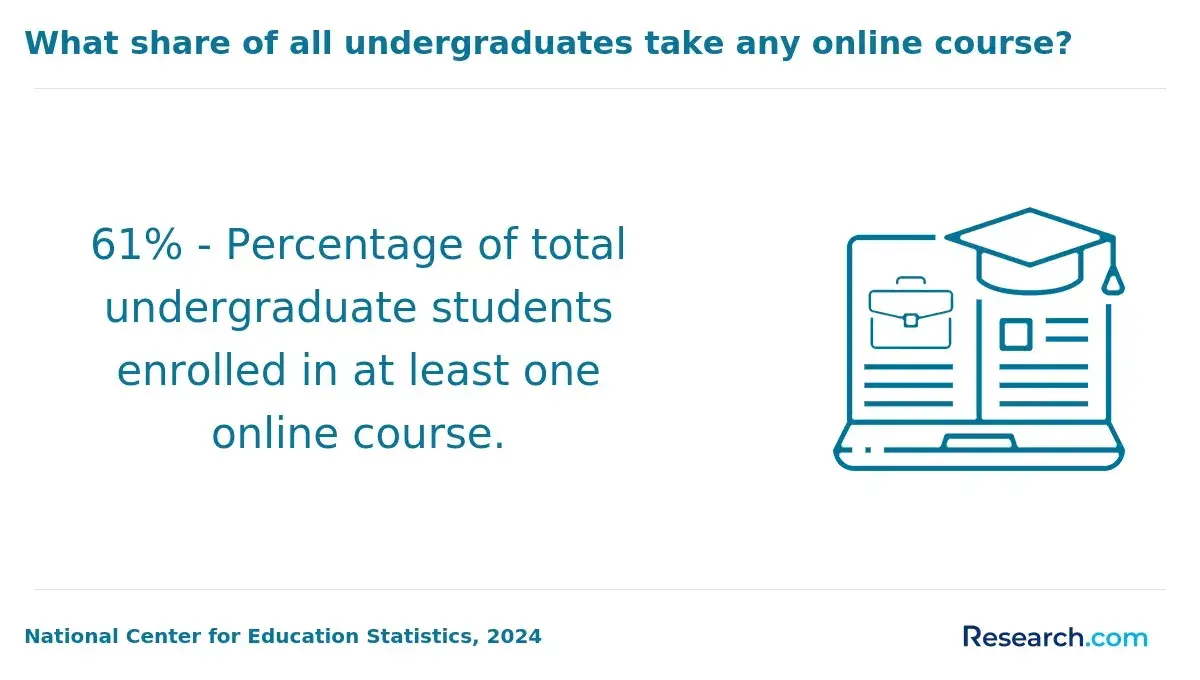
Online study is common across career-oriented degrees, but quality depends on delivery design. Just as a student comparing an online degree in exercise science should look for hands-on learning, game programming students should look for live code support, project milestones, and team-based production tools.
Before choosing an online or campus program, ask how the school handles the work that matters most to game programming outcomes:
- Will students complete team projects with defined programming responsibilities?
- Are lectures live, recorded, or both, and how quickly do instructors respond to code questions?
- Does the program require Git, issue tracking, build pipelines, and remote collaboration tools?
- Are portfolio reviews included, and who evaluates the work?
- Can online students access career fairs, internship support, game jams, alumni panels, and showcases?
- Are courses asynchronous enough for working students, or do required meetings create scheduling conflicts?
A common mistake is assuming "online" means easier. In game programming, online students often need more initiative because debugging, teamwork, and portfolio polish require consistent communication without the built-in rhythm of a physical lab.
What admission requirements and prerequisites do game programming degrees typically have?
Admissions requirements vary by degree level, but game programming programs usually look for academic readiness, basic technical interest, and evidence that the applicant can handle math, logic, and project-based work. Selective programs may also request a portfolio, coding sample, or interview.
For bachelor's programs, applicants commonly need a high school diploma or equivalent, transcripts, application essays, and sometimes standardized test scores depending on the school's policy. Strong preparation includes algebra, precalculus, physics, computer science, and any class that builds problem-solving discipline.
The table below summarizes typical requirements by program level. Requirements vary by institution, so students should verify details directly with admissions departments.
| Program level | Typical admission requirements | Helpful preparation |
| Associate degree | High school diploma or equivalent, placement testing at some colleges | Intro programming, algebra, basic digital media familiarity |
| Bachelor's degree | Transcripts, application, possible essay, possible test scores, sometimes portfolio | Math through precalculus, AP or dual-enrollment CS, personal game or app projects |
| Master's degree | Bachelor's degree, transcripts, statement of purpose, recommendations, programming background, sometimes GRE or portfolio | Data structures, algorithms, object-oriented programming, linear algebra, completed code projects |
| Certificate | Varies widely; some are open enrollment while others require prior programming | Basic coding fluency and a clear skill goal |
Students without a coding background can still prepare effectively, but they should not ignore prerequisites. The most useful preparation steps are practical and measurable:
- Complete an introductory Python, C#, or Java course before applying if the program assumes prior coding.
- Build a tiny playable game, even a simple 2D project, to test whether you enjoy debugging and iteration.
- Review algebra, trigonometry, and basic vectors because game movement, physics, and rendering rely on math.
- Save code samples in a clean repository so you can show progress if a portfolio is requested.
- Ask admissions whether remedial math or programming courses add time and cost to the degree plan.
The main red flag is enrolling in an advanced or accelerated program that assumes programming experience you do not yet have. That can lead to course repeats, weaker projects, and higher total cost.
What core courses and technologies are covered in game programming curricula?
Game programming curricula should teach students how to build reliable interactive systems, not just how to use a game engine interface. A strong program combines software engineering fundamentals with game-specific production work.
Most strong curricula include a blend of general computing, math, engine development, and collaborative production. The table below shows the course areas to look for and why each one matters.
| Curriculum area | Typical courses or technologies | Why it matters |
| Programming foundations | C++, C#, Python, object-oriented programming, scripting | Builds the coding fluency needed for gameplay and tools roles |
| Computer science core | Data structures, algorithms, databases, operating systems, software engineering | Improves long-term mobility into broader software jobs |
| Math and simulation | Linear algebra, discrete math, calculus, physics, probability | Supports movement, collision, camera systems, AI behavior, and optimization |
| Game engines | Unity, Unreal Engine, custom engine work, editor tools | Connects programming theory to production-ready workflows |
| Graphics and rendering | Shaders, rendering pipelines, GPU concepts, lighting | Prepares students for technical art, engine, and performance-focused work |
| Networking and platforms | Multiplayer architecture, cloud basics, platform constraints | Supports online games, live services, and distributed interactive systems |
| Production and teamwork | Agile methods, Git, QA, playtesting, capstone development | Shows employers that students can work in team pipelines |
AI is also becoming more visible in game development, especially in procedural content, NPC behavior, QA automation, tooling, and asset pipeline support. Students interested in deeper technical AI work may want to compare game programming curricula with an AI degree online, especially if they want broader machine learning career options beyond games.
Students should be cautious with programs that focus mainly on drag-and-drop development or short tutorials. Those tools can help beginners learn quickly, but programming careers usually require readable code, debugging skill, performance awareness, and the ability to understand systems below the surface.
How can students build a competitive game programming portfolio during their degree?
A competitive game programming portfolio should prove that you can solve technical problems in a playable context. The best portfolios are focused, documented, and honest about what the student personally built.
Students should start building portfolio evidence early instead of waiting for the senior capstone. A practical portfolio plan usually includes the following steps:
- Create one small polished game before attempting a large project, because finished work is more persuasive than ambitious unfinished work.
- Maintain public or shareable code repositories with clear readme files, build instructions, and notes about your role.
- Include short gameplay videos or demos so reviewers can understand the project quickly.
- Document technical decisions, such as AI behavior, physics implementation, optimization fixes, networking choices, or custom tools.
- Join game jams or team projects to show collaboration, scope control, and iteration under deadlines.
- Ask faculty, peers, and industry contacts for code review rather than only visual feedback.
- Replace weak early projects as your skills improve so the portfolio stays selective.
Presentation matters, but it should support the code rather than hide it. Students who enjoy the visual communication side of portfolio building may find useful parallels in graphic design graduate programs, where the quality of the final portfolio often matters as much as the credential.
Common portfolio mistakes include claiming credit for team work without explaining your contribution, showing only screenshots, posting broken builds, overusing templates, and including too many small tutorial projects. A better approach is to show fewer projects with clear technical depth and evidence of iteration.
Portfolio test: A reviewer should be able to answer three questions in under two minutes: What did you build, what technical problem did you solve, and what part of the project was yours?
What game programming careers, roles, and industries can graduates pursue?
Game programming graduates can pursue roles inside game studios and in adjacent industries that use real-time software. Career mobility matters because entry-level game jobs are competitive, and programming skills can transfer to simulation, education technology, defense, healthcare visualization, AR/VR, tools development, and general software engineering.
The table below outlines common roles and how closely each one depends on game-specific training.
| Role | Typical responsibilities | Game-specific dependence | Mobility outside games |
| Gameplay programmer | Build player controls, mechanics, combat, cameras, interactions, and prototypes | High | Moderate, especially to interactive software roles |
| Engine programmer | Work on rendering, memory, performance, tools, platforms, and low-level systems | High | High for systems and performance-oriented software roles |
| Tools programmer | Create internal tools for designers, artists, build pipelines, and automation | Moderate | High because workflow tooling exists in many software teams |
| AI programmer | Build NPC behavior, pathfinding, decision systems, and procedural logic | Moderate to high | High if paired with broader AI and software skills |
| Network programmer | Develop multiplayer systems, synchronization, latency handling, and services | High for games | High for distributed systems and backend roles |
| QA automation engineer | Build test automation, reproduce bugs, verify builds, and support quality pipelines | Moderate | High for software testing and automation roles |
| AR/VR or simulation developer | Create real-time interactive training, visualization, or immersive applications | Moderate | High across enterprise, education, healthcare, and defense contractors |
A game programming degree is most worth it for students who enjoy both creative products and technical problem solving. It may be a weaker fit for students who mainly want to write stories, design levels, make character art, or manage esports communities; those goals often align better with game design, animation, art, media, or business programs.
Career progression is rarely one straight path, but many graduates move through a sequence like this:
- Build small games, tools, mods, or prototypes while in school.
- Complete internships, game jams, research assistantships, or freelance technical projects.
- Apply for junior programmer, associate software engineer, QA automation, tools, or technical designer roles.
- Specialize after gaining experience in gameplay, engine, networking, AI, rendering, or technical production.
- Move into senior programmer, lead programmer, technical director, software architect, or product-focused roles over time.
Students should keep their job search broad at first. A first role in tools, QA automation, simulation, or general software can still build experience that supports a later move into games.
What salary ranges and job outlook can game programmers expect in the U.S.?
Salary data for game programmers is difficult to isolate because federal datasets usually group them with broader software occupations. The most reliable approach is to use software developer and computer occupation data as a benchmark, then adjust expectations based on industry, location, specialization, portfolio strength, and experience.
The U.S. Bureau of Labor Statistics reported a median annual wage of $132,270 for software developers in May 2023 data published in 2024. This does not mean every game programmer earns that amount; it is a national median for a broader occupation that includes many industries with different pay structures.
The table below explains how to interpret salary context without overreading a single number.
| Career category | Relevant salary context | How students should use the number |
| Software developers | BLS median annual wage: $132,270 | Useful benchmark for broader software mobility and technical degree ROI |
| Computer programmers | BLS median annual wage: $99,700 | Useful comparison for code-focused roles, though the occupation category has changed as development work has shifted |
| Game studio entry-level roles | Varies widely by studio size, location, platform, and specialization | Students should compare actual job postings and internship offers in target cities |
| Adjacent real-time software roles | Often mapped to software developer, simulation, tools, or systems roles | Important for students who want a backup plan outside entertainment games |
Job outlook should also be viewed broadly. BLS projects much faster-than-average growth for software developers over the 2022-32 period in its current occupational outlook, reflecting demand for software across industries. For game programming students, the key takeaway is not that game jobs are easy to get; it is that strong programming fundamentals can support mobility into many software markets.
Salary outcomes vary because employers weigh more than the degree name. Students can improve their position by building demonstrable skills in areas that studios and software teams value:
- C++ and C# fluency with readable, maintainable code.
- Engine experience in Unity, Unreal Engine, or custom engine environments.
- Debugging, profiling, memory management, and performance optimization.
- Team collaboration with Git, issue tracking, code reviews, and build processes.
- Specialized depth in networking, AI, rendering, tools, or backend services.
The safest salary mindset is conservative: evaluate the degree by net price, portfolio quality, internship access, and transferability of skills rather than assuming a specific game-industry pay outcome.
How do accreditation, certifications, and program reputation impact game programming careers?
Accreditation affects credit transfer, federal financial aid eligibility, graduate school options, and employer trust. In the U.S., students should prioritize institutions accredited by recognized institutional accreditors. Programmatic accreditation is less common for game programming than for fields like nursing or engineering, but computer science or computing programs may have ABET accreditation at some schools.
Certifications are not usually required for game programming jobs, but they can support a portfolio when they validate relevant tools or cloud skills. They work best as supplements, not substitutes for finished projects and strong code.
| Credential or reputation signal | Why it matters | Limitation |
| Institutional accreditation | Supports financial aid access, transfer credit, and general legitimacy | Does not prove the game programming curriculum is strong |
| ABET accreditation for computing programs | Can signal structured computing outcomes and quality review | Not all strong game-related programs have it |
| Engine or platform certifications | May show familiarity with tools such as game engines or cloud platforms | Employers still need to see applied project work |
| Student showcases and shipped projects | Show practical output and production culture | Quality varies; students should inspect actual work |
| Internship and alumni outcomes | Indicate whether students are connecting to relevant jobs | Schools may report outcomes differently, so ask for details |
Before enrolling, students should ask direct questions that reveal whether the program can support real outcomes. These questions are more useful than relying only on rankings or promotional videos:
- Is the institution accredited by a recognized accreditor, and are students eligible for federal financial aid?
- How many required programming courses are in the major, and which languages are used?
- Do students complete team-based game projects, and can applicants see examples?
- What percentage of major courses are taught by faculty with software, game, simulation, or interactive technology experience?
- What career support is available for internships, technical interviews, portfolio reviews, and alumni networking?
- Can credits transfer into or out of the program if plans change?
- What are the total estimated costs, including equipment, fees, housing, and extra semesters?
Program reputation can help, but it should not replace evidence. The strongest choice is a program that is accredited, affordable enough for the student's situation, technically rigorous, portfolio-centered, and broad enough to support careers both inside and outside games.
Other Things You Should Know About Game Programming & Development
In 2027, standout game programming degrees include those from institutions like Carnegie Mellon, USC, and DigiPen. These programs emphasize a strong portfolio, reasonable tuition, and high alumni placement rates, ensuring graduates secure valuable roles in the gaming industry.
Computer science is often the more flexible path because it transfers well to many software roles. A dedicated game programming degree can be better if it still includes rigorous CS courses and gives students repeated team-based game production experience.
Yes, an online degree can support a game programming career if it is accredited, technically rigorous, and portfolio-focused. Employers will still want evidence of coding ability, completed projects, collaboration, and problem-solving.
Most accredited game programming and related computer science programs require a minimum 2.5 to 3.0 GPA for first-year admission, and many competitive schools expect at least a 3.0. Transfer applicants often need 24 to 60 college credits and a stronger math record, usually through precalculus or calculus.
References
- Game Dev Financing: Explore Different Financial Aid Options https://www.m3dsacademy.com/game-dev-financing-explore-different-financial-aid-options/
- The Difference Between Game Programming and Development https://www.cgspectrum.com/blog/difference-between-game-programming-and-game-development
- Career Path and Salary for Video Game Designers | ComputerScience.org https://www.computerscience.org/careers/video-game-designer/career-outlook-and-salary/
- How to Build a Portfolio for a Game Development Career - Eduonix Blog https://blog.eduonix.com/2025/04/how-to-build-a-portfolio-for-a-game-development-career/
- Game Development Degrees: What You Need to Know https://www.ivywise.com/ivywise-knowledgebase/gaming-majors/
- We help game developers learn and grow https://gamedev.tv/
- How to build a game programming portfolio that impresses employers | Vancouver Film School https://vfs.edu/news/2025/06/20/game-programming-portfolio-tips
- Is Game Programming a Good Career Path? Opportunities, Salary, Outlook - Champlain College https://www.champlain.edu/blog/stories/game-programming-career-path/
- Video Game Developer Salary: Averages by State https://gamedesignskills.com/game-development/developer-salary/
- How Game Programming and Game Design Differ | All Art Schools https://www.allartschools.com/game-design/game-programming-vs-game-design/