2027 Most Affordable Online Health Education Degree Programs

Co-Founder and Chief Data Scientist
Choosing an online health education degree is not just a question of finding the lowest tuition. You also need to know whether the program is accredited, whether it prepares you for the jobs you want, how long it will take, and whether the cost makes sense for your likely career path. This guide is designed for students comparing affordable online health education degrees for 2027, including first-time bachelor’s students, working adults returning to school, and professionals considering graduate study in health promotion, public health education, wellness, or community health.
Health education matters because employers in hospitals, public agencies, schools, nonprofits, and wellness organizations need professionals who can translate health information into practical behavior-change programs. The field also offers measurable career stability: health education specialists earned a median annual wage of $63,000 as of May 2024, and demand is supported by prevention-focused healthcare, public health outreach, and community wellness initiatives.
In this guide, you will learn what an online health education degree covers, how affordable programs compare, what career options are realistic, how to evaluate accreditation and ROI, and what questions to ask before enrolling.
Quick answer: Is an online health education degree worth it?
An online health education degree can be worth it if you want a career focused on health promotion, community education, wellness programming, public health outreach, or patient education. The degree can lead to roles such as health education specialist, wellness coordinator, community health educator, program coordinator, and public health specialist. It is especially useful when the program is accredited, offers practical field experience, aligns with certification goals such as CHES® or MCHES, and fits your budget without excessive borrowing.
It may not be the best fit if your main goal is direct clinical practice, such as nursing, physical therapy, or medical assisting, because those careers usually require different licensure-focused training.
What are the main benefits of earning a health education degree?
- Career flexibility: Graduates can work in hospitals, clinics, schools, government agencies, nonprofits, community organizations, and workplace wellness programs.
- Practical public health skills: Programs teach behavior change, health communication, needs assessment, program planning, and evaluation.
- Online accessibility: Many programs allow students to complete coursework remotely, which can help working adults balance school, employment, and family responsibilities.
- Recognized career pathway: Health education specialists earned a median annual wage of $63,000 in May 2024, though actual earnings vary by role, employer, location, degree level, and experience.
What can I expect from a health education degree?
A health education degree teaches students how to design, deliver, and evaluate programs that help individuals and communities make healthier decisions. Instead of focusing only on clinical treatment, the field emphasizes prevention, education, communication, equity, and behavior change.
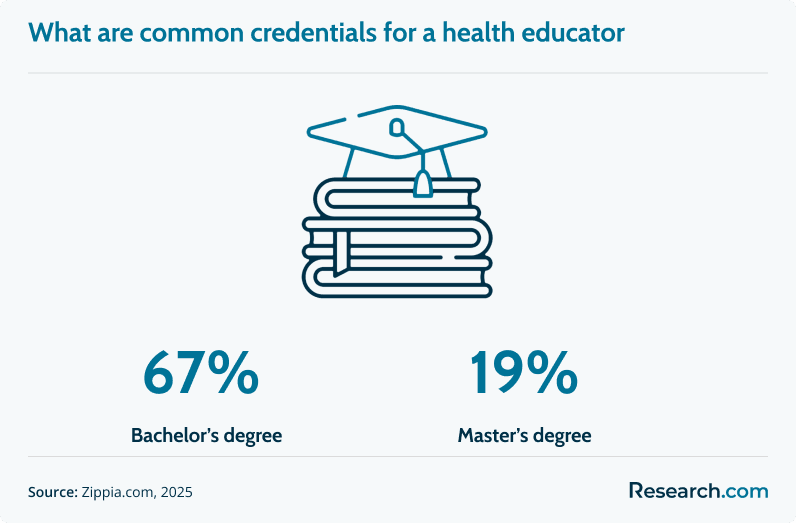
Most programs include coursework in public health, epidemiology, health promotion, research methods, health behavior theory, communication, and program planning. Many also require a capstone, practicum, internship, or applied project in a healthcare, school, nonprofit, or community setting.
Online courses are commonly delivered through recorded lectures, learning management systems, discussion boards, virtual projects, research assignments, and instructor feedback. Strong programs still provide interaction with faculty and peers, even if students are not required to attend campus regularly.
Tuition can range from $8,000 to $25,000 annually, depending on the institution. The lowest advertised tuition is not always the lowest total cost, so students should compare fees, transfer credit policies, textbook requirements, technology charges, and whether the program can be completed on time.
| Degree level | Typical focus | Best for | Common outcome |
| Bachelor’s degree | Foundations in health education, public health, communication, and program planning | Students entering the field or changing careers | Entry-level health education, wellness, outreach, or program support roles |
| Master’s degree | Advanced health promotion, leadership, evaluation, policy, and applied public health practice | Working professionals seeking advancement or specialization | Program management, public health leadership, advanced health education roles |
| Doctoral degree | Research, policy, leadership, population health, and advanced education practice | Professionals pursuing senior leadership, academic, research, or policy roles | Research, teaching, executive public health, or high-level program leadership |
Where can I work with a health education degree?
Health education graduates work wherever organizations need to improve health knowledge, encourage prevention, support behavior change, or connect people with services. Common employers include hospitals, outpatient clinics, public health departments, schools, universities, nonprofits, government agencies, insurance organizations, and corporate wellness programs.
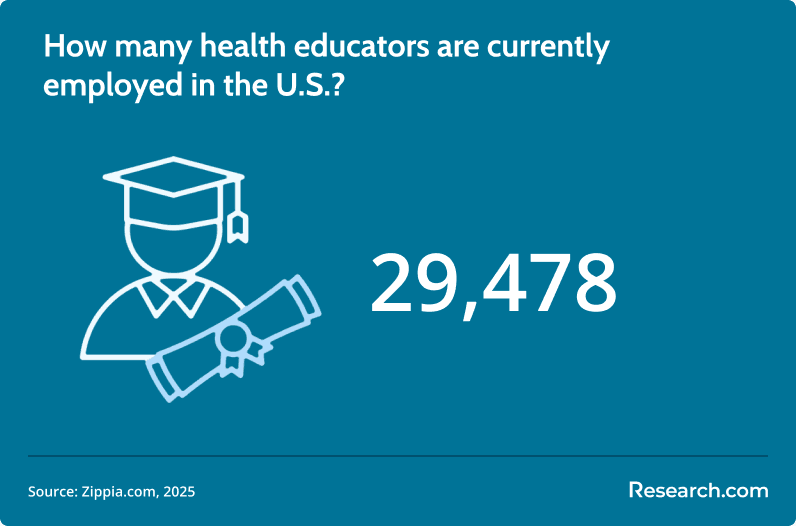
According to the U.S. Department of Labor, over 60,000 health education specialists were employed in 2022, with job growth projected at 7% from 2023 to 2033, faster than average. The most transferable skills include communication, needs assessment, program design, evaluation, cultural awareness, and the ability to explain health information clearly to different audiences.
How much can I make with a health education degree?
Professionals with a health education degree earned a median salary of $63,000 as of May 2024. Salary depends on job title, employer, region, education level, certification, and experience. Entry-level health educators may start around $45,000, while experienced specialists and managers can earn $75,000 or more annually.
Work setting also matters. Hospitals and corporate wellness programs often pay more than some school or community-based settings, while government and nonprofit roles may offer strong benefits or mission-driven work. Certifications such as CHES® or MCHES and graduate education can improve competitiveness, but they do not guarantee a specific salary.
| Factor | How it can affect earnings |
| Degree level | Graduate degrees may support advancement into leadership, research, policy, or program management roles. |
| Certification | CHES® or MCHES can show professional competency and may be preferred by some employers. |
| Employer type | Hospitals, corporate wellness programs, public agencies, schools, and nonprofits may offer different pay ranges. |
| Location | Urban areas, high-cost regions, and large healthcare systems may offer higher wages, but expenses can also be higher. |
| Experience | Professionals who can manage programs, evaluate outcomes, write grants, or supervise teams may qualify for higher-level roles. |
- Best Online Health Education Degree Programs for 2027
- How long does it take to complete an online health education degree program?
- How does an online health education degree program compare to an on-campus program?
- What is the average cost of an online health education degree program?
- What are the financial aid options for students enrolling in an online health education degree program?
- What are the prerequisites for enrolling in an online health education degree program?
- What accreditation and regulatory standards should I look for in an online health education degree program?
- What are the emerging trends shaping online health education degree programs?
- What is the return on investment for an online health education degree program?
- Is an online health education degree cost-effective compared to other online degrees?
- What courses are typically in an online health education degree program?
- What types of specializations are available in an online health education degree program?
- How to Choose the Best Online Health Education Degree Program
- What career paths are available for graduates of an online health education degree program?
- What is the job market for graduates with an online health education degree program?
Best Online Health Education Degree Programs for 2027
How do we rank the programs?
Research.com rankings are built to help students compare programs using reliable education data rather than marketing claims. For this list of online health education degree programs, we reviewed information from the IPEDS database, Peterson's database, the College Scorecard database, and the National Center for Education Statistics. These sources help evaluate affordability, institutional profile, program availability, and student outcomes. You can review Research.com's full ranking process on the methodology page.
| Rank | School | Degree level | Required credits | Cost | Accreditation |
| 1 | University of Florida | Bachelor’s | 120 | $25,694 per year (out-of-state) | Southern Association of Colleges and Schools Commission on Colleges (SACSCOC) |
| 2 | Arizona State University | Bachelor’s | 120 | $28,800 per year | Higher Learning Commission (HLC) |
| 3 | Touro University Worldwide | Bachelor’s | 120 | $14,400 per year | WASC Senior College and University Commission (WSCUC) |
| 4 | Southern New Hampshire University | Bachelor’s | 120 | $30,756 per year | New England Commission of Higher Education (NECHE) |
| 5 | CUNY Lehman College | Master’s | 33 | Varies | National Commission for Health Education Credentialing (NCHEC) |
| 6 | Texas State University | Master’s | 36 | Varies (public, affordable tier) | Commission on Accreditation of Healthcare Management Education (CAHME) |
| 7 | Concord University | Master’s | 33 | Varies (public, affordable tier) | Higher Learning Commission (HLC) |
| 8 | Purdue University Global | Master’s | 56 | $7, 800 | Higher Learning Commission (HLC) |
| 9 | American College of Education | Doctoral | Varies | $21,000 | Higher Learning Commission (HLC) |
| 10 | Walden University | Doctoral | Varies | $21,000 | Higher Learning Commission (HLC) |
1. University of Florida
The University of Florida offers a fully online bachelor of science in health education for students who want a flexible undergraduate route into health promotion and related fields. Academic advising helps students select electives and interdisciplinary options that support their personal interests and career goals.
- Required Credits to Graduate: 120
- Cost: $25,694 per year (out-of-state)
- Accreditation: Southern Association of Colleges and Schools Commission on Colleges (SACSCOC)
2. Arizona State University
Arizona State University offers a bachelor of science in health education and health promotion through an online platform designed for broad access and student support. The program gives students room to shape their studies through minors and electives while building core knowledge in health promotion.
- Required Credits to Graduate: 120
- Cost: $28,800 per year
- Accreditation: Higher Learning Commission (HLC)
3. Touro University Worldwide
Touro University Worldwide provides an online bachelor’s program in health education that connects academic foundations with practical preparation. Students work with advisors to align course choices with professional plans in community health, health promotion, and education-focused roles.
- Required Credits to Graduate: 120
- Cost: $14,400 per year
- Accreditation: WASC Senior College and University Commission (WSCUC)
4. Southern New Hampshire University
Southern New Hampshire University offers an online bachelor of science in community health education with an emphasis on applied learning, flexible scheduling, and virtual student engagement. Students can use electives and minors to build a degree plan that supports their long-term health education goals.
- Required Credits to Graduate: 120
- Cost: $30,756 per year
- Accreditation: New England Commission of Higher Education (NECHE)
5. CUNY Lehman College
CUNY Lehman College offers a fully online Master of Arts in Health Education and Promotion for healthcare and public health professionals who want advanced preparation. The program prepares graduates for work in hospitals, nonprofits, government agencies, and other health-focused settings, and it qualifies students to sit for the MCHES exam.
- Required Credits to Graduate: 33
- Cost: Varies
- Accreditation: National Commission for Health Education Credentialing (NCHEC)
6. Texas State University
Texas State University offers a fully online master’s in public health with a specialization in health education. The program is designed for students who want leadership skills in public health practice, health promotion, health equity, or broader population health work.
- Required Credits to Graduate: 36
- Cost: Varies (public, affordable tier)
- Accreditation: Commission on Accreditation of Healthcare Management Education (CAHME)
7. Concord University
Concord University offers a Master of Arts in Health Promotion with a strong focus on health communication and flexible delivery. Students can complete coursework online or in a hybrid format, with a curriculum that may be completed in as little as one year.
- Required Credits to Graduate: 33
- Cost: Varies (public, affordable tier)
- Accreditation: Higher Learning Commission (HLC)
8. Purdue University Global
Purdue University Global offers a 100% online master of science in health education that includes study in health behavior, health communication, epidemiology, and applied practice. The program ends with a capstone project designed to demonstrate competency in real-world health education work.
- Required Credits to Graduate: 56
- Cost: $7, 800
- Accreditation: Higher Learning Commission (HLC)
9. American College of Education
The Doctorate in Public Health Education at American College of Education is intended for professionals who want to lead health education initiatives at a broader scale. The curriculum emphasizes evidence-based interventions, disease prevention, and population-level strategies.
- Required Credits to Graduate: Varies
- Cost: $21,000
- Accreditation: Higher Learning Commission (HLC)
10. Walden University
Walden University offers an online PhD in Public Health – Community Health Education for students interested in research, policy, leadership, and community-focused public health work. The program accepts students with or without a public health master’s and offers asynchronous coursework with flexible start dates.
- Required Credits to Graduate: Varies
- Cost: $21,000
- Accreditation: Higher Learning Commission (HLC)
How long does it take to complete an online health education degree program?
An online health education degree can take two and a half to eight years, depending on the degree level, enrollment status, transfer credits, practicum requirements, and dissertation or capstone timeline.
A bachelor’s degree usually requires 120 credits and takes about four years for full-time students. Part-time students may need longer, while transfer students can sometimes finish sooner. A master’s degree commonly requires around 35–50 credits and may take roughly 2.5 years with a full course load. Doctoral programs vary the most: some students finish in as little as 2.5 years, while others may take up to eight or nine years, especially when research, dissertation work, employment, and family responsibilities affect pacing.
| Program level | Typical credit requirement | Common completion timeline | What can change the timeline? |
| Bachelor’s | 120 credits | About four years full time | Transfer credits, part-time study, accelerated terms, general education requirements |
| Master’s | Around 35–50 credits | Roughly 2.5 years with a full course load | Practicum, capstone, course availability, work schedule |
| Doctoral | Varies | As little as 2.5 years or up to eight or nine years | Research progress, dissertation timeline, enrollment pace, professional obligations |
Online delivery can make scheduling easier, but it does not automatically make a program shorter. Before enrolling, ask whether courses are asynchronous, whether required classes are offered every term, and whether the school has limits on how many credits you can take at once.
How does an online health education degree program compare to an on-campus program?
An online health education degree can cover the same academic content as an on-campus program, but the student experience is different. Online programs are usually better for learners who need scheduling flexibility, do not want to relocate, or already work in healthcare, education, social services, or community outreach. On-campus programs may be better for students who want face-to-face networking, local internships, campus resources, or a more structured weekly schedule.
Online learning is now a mainstream part of higher education. In fall 2021, 61% of all undergraduate students took at least one online course, and 28% were fully online. That share was below the pandemic peak but still far above the 2019 level of just 15% fully online. At private for-profit institutions, 71% of undergraduates studied entirely online.
Graduate students also use online education heavily. In fall 2021, 56% of postbaccalaureate students took at least one online course, and 40% were enrolled exclusively online. Many students choose programs outside their state, which makes online learning especially useful for people who need access to specialized programs not offered nearby.
| Format | Strengths | Trade-offs | Best fit |
| Online | Flexible scheduling, no relocation, easier to combine with work, wider school choice | Requires self-discipline, fewer in-person interactions, field placements may require local coordination | Working adults, caregivers, rural students, military students, transfer students |
| On campus | Face-to-face learning, campus networking, local partnerships, structured routine | Commuting, housing, less schedule flexibility, limited to nearby schools unless relocating | Students who prefer in-person support, traditional campus life, or local practicum access |
| Hybrid | Mix of online convenience and occasional in-person engagement | May still require travel, schedule coordination, or campus visits | Students near campus who want both flexibility and direct interaction |
If you are comparing broader education-related pathways, Research.com’s guide to the cheapest online bachelor's degree in education can help you evaluate affordability, flexibility, and online delivery across related programs.
What is the average cost of an online health education degree program?
The cost of an online health education degree depends on the school, degree level, residency status, tuition model, transfer credits, and required fees. Students should compare total program cost rather than tuition alone.
- Bachelor’s Degree: Annual tuition typically ranges from $4,000 to $15,000. Public universities are often more affordable than private institutions.
- Master’s Degree: Students can expect to pay between $12,410 and $26,600 per year. Private institutions are usually on the higher end.
- Doctoral Programs: Costs can exceed $50,000 per year, especially at private schools or in programs with longer completion timelines.
Additional expenses may include technology fees, textbooks, online learning fees, background checks, internship-related costs, graduation fees, and certification exam preparation. Some schools charge per credit, while others use flat-rate tuition. An accelerated program may reduce total time in school, but only if you can handle the workload and complete courses in sequence without delays.
Students considering graduate-level public health training can also review Research.com’s guide on what can you do with a master of public health to compare career options and long-term value.
What are the financial aid options for students enrolling in an online health education degree program?
Online health education students may qualify for many of the same financial aid options as campus-based students, as long as the institution and program meet eligibility requirements. The most important first step is to confirm accreditation and submit the FAFSA as early as possible.
Common funding sources
- Federal Student Aid: The FAFSA can determine eligibility for grants, work-study, and federal student loans.
- Institutional Aid: Schools may offer scholarships, tuition discounts, graduate assistantships, grants, or work-study opportunities for eligible students.
- Scholarships and Grants: Students can search for health-specific awards, including Health Education & Promotion Scholarships.
- Payment Plans: Some institutions allow students to divide tuition into installments instead of paying the full term balance at once.
- Service-Based Repayment or Forgiveness: Some graduates may explore programs such as NHSC or PSLF if their employment and loans meet program rules.
How to compare aid offers
- Separate grants and scholarships from loans, because loans must be repaid.
- Check whether scholarships renew automatically or require a minimum GPA.
- Ask whether aid applies to summer, accelerated, part-time, or online enrollment.
- Compare net cost after aid, not just the size of the award package.
- Review loan interest, repayment terms, and borrowing limits before accepting funds.
What are the prerequisites for enrolling in an online health education degree program?
Admission requirements vary by degree level. Bachelor’s programs usually focus on high school preparation or transfer credits, while graduate programs evaluate prior college performance, professional goals, and readiness for advanced work.
Bachelor's degree prerequisites
- Academic background: Helpful preparation may include biology, psychology, statistics, health science, or social science coursework.
- GPA: A GPA of around 3.2 or higher is often expected.
- Transfer requirements: Students with previous college credits should ask how many credits transfer and whether major prerequisites are required.
- Preferred experience: Some schools may value volunteer work, healthcare exposure, public health interest, or community service.
Master's degree prerequisites
- Bachelor’s degree: Applicants generally need a bachelor’s degree from an accredited institution.
- GPA: Many programs expect a minimum GPA of 3.0–3.2.
- GRE: Some programs require GRE scores, while others do not. Students looking for test-flexible graduate pathways can compare affordable master of public health programs no GRE.
- Additional materials: Letters of recommendation, personal statements, resumes, and interviews may be required.
Doctoral degree prerequisites
- Master’s degree: A master’s degree is typically required.
- GPA: Programs commonly expect a GPA of 3.5 or higher.
- Research preparation: Prior research, writing, evaluation, or public health experience can strengthen an application.
- Application materials: Expect a statement of purpose, recommendation letters, interviews, and evidence of relevant professional experience.
What accreditation and regulatory standards should I look for in an online health education degree program?
Accreditation should be one of your first checks when evaluating an online health education degree. Institutional accreditation helps confirm that a school meets recognized academic standards and can affect federal financial aid eligibility, credit transfer, graduate admission, and employer recognition. Program-level alignment with health education standards can also matter if you plan to pursue professional certification.
Look for institutional accreditation from recognized regional or national accrediting bodies and ask whether the curriculum aligns with standards from organizations such as the National Commission for Health Education Credentialing (NCHEC) or the Council on Education for Public Health (CEPH), when relevant. If your goal involves school-based health education, teaching, or a regulated state role, verify state-specific requirements before enrolling.
Students comparing education-focused doctoral pathways may also want to review 2 year Ed D programs to understand how accelerated education degrees handle accreditation, pacing, and professional outcomes.
Accreditation questions to ask before applying
- Is the institution accredited by a recognized accrediting agency?
- Does the program meet eligibility requirements for federal financial aid?
- Will credits transfer to other accredited colleges or graduate programs?
- Does the curriculum support CHES® or MCHES preparation, if that is your goal?
- Does the program meet requirements in your state for school, public health, or employer-specific roles?
- Are practicum, internship, or capstone experiences available to online students?
What are the emerging trends shaping online health education degree programs?
Online health education programs are changing as public health practice becomes more data-driven, technology-supported, and community-focused. Many programs now place greater emphasis on digital communication, telehealth education, health equity, population health data, virtual collaboration, and culturally responsive messaging.
Some institutions are adding interactive learning platforms, simulation-based assignments, virtual case studies, and data-informed learning tools. These approaches can help students practice decision-making and communication before working with real communities. However, technology should support learning rather than replace applied experience. A strong program should still teach students how to assess community needs, design realistic interventions, evaluate outcomes, and communicate effectively with diverse populations.
If you want to strengthen your teaching and instructional design skills alongside health education, Research.com’s guide to the most affordable online master's of education programs may help you compare related education-focused graduate options.
What is the return on investment for an online health education degree program?
The ROI of an online health education degree depends on total cost, time to completion, current income, expected career path, employer tuition support, financial aid, and whether the degree helps you qualify for better roles. A low-cost program with strong accreditation and relevant applied experience may offer better value than a more expensive program with weak career support.
To evaluate ROI, compare the full program cost against realistic salary outcomes. Health education specialists earned a median annual wage of $63,000 as of May 2024, but individual results vary. Students should not assume that a degree automatically produces a salary increase. The strongest ROI usually comes from matching the degree to a specific career goal, such as health education specialist, wellness coordinator, public health program manager, or community health leadership.
For students comparing advanced education investments, Research.com’s overview of the cheapest EdD programs can provide another reference point for cost, flexibility, and professional value.
Simple ROI checklist
- Calculate total tuition, fees, books, and technology costs.
- Subtract grants, scholarships, tuition assistance, and transfer credit savings.
- Estimate how long the degree will take at your intended pace.
- Compare realistic job outcomes for your region and employer type.
- Ask whether the program includes internship, capstone, portfolio, or certification preparation.
- Avoid borrowing more than your expected career path can reasonably support.
Is an online health education degree cost-effective compared to other online degrees?
An online health education degree can be cost-effective when it leads to a clear career path in healthcare, public health, school health, community outreach, wellness, or program management. Its value is strongest for students who want mission-driven work and practical skills that apply across many settings.
Compared with some online degrees, health education has a more defined occupational connection because graduates can pursue health education specialist, community health, wellness, and program coordination roles. However, students should compare costs and career outcomes with other fields before committing. For a broader affordability comparison outside healthcare, Research.com’s guide to the cheapest political science bachelors online can help you think through how different online degrees connect to different labor markets.
| Choose health education if... | Consider another path if... |
| You want to teach people about health, prevention, and wellness. | You want direct patient care that requires clinical licensure. |
| You are interested in community outreach, public health programs, or wellness initiatives. | You prefer laboratory science, medical diagnosis, or one-on-one clinical treatment. |
| You want a degree that can apply across hospitals, nonprofits, government, and schools. | You want a field with a very specific technical credential or apprenticeship route. |
| You are comfortable with communication, writing, program planning, and evaluation. | You do not want to work with groups, communities, behavior change, or public-facing education. |
What courses are typically in an online health education degree program?
Online health education programs usually combine public health theory, applied communication, program development, research, and evaluation. Like other flexible online pathways, including the cheapest ESL programs online, the goal is to build specialized professional skills through accessible coursework.
Common core courses
- Health Behavior Theories: Students study models such as the Health Belief Model, Social Cognitive Theory, and the Transtheoretical Model to understand how people adopt, maintain, or resist health behaviors.
- Public Health Program Design: Coursework covers how to identify community needs, set goals, plan interventions, and develop programs for specific populations.
- Health Communication: Students learn how to create clear, culturally aware messages for patients, families, communities, employees, or students.
- Evaluation Methods: Courses introduce tools such as the RE-AIM framework to assess whether health programs are reaching the right people and producing intended outcomes.
- Epidemiology and Population Health: Students learn how health patterns, risk factors, and social conditions affect communities.
- Research Methods: Coursework often includes data collection, literature review, survey design, and evidence-based decision-making.
Common electives
- Environmental health
- Public health grant writing
- Social determinants of health
- Mental health and substance use education
- School health education
- Worksite wellness
Students interested in combining health education with data skills may also explore health information technology careers salary to understand how informatics, analytics, and health communication can overlap.
What types of specializations are available in an online health education degree program?
Specializations help students tailor a health education degree to a specific audience, setting, or career goal. The right concentration can influence your practicum, portfolio, job search, and long-term advancement options.
Popular specialization areas and salary ranges
- Community Health: Focuses on wellness education for specific populations. Common roles include health educator or community organizer. Average salary: $49,000–$50,000 per year.
- Public Health Policy: Emphasizes law, ethics, and health systems. Graduates often work as policy analysts or epidemiologists. Average salary: $58,000–$69,000 per year.
- Health Science: Covers biological, social, and behavioral health topics across populations. Leads to roles like wellness coordinator or health coach. Average salary: $47,000–$50,000 per year.
- Health and Physical Education: Prepares students for teaching roles in K–12 schools. Average salary: Around $48,000 per year, depending on district and experience.
- Health Informatics: Uses healthcare data to improve patient outcomes and organizational efficiency. Average salary: $70,000–$90,000+ per year, depending on role and experience.
Some programs use national tools such as the Health Education Curriculum Analysis Tool and the Health Education Curriculum Analysis Tool (HECAT) to help align curriculum design with health education standards. When comparing specializations, look beyond the title and review actual course requirements, fieldwork opportunities, and employer relevance.
How to Choose the Best Online Health Education Degree Program
The best online health education degree is the one that is accredited, affordable for your situation, aligned with your career goal, and realistic for your schedule. Rankings can help you build a shortlist, but they should not be the only factor. Students comparing broad online liberal arts options may also review affordable humanities degree programs online to understand how cost, flexibility, and career alignment differ by field.
Key factors to compare
- Accreditation: Confirm institutional accreditation and ask whether the curriculum supports health education standards or certification preparation.
- Total cost: Compare tuition, fees, books, technology charges, travel, practicum costs, and transfer credit savings.
- Curriculum fit: Look for coursework in health theory, public health, communication, program planning, research, and evaluation.
- Specializations: Choose a program with tracks or electives that match your goals, such as community health, school health, policy, wellness, or health informatics.
- Online format: Decide whether you need asynchronous courses, part-time options, accelerated terms, or fixed class meetings.
- Field experience: Ask how online students complete internships, practicums, capstones, or community-based projects.
- Career support: Strong programs may provide résumé help, internship guidance, job boards, alumni connections, or CHES exam preparation.
Questions to ask admissions advisors
- What is the total estimated cost from enrollment to graduation?
- How many transfer credits will the school accept?
- Are online students eligible for the same financial aid as campus students?
- Does the program prepare students for CHES® or MCHES?
- Are internships required, and can they be completed near my home?
- What percentage of students complete the program on time?
- What career services are available to online students?
- Do graduates work in the roles I am targeting?
If your goal is a faster entry into a hands-on healthcare support role, accelerated medical assistant programs may be worth comparing as a shorter, more clinical alternative.
Common mistakes to avoid
- Choosing only by tuition: A low per-credit rate can be misleading if fees are high or credits do not transfer efficiently.
- Ignoring accreditation: Accreditation can affect financial aid, transfer options, graduate school admission, and employer acceptance.
- Assuming online means easier: Online programs require strong time management, writing skills, and independent learning.
- Skipping certification research: If CHES® or MCHES matters for your goals, confirm that the program supports eligibility and preparation.
- Overlooking fieldwork: Practicum and capstone requirements can affect scheduling, location, and graduation timing.
- Relying only on rankings: A highly ranked program may still be the wrong fit if it is too expensive, too rigid, or misaligned with your goals.
What career paths are available for graduates of an online health education degree program?
Graduates can pursue roles in healthcare, public health, education, government, nonprofits, social services, and workplace wellness. The right path depends on degree level, specialization, certification, experience, and local employer demand.
Common career paths
- Health Educator: Develops and delivers wellness programs in hospitals, schools, community organizations, or clinics.
- Public Health Specialist: Supports health campaigns, policy implementation, public outreach, and population health initiatives.
- Wellness Coordinator: Designs employee wellness, patient education, or lifestyle improvement programs in corporate or clinical settings.
- Patient Advocate or Case Manager: Helps people understand healthcare systems, treatment plans, benefits, and service options.
- Community Health Worker: Works directly with communities, often addressing health disparities, prevention, access, and outreach.
- Public Health Program Manager: Oversees program planning, staff coordination, budgets, partnerships, and outcome evaluation.
In 2023, the U.S. had approximately 62,100 health education specialists, with 27% employed by government agencies, 18% in outpatient care, and 17% in hospitals. Many work in offices, but off-site meetings, community events, and program coordination are also common. Some roles increasingly require digital literacy, especially when collecting data, evaluating outcomes, or reporting program impact. Students who want to build stronger analytics skills can compare practical training options such as the cheapest data analytics online bootcamps.
| Career path | Typical work setting | Useful skills |
| Health Educator | Hospitals, schools, clinics, nonprofits | Teaching, communication, curriculum design, cultural awareness |
| Wellness Coordinator | Employers, healthcare systems, insurance organizations | Program planning, coaching, engagement, evaluation |
| Community Health Worker | Community agencies, public health departments, nonprofits | Outreach, advocacy, trust-building, resource navigation |
| Public Health Specialist | Government, public agencies, health organizations | Policy awareness, data interpretation, campaign planning |
| Program Manager | Hospitals, nonprofits, agencies, foundations | Leadership, budgeting, evaluation, stakeholder coordination |
What is the job market for graduates with an online health education degree program?
The job market for health education graduates is supported by continued attention to disease prevention, patient education, public health outreach, and cost-effective care. Employers need professionals who can help communities understand risks, follow prevention strategies, access services, and participate in wellness programs.
From 2023 to 2033, employment of health education specialists is expected to grow by 7%, faster than the national average for all occupations. About 6,700 job openings in health education are expected each year, many resulting from retirements, job changes, and workforce movement.
Hospitals, public health departments, insurance organizations, schools, nonprofit agencies, and community health programs may all hire health education graduates. Students interested in combining public health outreach with faith-based service, spiritual care, or community ministry can also compare affordable MDiv programs online as a complementary pathway.
Key Insights
- An online health education degree is most valuable when it connects directly to a clear career goal, such as health educator, wellness coordinator, community health worker, public health specialist, or program manager.
- Accreditation is non-negotiable. It can affect financial aid, transfer credits, graduate school options, employer recognition, and certification preparation.
- Health education specialists earned a median annual wage of $63,000 as of May 2024, but salary outcomes vary by setting, location, education level, certification, and experience.
- Program cost should be evaluated as total cost, not just tuition. Include fees, books, transfer credits, time to completion, and financial aid.
- Online programs can offer strong flexibility, but they require self-direction and careful planning around internships, practicums, and capstones.
- The field is growing: employment of health education specialists is projected to increase by 7% from 2023 to 2033, with roughly 6,700 job openings expected each year.
- The best program is not always the cheapest or highest-ranked. The right choice is accredited, affordable, career-aligned, flexible enough for your life, and strong in applied learning.
References:
- U.S. Bureau of Labor Statistics. (n.d.). Health education specialists career profile.
- Indeed Career Guide. (n.d.). Health education degree career options.
- Healthcare Management Degree. (n.d.). Health educators and public health careers.
- EduMed. (n.d.). Financial aid for public health degrees.
- National Center for Education Statistics. (n.d.). Tuition costs of colleges and universities.
- Zippia. (n.d.). Health educator jobs overview.
- National Commission for Health Education Credentialing. (n.d.). Guide to health education careers.
- Purdue Global. (n.d.). Bachelor’s degree in health education and promotion.
Other Things You Should Know about Online Health Education Degree Programs
Most affordable online health education degree programs in 2027 typically require a high school diploma, a minimum GPA of 2.5, and completion of prerequisite courses in biology and chemistry. Some programs may also require standardized test scores such as the SAT or ACT.
Financial aid for online health education degrees in 2027 includes federal student loans, state grants, and scholarships specific to healthcare fields. Students should complete the FAFSA to determine eligibility and explore institutional scholarships offered by specific colleges or universities.
Students should check whether the program accepts regionally accredited transfer credits and how many can apply toward the degree. Many schools cap transfer credit at 60 to 90 semester credits for a bachelor’s degree, which can cut tuition and shorten completion time.