2027 Game Programming Careers That Reward Strong Math Skills

Co-Founder and Chief Data Scientist
Game programming is a smart path for students who enjoy both code and problem-solving, but not every role uses math the same way. The U. S. Bureau of Labor Statistics reported a $133,080 median annual wage for software developers in May 2024, which helps explain why math-strong students are comparing game degrees, computer science programs, and related technical paths carefully.
This guide explains which game programming careers reward math most, what to study, how much programs cost, and how to choose an education route that fits your goals.
Key Things You Should Know
- Math is most heavily rewarded in gameplay physics, graphics programming, artificial intelligence, simulation, tools engineering, engine development, and technical animation, while scripting-heavy or UI-focused game roles may require less advanced math.
- For salary context, BLS May 2024 data places the median annual wage for software developers at $133,080, but game-specific pay varies by studio size, location, portfolio quality, engine expertise, and specialization.
- College Board's 2024 pricing data shows average published 2024-25 tuition, fees, housing, and food of $24,920 at public four-year in-state institutions and $58,600 at private nonprofit four-year institutions, so comparing total cost is essential before enrolling.
What game programming careers most reward strong math skills today?
The game programming careers that reward strong math skills most are the ones closest to game engines, real-time systems, physics, artificial intelligence, rendering, and simulation. These roles use math not as an academic exercise but as a production tool for building believable movement, efficient graphics, responsive gameplay, and scalable systems.
Students sometimes use "game programmer" as one broad job title, but studios often separate responsibilities by specialization. The table below summarizes common math-heavy game programming paths and the kind of math each one tends to use.
| Career path | What the role does | Math most often used | Best fit for students who enjoy |
| Graphics programmer | Builds rendering systems, shaders, lighting, visual effects, and performance optimizations | Linear algebra, vectors, matrices, geometry, trigonometry, calculus | Visual problem-solving, GPU performance, image quality |
| Gameplay physics programmer | Creates movement, collision, ragdolls, projectiles, vehicles, and physical interactions | Calculus, differential equations, linear algebra, numerical methods | Motion, forces, simulation, realistic or stylized behavior |
| AI programmer | Designs enemy behavior, navigation, decision systems, procedural content, and adaptive gameplay | Probability, statistics, graph theory, optimization, discrete math | Behavior, strategy, pathfinding, machine learning concepts |
| Engine programmer | Develops core systems for rendering, memory, animation, audio, networking, and tools | Discrete math, algorithms, linear algebra, systems-level performance analysis | Low-level code, architecture, optimization, cross-platform systems |
| Technical animator or technical artist | Builds rigs, animation pipelines, procedural tools, simulations, and artist-facing workflows | Linear algebra, geometry, interpolation, scripting logic | Combining art, math, and code |
| Tools programmer | Creates editors, pipelines, automation, build systems, and workflow tools for game teams | Algorithms, data structures, applied statistics in some analytics tools | Improving team productivity and solving production bottlenecks |
Graphics, physics, and engine roles usually require the deepest math because they involve real-time performance constraints. A solution that works in a classroom may still fail in a game if it cannot run at the target frame rate, fit memory limits, or behave consistently across platforms.
Math also helps students communicate with adjacent teams. For example, a programmer who understands animation curves, camera transforms, and 3D space can collaborate more effectively with designers and artists. Students who are drawn more to visual communication than systems programming may also compare adjacent creative paths such as graphic design, but the technical math load is usually much lighter than in engine or rendering work.
How much math do you really need for different game programming specializations?
You do not need the same level of math for every game programming job. A UI programmer, technical designer, or gameplay scripter may rely mostly on algebra, geometry, logic, and engine-specific scripting, while a graphics or simulation programmer may need advanced linear algebra, calculus, and numerical reasoning.
The most practical way to think about math preparation is to match the depth of math to the role you want. The table below shows the difference between "useful," "important," and "central" math requirements across specializations.
| Specialization | Typical math depth | What to prioritize | When a math-heavy degree helps most |
| Gameplay scripting | Moderate | Algebra, vectors, trigonometry, state logic | When moving into systems, AI, or physics-heavy gameplay |
| UI programming | Low to moderate | Coordinate systems, interpolation, layout logic, performance basics | When working on complex tools, data visualization, or accessibility systems |
| AI programming | High | Discrete math, probability, statistics, graph search, optimization | When building navigation, tactics, procedural systems, or machine learning features |
| Graphics programming | Very high | Linear algebra, geometry, trigonometry, calculus, shader math | Nearly always, especially for rendering, lighting, and GPU optimization |
| Physics and simulation | Very high | Calculus, linear algebra, numerical methods, differential equations | Nearly always, especially for vehicles, destruction, fluid-like effects, or robotics-adjacent simulation |
| Networking and multiplayer systems | Moderate to high | Discrete math, probability, latency modeling, data structures | When building scalable competitive or real-time multiplayer systems |
If you are not sure which role you want, start with the math that transfers best: algebra, trigonometry, vectors, matrices, probability, discrete math, algorithms, and data structures. These courses support nearly every technical game programming path and make it easier to switch later.
One common mistake is assuming that weak math skills can always be hidden behind a commercial engine. Engines such as Unity and Unreal can handle many low-level systems, but math still matters when you debug camera motion, tune physics, optimize shaders, implement AI navigation, or explain why a system behaves unpredictably.
Which U.S. game programming degrees best support math-focused career paths?
The best degree for a math-focused game programming career is often not the one with the most game-themed course titles. It is the program that combines rigorous computer science, applied math, real-time graphics or simulation, and a portfolio pipeline that helps students prove what they can build.
Students usually compare four academic routes. The table below explains how each option supports math-heavy game programming careers and where it may fall short.
| Degree option | Strengths for math-focused game careers | Possible limitations | Best fit |
| B.S. in Computer Science with game electives | Strongest foundation in algorithms, systems, math, and software engineering | May require students to build game-specific portfolio work independently | Students aiming for engine, graphics, AI, tools, or non-game software options |
| B.S. in Game Programming or Game Development | Direct exposure to engines, game production, team projects, and portfolio work | Quality varies widely; some programs are lighter on math and CS theory | Students who want structured game projects and technical specialization |
| B.S. in Software Engineering | Strong emphasis on development process, testing, architecture, and maintainable systems | May include fewer graphics, simulation, or game design courses | Students interested in tools, platform systems, live operations, or scalable codebases |
| B.S. in Applied Mathematics, Computational Science, or Physics with CS minor | Excellent preparation for simulation, graphics, modeling, and research-heavy roles | Requires intentional programming portfolio development | Students drawn to physics, rendering, scientific computing, or technical R&D |
A computer science degree with game electives is often the safest choice for students who want flexibility because it can support game studio roles and broader software jobs. A game programming degree can be excellent when it includes calculus, linear algebra, algorithms, systems programming, computer graphics, and substantial team-based projects.
Students should be cautious with programs that market themselves around "game design" but offer little programming depth. Design programs can be valuable, but they may emphasize level design, storytelling, production, or art rather than the math and systems work needed for graphics, physics, AI, or engine roles.
What core math and computer science courses do game programming majors include?
Math-focused game programming programs usually blend three areas: core math, core computer science, and applied game technology. The strongest programs do not treat these as separate silos; they help students use math directly in code, engines, and performance-constrained projects.
Before choosing a program, compare the course list against the skills required for technical game jobs. A strong curriculum commonly includes the following areas because each one maps to real development tasks.
- Calculus: Supports motion, acceleration, curves, optimization, and simulation concepts used in physics and animation systems.
- Linear algebra: Essential for vectors, matrices, transformations, cameras, lighting, skeletal animation, and 3D rendering.
- Discrete mathematics: Supports logic, graphs, state machines, algorithms, combinatorics, and many AI systems.
- Probability and statistics: Useful for procedural generation, game balancing, analytics, uncertainty modeling, and AI behavior.
- Data structures and algorithms: Critical for performance, pathfinding, memory-aware systems, search, sorting, and real-time responsiveness.
- Computer graphics: Covers rendering pipelines, shaders, lighting models, geometry, and GPU concepts.
- Physics or simulation: Helps students build collisions, projectiles, constraints, vehicles, particle systems, and numerical approximations.
- Systems programming: Builds understanding of memory, concurrency, performance, debugging, and lower-level engine behavior.
Good programs also include team production courses. Math knowledge becomes much more valuable when a student can demonstrate it in playable systems, such as an AI navigation demo, custom shader, collision system, procedural level generator, or optimized simulation.
Students interested in teaching tools, learning technology, or serious games may also find overlap with instructional media and simulation design. In that case, comparing programs such as an online masters in instructional design can clarify whether their long-term goal is game engineering, educational technology, or interactive training development.
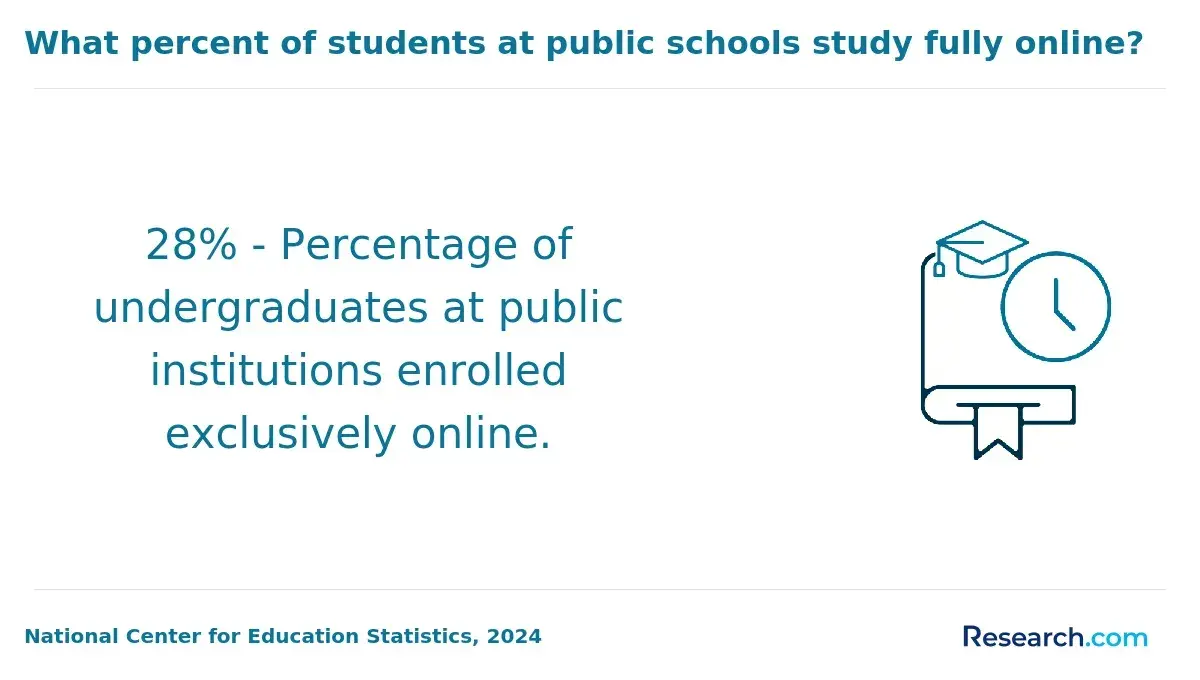
How do online game programming programs compare to campus-based options for math-focused students?
Online game programming programs can work well for disciplined students, especially those who already have programming experience or need flexibility. Campus-based programs may offer stronger access to labs, peer teams, faculty mentoring, local game industry events, and structured project accountability.
The right choice depends less on format and more on whether the program provides rigorous math, real programming assignments, feedback from technical faculty, and portfolio-building opportunities. The table below compares the practical trade-offs.
| Factor | Online programs | Campus-based programs | What math-focused students should check |
| Schedule flexibility | Often stronger for working students or career changers | Usually more fixed around class times and labs | Whether advanced math and programming courses are offered regularly online |
| Team projects | Can be effective but require strong remote collaboration systems | Often easier for studio-style teamwork and rapid feedback | Whether students complete substantial technical game projects, not only small tutorials |
| Technical support | Depends heavily on tutoring, office hours, and asynchronous feedback | May offer easier access to labs, faculty, and peer study groups | Whether calculus, linear algebra, and algorithms have adequate support |
| Portfolio development | Can be strong if projects are rigorous and publicly shareable | Can be strong when capstones involve teams, showcases, or industry review | Whether students graduate with demos that show math-driven systems |
| Networking | Requires more initiative through online communities and virtual events | May offer stronger local connections and studio visits | Whether the school has game jams, alumni networks, and employer-facing showcases |
Online programs make the most sense when the curriculum is transparent, faculty have relevant technical experience, and students can get help in difficult math and programming courses. Campus programs may be better for students who learn best through in-person collaboration, structured labs, and frequent mentoring.
A common mistake is choosing an online option only because it is convenient. Convenience matters, but a math-focused student should verify course rigor, project expectations, transfer policies, software requirements, tutoring availability, and whether the final portfolio will be competitive for technical roles.
What are typical admission requirements for math-intensive game programming degree programs?
Admission requirements vary by school, selectivity, and degree level, but math-intensive game programming programs often look for evidence that students can succeed in programming, algebra, precalculus, calculus, or other quantitative courses. More selective programs may review GPA, standardized test scores if submitted, portfolios, essays, or prior coding experience.
Applicants should prepare for both academic and technical review. The following items are commonly requested or strongly recommended because they help schools judge readiness for a demanding technical curriculum.
- High school transcript or prior college transcript: Schools usually review math, science, and computing coursework closely for technical majors.
- GPA requirement: Minimums vary, and competitive programs may expect stronger grades in math and science than the published minimum.
- Math placement or prerequisite courses: Students may need college algebra, precalculus, or calculus readiness before entering advanced programming and graphics courses.
- Programming experience: Prior work in Python, C++, C#, Java, or JavaScript can strengthen readiness, even when it is not formally required.
- Portfolio or project samples: Some game programs ask for games, code repositories, art-technical projects, or design documentation.
- Essay or statement of purpose: Applicants may need to explain why they want a technical game programming path rather than a general game design path.
- Transfer credit evaluation: Transfer students should confirm whether math and CS credits apply to the major, not just general electives.
Students who are not calculus-ready should not automatically avoid game programming. Many programs offer placement pathways, prerequisite sequences, tutoring, or bridge courses. However, delaying math too long can push back graphics, physics, AI, and engine courses because those classes often depend on earlier quantitative foundations.
A practical admissions strategy is to ask for a degree map before enrolling. If the plan delays key math or programming courses until late in the program, students may have fewer chances to build advanced portfolio projects before internship season.
How long do game programming degrees take, and what do they cost in the U.S.?
A bachelor's degree in game programming, computer science, or software engineering typically takes four years of full-time study. Associate degrees often take about two years, while master's degrees commonly take one to two years after a bachelor's. Part-time students may take longer, especially if they work while completing math-heavy prerequisites.
Cost depends heavily on institution type, residency, transfer credits, housing, and program fees. College Board's 2024 data reports average published tuition, fees, housing, and food for 2024-25 of $24,920 at public four-year in-state institutions and $58,600 at private nonprofit four-year institutions. For game programming students, this means living costs and time-to-degree can be just as important as tuition.
The table below shows common cost and timeline variables that can change the total investment. Use it to compare programs beyond the advertised tuition rate.
| Cost or timeline factor | Why it matters | What to ask before enrolling |
| Residency status | Public universities often charge different rates for in-state and out-of-state students | Can I qualify for in-state tuition, tuition reciprocity, or online-specific rates? |
| Transfer credits | Accepted credits can reduce both cost and time | Will my calculus, programming, and general education credits apply to the major? |
| Course sequencing | Math and CS prerequisites can delay graduation if offered infrequently | How often are calculus, linear algebra, algorithms, graphics, and physics courses offered? |
| Software and hardware | Game development may require a capable computer, engine tools, peripherals, or cloud services | What equipment is required, and are labs or remote desktops available? |
| Internship timing | Internships can improve experience but may affect course load or graduation timing | Does the program support internships, co-ops, or portfolio showcases? |
Students trying to reduce costs should consider starting with transferable general education, calculus, and introductory programming courses at a community college, then transferring into a bachelor's program with stronger upper-division game technology courses. This strategy works best when transfer agreements are confirmed in writing before courses are taken.
Do not judge affordability only by annual tuition. A cheaper program that causes credit loss, delayed graduation, or weak portfolio outcomes may be less cost-effective than a slightly more expensive program with stronger transfer acceptance, advising, and technical project support.
What salaries and earning potential can math-strong game programmers expect?
Game programmer salaries vary widely because "game programming" overlaps with several labor categories, including software development, graphics technology, simulation, tools engineering, and research-oriented computing. The most reliable public salary benchmarks are broader than the game industry, so students should treat them as context rather than a promise.
BLS May 2024 data reports a $133,080 median annual wage for software developers. This is useful because many game programming roles require similar software engineering skills, but actual pay can differ by studio, region, platform, specialization, overtime practices, and whether the employer is a large technology company, AAA studio, indie studio, defense simulation firm, or educational technology company.
The table below explains how different math-heavy paths may connect to earning potential. It avoids promising outcomes and instead highlights the factors that commonly influence compensation.
| Path | Salary factors that matter | Portfolio evidence employers value | Broader career mobility |
| Graphics programmer | Rendering expertise, GPU optimization, engine experience, platform knowledge | Shaders, rendering demos, performance breakdowns, graphics engine contributions | Games, film technology, visualization, AR/VR, simulation |
| AI programmer | Pathfinding, behavior systems, data structures, machine learning exposure | NPC behavior demos, navigation systems, procedural generation tools | Games, robotics-adjacent software, data-driven applications, simulation |
| Engine programmer | C++ depth, systems architecture, memory optimization, cross-platform experience | Engine modules, profiling results, low-level systems, open-source contributions | Games, embedded systems, high-performance software, platform engineering |
| Tools programmer | Pipeline knowledge, UX for internal tools, automation, reliability | Editors, exporters, build automation, workflow improvements | Games, enterprise software, DevOps-adjacent roles, production technology |
| Simulation programmer | Physics, numerical methods, real-time modeling, domain knowledge | Physics demos, vehicle systems, training simulations, optimization reports | Defense, aerospace, training, scientific visualization, serious games |
Math-strong students can improve earning potential by building evidence of rare skills. A polished game is helpful, but a technical demo that explains the math, performance constraints, and implementation decisions may be more persuasive for specialized roles.
Salary expectations should also account for competition. Many people want to work in games, so entry-level candidates often need stronger portfolios than they would for some general software jobs. Students who want maximum financial flexibility should choose coursework that also qualifies them for broader software developer, simulation, or technical computing roles.
What is the job outlook for math-intensive game programming and related roles?
The outlook for math-intensive game programming is strongest when students prepare for both game studios and adjacent industries that use real-time software. These include simulation, defense training, AR/VR, education technology, visualization, digital twins, robotics-adjacent systems, and interactive media tools.
BLS Employment Projections released for 2024-2034 project 15% growth for software developers, quality assurance analysts, and testers. That figure does not isolate game programming, but it signals continued demand for software skills, especially for candidates who can solve technical problems beyond basic scripting.
Several current trends affect math-strong game programmers. AI tools are changing workflows, but they do not remove the need to understand algorithms, data, systems behavior, or performance. Real-time rendering continues to expand into film, architecture, training, and simulation. Live-service games and cross-platform development also increase demand for tools, testing automation, telemetry, networking, and optimization.
Students interested in the AI side of games should distinguish between using AI tools and building AI systems. Using a code assistant may help productivity, but roles in procedural generation, behavior modeling, machine learning, or adaptive systems require deeper math and computer science preparation. Students planning for advanced AI research may eventually compare graduate options such as an online PhD in AI, though most entry-level game programming roles do not require a doctorate.
The biggest career risk is over-specializing too early without a broad software foundation. A student who can only use one engine may be vulnerable when tools change. A student who understands algorithms, linear algebra, systems programming, debugging, and performance can adapt across engines, platforms, and industries.
How can students choose an accredited, reputable game programming program that values math?
Students should choose a game programming program by checking accreditation, curriculum depth, faculty expertise, portfolio outcomes, cost, transfer policies, and career support. Accreditation matters because it affects credit transfer, financial aid eligibility, and employer confidence, but it does not automatically prove that a program is strong in math-heavy game technology.
Use a structured review process before committing. The steps below help reduce the risk of choosing a program that sounds exciting but does not support the technical career path you want.
- Confirm institutional accreditation: Check that the school is accredited by an agency recognized by the U.S. Department of Education or the Council for Higher Education Accreditation.
- Review the full degree map: Look for calculus, linear algebra, discrete math, algorithms, data structures, computer graphics, systems programming, and substantial technical electives.
- Inspect project requirements: Ask whether students build original systems, technical demos, team games, or capstones that show math-driven programming ability.
- Check faculty background: Look for instructors with experience in computer science, graphics, engines, simulation, AI, or production programming.
- Ask about career outcomes carefully: Request job placement methods, internship support, employer partners, and alumni examples, but avoid treating marketing claims as guaranteed results.
- Compare total cost: Include tuition, fees, housing, equipment, software, time-to-degree, credit transfer, and lost income if you plan to study full time.
- Evaluate support services: Math tutoring, coding labs, office hours, portfolio reviews, and internship advising are especially important in difficult technical programs.
Red flags include vague course descriptions, few advanced math or CS requirements, no clear portfolio sequence, limited faculty transparency, poor transfer-credit clarity, and pressure to enroll before financial aid or total cost is fully explained.
The same verification mindset applies across career-focused degree decisions, whether a student is comparing game programming, software engineering, or an online nutritionist degree: accreditation, curriculum fit, total cost, and career alignment should come before branding or convenience.
Other Things You Should Know About Game Programming & Development
A computer science degree is often more flexible, while a strong game programming degree can provide more direct engine, production, and portfolio experience. The better choice depends on curriculum quality, math depth, project work, and whether you want broader software career options.
C++ is especially valuable for engine, graphics, and performance-heavy roles. C# is common in Unity development, while Python is useful for tools, scripting, automation, AI experiments, and technical pipelines.
In 2027, game programming offers an excellent career path for math enthusiasts, with many roles requiring strong skills in linear algebra, calculus, and algorithms. Professions such as physics programmers and graphics programmers highly value math proficiency to create realistic simulations and efficient gameplay mechanics.
References
- 10 Of The Most In Demand Game Developer Jobs for 2022 | Pingle Studio https://pinglestudio.com/blog/industry-news/top-popular-game-developer-jobs-in-2022
- Game Development Degrees: What You Need to Know https://www.ivywise.com/ivywise-knowledgebase/gaming-majors/
- Game Development Bachelor's Degree https://www.fullsail.edu/degrees/game-development-bachelor
- Career Path and Salary for Video Game Designers | ComputerScience.org https://www.computerscience.org/careers/video-game-designer/career-outlook-and-salary/
- Bachelor of Software Engineering - Game Programming | Media Design School at Strayer https://www.mediadesignschool.com/courses/undergraduate-studies/bachelor-software-engineering-game-programming
- How to Choose the Right Game Programming Course - Gamespublisher.com https://gamespublisher.com/how-to-choose-the-right-game-programming-course/
- Engaging Math Through Game-Based Learning https://www.relearneducation.com/post/make-math-fun-with-game-based-learning
- What Can You Do With a Math Degree? 12+ Careers (2026) | Extern https://www.extern.com/post/what-can-you-do-with-a-math-degree-career-guide
- Top 10 Highest Paying Game Development Jobs in India [2026] https://www.placementpreparation.io/blog/highest-paying-game-development-jobs/
- Fundamental Math for Game Developers https://pikuma.com/blog/math-for-game-developers