2027 Online Game Programming and Development Degrees With Gameplay Programming Concentrations

Co-Founder and Chief Data Scientist
Choosing an online game programming degree is really a career-fit decision: will the program help you build playable systems, not just learn theory? The stakes are high because the U. S. Bureau of Labor Statistics reported a May 2024 median annual wage of $133,080 for software developers, a broad category that includes many game-adjacent programming roles.
This guide is for students comparing accredited online bachelor's options, costs, courses, and career outcomes. You'll learn how gameplay concentrations work, what to ask schools, and how to avoid programs that do not match your goals.
Key Things You Should Know
- Most online gameplay programming bachelor's programs require about 120 credits and combine computer science fundamentals with game engines, scripting, physics, artificial intelligence, tools, and portfolio-based projects.
- College Board's 2024 pricing data placed average published tuition and fees at $11,610 for in-state public four-year colleges and $43,350 for private nonprofit four-year colleges, so transfer credits and total program length strongly affect ROI.
- BLS projects software developer employment to grow 17% from 2023 to 2033, but game studio hiring is portfolio-driven and competitive, so students should evaluate shipped projects, engine experience, internships, and faculty industry background.
What is an online game programming and development degree with a gameplay programming concentration?
An online game programming and development degree with a gameplay programming concentration is a bachelor's-level program focused on the code that makes a game playable. Instead of emphasizing only visual design, storytelling, or production, gameplay programming teaches students to build mechanics, controls, player feedback systems, enemy behavior, camera logic, user interfaces, and interactive systems inside game engines.
The core distinction is practical: game development is the broad umbrella, while gameplay programming is one technical specialization within it. A student in this concentration may still study design, art pipelines, audio, and project management, but the program's value depends heavily on whether it develops strong programming ability. Students comparing a broader game design and development degree should check whether the curriculum includes advanced coding work or is mainly focused on design documentation and creative production.
This degree is usually a good fit for students who enjoy solving technical problems, building prototypes, debugging code, and collaborating with artists and designers. It may be a poor fit for students who mainly want to write stories, create character art, or manage esports programs unless the degree allows electives in those areas.
The table below summarizes the main degree and concentration types a prospective student is likely to encounter. It helps clarify which option fits a programming-heavy career goal and which may be better for design, art, or management interests.
| Program type | Typical focus | Best fit | Potential limitation |
| BS in Game Programming or Game Development | Programming, engines, math, software development, gameplay systems | Students targeting gameplay programmer, engine programmer, tools programmer, or technical designer roles | May be demanding for students without interest in math or coding |
| BS or BA in Game Design | Mechanics, level design, narrative, user experience, prototyping | Students who want to design systems and experiences rather than write most production code | May not provide enough depth for programming roles unless electives are technical |
| BFA in Game Development | Art, design, production, interactive media, portfolio development | Students pursuing environment art, character art, animation, or generalist indie development | Programming may be secondary depending on the school |
| BS in Computer Science with game electives | Algorithms, systems, software engineering, math, optional game projects | Students who want flexibility across games, software, simulation, and AI careers | May require self-directed game portfolio building |
How do online game programming degrees compare to campus-based programs for gameplay-focused study?
Online game programming degrees can be a strong option for students who need scheduling flexibility, already work, or do not live near a campus with a game development program. The main question is not whether the format is online or in person; it is whether the program provides enough structured practice, instructor feedback, collaboration, and portfolio review.
The comparison below shows where online and campus programs tend to differ. Use it to decide which format better supports your learning style and career plan.
| Factor | Online gameplay programming program | Campus-based program | Decision point |
| Schedule | Often asynchronous or evening-friendly | More fixed class times and lab schedules | Online may fit working adults; campus may fit students who want daily structure |
| Collaboration | Uses Discord, learning platforms, GitHub, cloud tools, and virtual teams | Offers in-person labs, clubs, jams, and studio spaces | Ask how team projects are managed and assessed |
| Hardware access | Student usually supplies the computer and software setup | Campus may provide labs, motion capture, VR equipment, or console dev kits | Online students should budget for a capable workstation |
| Networking | Can include remote critiques, online showcases, and virtual career events | May offer local studio visits, campus recruiters, and in-person portfolio events | Students targeting major studios should look for strong employer connections |
| Portfolio development | Depends on project sequence, capstones, and instructor feedback | Often supported by studio-style courses and peer playtesting | The stronger option is the one that produces polished, playable work |
Online study is not automatically easier. Gameplay programming requires repeated coding practice, debugging, version control, and iteration. Students who thrive online usually set weekly production goals, participate in peer review, and treat game projects like studio sprints rather than isolated homework assignments.
Campus programs may be better for students who need hands-on equipment, face-to-face accountability, or intensive studio culture. Online programs may be better for students who already have discipline, want to keep working, need geographic flexibility, or prefer to build a portfolio while living near a different game market.
What accredited U.S. schools offer online game programming degrees with gameplay concentrations?
Several accredited U.S. institutions offer online game programming, game development, or closely related degrees with gameplay-focused technical coursework. Program names, delivery formats, tuition, and curriculum requirements can change, so students should verify the current catalog, accreditation status, transfer policy, and course list before applying.
The table below lists examples of schools to investigate. It is not a ranking; it is a starting point for comparing accredited online options that include programming-heavy game development study.
| School | Accreditation type to verify | Relevant online program or focus | What to check before applying |
| Southern New Hampshire University | Institutional accreditation through NECHE | Online BS in Game Programming and Development | Depth of C++, C#, Java, engine work, capstone expectations, and transfer credit options |
| Full Sail University | Institutional accreditation through ACCSC | Online Game Development bachelor's program | National accreditation transfer implications, accelerated schedule, technology requirements, and portfolio outcomes |
| University of Advancing Technology | Institutional accreditation through HLC | Online game programming and game development-related bachelor's options | Project-based curriculum, engine specialization, faculty background, and graduation portfolio support |
| Academy of Art University | Institutional accreditation through WSCUC | Online game development programs with programming and interactive media coursework | Whether the selected track is programming-heavy enough for gameplay engineering roles |
| Liberty University | Institutional accreditation through SACSCOC | Online gaming design-related bachelor's coursework within technology-focused study | Balance of design, IT, programming, and applied game development projects |
Accreditation matters because it can affect federal financial aid eligibility, transfer credit, graduate school admissions, and employer confidence. For game programming, institutional accreditation is more common than ABET programmatic accreditation. ABET can be valuable in some computing fields, but many legitimate game development programs do not have ABET accreditation.
Students should also distinguish between accreditation and reputation. A program can be accredited yet still be a weak fit if it lacks advanced programming courses, current engines, real-time project work, or meaningful feedback on playable builds.
What courses and skills are typically taught in gameplay programming concentration curricula?
Gameplay programming curricula usually blend computer science foundations with applied game development. The best programs do not simply teach students to use an engine; they teach why systems work, how to debug them, and how to build mechanics that remain stable as a project grows.
Students should expect a sequence that starts with programming fundamentals and advances toward production-style projects. These are the course and skill areas that matter most when evaluating a curriculum:
- Programming languages such as C++, C#, Java, or Python, with emphasis on object-oriented programming, memory concepts, debugging, and clean code practices.
- Game engine development using tools such as Unity or Unreal Engine, including scripting, asset integration, prefabs or blueprints, scene management, and performance testing.
- Gameplay systems including player movement, cameras, combat, inventory, scoring, progression, user interfaces, save systems, and input handling.
- Math for games, typically including vectors, matrices, trigonometry, collision detection, physics, spatial reasoning, and transformations.
- Artificial intelligence for non-player characters, pathfinding, decision trees, behavior states, navigation meshes, and procedural systems.
- Software engineering practices such as Git, agile workflows, issue tracking, code review, documentation, testing, and team-based production.
- Portfolio and capstone development, where students produce playable projects that demonstrate mechanics, polish, and technical problem-solving.
AI is increasingly relevant in gameplay programming, but students should separate hype from practical skills. A useful curriculum may cover AI for enemy behavior, procedural content, simulation, automated testing, and developer tools. Students who want deeper machine learning or generative AI preparation may compare game programming coursework with broader online AI degrees, especially if they are considering careers outside entertainment games.
A strong portfolio should show more than final screenshots. Employers often want to see playable builds, source-code samples where appropriate, concise technical write-ups, and evidence that the student can explain trade-offs. For example, a candidate who can describe how they fixed animation-state bugs or optimized enemy pathfinding may stand out more than one who only shows a polished trailer.
What are the admission requirements for online game programming and development bachelor's programs?
Admission requirements for online game programming and development bachelor's programs vary by school, but most are designed for first-year, transfer, and adult learners. Selective programs may ask for stronger math preparation or a creative portfolio, while access-oriented programs may focus on high school completion, transcripts, and placement readiness.
Prospective students should prepare these common application materials and readiness items before contacting admissions. They help schools determine whether a student can start directly in college-level coursework or needs prerequisite support.
- High school diploma, GED, or equivalent credential, plus official transcripts from high school and any previous colleges.
- Minimum GPA requirements, which vary by institution and may be flexible for adult or transfer applicants.
- Math readiness for algebra, trigonometry, discrete math, or calculus-related coursework, depending on the program's technical depth.
- Basic computer literacy and access to a computer that meets engine, graphics, memory, and storage requirements.
- Optional or required portfolio samples for programs that blend programming, design, and interactive media.
- Transfer credit evaluation for previous college courses, AP, IB, CLEP, military learning, or industry training when accepted by the school.
- FAFSA submission if the student wants federal aid and the institution participates in Title IV financial aid programs.
Students without programming experience should not automatically rule out the degree, but they should look for programs with true introductory courses, tutoring, and early coding labs. A red flag is a program that markets advanced game development but offers little support for students who are new to programming.
Transfer students should ask whether prior computer science, math, or digital media courses apply to the major or only to electives. A generous transfer policy is helpful only if it reduces the number of required credits and does not delay access to upper-division game programming courses.
How long do online gameplay programming degrees take to complete, and how many credits are required?
Most online gameplay programming bachelor's degrees require about 120 credits, which commonly translates to four years of full-time study. The actual timeline can be shorter or longer depending on transfer credits, course load, academic calendar, prerequisite sequencing, and whether the school uses traditional semesters or accelerated terms.
The table below shows common completion paths. It helps students estimate how schedule choices affect time, workload, and cost.
| Enrollment path | Typical pace | Estimated completion pattern | Best fit |
| Full-time first-year student | About 12 to 15 credits per term | Often about four academic years | Students who can prioritize school and want a traditional bachelor's timeline |
| Accelerated online student | Heavier course loads or shorter terms | May finish faster if prerequisites and course availability align | Students with strong time management and fewer outside obligations |
| Part-time working student | Often 6 to 9 credits per term | May take five or more years | Students balancing employment, caregiving, or military service |
| Transfer student | Varies by accepted credits | Can shorten the timeline if major requirements are satisfied | Students with prior general education, math, or programming coursework |
| Second-degree or career changer | Major coursework plus missing prerequisites | Depends on how much general education is waived | Students who already hold a bachelor's degree and need technical preparation |
Course sequencing matters in technical majors. A student may have many transfer credits but still need several terms if advanced gameplay courses require programming, math, engine, and software engineering prerequisites in a fixed order.
Before enrolling, ask for a degree map that shows every required course by term. The most useful version identifies prerequisites, course availability, and the exact point when portfolio, internship, or capstone work begins.
What do online game programming and development degrees cost, and what financial aid is available?
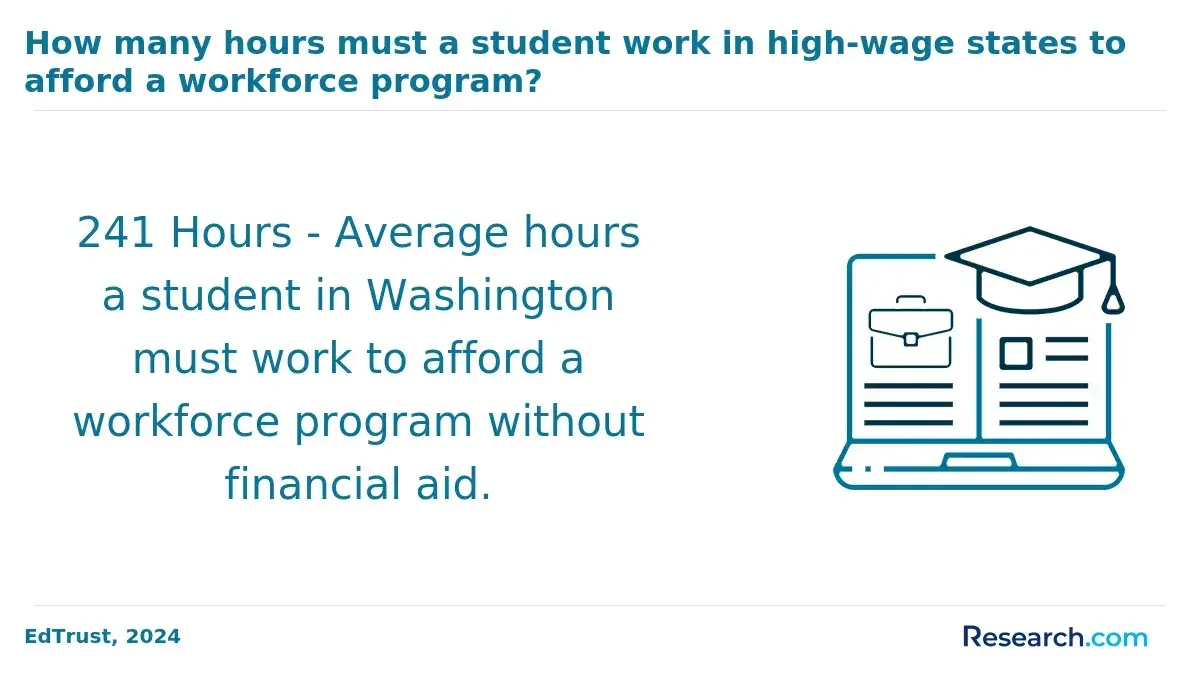
Costs for online game programming degrees vary widely by institution type, transfer credits, technology fees, course materials, and required hardware. College Board's 2024 data reported average published tuition and fees of $11,610 for in-state students at public four-year institutions and $43,350 at private nonprofit four-year institutions. Online pricing does not always follow those averages, but the figures give students a useful benchmark for judging whether a program is unusually inexpensive or unusually expensive.
Tuition is only one part of the cost. Game programming students should also budget for hardware and software needs that may be less significant in some other online majors, including non-technical programs such as a nutritional science degree online.
The table below summarizes the major cost categories. Use it to calculate total cost of attendance rather than comparing tuition alone.
| Cost category | What it may include | Why it matters |
| Tuition | Per-credit or per-term charges for required coursework | Usually the largest direct cost and the basis for ROI comparisons |
| Fees | Technology, online learning, graduation, lab, or student service fees | Can make a low advertised tuition less affordable |
| Hardware | Computer with sufficient CPU, GPU, RAM, storage, display, and peripherals | Game engines can require stronger equipment than standard online coursework |
| Software and subscriptions | Game engines, IDEs, version control tools, asset tools, cloud storage, or marketplace assets | Some tools are free for students, but project requirements can still create expenses |
| Books and materials | Textbooks, digital resources, assets, or course packs | Costs vary by course and may be lower when open educational resources are used |
| Opportunity cost | Reduced work hours, unpaid project time, or internship trade-offs | Important for working adults deciding between full-time and part-time study |
Students at eligible accredited institutions may be able to use federal financial aid, including Pell Grants, federal student loans, and work-study. For the 2024-25 award year, the maximum Pell Grant was $7,395, but actual eligibility depends on FAFSA results, enrollment intensity, cost of attendance, and other aid.
To reduce cost, students should take a step-by-step approach rather than relying only on advertised tuition. The following actions can materially change the final price:
- Request a written transfer credit evaluation before committing to enrollment.
- Compare total program cost, including fees and required equipment, not just per-credit tuition.
- Ask whether general education courses can be completed at a lower-cost community college and transferred back.
- Confirm whether scholarships apply to online students and whether they renew automatically.
- Estimate monthly loan payments before borrowing and compare them with realistic entry-level salary ranges.
- Check whether the school offers paid internships, co-ops, employer partnerships, or portfolio showcases that improve career value.
What entry-level and advanced careers can graduates with gameplay programming concentrations pursue?
Graduates with gameplay programming concentrations can pursue game studio roles, adjacent software roles, simulation jobs, and interactive media positions. The degree is most valuable when paired with a portfolio that proves the student can build and polish playable systems.
The table below connects common roles to responsibilities and preparation. It helps students see which careers are directly aligned with gameplay programming and which may require additional specialization.
| Career path | Typical responsibilities | Helpful preparation | Career stage |
| Junior gameplay programmer | Implement player mechanics, UI behavior, camera systems, weapons, abilities, and interactive objects | Strong C++ or C#, engine projects, debugging, math for games, and Git | Entry level |
| Technical designer | Prototype mechanics, tune systems, script encounters, and bridge design with engineering | Gameplay scripting, design communication, rapid prototyping, and engine fluency | Entry to mid level |
| Tools programmer | Create internal tools for designers, artists, level builders, or QA teams | Software engineering, UI tools, scripting, editor extensions, and workflow analysis | Entry to mid level |
| QA automation or software tester | Test features, write bug reports, automate checks, and support release quality | Testing methods, scripting, version control, and strong communication | Entry level |
| Engine programmer | Work on rendering, physics, memory, optimization, tools, or platform systems | Advanced C++, algorithms, computer architecture, graphics, and performance profiling | Advanced or specialized |
| Simulation developer | Build interactive training, defense, medical, industrial, or education simulations | Real-time systems, physics, UI, data integration, and domain-specific knowledge | Entry to advanced |
| AI or data-focused game developer | Work on player behavior analysis, procedural systems, bots, personalization, or analytics tools | Statistics, machine learning, databases, and production software skills | Advanced or specialized |
Not every graduate enters a game studio immediately. Some build experience in software development, QA automation, simulation, AR/VR, or educational technology before moving toward games. This can be a smart path because many technical skills transfer across industries.
Students interested in gameplay analytics, personalization, or AI-driven systems may eventually benefit from graduate-level data training. A masters in data science online can make sense later for professionals who want to move from gameplay implementation into analytics, machine learning, or player-behavior modeling.
Career outcomes vary by region, portfolio quality, internships, networking, and market cycles. The game industry can be competitive and project-based, so students should avoid assuming that a degree alone will be enough. A strong job search plan should include playable projects, code samples, team experience, game jam participation, and tailored applications.
What is the salary outlook and industry demand for gameplay programmers and related roles?
The salary outlook for gameplay programmers is best understood through broader software labor market data because federal datasets do not always isolate "gameplay programmer" as a separate occupation. The BLS reported a May 2024 median annual wage of $133,080 for software developers. That figure is not a promise for game graduates, but it shows the broader market value of advanced programming skill.
Demand is also supported by software employment trends. BLS projected software developer employment to grow 17% from 2023 to 2033, much faster than the average for all occupations. For students, the practical takeaway is that strong programming fundamentals can support both game and non-game career options, which can reduce risk if studio hiring slows.
The table below explains how compensation and demand can vary across gameplay-related roles. It avoids treating one salary number as universal because role level, studio size, region, platform, and specialization can change pay substantially.
| Role area | Demand driver | Salary context | What improves competitiveness |
| Gameplay programming | Need for polished mechanics, live updates, cross-platform features, and player-facing systems | Often evaluated within the broader software developer labor market | Playable projects, engine fluency, strong debugging, and team production experience |
| Engine and graphics programming | Performance, rendering, platform optimization, and custom technology needs | Can be higher in specialized technical roles, but expectations are also higher | Advanced C++, math, graphics, profiling, and systems knowledge |
| Tools programming | Studios need better workflows for designers, artists, QA, and live operations | Often overlaps with internal software development roles | Editor tools, usability mindset, scripting, and communication with non-programmers |
| QA automation | Complex releases, patches, multiplayer systems, and platform compliance | May start lower than software development but can lead to technical advancement | Testing frameworks, scripting, bug documentation, and release discipline |
| Simulation and interactive software | Training, defense, education, healthcare, manufacturing, and AR/VR applications | May offer steadier demand outside entertainment cycles | Real-time development, domain knowledge, UX, and software engineering practices |
Current trends are reshaping expectations. Studios increasingly value developers who can work across engines, understand live-service development, collaborate remotely, and use AI-assisted tools responsibly. AI may automate some routine content tasks, but it also increases the need for programmers who can integrate tools, evaluate generated output, maintain performance, and solve novel gameplay problems.
Students should use salary data as a planning benchmark, not a guarantee. Entry-level pay can differ from median pay, and game industry compensation may vary widely by company, location, remote-work policy, shipped-title experience, and specialization.
How can prospective students evaluate and choose a reputable online gameplay programming program?
A reputable online gameplay programming program should be accredited, technically rigorous, transparent about cost, and designed around portfolio development. The best choice is the program that matches your target role, budget, learning style, and risk tolerance, not simply the school with the flashiest game trailers.
Use the following steps to compare programs systematically. They will help you move beyond marketing language and focus on evidence that affects outcomes.
- Verify institutional accreditation through the school's website and the U.S. Department of Education or CHEA-recognized accreditation databases.
- Download the current degree plan and identify how many courses are truly programming-focused rather than general design, media, or survey courses.
- Ask which engines, languages, and production tools students use in upper-division coursework.
- Review student portfolios, capstone projects, game jam work, or demo reels to judge the quality of actual output.
- Ask how online students receive code feedback, project critiques, tutoring, and career support.
- Confirm total cost of attendance, including fees, hardware, software, and the number of credits remaining after transfer evaluation.
- Ask about internships, employer partnerships, alumni outcomes, and whether career services understand game industry hiring.
- Check whether the program supports your intended role, such as gameplay programmer, technical designer, tools programmer, or engine programmer.
Common mistakes can be expensive. Students should watch for these red flags before signing an enrollment agreement:
- Choosing a program because it says "game" in the title without checking whether advanced programming courses are required.
- Ignoring accreditation or assuming all accredited schools have the same transfer and graduate school acceptance outcomes.
- Comparing tuition only and overlooking fees, hardware, course retakes, and delayed graduation.
- Assuming online programs automatically provide internships or industry connections without verifying how remote students participate.
- Building only solo class projects and failing to show teamwork, version control, documentation, and production communication.
- Expecting the degree to replace a portfolio, code samples, networking, and interview preparation.
A strong final shortlist should include at least three programs with written cost estimates, transfer evaluations, degree maps, and sample student work. If a school cannot clearly explain what you will build, what tools you will use, how you will be evaluated, and what support online students receive, keep looking.
Other Things You Should Know About Game Programming & Development
Most online game programming degrees with a gameplay programming concentration require about 120 semester credit hours for the bachelor’s degree. The concentration itself often adds 12 to 18 upper-division credits in topics such as C++, game engines, AI scripting, and real-time interactive systems.
In 2027, requirements to enroll in an online game programming and development degree program typically include a high school diploma or equivalent. Some programs may also require a portfolio of work or prior experience in programming, but prerequisites can vary by institution.
C++ and C# are especially useful because they are common in Unreal Engine and Unity workflows. Python can also help with tools, automation, and prototyping, but it usually should not be the only language for a gameplay-focused student.
Yes, many online students work while enrolled, but programming projects can be time-intensive. Part-time study may be more realistic for working adults, especially during advanced courses, capstones, or team-based production classes.
References
- Bachelor of Science inGame Design and Development Online or On Campus https://www.albany.edu/cehc/programs/bs-game-design-and-development
- Game Programming Degree | Bachelor of Game Development https://www.cgspectrum.com/courses/game-programming-program
- Game Development https://online.champlain.edu/degrees-certificates/bachelors-game-development
- Game Design Degree at University of Advancing Technology https://www.uat.edu/game-design-degree
- Career Path and Salary for Video Game Designers | ComputerScience.org https://www.computerscience.org/careers/video-game-designer/career-outlook-and-salary/
- Top 50 Game Design Schools and Colleges in the U.S. - 2023 Rankings | Animation Career Review https://www.animationcareerreview.com/articles/top-50-game-design-schools-and-colleges-us-2023-rankings
- Which Game Degree is Right for You? - The Hub https://hub.fullsail.edu/articles/which-game-degree-is-right-for-you
- Learn Coding & Math Online | Modern Age Coders https://learn.modernagecoders.com/courses
- Circuit Stream · Your Guide to the Different Career Pathways You Can Take in the Game Development Industry https://www.circuitstream.com/blog/your-guide-to-the-different-career-pathways-you-can-take-in-the-game-development-industry
- Is Game Programming a Good Career Path? Opportunities, Salary, Outlook - Champlain College https://www.champlain.edu/blog/stories/game-programming-career-path/