2027 Online Game Programming and Development Degrees That Help Build Graphics and Rendering Skills

Co-Founder and Chief Data Scientist
Choosing a game programming degree is harder when your real goal is graphics, rendering, or engine work rather than general game design. The stakes are high: BLS reports that software developer-related employment is projected to grow 17% from 2023 to 2033, much faster than average, but specialized game roles still reward strong portfolios. This guide is for students comparing online degree options, costs, skills, admissions, accreditation, and career outcomes so they can choose a program that matches their technical goals and budget.
Key Things You Should Know
- Graphics-focused online game programming degrees usually emphasize C++, linear algebra, computer graphics, shaders, real-time rendering, physics simulation, optimization, and engine workflows rather than story, level design, or visual art alone.
- College Board's 2024 pricing data puts average published tuition and fees at $11,610 for in-state public four-year colleges and $43,350 for private nonprofit four-year colleges, so transfer credits and public online options can strongly affect total cost.
- BLS May 2024 data lists median pay of $133,080 for software developers and 17% projected growth for software developer, QA analyst, and tester occupations from 2023 to 2033, but game-specific hiring is portfolio-driven and more competitive than the broader software market.
What is an online game programming and development degree focused on graphics and rendering?
An online game programming and development degree focused on graphics and rendering is a computing program that teaches students how interactive 3D worlds are built, displayed, optimized, and controlled in real time. Instead of concentrating mainly on game concepts or visual storytelling, these programs train students to write code that makes lighting, materials, animation, cameras, physics, and performance work inside a game engine.
The core difference is technical depth. A game design program may emphasize mechanics, player experience, narrative, and production. A graphics-focused programming path usually expects more math and systems thinking, including vectors, matrices, memory management, GPU pipelines, and performance profiling. Students who want to become engine programmers, technical artists, graphics programmers, tools developers, or real-time simulation developers should look for evidence that the curriculum goes beyond "intro to Unity" or "game design fundamentals."
It also helps to separate related disciplines. A student drawn to visual composition, branding, user interface aesthetics, or digital illustration may be better served by a graphic design degree, while a student who wants to write rendering code should prioritize computer science, game programming, and engine development coursework.
Common terms can be confusing, so the table below explains what they usually mean in the context of online game programming degrees and why each matters for graphics-focused study.
| Term | What it means | Why it matters for graphics and rendering |
| Game programming | Writing software for gameplay systems, tools, artificial intelligence, physics, networking, and engines | Provides the programming foundation needed before specializing in rendering or engine work |
| Computer graphics | The study of how computers generate, transform, shade, and display images | Builds the theory behind lighting, cameras, meshes, shaders, textures, and animation |
| Rendering | The process of converting 3D scene data into the final image displayed on screen | Connects math, GPU programming, art assets, lighting, and performance optimization |
| Game engine | A software framework for graphics, physics, audio, input, scripting, and asset management | Most student and professional projects are built in engines such as Unreal Engine, Unity, or custom engines |
| Technical art | A bridge role between artists and programmers that builds pipelines, shaders, tools, and optimized assets | Useful for students who like both visual production and coding but may not want pure engine programming |
The degree is usually a good fit for students who enjoy programming, math, visual technology, and iterative problem-solving. It may be a poor fit for students who want to focus mostly on character art, writing, game criticism, or esports management unless the program offers a separate concentration aligned with those goals.
How do online game programming degrees compare to campus-based programs for graphics training?
Online and campus-based game programming programs can both build strong graphics skills, but they deliver the learning experience differently. The most important question is not whether the program is online or on campus; it is whether students receive enough technical feedback, project depth, computing resources, and portfolio support to demonstrate real-time rendering ability.
Online programs are often better for working adults, transfer students, military learners, and students who need geographic flexibility. Campus programs may be better for students who want in-person labs, studio culture, student game clubs, or easier access to motion capture, VR labs, faculty research groups, and local industry events. That said, many online students can still build strong portfolios if the program includes live critiques, collaborative projects, cloud-based tools, and structured milestones.
The table below compares the main decision points students should evaluate before assuming one format is automatically better for graphics training.
| Factor | Online game programming degree | Campus-based game programming degree | Best choice when... |
| Schedule flexibility | Often asynchronous or evening-friendly | Usually tied to set class times and studio meetings | Online works better for students balancing work, family, or relocation limits |
| Rendering labs and hardware | Depends on remote desktops, cloud labs, or the student's own machine | May provide dedicated labs, VR equipment, and higher-end workstations | Campus may be stronger if specialized hardware access is central to the curriculum |
| Collaboration | Requires deliberate use of Git, Discord, Slack, Jira, Perforce, or engine collaboration tools | Can happen naturally in labs and student studios | Online works if the program requires team-based production, not just solo assignments |
| Portfolio feedback | Can be excellent if faculty provide recorded critiques, code reviews, and milestone reviews | Can be more immediate through studio critiques and office hours | Either format works if feedback is frequent, technical, and tied to finished projects |
| Networking | Often depends on virtual events, alumni channels, and online communities | May offer more local networking and student showcases | Campus can help students who need structured community, while online students must be proactive |
A practical way to compare formats is to ask for examples of recent student capstone projects. For graphics and rendering, a credible portfolio should show more than a playable prototype. Look for shader work, lighting systems, optimization evidence, engine tools, frame-rate profiling, before-and-after performance improvements, or documented technical choices.
Students comparing online programs across different fields should also remember that each major has different remote-learning constraints. For example, an online bachelor's degree in nutrition may involve different lab, internship, or supervised-practice considerations than a computing degree, while game programming depends heavily on software access, hardware requirements, and project-based assessment.
What types of online game programming and development degrees are available in the U.S.?
Online game programming and development degrees in the U.S. are available at several academic levels. The right choice depends on your starting point, math readiness, prior credits, career target, and whether you need a full degree or a shorter credential to strengthen a portfolio.
The table below compares common degree and credential options. Use it to match your current education level with the type of graphics or rendering role you eventually want.
| Program type | Typical length | Common focus | Best fit | Limitations to check |
| Certificate in game programming or game development | Several months to 1 year | Game engine basics, scripting, introductory production, portfolio projects | Students testing the field or adding game skills to an existing degree | May not include enough math, algorithms, or graphics theory for rendering roles |
| Associate degree | About 2 years full time | Programming fundamentals, basic game development, general education, introductory math | Students planning to transfer into a bachelor's program or seek junior technical support roles | Transferability varies; confirm articulation agreements before enrolling |
| Bachelor's degree | About 4 years full time, less with transfer credit | C++, data structures, algorithms, graphics, engines, physics, tools, capstone projects | Most students targeting entry-level game programmer, graphics programmer, or engine-related roles | Quality varies widely; check for advanced graphics and portfolio depth |
| Master's degree | About 1 to 3 years depending on pacing | Advanced graphics, simulation, AI, research, systems, visualization, or interactive technology | Students with a computing background seeking specialization or technical leadership | May require strong prerequisites in programming, math, and computer science |
A bachelor's degree is usually the most complete starting point for students who do not already have a computer science background. It provides time to build programming fundamentals before moving into graphics, engines, and capstone work. A certificate can be useful, but it is usually not a substitute for deeper study if your goal is graphics programming rather than basic gameplay scripting.
Students who already have a bachelor's degree in computer science, software engineering, mathematics, or electrical engineering can often pursue a master's degree, graduate certificate, or self-directed portfolio path instead of earning a second bachelor's degree. The better option depends on whether the student needs formal credentials, advanced faculty feedback, or simply targeted projects using industry tools.
What core courses build graphics, rendering, and engine programming skills in these programs?
The strongest graphics-focused programs combine computer science fundamentals with game-specific production. A course catalog that mentions games is not enough; students should look for the technical sequence that leads from programming basics to real-time rendering and engine-level problem-solving.
The courses below are especially important because they build the foundation employers expect to see in code samples, technical demos, and capstone projects.
- Programming in C++ and scripting languages: C++ is central for engine work, while C#, Python, Lua, or Blueprint-style visual scripting may appear in tools, gameplay systems, or engine workflows.
- Data structures and algorithms: Students learn how to organize data efficiently, which matters for scene graphs, spatial partitioning, collision systems, and performance-sensitive code.
- Linear algebra and calculus: Vectors, matrices, transformations, interpolation, and curves are the mathematical backbone of cameras, lighting, animation, physics, and shaders.
- Computer graphics: This course usually covers coordinate systems, rasterization, lighting models, texture mapping, projection, shading, and the graphics pipeline.
- Shader programming: Students learn how GPU programs control materials, lighting, post-processing, visual effects, and performance trade-offs.
- Game engine architecture: This course explains how rendering, input, physics, audio, animation, scripting, asset loading, and tools fit together in a real-time engine.
- Physics and simulation: Collision detection, rigid bodies, particles, cloth, and numerical methods help students understand believable motion and interactive environments.
- Optimization and profiling: Students learn to identify bottlenecks, reduce draw calls, manage memory, improve frame times, and balance visual quality with performance.
- Team-based capstone: A substantial final project shows whether students can ship a working interactive system, document technical choices, and collaborate using professional workflows.
Graphics programming is increasingly influenced by data-heavy tools, procedural workflows, and machine learning-assisted asset pipelines. Students who discover they prefer large-scale data modeling, visualization, or machine learning infrastructure may eventually compare game technology programs with an online master in data science, especially if they want to apply graphics skills to simulation, analytics, or visualization outside entertainment.
When reviewing a syllabus, look for assignments that require students to build or modify rendering systems rather than only use prebuilt engine features. A strong project might include a custom shader, deferred rendering experiment, particle system, lighting optimization pass, procedural terrain tool, or performance analysis report.
How long do online game programming and development degrees take, and what do they cost?
Most online game programming degrees follow the same credit structure as other U.S. computing degrees. A bachelor's degree commonly requires about 120 credits, while a master's degree often falls in the 30- to 45-credit range. Actual time to completion depends on transfer credits, course load, prerequisite sequencing, and whether the school offers accelerated terms.
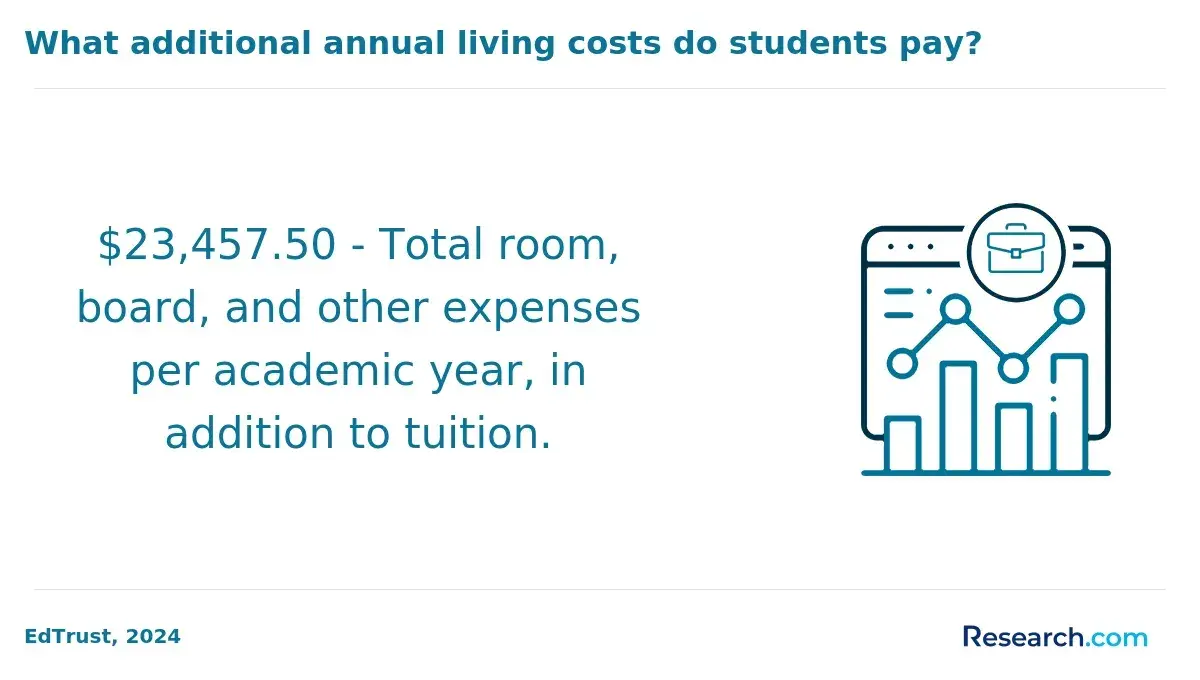
Cost is more variable than duration. College Board's 2024 Trends in College Pricing reports average published tuition and fees of $11,610 for in-state students at public four-year institutions and $43,350 at private nonprofit four-year institutions for the 2024-25 academic year. Those figures are not online-program-specific, but they are useful benchmarks: if an online game programming program is priced far above comparable options, students should ask what added value justifies the premium.
When schools publish costs clearly, compare the full price rather than tuition alone. Graphics-focused programs can require specific hardware and software access, so the real cost may include more than credits.
- Tuition per credit or per term
- Technology, online learning, lab, portfolio, or graduation fees
- Required laptop or desktop specifications, especially GPU, RAM, storage, and cooling needs
- Game engine, art tool, version control, cloud rendering, or plugin costs not covered by student licenses
- Books, digital materials, exam proctoring, and project storage costs
- Travel costs if the online program has optional or required residencies, showcases, or intensives
The table below summarizes common time and cost trade-offs. It can help students decide whether speed, affordability, depth, or flexibility matters most.
| Path | Typical timeline | Cost pattern | Best strategy |
| Full-time bachelor's degree | About 4 years | Higher annual course load but faster entry to the labor market | Choose if you can study intensively and want a complete foundation |
| Part-time bachelor's degree | Often 5 to 6 years or longer | Lower term-by-term cost but longer time before completion | Choose if you need to keep working while building a portfolio gradually |
| Transfer-friendly bachelor's degree | Often 2 to 3 years after prior credits | Can reduce total tuition if credits apply cleanly | Choose if you have community college or previous university credit |
| Graduate certificate | Several months to 1 year | Lower total cost than a degree, but narrower scope | Choose if you already have a computing degree and need targeted game or graphics projects |
| Master's degree | About 1 to 3 years | Higher per-credit cost in many programs but more specialized study | Choose if you need advanced technical depth, research exposure, or career repositioning |
To reduce costs, ask admissions and financial aid staff how many credits can transfer, whether online students pay in-state rates, whether portfolio or prior-learning credit is available, and whether game-specific courses are offered often enough to avoid delayed graduation.
What admission requirements do online game programming and development programs typically have?
Admission requirements vary by level and institution, but most online game programming programs look for evidence that a student can handle technical coursework. The more graphics-focused the program is, the more important math and programming readiness become.
Typical undergraduate requirements include a high school diploma or equivalent, transcripts, an application form, and sometimes a minimum GPA. Some programs may request SAT or ACT scores, though many institutions are test-optional. Transfer applicants usually submit college transcripts, and schools may evaluate whether prior programming, calculus, physics, or general education courses apply to the degree.
Graduate programs are more selective. They commonly require a bachelor's degree, transcripts, a resume, a statement of purpose, and prerequisites in programming, data structures, algorithms, calculus, linear algebra, or computer organization. A portfolio may be optional, but for graphics-focused study it can help show readiness.
Students can prepare a stronger application by gathering evidence that they are ready for both coding and visual technical work. The following materials are especially useful when a program asks for a portfolio or recommends prior experience.
- A small game prototype that demonstrates interaction, camera control, collision, or simple rendering effects
- Code samples in C++, C#, Java, Python, or another relevant language with clear documentation
- Math preparation, such as completed precalculus, calculus, linear algebra, or physics coursework
- A GitHub or similar repository showing version control habits and project history
- A short statement explaining why the student wants graphics, rendering, engine, or technical art training rather than general game design
A common mistake is applying to a game program because it sounds creative while underestimating the programming load. Students who dislike debugging, math, or systems thinking may find a graphics-heavy programming degree frustrating. Conversely, students who enjoy technical problem-solving should not be discouraged by a lack of professional game experience; many programs teach game tools from the ground up if the student has the discipline to build fundamentals.
How can students verify accreditation and program quality for online game programming degrees?
Accreditation and program quality matter because students use degrees for employment, graduate school, transfer credit, and federal financial aid eligibility. In the U.S., the first step is institutional accreditation from an accreditor recognized by the U.S. Department of Education or the Council for Higher Education Accreditation. Programmatic accreditation, such as ABET for certain computing programs, can be valuable but is not available or common for every game development degree.
Use the following steps before enrolling. They are practical safeguards against low-value programs, unclear credentials, and weak technical preparation.
- Verify institutional accreditation in the U.S. Department of Education's Database of Accredited Postsecondary Institutions and Programs or through the accreditor's official directory.
- Confirm that the exact online campus, degree name, and credential level are covered, not just a similarly named institution or on-campus program.
- Review whether the curriculum includes computer science depth, advanced graphics, math, engine programming, optimization, and a capstone or portfolio sequence.
- Ask for recent student work examples, graduate outcomes, internship support, employer partnerships, and faculty experience in game, simulation, graphics, or software engineering.
- Check transfer credit rules, course rotation, teach-out policies, refund policies, and whether specialized courses are guaranteed often enough for on-time completion.
- Compare total cost against similar accredited programs and ask what services are included for online students, such as tutoring, career coaching, code review, and technical support.
The table below highlights common red flags and better ways to evaluate a program. These issues are especially important in game education because polished marketing can hide a thin technical curriculum.
| Red flag | Why it matters | Better alternative |
| The program advertises "game development" but lists few programming or math courses | It may prepare students for general design exposure rather than graphics or engine roles | Look for C++, data structures, linear algebra, graphics, shaders, and engine architecture |
| No public information about accreditation | Credits, financial aid, and employer recognition may be at risk | Verify accreditation through official directories before applying |
| Portfolio examples are mostly trailers with no technical breakdown | Visual polish does not prove rendering, optimization, or engine skills | Ask for code samples, technical documentation, and capstone rubrics |
| Online students have limited access to faculty or career services | Graphics skills improve through critique, debugging help, and project feedback | Choose programs with scheduled faculty interaction, critique sessions, and career support |
| Costs are unclear until late in the admissions process | Students may underestimate fees, hardware needs, or completion costs | Request a full cost worksheet before committing |
Program quality is not determined by public or private status alone. A strong lower-cost public program may be a better fit than a high-cost private program, but a specialized private nonprofit program can also make sense if it offers advanced faculty expertise, strong portfolio outcomes, and meaningful industry connections. The key is evidence, not branding.
What entry-level and advanced careers rely on strong graphics and rendering skills?
Strong graphics and rendering skills can support careers inside and outside the traditional video game industry. Entertainment studios hire for these skills, but so do companies working in simulation, defense training, architecture, automotive visualization, virtual production, medical visualization, augmented reality, virtual reality, digital twins, and interactive education.
Entry-level roles may not always use the title "graphics programmer." Many graduates start in broader software, tools, gameplay, QA automation, or technical art roles and move toward rendering after building a portfolio. Advanced rendering jobs usually require evidence of C++, GPU concepts, optimization, and shipped or polished real-time projects.
The table below connects common roles with the responsibilities and evidence employers often look for.
| Role | Typical responsibilities | Portfolio evidence that helps |
| Junior game programmer | Implement gameplay systems, UI logic, camera behavior, debugging fixes, and engine integrations | Playable prototypes, clean code, engine projects, and documented problem-solving |
| Graphics programmer | Build or optimize rendering systems, shaders, lighting, materials, post-processing, and GPU performance | Shader demos, custom rendering features, profiling reports, and technical write-ups |
| Engine programmer | Work on engine architecture, memory, tools, asset loading, rendering integration, and platform performance | C++ systems projects, engine modules, performance benchmarks, and source-control history |
| Technical artist | Create shaders, tools, pipelines, rigging systems, visual effects workflows, and asset optimization processes | Tool demos, material graphs, shader breakdowns, artist-facing scripts, and before-and-after optimization examples |
| Tools programmer | Build editors, plugins, automation tools, asset pipelines, and workflow improvements for teams | Usable tools, clear UI, pipeline documentation, and examples of saved production time |
| Simulation or visualization developer | Create real-time interactive systems for training, research, engineering, architecture, or analysis | Interactive 3D scenes, physics simulations, data visualization, and performance documentation |
AI and automation are changing the field, but they are not removing the need for strong technical judgment. Generative tools can help create textures, concept references, code suggestions, or test assets, while real-time engines increasingly include automated lighting, upscaling, and optimization features. Employers still need people who understand what the tools are doing, can debug artifacts, and can make performance-quality trade-offs for specific hardware.
Students should build toward a portfolio that answers three employer questions: Can this person code? Can this person solve real-time visual problems? Can this person finish and explain technical work? A small, polished rendering demo with clear documentation is often more persuasive than several unfinished prototypes.
What salary ranges and job outlook can graduates with graphics-focused game programming degrees expect?
Salary expectations for graphics-focused game programming graduates should be grounded in broader software and digital media labor data, not only in game-industry anecdotes. Job titles vary widely, and BLS does not publish a single category for "game graphics programmer," so students should use related occupations as benchmarks rather than guarantees.
BLS May 2024 wage data reports a median annual wage of $133,080 for software developers, and the broader software developers, quality assurance analysts, and testers group is projected to grow 17% from 2023 to 2033. For students, the takeaway is that strong programming skills can create opportunities beyond games, which is important because game-studio hiring can be cyclical and portfolio-dependent.
The table below summarizes relevant U.S. labor-market benchmarks. Use these figures as context while remembering that compensation varies by location, employer, experience, specialization, portfolio strength, and whether the role is in entertainment games, simulation, enterprise software, or research.
| Related occupation | BLS median annual wage, May 2024 | BLS projected employment growth, 2023-2033 | How it relates to graphics-focused game degrees |
| Software developers | $133,080 | Part of a broader group projected at 17% | Closest broad benchmark for game, engine, tools, simulation, and rendering programmers |
| Special effects artists and animators | $99,800 | 3% | Relevant to technical art, real-time effects, animation tools, and visual production roles |
| Computer programmers | $98,670 | -10% | Useful caution that narrow coding roles can be more vulnerable without broader software design and systems skills |
| Web developers and digital designers | $95,380 | 8% | Relevant for interactive media, UI, visualization, and web-based 3D experiences |
Entry-level game programming roles may pay less than senior software roles, especially at smaller studios or in competitive entertainment markets. However, graphics and engine skills can also transfer into higher-paying technical areas such as simulation, AR/VR, graphics tools, visualization, robotics interfaces, and real-time enterprise platforms.
To evaluate return on investment, compare total program cost against a realistic career plan. A student paying a high private-school price should expect strong advising, technical faculty, portfolio review, career services, and project outcomes. A student choosing a lower-cost public or transfer-based path may need to be more self-directed about networking and portfolio development, but the lower debt burden can improve financial flexibility after graduation.
Are there industry certifications or specialized tools that complement graphics-focused game programming degrees?
Certifications are not usually required for graphics-focused game programming jobs, but targeted credentials and tool fluency can strengthen a resume when paired with a portfolio. Employers tend to value demonstrated projects more than badges, so certifications should support-not replace-evidence of real technical work.
The most useful tools and credentials are those connected to the roles you want. A rendering programmer needs different proof than a technical artist or gameplay programmer.
- Unreal Engine: Valuable for students interested in high-end real-time rendering, virtual production, simulation, C++ gameplay systems, materials, Niagara visual effects, and engine workflows.
- Unity: Useful for mobile games, AR/VR, indie production, simulation, interactive training, and C# development.
- Graphics APIs and shader languages: DirectX, Vulkan, OpenGL, Metal, HLSL, GLSL, and shader graph systems help students understand how real-time rendering works beneath the engine layer.
- Version control and production tools: Git, Perforce, Jira, Trello, and build systems show readiness for collaborative development.
- 3D and content tools: Blender, Maya, Houdini, Substance 3D tools, and Photoshop can help programmers communicate with artists and build test assets.
- Cloud and deployment tools: AWS, Azure, Google Cloud, containers, and CI/CD tools can matter for multiplayer services, build pipelines, and cloud-based simulation.
AI is becoming part of real-time development workflows through code assistance, procedural content generation, animation tools, upscaling, and asset production support. Students who want to combine game technology with machine learning, computer vision, or intelligent simulation may explore an MS in applied artificial intelligence after building a solid programming foundation.
A smart credential plan is simple: first build a portfolio, then add certifications that explain the tools used in that portfolio. For example, a student interested in technical art might create a shader library, material tool, or VFX optimization demo and then add engine-specific training. A student interested in engine programming might publish a C++ rendering project, document frame-time improvements, and then add lower-level graphics API practice.
Avoid collecting unrelated certificates without a coherent story. Recruiters and technical reviewers are more likely to notice a focused portfolio that shows progression from fundamentals to advanced rendering than a long list of disconnected online course completions.
Other Things You Should Know About Game Programming & Development
It can be worth it if the program is accredited, technically rigorous, and portfolio-driven. Look for C++, math, computer graphics, shaders, engine architecture, optimization, and a substantial capstone. If the program mostly teaches basic game design or engine tutorials, it may not be enough for graphics programming roles.
Most online bachelor’s programs require about 120 semester credits, including 30 to 45 credits in game programming, math, and computer science. Some accelerated pathways accept transfer credits or prior learning and let students finish in about 18 to 36 months.
Some people do, especially with strong C++ skills, a public portfolio, and rendering demos. However, a degree can provide structure, feedback, fundamentals, and access to internships or career services. The best path depends on your discipline, prior experience, budget, and need for a formal credential.
Include a few polished technical projects with clear explanations. Strong examples include custom shaders, lighting systems, particle effects, procedural terrain, frame-rate optimization, graphics API experiments, or engine tools. Add code samples, screenshots, short videos, and notes explaining the technical decisions you made.
References
- FULL-TIME | WINNIPEG LOCATIONS GAMPF-AD Game Development - Programming https://catalogue.rrc.ca/Programs/WPG/FullTime/GAMPF-AD/PrinterFriendly
- Is Game Programming a Good Career Path? Opportunities, Salary, Outlook - Champlain College https://www.champlain.edu/blog/stories/game-programming-career-path/
- Learn 3D Computer Graphics Programming from Scratch https://pikuma.com/courses/learn-3d-computer-graphics-programming
- Graphics Programming - Where to Start? https://stefanpijnacker.nl/article/graphics-programming-where-to-start/
- Alex TardifGraphics & Game Programmer https://alextardif.com/GraphicsJobGuide.html
- Game Development - studia I stopnia - Collegium Da Vinci Poznań https://cdv.pl/en/first-cycle-degree/creative-media-and-art/game-development-2/
- 80 Level Job Digest: Great Jobs for Artists & Developers https://80.lv/articles/80-level-job-digest-great-jobs-for-artists-developers
- Game Development Bachelor's Degree https://www.fullsail.edu/degrees/game-development-bachelor
- Top 50 Game Design Schools and Colleges in the U.S. - 2023 Rankings | Animation Career Review https://www.animationcareerreview.com/articles/top-50-game-design-schools-and-colleges-us-2023-rankings
- Game Programming Degree | Bachelor of Game Development https://www.cgspectrum.com/courses/game-programming-program