2027 Choosing an Online BS in Business Administration Around A Long Daily Commute
Audited and Verified:
Our Editorial and Data Verification Process
Research.com uses government datasets, official education statistics and primary institutional information to support its career and degree guides. Our review process checks factual accuracy, occupational definitions, source dates and the requirements associated with the credentials discussed.
How This Article Was Fact-Checked
Our editorial team verifies salary estimates, employment projections, education requirements and program information against original data providers and official organizations. Salary figures are checked against the relevant occupational definitions and reporting periods. Information about licensure, accreditation and required in-person training is reviewed separately.
Fact-checked and verified on:

Co-Founder and Chief Data Scientist
A long commute can make a campus-based business degree impractical, but an online program will not necessarily fit into the time you have left after work. This guide is for commuters considering a BS in Business Administration, including working adults returning to college. It explains how to test a program's actual attendance and assignment demands, compare costs and course options, and decide whether the degree supports your career goal. The aim is to help you choose a schedule you can sustain - not simply a program advertised as flexible.
Key Things You Should Know
- Choose based on weekly deadlines, live meetings, exams, and group work - not the word "online." A long work commute remains part of your schedule even if campus trips disappear.
- Ask for a term-by-term course plan before enrolling. Part-time study may protect your work and study time, while accelerated terms can increase the weekly workload.
- Compare the cost of credits you still need, fees, and borrowing with the role you want. The degree can support advancement, but it does not guarantee a management job or a particular salary.
What Is an Online BS in Business Administration?
An online Bachelor of Science in Business Administration is an undergraduate degree covering several business functions, typically through a general education curriculum, business core, electives, and sometimes a formal concentration. "Online" describes how instruction is delivered; it does not mean the degree is self-paced or free of scheduled activities.
A BS, a Bachelor of Business Administration (BBA), and a specialized business bachelor's degree can have different quantitative requirements and major courses. Compare actual catalogs rather than assuming the titles are interchangeable. When you compare leading American online business degree schools, confirm the exact degree awarded and whether required courses can be completed online - not just whether some business classes are offered online.
Is an Online Business Administration Degree Worth It for Long Commuters?
It may be worthwhile if a bachelor's degree is required or preferred for your target role and online delivery removes trips to campus that would otherwise prevent you from finishing. It will not shorten your commute to work. Nor should you count on learning effectively while driving: lectures may occasionally be suitable for listening, but reading, spreadsheets, exams, and group assignments need focused, safe study time.
Start with a normal workweek, including travel, meals, sleep, and existing obligations. Identify repeatable study periods at home, at a library, or during a break when you are not driving. Then ask the program for its expected weekly workload and a recent syllabus from a required course. If the schedule only works when every commute becomes study time, a lighter course load or a different pathway is more realistic.
Worth also depends on what remains to complete and what you hope to gain. Compare your employer's degree requirements and education benefits with cost-effective paths to a business degree. If you already hold a bachelor's degree and need one specific skill, targeted coursework or employer training may be more useful than a second bachelor's degree.
How Do You Choose an Accredited Online Business Administration Program?
First, verify the institution's recognized accreditation and confirm that it applies to the school awarding the degree. AACSB, ACBSP, and IACBE accreditation concerns business education, but their scopes differ; check whether the particular school or program is covered. Accreditation is an important screening tool, not proof that a program's timetable or career services meet your needs.
For a commuter, request written answers about live attendance, exam proctoring, group meetings, campus visits, course rotation, technology requirements, tutoring hours, and leave policies. Ask whether required courses are offered often enough to support your proposed pace. If federal aid matters, verify the institution and program's eligibility with its financial-aid office; FAFSA planning for affordable business administration study is a useful starting point, but it cannot establish your individual aid award.
Before paying an enrollment deposit, ask an adviser to review a tentative course sequence against your work hours. An appealing list of online electives will not solve a scheduling conflict in a required class.
The decisive difference for a long commuter is not simply location; it is when participation must happen. This comparison shows which obligations to check before choosing a delivery format.
| Format | Potential commute advantage | Scheduling constraint to verify |
| Asynchronous online | Usually avoids routine classroom trips | Fixed deadlines, timed exams, and scheduled group work may still apply |
| Live online | Avoids travel to class | Required sessions may conflict with work or the trip home |
| Hybrid | Reduces, but may not eliminate, campus trips | Required meeting dates and travel time |
| Campus-based | May offer easier in-person access to classmates and services | Class meetings add travel to an already long day |
A predictable live session may suit someone who can reliably be home by class time; asynchronous courses may better accommodate variable traffic. Neither format guarantees lighter work. Explore flexible business administration programs for career progression, then confirm each program's attendance rules rather than relying on its format label.
Business cores commonly include accounting, economics, finance, marketing, management, operations, statistics, and business law. Programs may also require presentations, collaborative cases, simulations, or a capstone. For commuters, the assignment format matters as much as the subject: a course with recurring team meetings may be harder to fit around unpredictable travel than one with individual work due on set dates.
Choose electives by the responsibilities you want to take on, not by a concentration's name alone. Operations or project-focused coursework, for example, can help you practice scheduling and process analysis, but a class does not confer a professional project-management credential. If that focus interests you, compare course availability and total cost; scholarship search options for project management majors may also be worth checking for eligibility rather than assuming an award will apply to a general business degree.
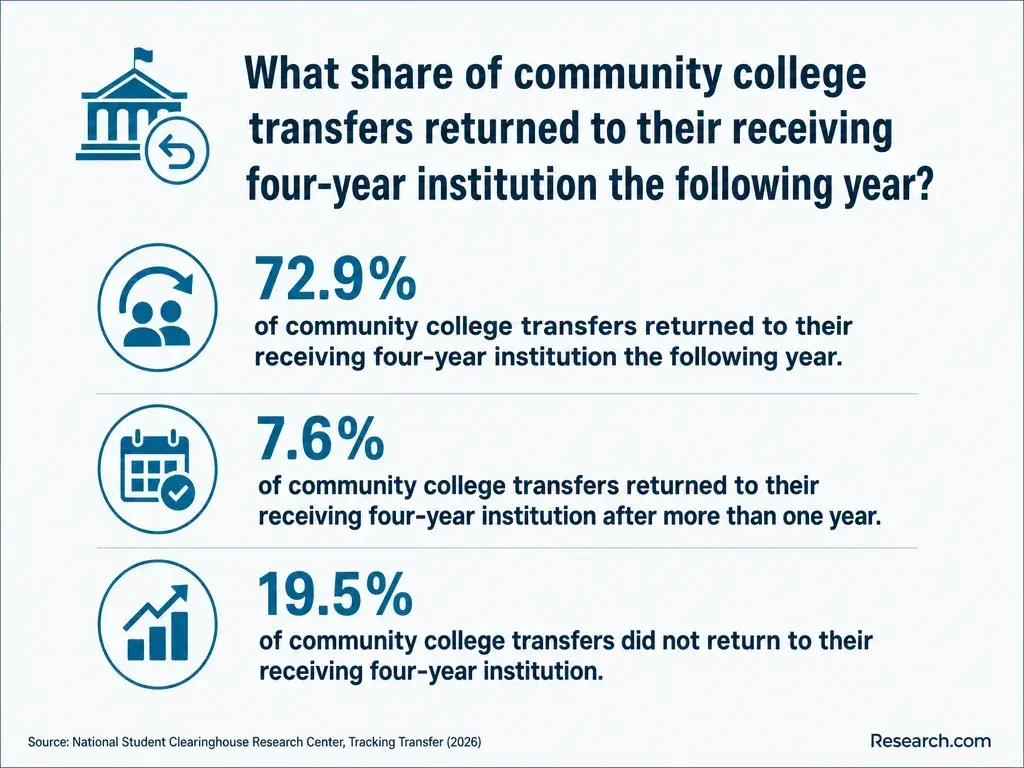
Requirements vary by institution and by whether you apply as a first-year or transfer student. Schools may request prior transcripts and evidence of academic readiness; some business majors also have separate entry or progression requirements. An applicant with previous college work should not assume that accepted credits will satisfy accounting, statistics, or other major requirements.
Gather transcripts before committing to a start date and request a degree audit showing where each accepted course applies. Ask whether any remaining prerequisites delay access to upper-level online courses. For a fuller account of variable entry rules, see academic preparation for business administration applicants. The admitting institution - not a general transfer estimate - decides how prior coursework applies to its degree.
Completion time depends on applicable transfer credit, course load, prerequisite order, and when required classes run. A shorter advertised calendar can mean more work each week, not less coursework. Review fastest online business bachelor's programs in the US with that distinction in mind: a program is only fast for you if its sequence fits both your evaluated credits and your available study hours.
For a useful cost comparison, request an estimate based on your remaining required credits rather than the tuition rate alone. Include mandatory fees, books, software, proctoring, any campus travel, and potential borrowing costs. Ask when employer reimbursement is paid, if available; reimbursement after a passing grade does not cover the bill due at the start of a term.
A business administration graduate may pursue coordinator or specialist roles in operations, marketing, purchasing, sales support, or human resources, depending on prior experience and demonstrated skills. The degree provides broad preparation; employers still evaluate job-specific work such as spreadsheet analysis, customer communication, scheduling, or handling records responsibly.
Use a target job posting to identify a realistic next step. A commuter already working in an organization may be able to seek relevant assignments without changing employers, but a class project is not the same as approved workplace experience. If HR is your target, compare human resources degree pathways with a general business degree before choosing electives. For a substantial switch into a specialized function, the more focused curriculum or supervised experience may matter more than the broad degree title.
There is no single salary for an online BS in Business Administration. Pay depends on the occupation, location, industry, responsibilities, and experience - not the delivery format alone. For context, the U.S. Bureau of Labor Statistics reports a May 2025 median annual wage of $75,940 for human resources specialists, with employment projected to grow 6% from 2025 to 2035. That is an occupation-wide median, not an expected starting salary or a forecast for business graduates.
Evaluate the degree against an actual role you could qualify for, not a manager's wage you might reach later. Compare local job requirements and plausible pay with your remaining education costs. Cost-effective paths to a business degree can inform the school comparison, but only a personalized credit evaluation and financial-aid offer can clarify your likely expense.
Compare economical college choices for business administration majors against your own degree audit, because a lower price per credit may not produce a lower completion cost if more courses are required.
Do Business Administration Graduates Need Licenses or Certifications?
Most general business roles do not require a license simply because you earned a business administration degree. Particular occupations can be different: accounting licensure, some financial-services activities, and certain professional certifications have separate education, examination, or experience rules. A business concentration or project-management course does not automatically meet them.
Check the requirements of your target role before paying for credentials. If a bachelor's degree is necessary but a conventional pace is the obstacle, shorter pathways to an online business degree may be worth examining - provided their weekly workload is feasible. If a degree is not required, a targeted course or employer-supported training may be the more direct option.
Other Things You Should Know About Business Administration
Yes, if conditions permit. Download readings or review notes while riding, but reserve spreadsheet work, exams, and confidential assignments for a secure, reliable workspace.
A phone may work for announcements and some reading, but business courses often require spreadsheets, presentations, and exam software. Ask for the program's device specifications before enrolling.
Tell the school before relocating. Its authorization to enroll students and provide any required services can vary by state; the program must confirm whether you can continue.
Check workplace policy first. A personal device is often the safer choice for separating schoolwork from employer systems and protecting confidential work information.
- General Requirements for Withdrawals and the Return of Title IV Funds | 2025-2026 Federal Student Aid Handbook https://fsapartners.ed.gov/knowledge-center/fsa-handbook/2025-2026/vol5/ch1-general-requirements-withdrawals-and-return-title-iv-funds
- "Ok - I Need Help from Somewhere": 'The Educational Value of Multiplex Student Relationships in a Commuter College' - PMC https://pmc.ncbi.nlm.nih.gov/articles/PMC9178316/
- Fast Facts: Undergraduate graduation rates (40) | ed.gov https://nces.ed.gov/fastfacts/display.asp
- Online BBA | Business | University of Illinois Chicago https://business.uic.edu/online/degrees/bba/
- Tuition & Fees for Online Students | University at Albany https://www.albany.edu/cost-aid/tuition-fees/online-students
- Credit for Prior Learning (CPL) | California Community Colleges https://www.cccco.edu/about-us/chancellors-office/divisions/educational-services-and-support/credit-for-prior-learning/
- Credit for Prior Learning | wichita.edu https://www.wichita.edu/priorlearning
- Choosing the Right Online MBA Program | Gies College of Business https://giesbusiness.illinois.edu/news/2025/10/03/choosing-the-right-online-mba-program--a-comprehensive-guide-to-asynchronous--synchronous--and-hybrid-programs
- Business Administration, B.S.: Degrees: Indiana University | iu.edu https://online.iu.edu/degrees/business-administration-bs-undergraduate.html
- Tuition & Financial Aid Overview - Stevens Online https://online.stevens.edu/tuition-and-financial-aid/