2027 Online BA in Psychology - General Psychology: How to Evaluate a Research Methods Sequence Before Upper-Level Courses
Audited and Verified:
Our Editorial and Data Verification Process
Research.com uses government datasets, official education statistics and primary institutional information to support its career and degree guides. Our review process checks factual accuracy, occupational definitions, source dates and the requirements associated with the credentials discussed.
How This Article Was Fact-Checked
Our editorial team verifies salary estimates, employment projections, education requirements and program information against original data providers and official organizations. Salary figures are checked against the relevant occupational definitions and reporting periods. Information about licensure, accreditation and required in-person training is reviewed separately.
Fact-checked and verified on:

Co-Founder and Chief Data Scientist
An online general psychology BA can look flexible until an upper-level course requires research skills you have not yet learned - or a methods prerequisite is offered too late. For prospective and transfer students, the important question is not simply whether the catalog lists statistics and research methods. It is whether those courses build usable skills in the right order, with feedback and research opportunities that work online.
This guide shows you how to inspect the sequence, identify gaps, and get answers from an adviser before committing to a course plan.
Key Things You Should Know
- Look for three connected stages: statistics, research design, and an opportunity to apply both before - or while beginning - advanced coursework.
- Check the actual prerequisite map and course schedule. A required methods course offered infrequently can delay access to upper-level classes even when its credits fit your degree audit.
- Judge online methods by the work you will produce and the feedback you will receive, not by whether classes are labeled asynchronous.
What Is a Research Methods Sequence in an Online Psychology BA?
A research methods sequence is the planned progression from interpreting psychological evidence to designing and evaluating a study. In a general psychology BA, it commonly connects introductory psychology, statistics, research methods, and later assignments in areas such as social, developmental, or cognitive psychology. Course names and prerequisites vary by institution; the word "sequence" does not necessarily mean a formally named track.
The ordering matters because advanced courses may ask you to distinguish a psychological construct, such as stress, from the questionnaire used to measure it; assess a sample's limitations; and explain why an association does not establish causation. Statistics helps you interpret estimates and uncertainty. Methods explains how design, measurement, recruitment, and ethics affect what those estimates mean.
A BA can provide this foundation without requiring the same research depth as every graduate program. If you expect to pursue graduate study, compare the undergraduate work you could produce with the preparation expected by programs you might later consider, including choosing a fast-track psychology master's program. A faster subsequent degree will not repair missing undergraduate prerequisites automatically.
Which Research Methods Courses Should an Online Psychology BA Include?
Look past course titles to the skills and assessed assignments. The following components describe a coherent foundation, not a universal set of separately required courses.
| Curricular component | What substantive coverage looks like | Potential gap to investigate |
| Statistics for behavioral or social science | Describing data, interpreting associations and group comparisons, and communicating uncertainty | A general math credit that satisfies graduation requirements but does not prepare students to interpret research |
| Research methods or experimental psychology | Research questions, operational definitions, sampling, design, validity, bias, and participant protections | Reading about studies without designing or critiquing one |
| Applied research work | A proposal, analysis of authorized data, reproducible report, or supervised project with revision | A methods requirement completed without feedback on an individual research product |
Qualitative methods, measurement, advanced statistics, or a thesis can add depth, especially for research-oriented students, but their absence does not alone make a BA inadequate. The decisive question is whether required coursework supports the assignments in your intended upper-level electives. That same sequencing principle becomes more consequential in specialized graduate study; forensic psychology master's course sequencing for faster completion illustrates why a short advertised timeline must be checked against prerequisites.
How Can You Evaluate Research Methods Before Taking Upper-Level Psychology Courses?
Request the current catalog, a tentative degree audit, recent methods syllabi, and a schedule showing when required courses are offered. Then trace a path from your first eligible statistics course to the advanced classes you want. This matters particularly for transfer students: accepted credits do not necessarily satisfy a psychology-major prerequisite.
Use this review to turn a course list into a workable plan:
- Map the gates. Mark each prerequisite and any minimum-grade or enrollment rule for methods and your intended upper-level courses.
- Inspect the assignments. Look for critique of published studies, a defensible design, data interpretation, research writing, and feedback followed by revision.
- Check timing. Ask which terms courses run, whether they fill quickly, and whether online students can take required sections in the needed order.
- Resolve transfer equivalencies in writing. Ask the department whether prior statistics or methods coursework applies to the major, not merely to elective credit.
- Test the plan against your goal. Identify whether a target elective, capstone, research role, or prospective graduate program expects skills beyond the required sequence.
For a transfer student prioritizing speed, skipping a prerequisite through an approved equivalency may make sense; skipping its underlying skills does not. The same distinction applies when planning a shorter undergraduate forensic psychology degree: the institution must determine both credit applicability and the remaining course order.
You should be able to turn a broad topic into a testable question, identify how its concepts will be measured, and explain what a particular design can - and cannot - show. For example, if a hypothetical class project examines sleep and study habits, a survey could estimate an association among respondents. It could not, by itself, establish that changing sleep causes better academic performance.
You should also be able to read a methods section critically: Who participated, who was left out, when were outcomes measured, and might missing responses or an unreliable measure change the interpretation? Basic facility with a spreadsheet or statistical tool is useful, but interpreting an output matters more than memorizing one software package.
Research ethics belongs in this foundation. A course assignment does not automatically authorize recruitment, access to employer or client records, or use of a restricted psychological assessment. Ask the instructor and relevant institution about permissions, consent, privacy, and whether review is required before collecting information. If future nonclinical graduate study is your goal, compare those demonstrated skills - not just course titles - when considering economical routes to graduate psychology study.
Either format can teach rigorous methods. Online courses may make recorded explanations and shared documents easier to revisit; campus classes may make spontaneous discussion and access to an on-site research group easier. Neither advantage is guaranteed. What matters is whether students practice designing studies, interpreting evidence, and revising work with qualified feedback.
Ask how often you will meet an instructor, whether collaboration is live or asynchronous, how data-analysis help is delivered, and whether a project involves required campus visits or scheduled participant sessions. An asynchronous lecture can still be paired with fixed-time group meetings. Working students should compare those obligations with their actual availability before enrolling.
Do not confuse online academic methods coursework with the supervised practice required by a professional training program. If a later clinical pathway interests you, fast-track online clinical counseling master's options warrant a separate review of live coursework and field-placement obligations; undergraduate research-methods flexibility does not predict them.
Verify the institution's recognized institutional accreditation and confirm that it applies to the school awarding the BA. Accreditation is an important baseline for evaluating an institution, but it does not establish that its online methods course is well taught, that transfer work will satisfy the major, or that graduates qualify for a license.
Do not expect APA accreditation for a general psychology BA: APA accreditation applies to covered professional psychology training programs, not general undergraduate psychology majors. Ask the school directly about methods-course staffing, research support, and graduation requirements. If you later consider a counseling degree, its applicable program recognition and your state's rules require a separate check; discussions of accelerated accredited clinical mental health counseling programs address a different credential pathway.
Requirements depend on whether you apply as a first-year or transfer student and whether admission to the institution also admits you to the psychology major. Schools may request prior transcripts and set their own academic standards; some require particular courses before students enter upper-level major work. Check the requirements for your intended entry term rather than assuming that an online format changes them.
If you have previous college work, send syllabi for statistics and research methods when course titles do not make their content clear. Ask for a written evaluation showing which credits meet general education, major, prerequisite, and residency requirements. The psychology department or designated evaluator - not a generic transfer-credit estimate - must approve a major-course substitution.
Admission and affordability are separate decisions. Students considering a related substance-use-focused undergraduate route can investigate grants for substance abuse counseling bachelor's study, while verifying aid eligibility and program-specific requirements with the school. That route should not be treated as interchangeable with a general psychology BA's research preparation.
Your remaining requirements, transfer evaluation, enrollment pace, and prerequisite availability determine the timeline more reliably than an advertised completion estimate. A course can fit your credit total yet still delay graduation if it is the only route into required advanced classes and is not available when you need it.
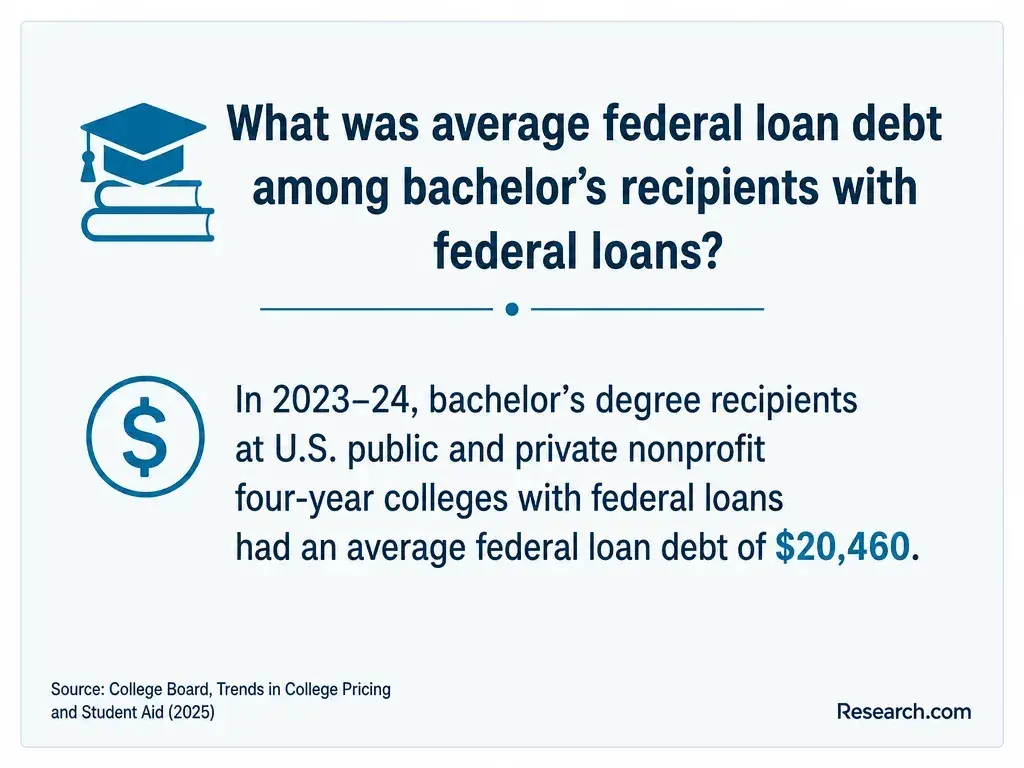
Request a term-by-term plan and a written estimate covering tuition, mandatory fees, books, required software, and any travel or project expenses. Compare the estimate for remaining applicable credits, not simply the price per credit. Also ask how a lighter course load or a repeated prerequisite could affect aid and the total time you pay to remain enrolled.
For a goal centered on substance-use services, compare the actual curriculum and total remaining cost of undergraduate substance use counseling study on a budget with the general psychology option. A lower advertised price is not a better value if the program lacks the methods preparation or state-specific coursework your next step requires.
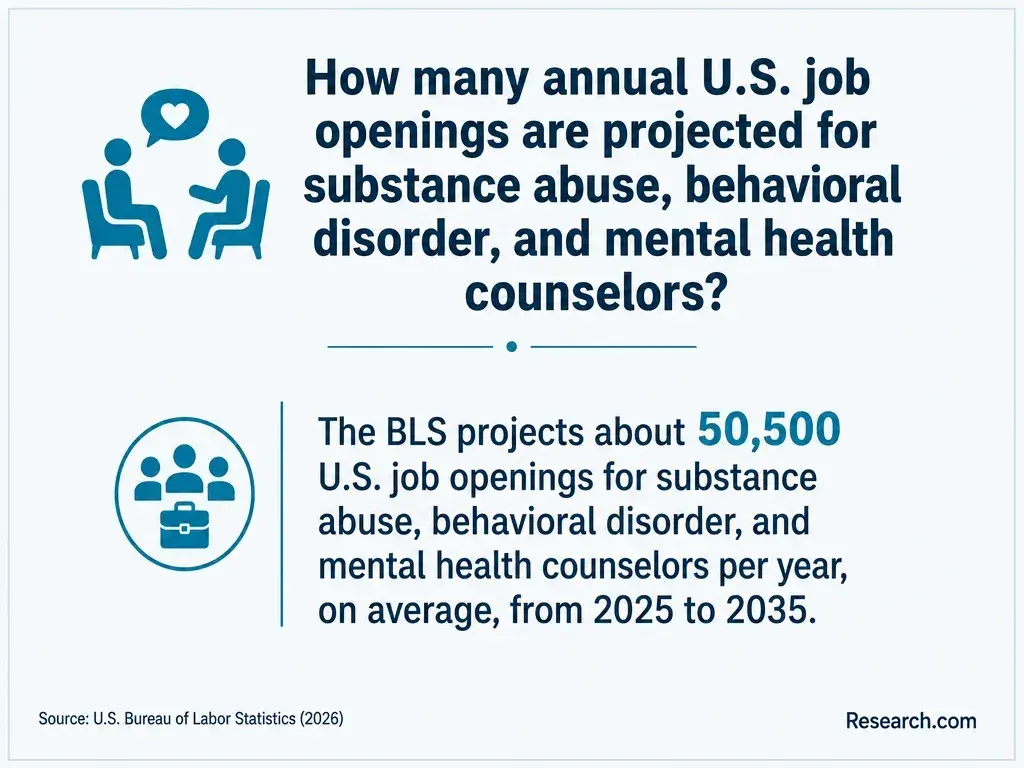
A general psychology BA can support applications for nonclinical roles in research support, program coordination, human services, and organizational settings. Employers evaluate the job's actual duties, your experience, and any required training - not the degree name alone. Methods coursework is particularly useful when a position involves literature searches, survey administration under supervision, data quality checks, or communicating program results.
Save appropriately shareable examples of your work, such as a literature review or a report using permitted data, and describe your contribution accurately. An internship, assistantship, or relevant employment may provide stronger evidence of readiness than an elective title. Some specialized roles require further education or credentials; forensic psychology master's careers and earning potential concern a different degree level and should not be read as BA-level outcomes.
Does a Bachelor's in Psychology Qualify You for Licensure or Certification?
A general psychology BA does not by itself authorize psychotherapy, diagnosis, independent psychological assessment, or use of a protected psychologist title. Those activities generally require a qualifying professional pathway and jurisdiction-specific credentials. Studying research instruments or abnormal psychology is not the same as qualifying to administer restricted assessments or provide treatment.
Requirements for particular support or recovery-service credentials vary by state and role. If that is your target, identify the exact job title and check its education, training, supervision, and examination rules with the responsible authority before selecting electives. An overview of addiction recovery occupations and education can help distinguish support work from regulated counseling; the relevant state rules should control your course decision.
Other Things You Should Know About Psychology
Possibly. Some teams offer beginners supervised tasks, but eligibility depends on the instructor, project, and any required training. Describe your current skills honestly and ask what you would learn on the team.
Not universally. Programs set their own expectations. A thesis may strengthen evidence of research readiness, but well-documented supervised research can also be relevant.
Only with your instructor's approval and any required employer permission. Do not assume that access to workplace information permits its use in coursework or a portfolio.
Follow the course's AI-use policy. Check every claim against the original article, protect confidential information, and cite the research you actually read rather than an AI-generated summary.
- Effectiveness of virtual laboratory in engineering education | nih.gov https://pmc.ncbi.nlm.nih.gov/articles/PMC11684589/
- Secondary Data Sets: Tools and Software - Library https://library.south.edu/c.php
- Transfer credit practices - UC Admissions https://admission.universityofcalifornia.edu/counselors/preparing-transfer-students/transfer-credit-practice.html
- Special regulations for courses in specific subject areas | UCOP https://www.ucop.edu/transfer-articulation/transfer-course-agreements/tca-policy/regulations-by-subject-area.html
- Course Descriptions and Symbols | lcu.edu https://lcu.edu/catalog/course-descriptions
- Statistics | Academic Catalog | The University of Chicago http://collegecatalog.uchicago.edu/thecollege/statistics/
- BA in Psychology | Cal State LA https://www.calstatela.edu/nss/psychology/ba-psychology
- Psychology subfields | apa.org https://www.apa.org/education-career/guide/subfields
- Statistics (STAT) | Virginia Tech Academic Catalog https://catalog.vt.edu/course-descriptions/stat/
- Guide 3: Reliability, Validity, Causality, and Experiments | fsu.edu https://myweb.fsu.edu/slosh/MethodsGuide3.html