2027 Online Ed.D. in Leadership and Learning in Organizations: Comparing Coursework in Learning Needs Assessment
Audited and Verified:
Our Editorial and Data Verification Process
Research.com uses government datasets, official education statistics and primary institutional information to support its career and degree guides. Our review process checks factual accuracy, occupational definitions, source dates and the requirements associated with the credentials discussed.
How This Article Was Fact-Checked
Our editorial team verifies salary estimates, employment projections, education requirements and program information against original data providers and official organizations. Salary figures are checked against the relevant occupational definitions and reporting periods. Information about licensure, accreditation and required in-person training is reviewed separately.
Fact-checked and verified on:

Co-Founder and Chief Data Scientist
A course labeled "learning needs assessment" can teach anything from basic training surveys to rigorous organizational diagnosis. That difference matters if you want an online Ed.D. to help you decide whether employees need instruction, better tools, clearer expectations, or a change in how work is organized.
This guide is for learning and development professionals and emerging leaders comparing doctoral coursework. It shows what to look for in syllabi, methods training, and applied projects - and how to judge whether a doctorate offers enough additional value for your goals.
Key Things You Should Know
- Strong needs assessment coursework investigates performance causes before recommending training and uses evidence from more than one source.
- Compare the full course sequence: adult learning, organizational diagnosis, research methods, evaluation, and an approved applied project matter more than one course title.
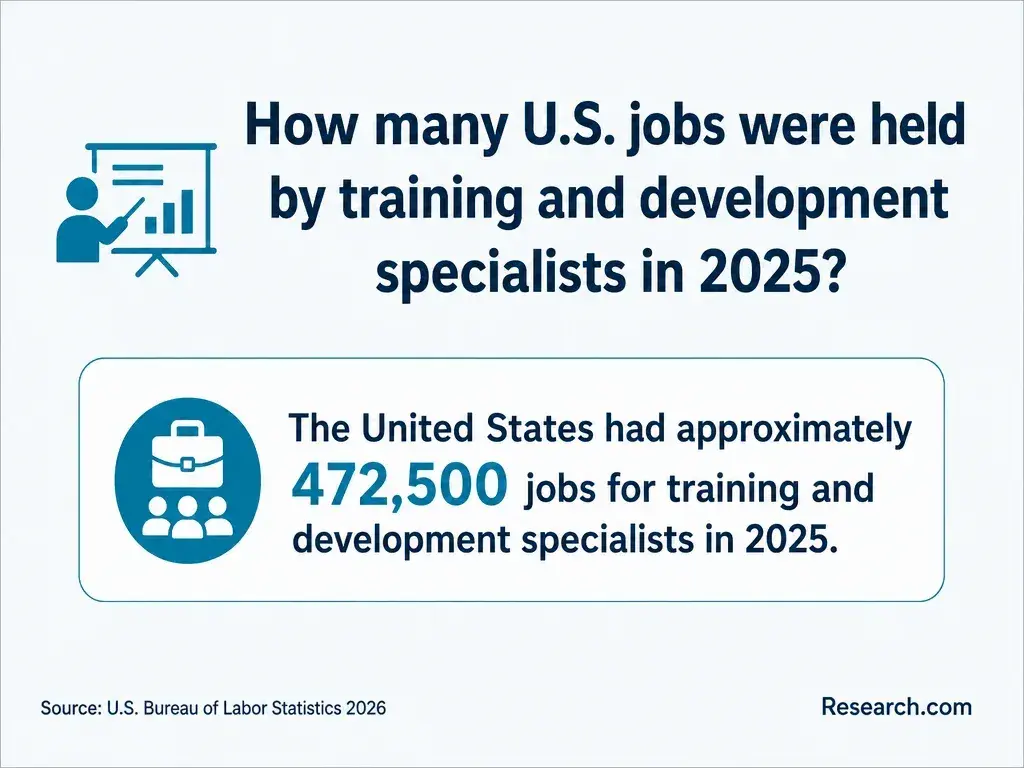
- The U.S. Bureau of Labor Statistics projects 10.8% employment growth for training and development specialists from 2025 to 2035; that occupational outlook does not establish a payoff from an Ed.D.
What Is an Online Ed.D. in Leadership and Learning in Organizations?
An online Doctor of Education in leadership and learning in organizations is a practice-oriented doctorate focused on how people learn, how organizations change, and how leaders use evidence to improve practice. Programs with similar names may emphasize corporate learning, educational institutions, organizational development, or cross-sector leadership. The exact degree name and curriculum are institution-specific.
For needs assessment, the value of doctoral study is not learning to administer a survey. It is learning to define a consequential organizational problem, test competing explanations, engage affected stakeholders, and make a defensible recommendation under real constraints.
A final project may offer a place to apply those skills, but schools use different dissertation, dissertation-in-practice, and capstone models. Readers comparing project structures can examine online education doctorates with alternative final projects, then confirm each program's actual requirements.
What Coursework Covers Learning Needs Assessment in an Online Ed.D.?
Learning needs assessment is a systematic inquiry into the difference between current and desired performance or capability - and what accounts for that difference. A training request is a starting hypothesis, not a diagnosis. If staff know a procedure but cannot access the required system, another course is unlikely to address the main barrier.
Course titles alone cannot show how deeply a program teaches this work. The following comparison identifies the coursework and assignments most useful to request from admissions staff or faculty.
| Coursework to examine | What meaningful assessment work looks like | What to check in the syllabus |
| Adult learning and instructional design | Distinguishes a skill gap from a motivation, workflow, or resource problem before designing instruction. | Does the assignment require evidence that learning is the appropriate response? |
| Organizational diagnosis and change | Maps stakeholders, incentives, work processes, and decision authority alongside learning needs. | Must students consider nontraining interventions and implementation constraints? |
| Qualitative and quantitative methods | Develops interviews, observations, surveys, or analysis of existing records suited to a defined question. | Are sampling, measurement quality, bias, and limitations taught and assessed? |
| Program evaluation and applied inquiry | Connects a proposed response to baseline measures, feasible indicators, and a plan to review results. | Is there faculty feedback on an assessment plan or authorized organizational project? |
A useful sequence moves from problem definition to stakeholder and evidence planning, data collection, interpretation, and a recommendation that may or may not involve training. For example, a student investigating low completion of a workplace safety procedure might compare task observations, available process records, and perspectives from staff and supervisors. Those sources could reveal different explanations; none should be treated as a finding before evidence is gathered.
Ask whether assignments use simulated cases or allow approved workplace inquiry. Real organizational data can make learning more relevant, but access requires employer permission and appropriate privacy safeguards. The institution must determine whether a proposed project needs research ethics review; an ordinary workplace evaluation is not automatically exempt or automatically human-subjects research.
How Does an Online Ed.D. Compare With a Campus-Based Program?
Online delivery changes where much of the instruction happens, not necessarily what a needs assessment requires. Either format can provide rigorous methods teaching and faculty feedback. Online students may find it easier to investigate a problem at their own workplace, while campus-based students may prefer in-person collaboration. Neither advantage substitutes for access to an appropriate project setting.
Compare the practical requirements rather than the format label: live-class attendance, group meetings, faculty consultation, campus convenings, and the time allowed for an applied project. An asynchronous lecture does not make stakeholder interviews or team assignments self-paced. Likewise, shorter Ed.D. course sequences should be evaluated against the time needed to develop methods skills and obtain organizational approvals - not just the advertised completion schedule.
Start by confirming that the institution holds recognized institutional accreditation. Check the school and accreditor through the U.S. Department of Education's accreditation database or the Council for Higher Education Accreditation, then confirm that the degree is awarded by that institution. Do not assume a course in learning assessment carries separate programmatic accreditation or a professional certification.
Accreditation is a baseline check, not a measure of how well a program teaches needs assessment. Review the actual syllabi, faculty expertise, assessment assignments, and project supervision. If you seek a regulated school leadership position, ask the program and the relevant state authority whether the specific degree meets licensure requirements; a broadly focused organizational leadership Ed.D. should not be presumed to do so.
Requirements vary. Programs may review prior graduate study, academic records, professional experience, recommendations, a statement of purpose, and evidence that an applicant can undertake applied inquiry. A master's in education is not a universal prerequisite: experience diagnosing learning or performance problems in business, healthcare, government, nonprofits, or education may also be relevant.
Use the application to explain a problem you have helped investigate, what evidence you could access, and what you still need to learn. Distinguish your responsibilities from team accomplishments, and do not claim permission to use workplace data that has not been granted. Returning doctoral students should ask separately about admission and credit evaluation; planning an online Ed.D. return after ABD status involves policies that cannot be inferred from prior coursework alone.
Time and cost depend on required credits, enrollment pace, tuition structure, fees, and the final project. Before comparing programs, request a term-by-term degree plan and an itemized estimate for your expected pace. Include required campus travel, technology, and any costs associated with obtaining or conducting an approved project. A shorter advertised timeline may not account for delays in gaining data access or completing an assessment with an organization.
Compare the amount you would actually pay after confirmed employer support, not an assumed reimbursement. Check eligibility, grade and employment conditions, annual limits, and repayment provisions in writing. A guide to education doctorate fees and total study costs can help identify expense categories, but the institution must provide the applicable charges for your entry term.
Needs assessment is especially relevant to learning and development leaders who decide which capability gaps warrant investment; organizational development professionals who diagnose barriers to change; and consultants who must justify recommendations to clients. In each role, employers also look for relevant experience, sound judgment, implementation skills, and evidence that recommendations improved decision-making.
A current training specialist might use doctoral coursework to move from delivering programs toward leading cross-functional assessment and evaluation. An experienced manager might use it to strengthen organizational inquiry without changing occupations. If your immediate goal is to conduct better interviews, analyze training requests, or build a small evaluation portfolio, targeted methods training and a supervised workplace project may be a more direct choice than an Ed.D.
There is no single salary for this degree: pay follows the occupation, sector, location, and scope of responsibility. The U.S. Bureau of Labor Statistics reports a May 2025 median annual salary of $133,000 for training and development managers. That is an occupational median across workers, not an estimate of Ed.D. graduates' earnings or a likely starting salary.
For a personal financial decision, compare the roles you can realistically pursue with and without the doctorate. An employer's promotion criteria, your record of leading assessments, and the total cost of study are more informative than applying a broad managerial median to your own prospects.
The Bureau of Labor Statistics projects 10.8% employment growth for training and development specialists from 2025 to 2035. That suggests continuing demand for training-related work, but the occupation spans many tasks and does not require an Ed.D. as a general entry credential. Demand for a leader who can conduct organizational diagnosis may differ by employer and sector.
Use postings for your target roles to test the value of doctoral coursework. Look for responsibility for needs assessment, stakeholder consultation, evaluation, and organizational change - not merely the word "learning." Note whether employers request a doctorate, prefer a master's, or prioritize a record of applied work.
How Can You Choose a Reputable Online Ed.D. Program?
Compare programs using an assessment you would genuinely like to learn to conduct. A reputable option should show how students develop the question, choose appropriate evidence, receive methods feedback, protect data, and translate findings into a feasible decision. Request recent syllabi and the applied-project handbook rather than relying on marketing descriptions.
Before enrolling, ask the program director which needs assessment courses are required rather than elective, whether the electives run during your expected enrollment, and who supervises projects involving an employer or external partner. Also confirm the institution's accreditation, live attendance and travel rules, project approval process, and total expected charges.
If affordability is decisive, use Doctor of Education programs by affordability as a starting point, then compare written, program-specific estimates and the depth of the coursework you need.
Choose the Ed.D. when its sustained methods training, leadership perspective, and applied inquiry fit responsibilities you expect to take on. If a shorter course plus access to a well-supervised assessment would meet your goal, the doctorate may add more cost and time than the decision requires.
Other Things You Should Know About EdD Leadership
Yes. Depending on the question and permissions, task observation, interviews, existing records, or document review may be more useful. A survey is one method, not a required starting point.
Not always. A training needs analysis often focuses on instruction to provide. A broader learning needs assessment can also examine how people acquire and apply knowledge - and whether instruction would help at all.
Ask the instructor what evidence the assignment requires. You may be able to propose an assessment plan or use an approved case, but do not substitute invented results for missing organizational data.
Only within your employer's permissions and confidentiality rules. An approved, redacted account of the question, methods, limitations, and your contribution may demonstrate your skills without exposing restricted information.
- Assess Training Needs: Conducting Needs Analysis | cdc.gov https://www.cdc.gov/training-development/php/about/assess-training-needs-conducting-needs-analysis.html
- Training Needs Assessment - Planning & Evaluating | U.S. Office of Personnel Management https://www.opm.gov/policy-data-oversight/training-and-development/planning-evaluating/
- Learning needs assessment: assessing the need - PMC - NIH https://pmc.ncbi.nlm.nih.gov/articles/PMC64520/
- Choose a Method to Collect Data/Evidence | Assessment and Curriculum Support Center https://manoa.hawaii.edu/assessment/resources/choose-a-method-to-collect-data-evidence/
- Assessment of Student Learning Guidance | umn.edu https://slo.umn.edu/additional-resources/assessment-guidance
- Policies for Online Teaching | Teaching and Learning Resource Center https://teaching.resources.osu.edu/teaching-topics/policies-online-teaching
- Course Assessment Plan Development | osu.edu https://drakeinstitute.osu.edu/institute-articles/course-assessment-plan-development
- The Power of the Needs Assessment to Transform Learning | harvard.edu https://learn.hms.harvard.edu/insights/all-insights/power-needs-assessment-transform-learning
- Teachers Collecting Evidence Through Research | sagepub.com https://methods.sagepub.com/book/mono/classroom-based-research-and-evidence-based-practice/chpt/teachers-collecting-evidence-through-research
- Designing Assignments for Learning | columbia.edu https://ctl.columbia.edu/resources-and-technology/teaching-with-technology/teaching-online/designing-assignments/