2027 Online Ed.D. in Leadership and Learning in Organizations After a Master's in Environmental Management: Admission and Credit Questions
Audited and Verified:
Our Editorial and Data Verification Process
Research.com uses government datasets, official education statistics and primary institutional information to support its career and degree guides. Our review process checks factual accuracy, occupational definitions, source dates and the requirements associated with the credentials discussed.
How This Article Was Fact-Checked
Our editorial team verifies salary estimates, employment projections, education requirements and program information against original data providers and official organizations. Salary figures are checked against the relevant occupational definitions and reporting periods. Information about licensure, accreditation and required in-person training is reviewed separately.
Fact-checked and verified on:

Co-Founder and Chief Data Scientist
A master's in environmental management may give you a strong foundation for an online Ed.D. in Leadership and Learning in Organizations, but it does not settle two separate questions: whether you qualify for admission and whether any prior courses will count toward the doctorate. The distinction matters if you are planning a career in sustainability training, organizational change, or environmental program leadership while continuing to work. This guide explains how schools assess your degree, experience, and credits - and what to obtain in writing before you commit time or money to an application.
Key Things You Should Know
- An environmental management master's can meet an Ed.D. program's degree requirement if the program accepts master's degrees outside education; relevant leadership and organizational experience may still be required.
- Credits that establish admission eligibility are not necessarily transferable. Only the receiving institution can determine whether a course satisfies an Ed.D. requirement, and no universal transfer-credit cap applies.
- Ask for separate, written answers about admission eligibility, course equivalencies, and whether approved credits would actually reduce required coursework, tuition, or time to completion.
What Is an Online Ed.D. in Leadership and Learning in Organizations?
An Ed.D. in leadership and learning in organizations is a practice-oriented doctorate focused on how people learn, lead change, and improve performance within institutions. Depending on the program, students may study adult learning, organizational culture, leadership development, and applied research. "Online" describes where much of the instruction occurs; it does not necessarily mean self-paced study or no campus visits.
For an environmental management graduate, the connection is practical. Implementing a conservation policy, training staff on new procedures, or coordinating climate-adaptation work can require more than technical environmental knowledge. An Ed.D. may help you examine how an organization adopts and evaluates those changes. It is less direct if your goal is advanced environmental science research or a technical credential; a field-specific PhD or targeted training may fit better. For a broader comparison, see understanding different Ed.D. degree formats and focuses.
Can an Environmental Management Master's Qualify You for Online Ed.D. Admission?
Yes, potentially. An education master's is not a universal prerequisite for a leadership and learning Ed.D. A completed environmental management master's may satisfy the degree requirement at programs that accept graduate study across disciplines. The admissions office must confirm whether your institution and degree meet its rules, including any minimum grades or required amount of graduate coursework.
Eligibility is different from a competitive application. Environmental management can provide evidence of systems thinking, policy implementation, stakeholder engagement, and evaluation. Show what you did: for example, whether you led staff training, managed a cross-agency initiative, evaluated a program, or made decisions using organizational evidence. Technical expertise alone may be less persuasive for a doctorate centered on leadership and adult learning.
If your transcript has limited coursework in research methods or learning theory, ask whether that is an admission barrier, recommended preparation, or a gap you can address after enrolling. Do not assume that a related course title qualifies for a waiver. The program - not a general description of Ed.D. study - decides whether bridging work or an exception is available.
How Much Credit Can You Transfer Into an Online Ed.D. Program?
There is no reliable transfer-credit number without the receiving program's policy and an individual evaluation. Some doctorates require students to complete their prescribed doctoral curriculum even when they arrive with a substantial master's degree. Others may consider eligible graduate courses for transfer or substitution, subject to limits and required in-program coursework.
The distinctions below prevent the most consequential credit mistake: treating credits recognized at admission as credits removed from the doctorate.
| Decision | What it means | Who confirms it |
| Admission eligibility | Your completed degree or graduate credits meet an entry requirement. | Admissions or the graduate school |
| Transfer eligibility | A prior course meets rules concerning level, grade, institution, recency, and credit value. | The receiving institution's designated evaluator |
| Degree applicability | An approved course fulfills a particular Ed.D. requirement or allowable elective. | The program through its formal degree audit |
| Time and cost effect | Approved credit changes the courses you must take or the charges you incur. | The program and billing office, based on your study plan |
Request official transcripts, course descriptions or syllabi, and the catalog rules that applied when you took each course. Flag methods, statistics, organizational change, and evaluation courses, but let the program determine equivalence. If credits came from multiple schools, an unfinished graduate program, or a quarter-credit institution, ask how each source is treated. A quarter-to-semester conversion, course waiver, or substitution may not award transferable doctoral credit. Seek a written evaluation that identifies the exact requirement each accepted course would satisfy.
Requirements vary by school and entry term. Programs commonly assess prior graduate education, academic performance, professional experience, a statement of purpose, recommendations, and readiness for applied inquiry. Some use interviews or require particular application materials; entrance-test policies also differ. Check the actual program's published criteria rather than assuming an environmental management degree either qualifies or disqualifies you.
Before applying, use these questions to separate formal requirements from evidence that makes your application stronger:
- Ask admissions whether your specific master's degree meets the entry requirement and whether a minimum amount of graduate credit, grade threshold, or course prerequisite applies.
- Ask the program what qualifies as leadership experience; prepare examples of decisions, people or projects you guided, and results you can substantiate without overstating your authority.
- Describe an authentic learning or change problem - such as improving adoption of an environmental procedure - and explain why doctoral study would help you investigate it.
- Confirm recommendation, interview, test, deadline, and transcript requirements for your intended entry term, including how any academic gap or unfinished graduate study will be assessed.
A strong statement connects your environmental work to an organizational problem, not merely to an interest in earning a doctorate. You need not claim that a proposed intervention has already worked or that your employer has approved a future research project.
An online program can let you remain in an environmental management role while studying, which may make workplace examples more relevant to class. It can also impose live evening sessions, group meetings, fixed cohort schedules, or campus convenings. A campus-based program may offer more in-person interaction but require commuting or relocation. Neither format is inherently easier or more rigorous; compare actual attendance and research expectations.
Ask each program when live activities occur, whether recordings satisfy attendance rules, how often students travel, and what happens if fieldwork or seasonal environmental duties conflict with a required meeting. Also check whether a change of employer would affect access to a workplace-based project. If speed matters, evaluate published course sequences and project requirements rather than assuming that accelerated Ed.D. study options will accept more prior credits or allow independent pacing.
Curricula vary, but relevant areas may include adult learning, leadership theory, organizational development, change implementation, research methods, and program evaluation. For an environmental management professional, the useful question is not whether a course mentions "leadership." It is whether the sequence helps you diagnose an organizational learning problem, design a response, and assess evidence without confusing training attendance with changed workplace practice.
Examine required courses separately from electives. A methods course might develop survey or interview skills, while an evaluation course might address whether staff use a new sustainability process. Prior environmental statistics coursework could support your readiness, but it may not replace a program's required doctoral research sequence. Confirm the final project's format and whether employer access, faculty approval, and ethical or data-use review would be needed before proposing workplace inquiry.
Completion time depends on the program's required sequence, enrollment pace, course availability, and final project. Prior graduate study does not automatically shorten any of these. Ask for a term-by-term plan based on your proposed entry point and obtain a revised plan if the school approves transfer or substitution credit.
For a defensible cost comparison, request the published tuition basis - per credit, term, or program - along with required credits, fees, technology charges, and any travel or lodging for convenings. Then ask which charges, if any, an approved course would eliminate. Employer reimbursement may depend on continued employment, grades, or repayment terms. The same checks apply when reviewing education doctorate tuition and affordability: a lower advertised price is not necessarily a lower total cost for your study plan.
Your environmental management background may position you for roles that connect technical initiatives with people and organizational systems: sustainability learning and development, environmental program leadership, workforce training, change management, or organizational consulting. The Ed.D. is most useful when those responsibilities require sustained leadership, adult learning design, and evaluation - not simply deeper technical knowledge of environmental regulations.
The transition depends on experience. Someone already leading environmental training might use doctoral work to strengthen program design and evaluation; someone with primarily technical duties may first need supervised leadership projects or learning-and-development experience. Higher education is another possible setting for organizational learning work, but administrative and faculty roles have distinct hiring expectations. Explore online Ed.D. study connecting organizations and higher education only if that setting matches your target role.
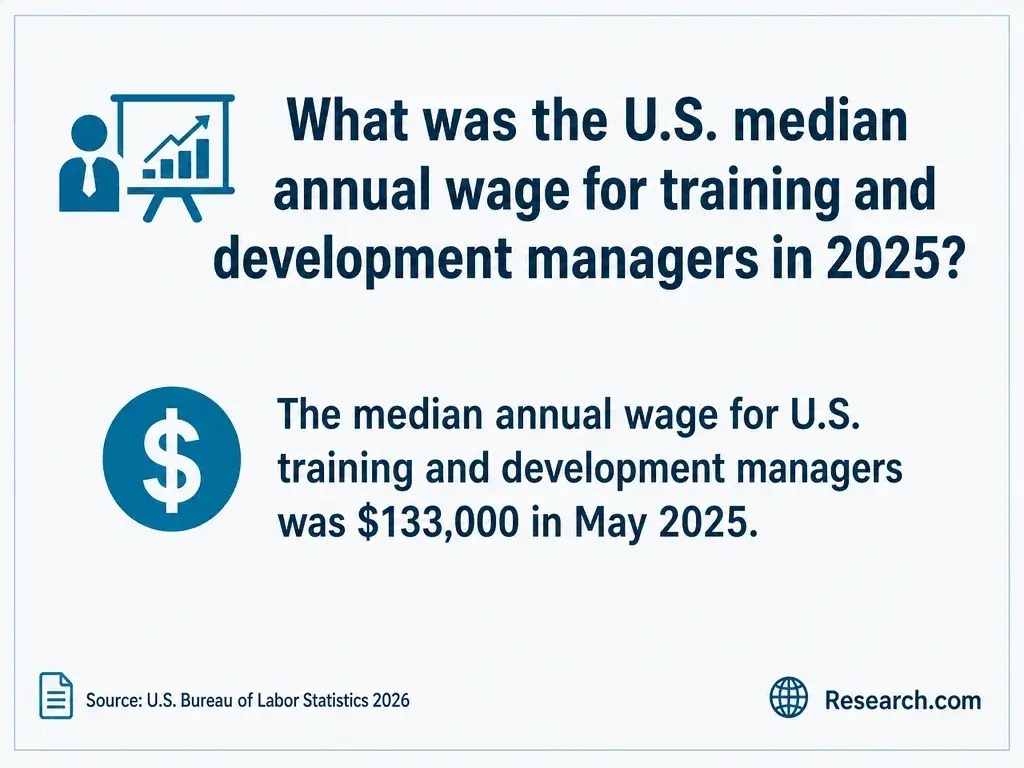
There is no single Ed.D. graduate salary: pay follows the occupation, employer, location, and prior experience. US Bureau of Labor Statistics May 2025 figures place the median annual salary for training and development managers at $133,000, with employment projected to grow 6.4% from 2025 to 2035. That occupation can be relevant to someone leading substantial workforce-learning programs, but its median is not an entry salary or a return promised by an Ed.D.
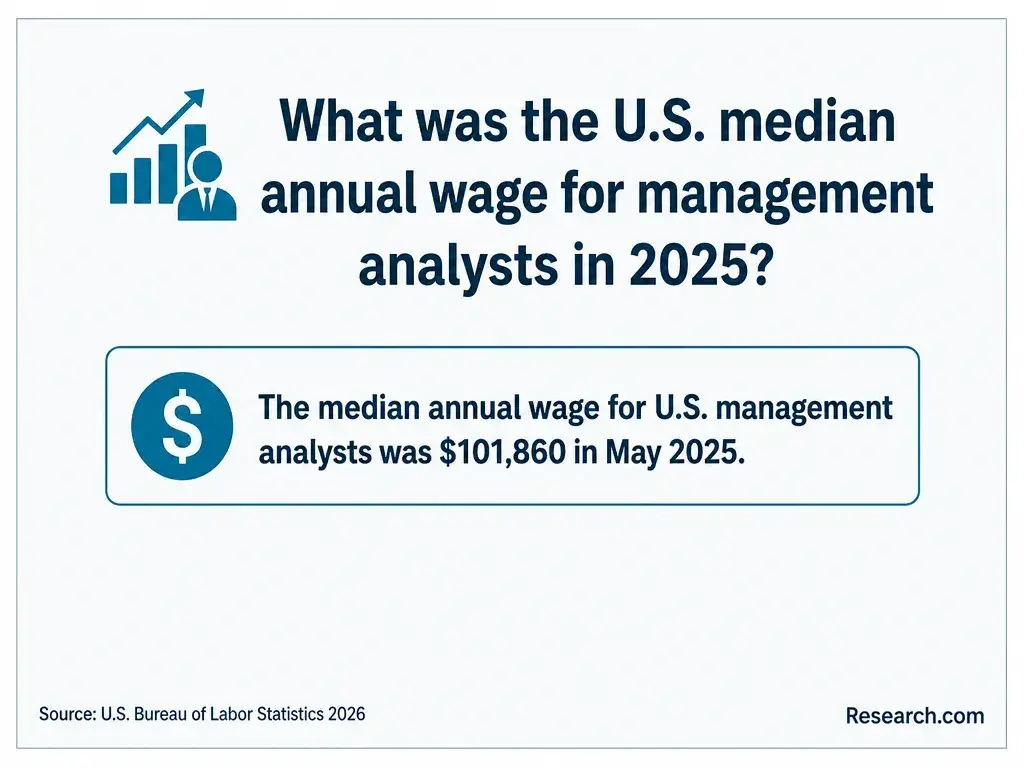
Match occupational figures to the work you actually want. Environmental consulting with a strong organizational-change component may resemble management analysis more than training management; hands-on course delivery may resemble a training specialist role. Before using any salary figure to justify tuition, review job postings in your intended market for required experience, technical qualifications, and whether a doctorate is requested at all.
How Can You Choose an Accredited and Reputable Online Ed.D. Program?
First, confirm the institution's accreditation through its stated accreditor and verify the exact degree title with the university. Institutional accreditation does not establish that a general leadership Ed.D. leads to educator licensure or an environmental professional credential. If a regulated role is your objective, check its separate requirements with the relevant authority.
For this particular application decision, give substantial weight to the clarity of the program's answers. Request its current admissions policy, transfer-credit rules, curriculum, attendance requirements, final-project expectations, and an individual credit evaluation. Ask who can issue binding decisions and whether an advisor's preliminary opinion will appear in a degree audit. You can use comparing affordable organizational leadership doctorates to identify candidates, but compare their official policies against the same transcript and career goal before enrolling.
If a school will confirm admission eligibility but cannot yet determine credit applicability, plan financially as though those credits will not reduce the doctorate. That conservative assumption protects you from making a time or tuition decision based on an informal estimate.
Other Things You Should Know About EdD Leadership
Yes, if you frame it as a feasible organizational leadership or learning problem rather than only a technical climate question. The program must approve the project's scope, evidence, and oversight.
Possibly. Follow the program's stated recommender rules. A supervisor who can describe your leadership and analytical work may be valuable, but may not replace an academic reference if one is required.
Not automatically. They may demonstrate writing and evidence-use skills, but only the program can decide whether a thesis or particular research preparation is required.
No. Professional credentials have their own eligibility rules. Check those requirements separately if a specific environmental designation is part of your career plan.
- Colleges and College Coursework | New York State Education Department https://www.nysed.gov/teaching-initiatives/colleges-and-college-coursework
- Graduate Credit Transfer Policy - Campus Offices https://campus.collegeforcreativestudies.edu/policy/transfer-credits-graduate/
- How to Apply | Nicholas School of the Environment https://nicholas.duke.edu/admissions/how-apply
- Master's, EdS, and Certificate Programs | unomaha.edu https://catalog.unomaha.edu/graduate/policies-governing-graduate-study/masters-eds-certificates-dual-degrees-second-masters-degree-programs/
- Leadership and Learning in Organizations Online Ed.D. | Peabody College of Education and Human Development https://peabody.vanderbilt.edu/academics/edd-programs/online-leadership-learning-organizations/
- Doctor of Education in Organizational Leadership, Culture and Change | Thomas Edison State University https://www.tesu.edu/degrees-programs/doctoral/edd.php
- Doctor of Education (EdD) | National University https://www.nu.edu/degrees/educational-leadership/programs/doctor-of-education/
- Ed.D. Admissions - Peabody | Vanderbilt University Online https://peabodyonline.vanderbilt.edu/edd-in-organizational-learning/admissions/
- Online EDD in Education Administration | OU Online https://online.ou.edu/program/edd-in-education-administration/
- Online (Ed.D.) in Leadership for Organizations | UD-EDU https://educationonline.udayton.edu/edd/