2027 Online Ed.D. in Leadership and Learning in Organizations: Scheduling Interviews Around the Partner's Busy Season
Audited and Verified:
Our Editorial and Data Verification Process
Research.com uses government datasets, official education statistics and primary institutional information to support its career and degree guides. Our review process checks factual accuracy, occupational definitions, source dates and the requirements associated with the credentials discussed.
How This Article Was Fact-Checked
Our editorial team verifies salary estimates, employment projections, education requirements and program information against original data providers and official organizations. Salary figures are checked against the relevant occupational definitions and reporting periods. Information about licensure, accreditation and required in-person training is reviewed separately.
Fact-checked and verified on:

Co-Founder and Chief Data Scientist
Your organizational partner may support an Ed.D. interview project but have little time to participate during its busiest season. For working professionals coordinating coursework, employment, and partner-site access, that conflict can affect both the project's timeline and the quality of its evidence. This guide explains how to plan interview windows, protect participants' choice to take part, and check whether an online leadership and learning doctorate offers enough flexibility. It also shows when the scheduling problem calls for a different project design rather than a different degree.
Key Things You Should Know
- Ask the partner to identify its peak period before proposing interviews; shift recruitment and interviews to an approved quieter window rather than assuming online study makes deadlines movable.
- Get faculty approval for the interview plan and any changes to participants, questions, or timing; organizational permission and research-ethics clearance are separate matters.
- Compare programs on live attendance, project milestones, and leave policies - not delivery mode alone. The relevant cost is the full program commitment, including travel and time away from work.
What Is an Online Ed.D. in Leadership and Learning in Organizations?
An online Ed.D. in leadership and learning in organizations is a practice-oriented doctorate concerned with how people learn, lead change, and improve organizational performance. Students may study adult learning, organizational development, and applied inquiry while working. Program titles and final-project requirements differ: some require a dissertation in practice, while others use a different doctoral deliverable.
For an interview-based project, the partner is the organization that may provide a setting, sponsor, or access to potential participants. Its busy season could make interviews impractical even when the student can study at night. Map the organization's peak operating period against the program's project-proposal, approval, data-collection, and submission milestones before treating the partnership as feasible. A partner's willingness to participate does not itself authorize access to employees or records.
Is an Online Ed.D. in Leadership and Learning Accredited?
Check the institution's accreditation status and confirm that the specific Ed.D. is an awarded degree at that institution. Institutional accreditation does not establish that an interview project will be approved or that the degree prepares graduates for a regulated position. Ask the program which office governs applied-project approval and whether interviews require institutional research review, organizational permission, or both.
This matters when the partner's availability is uncertain: an advisor may help refine a project schedule, but only the responsible offices can decide whether a revised design satisfies academic and ethics requirements. Request the applicable handbook and project policies for your intended entry term.
What Are the Admission Requirements for an Online Ed.D.?
Requirements vary, but programs may review prior graduate study, professional experience, recommendations, and an account of the organizational problem an applicant hopes to address. Applicants should distinguish a promising project idea from a confirmed research site. In an interview, it is more credible to explain the partner's busy season and a possible alternative window than to promise access that has not been approved.
If you hold an education specialist degree, planning the transition from Ed.S. to Ed.D. can help frame questions about eligibility. Admission credit and credits that actually reduce Ed.D. requirements are different decisions; get both evaluated by the institution in writing. Before applying, ask whether a project partner must already be identified and whether the proposed site can change later.
Online delivery saves routine travel but does not necessarily let students move live classes, team meetings, or project deadlines. Campus-based study adds commuting or relocation considerations, yet neither format can make a partner's staff available during a peak period. The useful comparison is whether each program's actual calendar accommodates an approved interview window.
Compare required attendance, campus convenings, advisor availability, and whether project milestones can shift without delaying progression. If cost also affects the choice, inexpensive Ed.D. pathways to consider are a starting point - not evidence that a program has flexible research deadlines. Ask how a postponed interview phase affects enrollment, tuition, and access to advising.
Relevant coursework may include leadership and change, adult learning, qualitative and quantitative methods, and program evaluation; confirm each program's required sequence. Methods preparation is especially important if interviews are proposed. It should help you define whom to invite, write questions that address the organizational problem, and explain what interview evidence can - and cannot - show.
A busy season can distort the evidence as well as the calendar. Staff who agree to speak during a peak period may differ from those who cannot, while rushed conversations may leave important experiences unexplored. Discuss sampling and timing with faculty before recruiting. Do not replace interviews with a survey or existing workplace data without checking whether the revised method answers the question and has the necessary approvals.
Completion time depends on the program's course sequence, project requirements, enrollment rules, and the time needed for approvals and evidence collection. A partner's busy season can create a delay if the only suitable interview window falls after a required milestone. Ask the program to show where project design, review, recruitment, interviews, analysis, and final submission fall in its academic calendar.
Build a feasible sequence with the partner and advisor before committing to a date:
- Have the partner identify peak weeks, quieter weeks, and the person authorized to discuss access.
- Confirm the program's approval steps and the earliest date recruitment could begin.
- Reserve a primary interview window and a backup window, allowing time for declined invitations and analysis.
- Ask the advisor what formal change is required if the window moves or the partner cannot participate.
Returning doctoral students should separately check whether doctoral completion options for ABD education students apply to their academic standing. An ABD option does not, by itself, solve a partner-access or interview-timing problem.
Compare the institution's published tuition and required fees with the costs of campus visits, technology, and time away from paid work. For this project, also ask what an additional term would cost if interviews move past a deadline. Do not assume an extension preserves financial aid, employer reimbursement, or the original tuition arrangement; each has its own rules.
Use the school's current charges and policies to estimate both an on-time plan and a delayed plan. A guide to education doctorate fees and total study costs can help identify categories to check, but the institution must confirm charges for your enrollment pattern. If partner access is too uncertain to budget for, postponing enrollment or choosing a smaller approved project may be more prudent.
The degree may support experienced professionals pursuing learning and development, organizational development, consulting, or education-administration responsibilities. Interview planning itself develops useful practice: negotiating stakeholder access, managing constraints, and interpreting evidence without claiming more than participants can support. Employers will still assess relevant experience and demonstrated leadership, not the credential alone.
If college administration is the goal, comparing organizational leadership Ed.D. pathways for college administration may be more useful than choosing by project flexibility alone. If your immediate goal is to conduct a small organizational needs assessment, supervised workplace experience or a targeted methods course may meet that need without a doctorate.
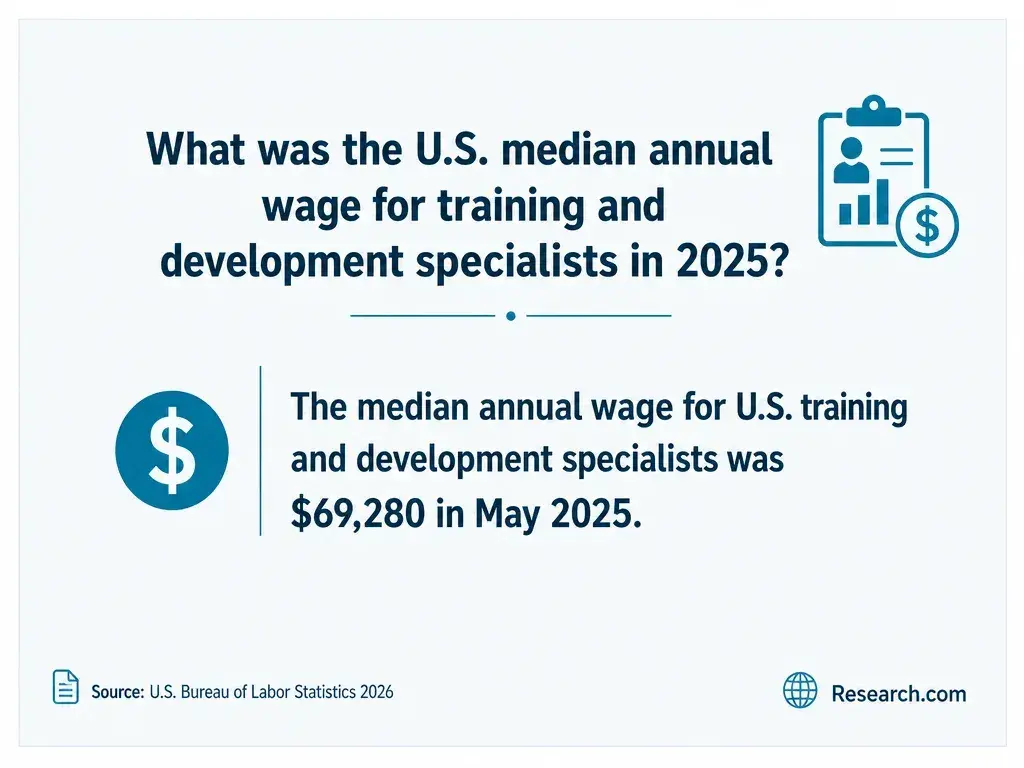
Pay depends on the occupation, employer, sector, location, and prior responsibility - not simply on holding an Ed.D. The U.S. Bureau of Labor Statistics reports a median annual salary of $133,000 for training and development managers in its May 2025 data. That is an occupational median, not a salary estimate for Ed.D. graduates or for someone moving directly into management.
When weighing the degree's cost against career prospects, compare job postings for roles you could realistically pursue with your current experience. A successfully completed interview project can demonstrate applied inquiry, but it does not substitute for an employer's management requirements.
Does This Ed.D. Require Licensure or Professional Certification?
A broadly focused leadership and learning Ed.D. does not, by itself, grant teacher, principal, superintendent, or other occupational licensure. If a target role is regulated, check the specific program's licensure disclosures and the relevant state authority's requirements before enrolling. Professional certifications may also have separate experience and assessment rules.
For an organizational interview project, the more immediate distinction is between a credential and permission to conduct the work. Neither Ed.D. enrollment nor an employer's informal support replaces required academic approval, research review, participant consent, or authorization to use organizational information.
Other Things You Should Know About EdD Leadership
Only if the organization permits it and the approved project procedures allow it. Make clear that participation is voluntary and check how recruitment will avoid pressure from supervisors.
Record only if the approved protocol and participants' consent permit it. Confirm where files and transcripts may be stored, who can access them, and when they must be deleted.
Tell the advisor before changing recruitment or broadening the participant group. A smaller sample may change what conclusions the project can reasonably support and may require an amendment.
Ask the advisor and partner to agree in advance on a confidentiality review process. The organization may need to flag restricted information, but academic conclusions and submission rules remain subject to program requirements.
- Academic Years, Academic Calendars, Payment Periods, and Disbursements | 2025-2026 Federal Student Aid Handbook https://fsapartners.ed.gov/knowledge-center/fsa-handbook/2025-2026/vol3/ch1-academic-years-academic-calendars-payment-periods-and-disbursements
- Virtual Qualitative Research During COVID-19 and Beyond | nih.gov https://pmc.ncbi.nlm.nih.gov/articles/PMC9167989/
- Informed Consent FAQs | hhs.gov https://www.hhs.gov/ohrp/regulations-and-policy/guidance/faq/informed-consent/index.html
- Scheduling Online Classes - Teaching Support and Innovation https://teaching.uoregon.edu/node/537
- Informed Consent Guidelines & Templates | umich.edu https://hrpp.umich.edu/irb-health-sciences-and-behavioral-sciences-hsbs/informed-consent-guidelines-templates/
- Class meetings online - Keep Teaching Duke Kunshan https://ctl.duke.edu/keepteachingdku/strategies/class-meetings-online/
- Informed Consent | Duke Research & Innovation https://research.duke.edu/resource/informed-consent/
- Expanding Online and Virtual Learning Options at Temple's College of Education and Human Development https://education.temple.edu/news/2025/07/expanding-online-virtual-learning-options-temples-college-education-human-development
- Understanding the Schedule of Classes: Register for Classes | Student Engagement https://southbend.iu.edu/students/registrar/register-for-classes/understanding-the-schedule-of-classes.html
- Research Ethics and Informed Consent | Educational Research Basics by Del Siegle https://researchbasics.education.uconn.edu/ethics-and-informed-consent/