2027 Choosing an Online Ed.D. in Leadership and Learning in Organizations for Leadership in Regional Education Service Agencies
Audited and Verified:
Our Editorial and Data Verification Process
Research.com uses government datasets, official education statistics and primary institutional information to support its career and degree guides. Our review process checks factual accuracy, occupational definitions, source dates and the requirements associated with the credentials discussed.
How This Article Was Fact-Checked
Our editorial team verifies salary estimates, employment projections, education requirements and program information against original data providers and official organizations. Salary figures are checked against the relevant occupational definitions and reporting periods. Information about licensure, accreditation and required in-person training is reviewed separately.
Fact-checked and verified on:

Co-Founder and Chief Data Scientist
Regional education service agencies help multiple school districts solve problems that no single district may have the capacity to address alone. Leading that work calls for more than school administration expertise: it can involve adult learning, cross-district collaboration, evaluation, and public-sector accountability.
This guide is for agency staff and education-sector leaders considering an online Ed.D. in leadership and learning in organizations. It explains where the degree could strengthen agency practice, where its limits matter, and how to compare it with more direct paths to your goal.
Key Things You Should Know
- An organizational leadership Ed.D. can support regional agency work in professional learning, shared services, and improvement across districts, but it does not automatically qualify you for a licensed school-administrator role.
- Judge programs by their fit with multi-district work: curriculum, project-site rules, data access, scheduling, and total cost matter more than an "online" label.
- The U.S. Bureau of Labor Statistics reports a $95,200 median annual salary for education administrators, all other, in May 2025; that occupational figure is not an expected salary for Ed.D. graduates or agency leaders.
What Is an Online Ed.D. in Leadership and Learning in Organizations?
An Ed.D. is a professional doctorate in education. A program focused on leadership and learning in organizations typically studies how adults learn, how organizations change, and how leaders use evidence to improve practice. Online describes where much of the instruction occurs; it does not necessarily mean self-paced study or the absence of campus visits.
For a regional education service agency, the appeal is its cross-organizational focus. Agencies - whose names, authority, and services vary by state - may coordinate professional development, technical assistance, specialized programs, or other shared services for districts.
An organizational leadership Ed.D. may suit someone responsible for improving those services. It is not interchangeable with an educational leadership doctorate designed specifically around principal or superintendent preparation, nor with a research-focused PhD.
How Can This Ed.D. Prepare Leaders for Regional Education Service Agencies?
The strongest fit is work that requires an agency leader to learn from several districts, design a response with them, and assess whether it helps. For example, an agency might be asked to improve how a professional learning program transfers into classroom practice. Doctoral study could help a leader distinguish a training gap from barriers such as limited coaching time, inconsistent implementation, or competing district priorities; it cannot establish the cause without evidence.
Agency leaders also work through governance and resource constraints. A promising intervention may require district agreement, accessible delivery across a large region, staff capacity, and a defensible use of public funds. Courses in systems thinking, adult learning, change implementation, and evaluation are valuable when students can apply them to those decisions - not merely describe leadership theories.
An applied doctoral project can be especially relevant, but agency employment alone does not make a project feasible. Before relying on a multi-district project, establish which organization can sponsor it, who can authorize each data source, whether districts may decline participation, and what the university requires for oversight. A narrowly scoped evaluation of an existing service may be more achievable than a region-wide change initiative.
What Careers Can You Pursue With This Organizational Leadership Ed.D.?
The degree is most useful as an extension of demonstrated education-sector responsibility, not a substitute for it. In a regional agency, potential paths include professional learning leadership, program evaluation, organizational improvement, and executive management. Actual titles and hiring rules differ by agency and state.
The comparison below separates the work from the credential decision. It can help you identify whether your next step is doctoral study or experience in a function you have not yet led.
| Target work | Relevant Ed.D. contribution | Experience still needed |
| Professional learning leadership | Adult learning, implementation, and evaluation | Designing and delivering support that districts use |
| Regional program or improvement leadership | Systems thinking and evidence-informed change | Budgets, partnerships, service operations, and stakeholder decisions |
| Agency executive leadership | Strategic inquiry and organizational leadership | Substantial management, governance, and public accountability experience |
Experience outside a school district can transfer, particularly in workforce development, government, or nonprofit partnerships. A substantial transition into education administration may still require familiarity with district operations and state hiring rules. Readers primarily seeking university roles can compare doctoral study in organizational leadership for higher education careers; those roles have different constituencies and qualifications.
Look for a sequence that connects diagnosis to action. Adult learning and instructional design help leaders plan professional development; organizational change and systems thinking help them address conditions that affect implementation; research and evaluation methods help them judge what happened. Budgeting, governance, and collaboration matter because an agency cannot usually impose the same solution on every district.
Course titles are not enough. Ask whether students practice needs assessment, qualitative inquiry, quantitative interpretation, and evaluation using realistic organizational constraints. For agency work, an especially useful assignment would require a defensible measure of service use or learning transfer while acknowledging that districts differ and that a simple before-and-after comparison cannot establish causation.
Check the culminating requirement separately. A dissertation in practice, team capstone, and individual dissertation can demand different levels of site access, faculty supervision, and writing. If an applied product is your priority, compare Ed.D. programs emphasizing applied culminating work, then verify each program's actual deliverable rather than assuming "without dissertation" means without substantial research.
For agency professionals serving a wide region, online study can reduce routine travel. It may also make collaboration with faculty and classmates more dependent on scheduled live sessions. The format comparison below highlights obligations to verify rather than promises about any particular program.
| Consideration | Online program | Campus-based program |
| Class participation | May combine independent work with required live meetings | Usually requires scheduled travel to campus |
| Collaboration | Remote group meetings may extend beyond class hours | In-person meetings may be easier to arrange on campus |
| Location and travel | May still require residencies or convenings | Regular travel or relocation may be necessary |
| Agency-based project | Depends on site approval and faculty support | Depends on the same academic and organizational approvals |
Ask for the live-class schedule, attendance policy, residency dates, group-work expectations, and support available if agency travel or an emergency conflicts with study. Neither delivery format by itself guarantees access to district data or permission to conduct an applied project.
Requirements vary by institution. Programs may review a completed graduate degree, transcripts, professional experience, recommendations, a statement of purpose, and evidence that the applicant is ready for applied inquiry. Some admit leaders from fields outside education; others specify particular degrees, coursework, or experience. An agency title alone does not prove that an applicant meets a program's definition of leadership experience.
A strong application can describe a real decision you have helped make: the stakeholders involved, your responsibility, the evidence available, and what remains uncertain. It should not claim access to district records or approval for a future project that you have not obtained.
If you hold an education specialist degree, review Ed.S.-to-Ed.D. admission and study options, but request a written evaluation from each institution. Credits used to establish admission eligibility are not necessarily credits applied to doctoral requirements.
Completion time depends on required credits, course sequencing, enrollment pace, and the culminating project. A project involving several districts can take longer if permissions or usable data are delayed. When comparing Ed.D. completion timelines, check whether an advertised timeframe assumes uninterrupted enrollment, a particular course load, and timely project approval.
Calculate the cost from the program's published charges for your entry term, not from tuition alone. Include required fees, books or technology, travel and lodging for convenings, and any work time you would forgo. Ask your agency whether education assistance covers a professional doctorate, when reimbursement is paid, and whether leaving the job triggers repayment. A shorter program is not automatically cheaper if its pace reduces your ability to work.
Online delivery does not determine accreditation. Verify the institution's recognized institutional accreditation and confirm that the advertised Ed.D. is the degree you would actually earn. If a program cites additional recognition, check its scope rather than assuming it applies to every degree the institution offers.
A leadership and learning Ed.D. does not automatically lead to teacher, principal, or superintendent licensure. Some agency positions may not require those credentials; others may be governed by state rules or employer policy. If a target job specifies a license, obtain the program's licensure disclosure and confirm eligibility with the relevant state authority before enrolling.
There is no single salary or job-growth figure for graduates of this Ed.D. Regional agencies employ people in different occupations, and public-sector pay may follow established classifications.
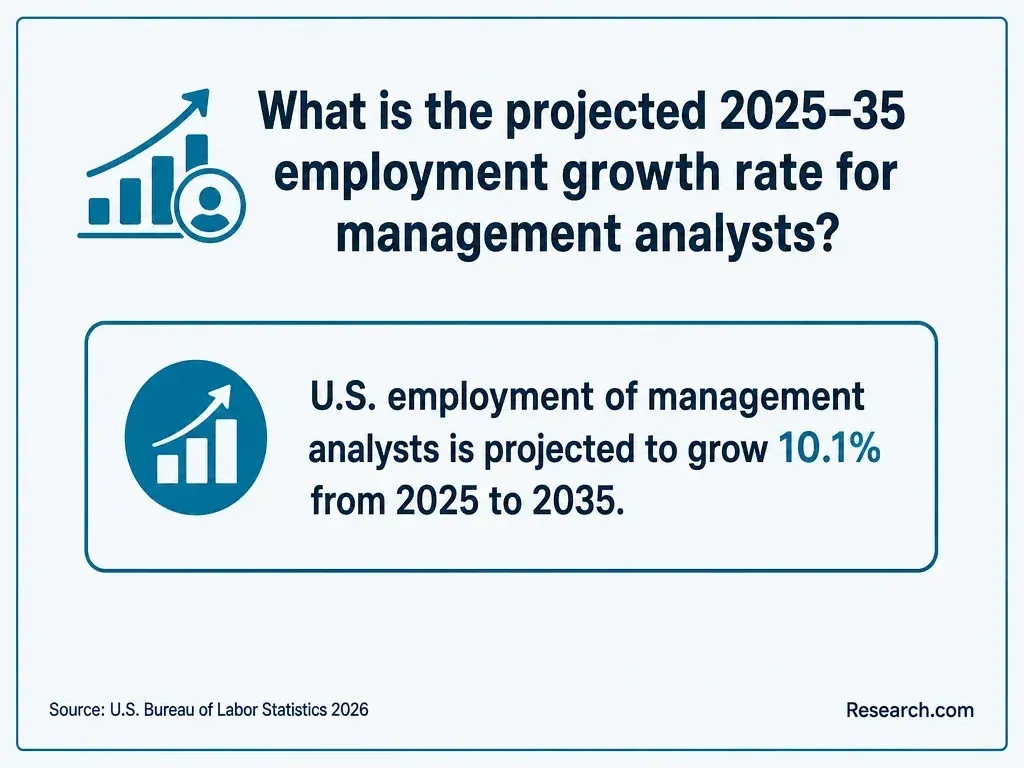
As one reference point, the U.S. Bureau of Labor Statistics reports a May 2025 median annual salary of $95,200 for education administrators, all other, with projected employment growth of 1.6% from 2025 to 2035. This broad occupation is not a regional-agency pay scale and does not measure the effect of earning a doctorate.
For a realistic comparison, examine posted salaries for the agency roles you could plausibly obtain, their required qualifications, and whether your employer recognizes the degree for advancement. Factor in your existing experience and the full cost of study; do not base the decision on an assumed doctoral pay increase.
How Do You Choose a Reputable Online Ed.D. Program?
Start with the agency responsibility you want to handle better - such as leading professional learning across districts or evaluating a shared service - and compare programs against that work. A reputable institution is necessary, but a good fit also requires usable coursework, appropriate project rules, and a schedule you can sustain.
Before applying, ask each program for answers to the following decision-critical questions:
- Which required courses address adult learning, organizational change, and evaluation, and what work will students produce?
- Can the culminating project involve a regional agency and multiple districts, and what approvals and faculty guidance are required?
- What live meetings, group obligations, campus visits, and progression deadlines apply to my entry term?
- What is the complete estimated cost under my proposed enrollment pace, and what happens if a project or course is delayed?
- What completion and career information does the program publish, and how were those outcomes measured?
Use the same questions for every school and request written answers where policies affect your decision. An Ed.D. tuition comparison guide can help identify programs to investigate, but confirm charges and required credits directly with each institution. If your immediate need is to improve one agency service, a focused evaluation course, mentorship, or supervised improvement project may provide a faster, less costly first step than a doctorate.
Other Things You Should Know About EdD Leadership
Potentially. Agencies employ people in operations, evaluation, technology, professional learning, and other functions. Check the specific posting and state requirements; instructional or administrator positions may have credential rules that other roles do not.
District participation should not be presumed. An agency's support does not replace a district's authority over its staff, records, or participation. Design the project so it remains viable if some districts decline.
Only if the grant's terms and the agency's financial policies permit that expense. Ask the grant administrator to review allowability and approval requirements before counting on the funding.
Follow district, agency, and university rules before entering any information into an AI tool. Do not upload identifiable learner or employee records, confidential documents, or restricted data without explicit authorization and an approved data-handling process.
- Research Findings Summary | California Governor's Council for Career Education https://careereducation.gov.ca.gov/initiatives/recovery-with-equity/research-findings-summary/
- Institutional Accrediting Agencies | ed.gov http://www.ed.gov/laws-and-policy/higher-education-laws-and-policy/college-accreditation/institutional-accrediting-agencies
- Cost of Attendance (Budget) | 2025-2026 Federal Student Aid Handbook https://fsapartners.ed.gov/knowledge-center/fsa-handbook/2025-2026/vol3/ch2-cost-attendance-budget
- ESC Services | Texas Education Agency https://tea.texas.gov/school-district-leaders/esc-services
- Recognition of Accrediting Agencies | Texas Higher Education Coordinating Board https://www.highered.texas.gov/recognition-of-accrediting-agencies/
- Regional Education Agencies: The Critical Link Between the State and the Classroom - SISEP https://sisep.fpg.unc.edu/blog/regional-education-agencies-the-critical-link-between-the-state-and-the-classroom/
- What Topics Do EdD Students Research in the EdD Program? | Fairfield University https://www.fairfield.edu/news/insights/education-human-development/what-topics-do-edd-students-research.html
- UNC EdD Online: Organizational Learning and Leadership https://online.unc.edu/online-doctoral-programs/online-edd-organizational-learning-and-leadership/
- Ed.D. in Executive Leadership - Degrees & Requirements | Columbia University https://www.tc.columbia.edu/organization-and-leadership/edd-in-executive-leadership/degrees--requirements/executive-leadership-edd/
- Online Ed.D. in Leadership and Learning in Organizations | VU-EDU https://peabodyonline.vanderbilt.edu/edd-in-organizational-learning/