2027 Online Ed.D. in Leadership and Learning in Organizations Admissions: Documenting Leadership in Volunteer Organizations
Audited and Verified:
Our Editorial and Data Verification Process
Research.com uses government datasets, official education statistics and primary institutional information to support its career and degree guides. Our review process checks factual accuracy, occupational definitions, source dates and the requirements associated with the credentials discussed.
How This Article Was Fact-Checked
Our editorial team verifies salary estimates, employment projections, education requirements and program information against original data providers and official organizations. Salary figures are checked against the relevant occupational definitions and reporting periods. Information about licensure, accreditation and required in-person training is reviewed separately.
Fact-checked and verified on:

Co-Founder and Chief Data Scientist
Volunteer leaders often make consequential decisions without a managerial title or paid staff. That experience may strengthen an online Ed.D. application, but admissions committees need to understand what you actually led, how you learned from it, and whether it meets their program's experience requirements.
This guide is for nonprofit, community, and other volunteer leaders considering a doctorate in leadership and learning in organizations. It explains how to assemble credible evidence, describe an organizational challenge without overstating results, and decide whether a program fits your goals and resources.
Key Things You Should Know
- Volunteer leadership can be persuasive Ed.D. application evidence when you show decision-making responsibility, collaboration, and organizational learning - not merely hours served or a title.
- Use a consistent account across your résumé, statement, and recommender's letter; distinguish your contribution from the organization's collective results.
- Ask each program whether unpaid leadership qualifies under its experience policy. There is no universal Ed.D. rule requiring paid management experience.
What Is an Online Ed.D. in Leadership and Learning in Organizations?
An Ed.D. in leadership and learning in organizations is a practice-oriented doctorate concerned with how people develop, organizations change, and leaders use evidence to improve practice. Programs with similar names can emphasize different settings, from nonprofit and corporate workforce development to universities and schools. "Online" describes where much instruction occurs; it does not establish that attendance is self-paced or that campus visits are unnecessary.
For a volunteer leader, the central fit question is whether the curriculum will help address a real organizational problem - such as volunteer onboarding, leadership succession, or evaluating a community program. If your goal is specifically university administration, compare Ed.D. learning and organizational improvement pathways in universities rather than assuming every organizational leadership doctorate has that focus.
How Can Volunteer Leadership Experience Strengthen an Ed.D. Application?
Unpaid work can demonstrate substantial leadership when it involves responsibility for people, resources, decisions, or improvement. Coordinating a volunteer training effort, for example, shows more than participation if you identified a need, worked with stakeholders, made implementation decisions, and assessed what should change. Describe the scope and limits of your authority: a committee chair who proposed a process is not necessarily the person who approved its budget or measured its effects.
The strongest application connects that experience to a doctoral purpose. Explain the organizational learning question your work exposed and why you need more advanced preparation to investigate it. A modest, well-supported account of an unresolved challenge is more credible than an unsupported claim that your initiative transformed an organization.
Volunteer service may also mean you have no employer tuition benefit. Before treating a doctorate as the next step, compare funding possibilities, including higher education leadership doctoral scholarships if that is your intended field. A shorter evaluation course, mentorship, or a supervised improvement project may be a better first investment if your immediate need is a specific skill.
What Admissions Requirements Apply to Online Ed.D. Leadership Programs?
Requirements belong to the individual program and entry term. A completed graduate degree, transcripts, recommendations, a statement of purpose, and relevant professional experience may be requested, but schools differ on acceptable degree fields, grades, tests, interviews, and how they define leadership experience. An applicant can meet formal minimums without yet presenting a competitive case for doctoral study.
Before applying, ask admissions these questions and request the answer in writing when your eligibility depends on volunteer work:
- Does the experience requirement include unpaid leadership, and how should its dates, hours, and responsibilities be reported?
- Who should verify the work if the organization has no conventional supervisor or human resources office?
- What academic preparation is required, and which application materials or deadlines apply to the intended entry term?
- Must applicants have an organizational project site at admission, or is one identified later?
Prior doctoral coursework creates a separate question. Consult the school's written policy before assuming unfinished education doctorate study and completion choices will satisfy admission conditions or reduce the new degree's requirements. Eligibility and transfer credit are different decisions.
Build a short evidence file before drafting the application. Its purpose is not to produce the largest portfolio; it is to let an admissions reader verify your role, understand your judgment, and see how the experience relates to leadership and learning. These steps keep claims consistent across application materials:
- Identify each role's organization, dates, approximate commitment, reporting relationship, and whether it was unpaid. Use the organization's actual title, then explain responsibilities in plain language.
- Describe a specific challenge, your decision authority, the people you worked with, and what you personally did. Separate your actions from those of a board, staff team, or other volunteers.
- Attach or retain permissible corroboration, such as a role description, approved plan, public program materials, or an organization-issued confirmation. Redact personal and confidential information.
- Report results only when records support them. If outcomes were not measured, describe what was implemented, the feedback available, its limitations, and what you would evaluate next.
- Choose a recommender who observed your work and can explain its scope. Share your factual résumé with them, but do not script their independent assessment.
In the statement of purpose, move from evidence to inquiry: "While coordinating volunteer onboarding, I encountered inconsistent preparation across teams; I want to study how organizations assess learning and support its transfer into practice." That is an illustrative framing, not a claim that training improved outcomes. If you hope to study the organization during the doctorate, confirm separately that a proposed project could receive faculty approval, organizational permission, appropriate data access, and any required ethical review.
Relevant coursework may address adult learning, leadership and organizational change, research methods, and evaluation. For a community-serving organization, the useful connection is between diagnosing a problem and testing a feasible response: weak volunteer retention, for instance, should not automatically be treated as a training problem when scheduling, supervision, or resources might matter more.
Examine the actual required courses and final project rather than relying on a program's broad description. Ask whether students practice qualitative or quantitative inquiry, whether they evaluate learning or organizational outcomes, and whether a volunteer organization can serve as a project setting. A capstone, dissertation in practice, and traditional dissertation are not interchangeable; the school determines its deliverable and approval process.
Online study may reduce routine travel, which can help volunteers balance service, paid work, and study. Campus-based study may make in-person collaboration easier. Neither format determines academic rigor or how much time a project will take. The comparison that matters is the published schedule: live classes, team meetings, attendance rules, required convenings, and project milestones.
Ask an online program for a sample term calendar and its policy if you cannot attend a live session. Compare that with the commute and scheduled presence a campus program requires. Applicants attracted to fast-track online education doctorate programs should check whether compressed coursework and project deadlines are feasible alongside their volunteer and employment commitments; a shorter advertised timeline does not remove those obligations.
Time and price vary with the program's credit requirements, enrollment pace, tuition structure, and final-project rules. Do not estimate total cost from a per-credit figure alone. Request a term-by-term plan showing tuition, mandatory fees, required travel, and the charges that would apply if the project takes longer than planned.
For someone whose leadership is unpaid, the financing question deserves particular care: there may be no employer reimbursement, and time spent studying may displace paid work or service. When comparing tuition across online Ed.D. programs, use each school's current charges and written aid terms. Ask whether awards continue during the final-project stage and whether a slower pace changes eligibility or total cost.
Confirm that the university holds recognized institutional accreditation and that the accreditation covers the institution awarding the degree. Use the accreditor's and university's current records, then verify the exact degree name with the program. A school's institutional accreditation does not by itself establish a specialized endorsement or eligibility for an occupation-specific license.
If you want to work in a regulated school leadership position, obtain the program's licensure disclosure and check it with the relevant state authority before enrolling. A broadly focused Ed.D. in organizational leadership and learning should not be assumed to prepare graduates for principal or superintendent licensure.
Experienced volunteer leaders may use doctoral study to strengthen work in nonprofit program leadership, volunteer development, organizational learning, workforce training, or consulting. The credible career bridge is a combination of existing responsibility, demonstrated projects, and the skills a target role requires - not the degree alone. A person aiming to manage paid learning staff, for example, should assess gaps in budgeting, supervision, evaluation, and sector-specific experience.
For a move into university administration, investigate the responsibilities and hiring expectations of particular roles; Ed.D. learning and organizational improvement pathways in universities can help frame that comparison. If the goal is to improve one volunteer program rather than change careers or conduct sustained applied inquiry, targeted training and an experienced mentor may be more proportionate than a doctorate.
What Salaries and Job Outlook Can Ed.D. Graduates Expect?
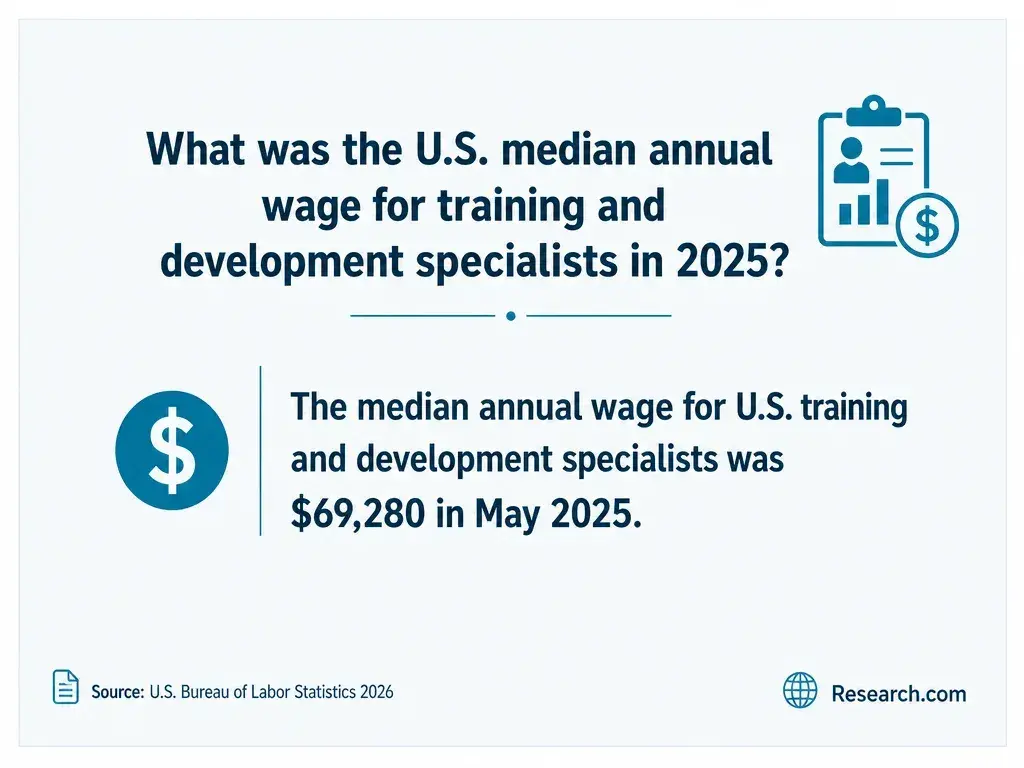
There is no single Ed.D. graduate salary: employers pay for a particular occupation and level of responsibility, not a degree title alone. The U.S. Bureau of Labor Statistics reports a May 2025 median annual salary of $133,000 for training and development managers and projects 6.4% employment growth for that occupation from 2025 to 2035. Those figures describe the occupation across workers, not the earnings or placement prospects of new Ed.D. graduates.
Use occupational data only after identifying a realistic target role. A volunteer leader seeking a first paid training position and an established manager seeking broader responsibility face different hiring requirements. Compare job postings, your documented management experience, and the full cost of study before assuming doctoral tuition will translate into higher pay.
Other Things You Should Know About EdD Leadership
Yes, if you can explain responsibilities and learning challenges relevant to the program. Describe the work in terms an admissions reader outside the organization can understand, and check any program-specific experience rules.
Use accurate records you retained and ask a former officer or supervisor whether they can independently confirm the role. Explain any gaps rather than creating documentation after the fact that appears contemporaneous.
Include older work when it shows meaningful leadership or helps explain your development. Give more space to experiences that best demonstrate your present readiness and goals.
Name the shared responsibility, identify your own decisions and work, and credit collaborators for theirs. Admissions readers can assess substantial team leadership without a claim of sole ownership.
- Letters of Recommendation | The Harry S. Truman Scholarship Foundation https://www.truman.gov/apply/advice-guidance/letters-recommendation
- UNC EdD Online: Organizational Learning and Leadership https://online.unc.edu/online-doctoral-programs/online-edd-organizational-learning-and-leadership/
- Advance Your Leadership Career with an Online Ed.D. | UMass Global https://www.umassglobal.edu/blog-news/advance-your-leadership-career-online-edd
- Online Ed.D. in Leadership and Learning in Organizations | VU-EDU https://peabodyonline.vanderbilt.edu/edd-in-organizational-learning/
- Section 2. Recruiting Volunteers - Community Tool Box https://ctb.ku.edu/en/table-of-contents/structure/volunteers/recruiting/main
- Prepare Your Application Documents - CNS Career Services https://careerservices.cns.utexas.edu/resources/graduate-school-preparation/prepare-your-application-documents
- Letters of Recommendation - The Writing Center https://writingcenter.unc.edu/tips-and-tools/letters-of-recommendation/
- Recommendation Letters | harvard.edu https://uraf.harvard.edu/resource/recommendation-letters