2027 Online Ed.D. in Leadership and Learning in Organizations: Choosing Doctoral Study When Your Employer Does Not Require It
Audited and Verified:
Our Editorial and Data Verification Process
Research.com uses government datasets, official education statistics and primary institutional information to support its career and degree guides. Our review process checks factual accuracy, occupational definitions, source dates and the requirements associated with the credentials discussed.
How This Article Was Fact-Checked
Our editorial team verifies salary estimates, employment projections, education requirements and program information against original data providers and official organizations. Salary figures are checked against the relevant occupational definitions and reporting periods. Information about licensure, accreditation and required in-person training is reviewed separately.
Fact-checked and verified on:

Co-Founder and Chief Data Scientist
Your employer may value your leadership and learning work without requiring a doctorate. That makes an online Ed.D. a choice about the work you want to do - not a box you must check for your current job. This guide is for working professionals weighing deeper study against its cost, time demands, and less expensive ways to advance. You'll learn where the degree may add value, where experience matters more, and what to verify before committing.
Key Things You Should Know
- An online Ed.D. is most compelling when you need sustained preparation to lead organizational change or evaluate learning initiatives - not simply a credential your employer does not request.
- The median annual salary for training and development managers was $133,000 in May 2025, according to the U.S. Bureau of Labor Statistics (BLS); that occupational median is not an expected Ed.D. graduate salary.
- Compare the full cost and scheduling demands with a smaller development project, targeted study, or an employer-sponsored leadership opportunity before enrolling.
What is an online Ed.D. in Leadership and Learning in Organizations?
An Ed.D. is a Doctor of Education. A program focused on leadership and learning in organizations generally examines how adults learn at work, how leaders guide change, and how organizations use evidence to improve practice. Its focus can apply beyond schools - to businesses, nonprofits, healthcare organizations, government agencies, and universities. The exact degree name and curriculum depend on the institution.
"Online" describes where much of the instruction occurs, not necessarily how freely you can schedule it. Programs may require live classes, cohort projects, campus visits, and an approved applied project or dissertation. If you are already all but dissertation in another doctoral program, comparing education doctorate ABD completion routes may be more relevant than starting a new degree; ask whether any prior work would actually apply.
Is an online Ed.D. worth pursuing when employers do not require a doctorate?
Possibly - but the case rests on the responsibilities you want to take on, not on the degree's status. An Ed.D. may be worthwhile for an experienced learning professional or organizational leader who wants to diagnose complex problems, evaluate interventions, and lead change across teams. It is a weaker investment if the immediate goal is a promotion determined chiefly by management experience, a required license, or an employer's internal hiring rules.
The comparison below starts with the capability or opportunity you need. These paths are not interchangeable, but each may offer a more direct route to a particular goal.
| Primary goal | Path worth considering | Important limitation |
| Lead and evaluate complex organizational learning or change work | Practice-oriented Ed.D. with a relevant applied project | A doctorate does not confer decision-making authority at work. |
| Move into a specific management role | Expanded responsibility, mentorship, or employer leadership development | Experience may matter more than additional coursework. |
| Build one defined skill, such as evaluation or instructional design | Targeted courses, a certificate, and a supervised project | The scope is narrower than doctoral study. |
| Pursue a research-centered academic career | Research-focused PhD | Its aims and funding arrangements differ by program. |
Before applying, identify a responsibility you cannot yet perform confidently and ask whether the proposed Ed.D.'s courses, faculty guidance, and final project address that gap. Then ask your employer whether completing it would change your duties, eligibility, or pay. A supportive answer is useful; an unwritten assumption is not. If higher education leadership is your goal, investigate grants for doctoral study in higher education leadership, while checking each award's actual eligibility and availability.
What careers can an Ed.D. in Leadership and Learning in Organizations lead to?
The degree can support work in learning and development, organizational development, talent management, consulting, nonprofit leadership, or higher education administration. Those are different career paths. A training and development manager oversees learning strategy, staff, and budgets; an organizational consultant diagnoses client problems and recommends changes; a higher education administrator works within institutional governance and policies.
Start with the work you already do. A learning specialist who has designed training may need experience managing people and budgets before competing for director roles. An established manager may benefit more immediately from stronger evaluation and change-leadership skills. For a move into consulting or another sector, document projects that show the problem, your role, the evidence used, and the limits of any results. An Ed.D. can strengthen that record, but it cannot replace sector knowledge, professional relationships, or a specific employer's qualifications.
Online study can reduce routine commuting and widen your choice of institutions. Campus-based study may make in-person faculty contact and peer collaboration easier. Neither format guarantees more flexibility or better career outcomes: a live online cohort can be less schedule-friendly than a campus program with predictable meeting dates.
Compare published attendance rules, live-session times, group-work expectations, required campus convenings, accessibility support, and faculty availability. Confirm whether your work schedule allows protected time for research and writing, especially during the final project. When comparing affordable distance learning education doctorates, include required travel and time away from work rather than comparing advertised tuition alone.
Relevant study may include adult learning, organizational culture, leadership and change, needs assessment, program evaluation, and qualitative or quantitative inquiry. The strongest fit for a working leader connects these subjects: for example, determining whether a performance problem calls for training, a process change, or both, then deciding what evidence would show whether an intervention helped.
Review actual required courses and the final-project rules, not just topic labels in a program description. Ask whether you can investigate a problem in your sector, what faculty guidance is available, and whether you need employer permission or access to restricted data. Coursework about evaluation does not itself establish that a graduate can conduct independent research or implement an organizational change.
Requirements vary by institution. Programs may assess prior graduate study, academic performance, professional experience, recommendations, a statement of purpose, and the fit between an applicant's goals and the curriculum. Some expect a completed master's degree; do not assume every program requires an education major, a senior job title, or the same amount of leadership experience.
Describe decisions you have made, people or initiatives you have led, and an organizational problem you want to study - without claiming results you cannot document. If you hold an Education Specialist degree, advanced study options after an Ed.S. can help frame your search. Ask admissions staff separately whether prior coursework meets entry requirements and whether any credits would apply toward the Ed.D.; one answer does not establish the other.
Both depend on the program's required credits, course sequence, enrollment pace, final-project process, and tuition policy. A published schedule may assume uninterrupted progress; project approvals, data access, or a change in employment can affect completion. Request the curriculum sequence and ask what happens if you need to pause or repeat a course.
Build a personal cost estimate from tuition, mandatory fees, books or technology, required travel, and any lost earnings or caregiving costs. Subtract employer assistance only after confirming its limits, reimbursement timing, and conditions for repayment. Compare that estimate with affordable online Ed.D. programs, then check whether the lower-cost options teach the skills and permit the project your goal requires. Without a clear professional use for the degree, even comparatively low tuition can be a poor investment.
Check the institution and the exact degree offering separately. Confirm the institution's recognized accreditation through the accreditor's directory or the U.S. Department of Education's accreditation database, then verify on the university's official pages that the Ed.D. is offered in the format and field advertised. Ask the institution which accreditation statements apply to your proposed entry term.
Institutional accreditation does not mean a leadership doctorate has a separate programmatic accreditation, qualifies you for an education license, or meets a particular employer's hiring rule. If one of those outcomes matters, obtain confirmation from the relevant licensing authority or employer before enrolling.
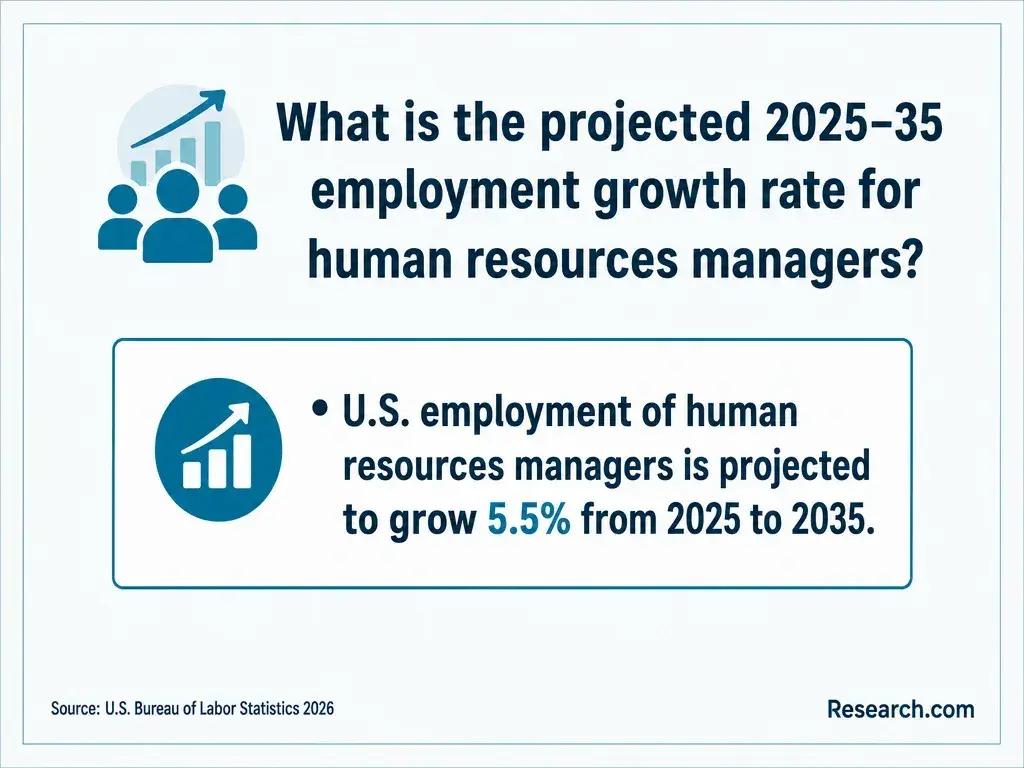
There is no single Ed.D. salary because graduates enter different occupations with different levels of experience. The BLS reports a May 2025 median annual salary of $133,000 for training and development managers and projects 6.4% employment growth for that occupation from 2025 to 2035. These figures describe the occupation - not the pay or prospects of graduates from a particular program.
For a sound financial decision, compare roles you could realistically qualify for now with roles you could pursue after gaining additional responsibility. Check local job postings for required experience and credentials, and ask whether your employer has a defined advancement path. Do not calculate a return on investment by assuming that earning the doctorate moves you immediately into a manager's salary range.
Do Ed.D. graduates need licenses or professional certifications?
Many organizational learning and leadership roles do not require a license tied to an Ed.D. Employers may value relevant professional certifications, but those credentials have their own eligibility rules and do not automatically come with a doctorate.
Regulated education roles are different. A general Leadership and Learning in Organizations Ed.D. should not be assumed to prepare you for teacher, principal, or superintendent licensure. If you have a specific role in mind, check the program's licensure disclosure and confirm eligibility with the appropriate state authority before applying.
Other Things You Should Know About EdD Leadership
Yes, if the program does not require sponsorship. But using your workplace for a project may require separate permission, data access, and academic approval. Ask about those requirements before relying on your job as a project site.
A job change need not end your studies, but it can disrupt a workplace-based project. Ask the program whether an external partner or revised project is permitted and how changes are approved.
Possibly, but do not assume every academic deliverable can remain private. Clarify who will review it, whether it will be archived, and what redaction or data-use rules apply before proposing sensitive work.
Try a substantial evaluation or change project with a mentor, and examine sample doctoral coursework. The experience can reveal whether you want sustained research and writing - or a narrower skill-building option.
- Cost of Attendance (Budget) | 2025-2026 Federal Student Aid Handbook https://fsapartners.ed.gov/knowledge-center/fsa-handbook/2025-2026/vol3/ch2-cost-attendance-budget
- Frequently asked questions about educational assistance programs | Internal Revenue Service https://www.irs.gov/newsroom/frequently-asked-questions-about-educational-assistance-programs
- Accreditation in the U.S. | ed.gov http://www.ed.gov/laws-and-policy/higher-education-laws-and-policy/college-accreditation/accreditation-in-the-us
- Rule 3341-3-06 - Ohio Administrative Code https://codes.ohio.gov/ohio-administrative-code/rule-3341-3-06
- Maximizing the Impact and ROI of Leadership Development | nih.gov https://pmc.ncbi.nlm.nih.gov/articles/PMC11505461/
- UNC EdD Online: Organizational Learning and Leadership https://online.unc.edu/online-doctoral-programs/online-edd-organizational-learning-and-leadership/
- Doctor of Education in Organizational Leadership, Culture and Change | Thomas Edison State University https://www.tesu.edu/degrees-programs/doctoral/edd.php
- Requirements - Educational Foundations and Leadership https://foundations.louisiana.edu/programs/doctoral/higher-education-executive/requirements