2027 Online Ed.D. in Leadership and Learning in Organizations: How to Evaluate Research Methods Sequenced Before the Capstone
Audited and Verified:
Our Editorial and Data Verification Process
Research.com uses government datasets, official education statistics and primary institutional information to support its career and degree guides. Our review process checks factual accuracy, occupational definitions, source dates and the requirements associated with the credentials discussed.
How This Article Was Fact-Checked
Our editorial team verifies salary estimates, employment projections, education requirements and program information against original data providers and official organizations. Salary figures are checked against the relevant occupational definitions and reporting periods. Information about licensure, accreditation and required in-person training is reviewed separately.
Fact-checked and verified on:

Co-Founder and Chief Data Scientist
A capstone can stall when a student reaches it without a workable question, suitable methods, or permission to use organizational data. If you are comparing online Ed.D. programs in leadership and learning, the order of research courses matters as much as their titles.
This guide shows what preparation should come before project approval, how to spot gaps in a published curriculum, and which questions to ask faculty. You can use it to judge whether a program will help you investigate a real workplace learning problem, not simply require a capstone at the end.
Key Things You Should Know
- Look for a progression from organizational problem definition to research design, data collection and analysis, ethics, and an approved capstone proposal, not just a list of methods courses.
- Ask when students must secure a project site, data access, faculty guidance, and any required ethical review. A methods course taken after those decisions may be too late to shape the project.
- Compare the actual assignments and approval checkpoints. An illustrative onboarding evaluation may need baseline measures, a feasible comparison, and interview safeguards. Course titles alone do not show whether students learn to make those choices.
What Is an Online Ed.D. in Leadership and Learning in Organizations?
An online Ed.D. in leadership and learning in organizations is a practice-oriented doctorate concerned with how people learn, lead, and improve performance within organizations.
Depending on the institution, its exact award name and curriculum may emphasize adult learning, organizational change, leadership development, or applied evaluation. "Online" describes delivery, not necessarily self-paced study or an entirely remote capstone.
The degree can fit an experienced learning and development professional or organizational leader who wants to investigate a problem they have the authority and access to address. It differs from a research-oriented PhD when its central aim is improving practice rather than preparing primarily for an academic research career.
Before comparing curricula, consider matching an Ed.D. focus to leadership goals; a program centered on school administration may be a poor fit for a workplace learning project, even if both teach research methods.
How Are Research Methods Sequenced Before the Ed.D. Capstone?
A strong sequence lets each course answer a question the next course depends on. Students first distinguish an organizational symptom from a researchable problem, then select a design and measures, practice collecting and analyzing evidence, and finally defend a feasible proposal. The capstone may begin alongside later coursework, so ask when methods instruction occurs relative to the first irreversible project decisions.
Course names vary. This comparison shows what each stage should prepare a student to produce and the gap to investigate if it appears late in the curriculum.
| Preparation stage | Evidence of readiness | Risk if delayed |
| Problem framing and literature | A bounded organizational question, relevant scholarship, and a plausible account of what is not yet known locally | A proposed solution precedes diagnosis |
| Design and measurement | A justified qualitative, quantitative, or mixed-methods approach with defined participants, measures, and timing | Available data cannot answer the question |
| Collection, analysis, and interpretation | Practice with protocols, sampling, data quality, analysis, and limitations using appropriate examples or permitted data | The student learns essential techniques after collecting evidence |
| Ethics and proposal development | A documented access plan, oversight route, feasible timeline, and proposal reviewed under program rules | Approval or confidentiality problems interrupt the capstone |
For example, a student considering an onboarding initiative might examine completion records and interview new employees. Records could describe participation, while interviews could explain experiences; neither alone proves the initiative caused better job performance.
A useful methods sequence teaches the student to define outcomes, assess whether records are comparable, protect employee identities, and integrate the two forms of evidence before committing to that design.
Check the syllabus and assignment dates, not just the catalog. Ask whether students receive feedback on a draft question and protocol before seeking site permission, whether quantitative and qualitative courses are required or elective, and what happens if the proposed data are unavailable. A program that teaches analysis early but offers no supported route from methods assignments to a proposal leaves an important gap.
What Should an Ed.D. Capstone Include in Leadership and Learning?
The required deliverable varies: a program may specify a dissertation in practice, individual or team capstone, or another applied project. Whatever its name, a credible project connects a consequential organizational decision to a bounded question, suitable evidence, a defensible interpretation, and recommendations that acknowledge constraints. An employer presentation or course assignment does not automatically satisfy doctoral requirements.
For a learning initiative, the proposal might identify the decision-maker, whose learning or performance is at issue, what baseline evidence exists, which outcomes can be measured, and how implementation will be documented. It should distinguish a needs assessment from an evaluation of an intervention.
If the project uses interviews, surveys, or personnel or learner records, the student must check employer authorization, confidentiality and consent requirements, applicable record protections, and the institution's process for determining whether research review is required. Not every workplace evaluation is automatically human-subjects research or automatically exempt.
A sound final account also reports missing data, alternative explanations, and limits on applying findings elsewhere. Organizational improvement is not proof of causation unless the design supports that conclusion. Ask the program to show the capstone rubric and explain who approves the site, question, methods, and any later changes.
The relevant difference for methods preparation is access to feedback, collaboration, and project support, not whether a lecture is viewed on a screen. Either format can teach rigorous methods, and either can leave students to resolve data-access problems alone.
This comparison identifies delivery features worth verifying against a program's schedule and handbook rather than assuming they follow from its online or campus label.
| Feature | Online program: verify | Campus-based program: verify |
| Methods interaction | Live seminars, office hours, draft reviews, and feedback turnaround | Seminar access, advisor availability, and opportunities to revise designs |
| Project collaboration | Required team meetings across schedules and approved ways to work with a remote site | Meeting and site-visit expectations that may conflict with employment |
| Attendance and travel | Required synchronous sessions and any campus convenings | Regular commuting, campus attendance, and possible site travel |
For a working leader, flexible location may make an existing workplace project feasible, but evening seminars and group analysis still require protected time. Include travel and attendance requirements when comparing tuition-focused education doctorate program choices; the lower published tuition option may not be the easier one to complete.
Programs commonly combine leadership and organizational learning study with research preparation, but requirements and course depth differ. Relevant subjects may include adult learning, organizational change, needs assessment, program evaluation, qualitative inquiry, quantitative methods, and research ethics. A course titled "analytics" is not, by itself, evidence that students learn measurement validity or how to interpret uncertain results.
Read the curriculum as a dependency map. Adult learning and organizational diagnosis can help define the problem; design and measurement courses should follow before data collection; supervised proposal work should connect methods to the capstone.
If you already conduct surveys at work but have little experience evaluating alternatives to a training solution, diagnosis and causal reasoning may matter more than additional software exposure. Confirm which courses are required, which electives actually run, and whether a formal concentration is awarded rather than inferred from one course.
Requirements are institution-specific. Programs may evaluate a prior degree or graduate coursework, academic record, professional experience, recommendations, and a statement describing an organizational challenge. Some ask for an interview or evidence of research preparation; a publication record, education master's, or particular statistics course is not a universal condition.
For this topic, distinguish admission eligibility from capstone readiness. A leader can qualify for admission yet need substantial practice with sampling, interviews, or quantitative interpretation.
Ask admissions which prior credits count toward eligibility and ask the program separately whether any credits actually satisfy doctoral requirements. In your application, describe your role in a real organizational problem and the evidence you could potentially examine without claiming access, approval, or results you do not have.
Completion time depends on the institution's credit and residency rules, course rotation, enrollment pace, and capstone approvals. A published program length may assume uninterrupted progress and ready access to a suitable project site.
The more useful question is when students must have a question, site, methods plan, and approved proposal, not simply the scheduled graduation date.
Request a term-by-term plan showing methods courses and project milestones. Ask what happens if a required course is not offered when needed, an employer changes access rules, or review requires revisions.
Delays can also increase the cost of continued enrollment; readers comparing budget-friendly online education doctorates should check continuation and capstone registration charges alongside the advertised schedule.
No single price represents this degree. Calculate the institution's published tuition using its required credits or term charges, then add mandatory fees, any convening travel, materials, and potential continuation enrollment. Confirm whether tuition changes by enrollment status and whether employer reimbursement depends on grades, continued employment, or an approved field of study.
Methods preparation has a financial implication: weak proposal support or a project that cannot obtain data may extend paid enrollment. When comparing leadership doctorate programs with lower tuition, ask what advising, research-library access, and proposal review are included in the quoted cost. A shorter, targeted evaluation course may be more economical if you need research skills for your current role but not the doctorate's broader study or credential.
Graduates may apply their preparation in learning and development, organizational improvement, consulting, or education-adjacent leadership. Fit depends on prior responsibilities: designing an evaluation can strengthen a training manager's practice, but a capstone does not replace experience managing budgets, people, and implementation.
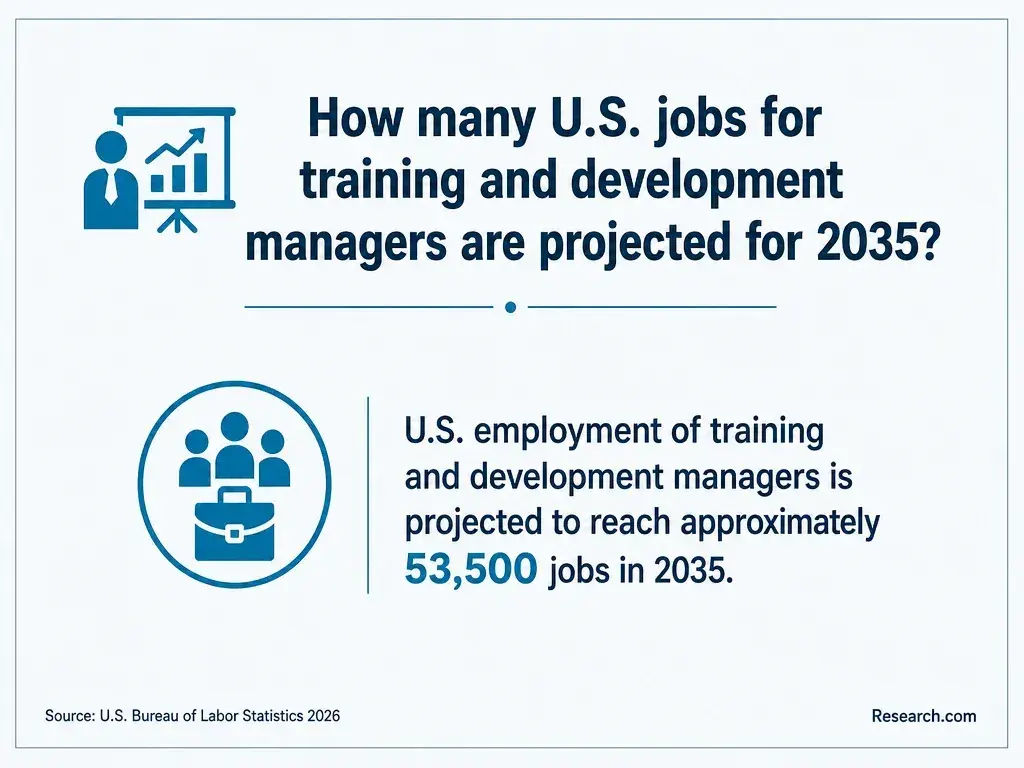
The U.S. Bureau of Labor Statistics reports a May 2025 median annual salary of $133,000 for training and development managers. That is an occupational median, not an expected salary for Ed.D. graduates or evidence that the degree qualifies someone for a manager role. Compare openings against your experience and target sector; a general organizational leadership Ed.D. also does not automatically confer school-administrator licensure.
How Can You Evaluate an Accredited Online Leadership Ed.D. Program?
Start by confirming the institution's accreditation status with its recognized accreditor and checking the exact degree name, delivery requirements, and licensure disclosures with the university.
Accreditation establishes the institution's status within its scope; it does not establish that a particular methods sequence is strong or that the degree meets a state's professional-licensure rules.
To compare research preparation, ask a program representative or faculty member for the documents below. Written answers are especially useful when a policy affects whether your intended project is possible.
- Obtain a current course map and syllabi showing when students practice design, data collection, analysis, ethics, and proposal writing.
- Request the capstone handbook and rubric; identify approval checkpoints, advisor responsibilities, team-work rules, and procedures for changing a question or site.
- Ask for an appropriately shareable example of a methods assignment or proposal rubric, and find out how students receive feedback before collecting data.
- Confirm who determines research-review requirements, what site permissions are needed, and what support exists if authorized data become unavailable.
Compare the answers against your own feasible project, not an idealized one. If you plan to use employer support, verify its terms and the program's actual aid options.
Resources on evaluating aid eligibility for higher education leadership doctorates can inform questions, but funding in one program or field does not establish your eligibility elsewhere. Choose a program only after its sequence, oversight, schedule, and total cost make sense together.
Other Things You Should Know About EdD Leadership Programs
Only if the institution approves it under its transfer, substitution, or waiver rules. Send the syllabus and transcript for a written evaluation; admission based on prior study does not itself waive a course.
Not universally. Ask which analyses and tools are required, what instruction is provided, and whether your intended project needs those techniques. Sound design and interpretation matter more than familiarity with a particular package.
Check university policy, participant consent, employer restrictions, and the tool's data-handling terms before uploading any recording or transcript. An automated summary still needs human verification and protection of confidential information.
Notify your advisor promptly and consult the program's change procedures. A revised site, question, or data source may require new academic approval, organizational permission, or ethical review; approval is not automatic.
- Why Human Subjects Research Protection Is Important - PMC https://pmc.ncbi.nlm.nih.gov/articles/PMC7122250/
- Human Research Protection Training | Virginia Department of Social Services https://dss.virginia.gov/research-and-planning/institutional-review-board-irb/policies-and-procedures/hrp-training/
- Human Subjects Protections Training - UW Research https://research.washington.edu/research/hsd/training/required-training/human-subjects-protections-training/
- Human Subjects -- Procedures and Guidelines | Cal Poly, San Luis Obispo https://research.calpoly.edu/HS-guidelines
- Capstone Guide: Choosing a Research Question | LibGuides at Central Penn College https://guides.centralpenn.edu/capstone/research_question
- UNC EdD Online: Organizational Learning and Leadership https://online.unc.edu/online-doctoral-programs/online-edd-organizational-learning-and-leadership/
- Mixed Methods | Irving Institute for Clinical and Translational Research https://www.irvinginstitute.columbia.edu/mixed-methods
- IRB for the Protection of Human Subjects Guidelines for Class Projects - Simpson University https://simpsonu.edu/irb-for-the-protection-of-human-subjects-guidelines-for-class-projects/
- Online Doctor of Education in Leadership (EdD) | spalding.edu https://online.spalding.edu/programs/online-doctor-education-leadership
- Online EdD Higher Education | Saint Leo University https://onlinedegrees.saintleo.edu/programs/online-edd-higher-education