2027 Online Ed.D. in Leadership and Learning in Organizations: Designing a Project About Employee Retention
Audited and Verified:
Our Editorial and Data Verification Process
Research.com uses government datasets, official education statistics and primary institutional information to support its career and degree guides. Our review process checks factual accuracy, occupational definitions, source dates and the requirements associated with the credentials discussed.
How This Article Was Fact-Checked
Our editorial team verifies salary estimates, employment projections, education requirements and program information against original data providers and official organizations. Salary figures are checked against the relevant occupational definitions and reporting periods. Information about licensure, accreditation and required in-person training is reviewed separately.
Fact-checked and verified on:

Co-Founder and Chief Data Scientist
Employee turnover can look like a training problem when the underlying issue is workload, supervision, compensation, or limited advancement. For a working leader considering an online Ed.D., that distinction determines whether a retention project will produce useful organizational evidence - or simply recommend another workshop.
This guide explains how to frame a feasible project, what to verify about a program and employer partnership, and when doctoral study is worth the commitment. It is especially relevant to learning and development professionals and organizational leaders who can influence change but must earn access to employee data and decision-makers.
Key Things You Should Know
- A strong retention project investigates a specific group and plausible causes of turnover before choosing a training or leadership intervention.
- Program approval, employer permission, data access, ethical review, and permission to share results are separate decisions; an employee survey alone does not settle them.
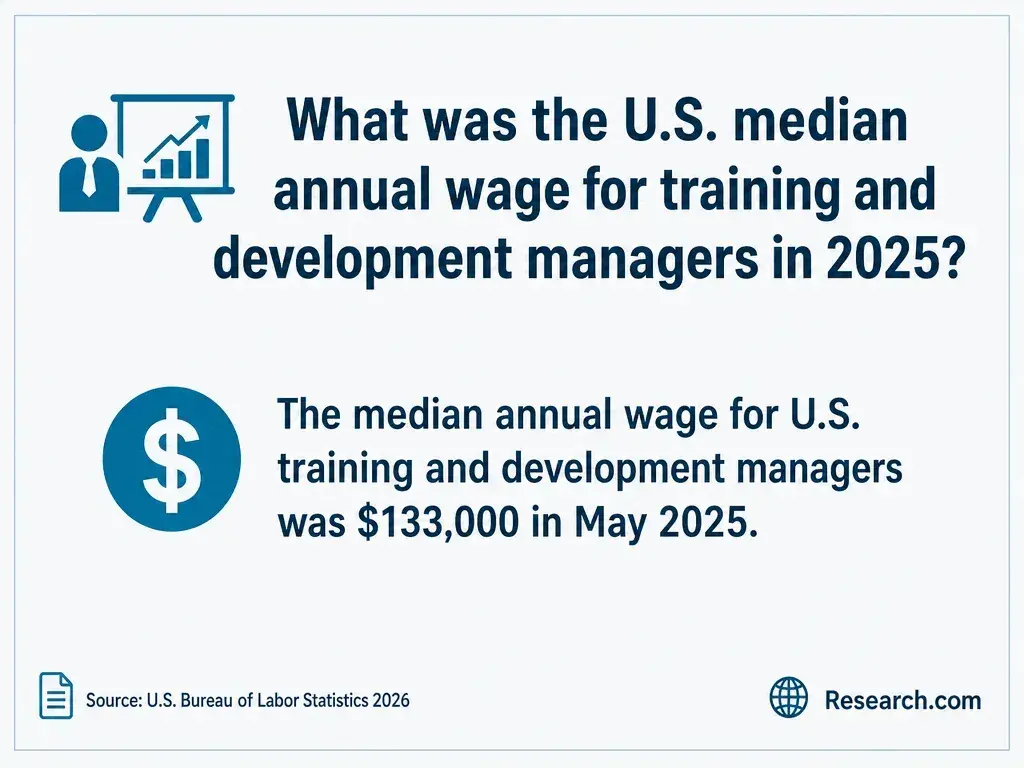
- The U.S. Bureau of Labor Statistics reports a $133,000 median annual salary for training and development managers in May 2025, but that occupational figure is not an expected Ed.D. graduate salary.
What is an online Ed.D. in Leadership and Learning in Organizations?
An Ed.D. in leadership and learning in organizations is a practice-oriented doctorate concerned with how people learn, leaders make decisions, and organizations improve. Programs with similar names can differ substantially: one may emphasize adult learning and organizational change, while another centers education administration. "Online" describes where much of the instruction occurs, not necessarily whether classes are self-paced or campus visits are optional.
For a retention-focused leader, the degree is most useful when the work calls for sustained organizational diagnosis, ethical inquiry, implementation, and evaluation - not merely an additional credential. A PhD may better suit a primary goal of producing academic research; an HR or organizational development certificate, employer leadership program, or supervised improvement project may be more direct if the immediate need is a specific workplace skill. Compare the actual award and project requirements, including lower-tuition pathways to an education doctorate, rather than assuming similarly titled degrees offer the same experience.
How can an employee-retention project fit an organizational leadership Ed.D.?
Retention can be an appropriate applied doctoral problem when an organization needs to decide why a defined group leaves and what it can responsibly change. The project might be a capstone, dissertation in practice, or another approved deliverable; an employer initiative does not automatically meet academic requirements. The strongest scope connects a leadership or learning mechanism to a decision the organization can make within the project period.
These planning steps turn a broad concern into a proposal a faculty advisor and organizational sponsor can evaluate:
- Define the setting and population, such as employees in a particular role or location, without presuming why they leave.
- Identify the decision: for example, whether to revise onboarding, supervisor coaching, internal mobility practices, or a nontraining process.
- Agree on feasible evidence, potentially including appropriately authorized aggregate turnover records, interviews, or existing feedback, and specify how each source will be interpreted.
- Choose a bounded deliverable, such as a diagnosis and pilot evaluation plan, with indicators that fit the available timeline.
- Obtain faculty approval, organizational sponsorship, data-use authorization, and any required institutional or employer ethics review before collecting or analyzing restricted information.
Consider a hypothetical onboarding project: a team could examine whether new employees receive consistent role guidance and whether an approved pilot changes early experiences. Turnover before and after the pilot could inform a decision, but without a suitable comparison and attention to hiring conditions, it would not prove that onboarding caused a change. Ask the program whether education doctorates using alternative research projects permit the kind of deliverable you propose; "no traditional dissertation" does not mean no substantial research or oversight.
What does the curriculum cover in an online Ed.D. in organizational leadership?
A useful curriculum for retention work connects leadership and organizational culture with adult learning, change implementation, research methods, and program evaluation. Learning theory can help assess onboarding or supervisor development. Organizational diagnosis helps distinguish a skill gap from scheduling, incentives, management practices, or advancement barriers. Methods courses should help students judge whether interviews, surveys, administrative records, or a mixed-methods design can answer a particular question.
Read course descriptions and the required sequence rather than inferring competence from a course title. If your proposal depends on analyzing employee-level turnover records, ask how the program teaches measurement, confidentiality, and interpretation of observational data. If it depends on interviews, ask about sampling, consent, and qualitative analysis. Also verify how much faculty guidance is available while the project is being designed; a general leadership seminar is not a substitute for appropriate methods supervision.
Good topics are narrow enough to study and connected to a change the organization has authority to consider. Examples include new-hire onboarding, supervisor feedback, access to professional development, internal career pathways, or the experience of employees moving into first-time management. Each has a different explanation to test: inadequate role preparation is not the same problem as a lack of promotion opportunities.
Choose the topic by matching the decision to available evidence. An onboarding study may draw on approved process records and new-hire feedback; a career-pathways study may require information about vacancies, eligibility rules, and employee perceptions. In either case, distinguish an indicator such as intent to stay from actual departures. If compensation policy or staffing levels are the plausible constraint and the project team cannot change them, an honest diagnosis and decision brief may be more useful than proposing training as a cure.
Requirements vary by institution and entry term. Programs may ask for a completed graduate degree, transcripts, a statement of purpose, recommendations, a résumé, and evidence of professional leadership or organizational problem-solving. Some use interviews or specify academic thresholds; applicants should verify these directly rather than assume that an education master's, a senior job title, or a published study is universally required.
For a retention-focused application, describe a problem you have encountered, your actual authority, what remains unknown, and why doctoral-level inquiry would help. Do not claim access to personnel files or promise an employer partnership that has not been approved. Ask admissions whether your prior study meets eligibility rules, then separately ask whether any credits could apply to degree requirements. An admissions determination does not itself shorten the doctorate.
Expect a multiyear commitment, but request the program's published course sequence and completion policies for your entry term rather than relying on a generic timeline. Cohort schedules, required live sessions, campus convenings, research approvals, and access to an organizational partner can all affect progress. A retention project may slow if the employer changes systems, restricts data, or cannot support a pilot when planned.
Ask when project planning begins, which milestones require faculty approval, and what happens if you change jobs or take leave. Learners returning with unfinished doctoral work should separately investigate online all-but-dissertation Ed.D. pathways; prior coursework and candidacy do not automatically transfer into a new program or its project sequence.
There is no reliable single price for the degree. Request a written estimate based on the program's required credits or terms, tuition rate, mandatory fees, expected enrollment pattern, and any required travel. For an employee-retention project, also consider time away from work, meetings with a partner organization, and any approved data or transcription costs. A delayed project can add enrollment costs even when coursework is complete.
When comparing tuition across online Ed.D. programs, compare the likely cost to completion rather than the advertised per-credit rate alone. Confirm employer reimbursement limits, grade conditions, continued-employment requirements, and repayment provisions in writing. If the goal is to improve retention at your current employer, ask whether the organization will support protected project time or targeted professional development before taking on doctoral costs.
Check the institution's current accreditation status with its recognized institutional accreditor and confirm that the school awarding the degree is covered. Then verify the exact Ed.D. title, delivery format, and any claims about specialized accreditation or state approval with the institution. Institutional accreditation does not by itself mean a broadly focused organizational leadership doctorate qualifies graduates for teacher, principal, or superintendent licensure.
Accreditation is only one project-fit check. Ask the program coordinator for the applicable handbook and confirm the required doctoral deliverable, whether external organizations are allowed, and who approves project sites and research plans. If a regulated role is your goal, obtain an eligibility answer from the relevant state authority rather than relying on the word "leadership" in a program name.
Experienced learning and development or organizational leaders may use the doctorate to strengthen their work in talent development, organizational change, or consulting. The project can provide evidence of diagnosis, stakeholder collaboration, and evaluation, but employers will still assess management experience, sector knowledge, and results they can substantiate. The occupations below illustrate different career directions, not placements or salaries promised to graduates.
| U.S. occupation | Typical connection to retention work | Median annual salary, May 2025 |
| Training and development manager | Leads workforce learning strategy and development teams | $133,000 |
| Management analyst | Advises organizations on processes and performance | $101,860 |
| Training and development specialist | Designs and delivers employee development programs | $69,280 |
These U.S. Bureau of Labor Statistics occupational medians cover workers with varied credentials and experience. A retention project is most persuasive when you can explain your contribution and the limits of its findings without exposing confidential employee information. If your intended move is specifically into higher education administration, investigate that sector's hiring expectations and higher education leadership doctoral grants and aid rather than assuming a general organizational role and a campus role offer the same pathway.
What is the job outlook for employee-retention and organizational learning leaders?
There is no single BLS occupation called "employee-retention leader." Among related roles, BLS projects 10.8% employment growth for training and development specialists from 2025 to 2035. That projection describes an occupation, not demand for Ed.D. graduates or a guarantee that employers will fund retention research.
Use the outlook as context, then examine job postings and internal promotion criteria for your target role. If positions emphasize HR operations, compensation, or employee relations, a leadership and learning doctorate may not address the largest qualification gap. If they require leading cross-functional change and evaluating workforce development, a well-executed retention project may be relevant alongside demonstrated professional experience.
Other Things You Should Know About EdD Leadership
Possibly, but prior collection does not automatically authorize doctoral use. Confirm the interviews' original purpose, employee notices, employer restrictions, data-use permission, and your program's review requirements before accessing them for the project.
Tell your advisor promptly. You may need a revised site agreement, new data permissions, or a different scope; do not assume you can take identifiable employee records with you.
Usually only to the extent your program and organization permit. Request approval for public use, remove restricted details, and describe your methods and role without implying that confidential findings are yours to disclose.
It can if the question, sponsor, access, and timeline meet program requirements. Small groups create greater identification and interpretation risks, so an approved process assessment may be safer than reporting detailed employee-level results.
- Maximizing the Impact and ROI of Leadership Development | nih.gov https://pmc.ncbi.nlm.nih.gov/articles/PMC11505461/
- Principles and Best Practices for Protecting Participant Privacy | Grants & Funding https://grants.nih.gov/policy-and-compliance/policy-topics/sharing-policies/dms/privacy/best-practices
- Risks to Participants - Research and Innovation https://research.uoregon.edu/manage/integrity-compliance/human-subjects-research/guidance-library/risks-research-participants
- Evidence-based change management | sciencedirect.com https://www.sciencedirect.com/science/article/pii/S0090261622000067
- Walden University's Guide to Doctoral Capstone Projects https://www.waldenu.edu/online-doctoral-programs/resource/guide-to-doctoral-capstone-projects
- Mixed Methods Research | harvard.edu https://catalyst.harvard.edu/community-engagement/mmr/
- Doctoral dissertation or capstone: how to choose the right program | PhD/Doctorate | Capella University Blog https://www.capella.edu/blog/phd-doctorate/the-difference-between-a-dissertation-and-doctoral-capstone/