2027 Choosing an Online Ed.D. in Leadership and Learning in Organizations Around a Temporary Reduction in Household Income
Audited and Verified:
Our Editorial and Data Verification Process
Research.com uses government datasets, official education statistics and primary institutional information to support its career and degree guides. Our review process checks factual accuracy, occupational definitions, source dates and the requirements associated with the credentials discussed.
How This Article Was Fact-Checked
Our editorial team verifies salary estimates, employment projections, education requirements and program information against original data providers and official organizations. Salary figures are checked against the relevant occupational definitions and reporting periods. Information about licensure, accreditation and required in-person training is reviewed separately.
Fact-checked and verified on:

Co-Founder and Chief Data Scientist
A temporary drop in household income can make an online Ed.D. appealing as a way to prepare for future leadership work—and risky to start before your finances recover. This guide is for working professionals weighing a doctorate in leadership and learning in organizations while managing a short-term income gap. It explains how to test affordability by academic term, compare program obligations with work and family demands, and decide whether enrolling now, delaying, or pursuing a less costly option better serves your goals.
Key Things You Should Know
- Choose based on cash available before each tuition deadline, not on anticipated income recovery, reimbursement, or a possible promotion.
- Ask the financial aid office whether a documented income change qualifies for a professional judgment review; approval and additional aid are not guaranteed.
- The U.S. Bureau of Labor Statistics reports a $133,000 median annual salary for training and development managers, but that occupational figure is not a forecast of an Ed.D. graduate's earnings.
What Is an Online Ed.D. in Leadership and Learning in Organizations?
An Ed.D. in leadership and learning in organizations is a practice-oriented doctorate focused on how people learn, lead, and implement change at work. Depending on the program, students may study adult learning, organizational development, leadership, and applied research, then complete a dissertation in practice, capstone, or another approved doctoral project. "Online" describes delivery, not necessarily self-paced study.
The degree may fit an experienced leader or learning professional who wants to investigate organizational problems and use evidence to improve practice. It is a weaker financial bet if the immediate goal is a skill that a focused course, employer development program, or supervised project could provide. A research-focused PhD may better fit a goal of producing academic scholarship.
How Can You Afford an Online Ed.D. During a Temporary Income Reduction?
Start with a term-by-term household cash-flow test, not the program's advertised total alone. A temporary income loss can coincide with a tuition due date, while employer reimbursement or loan funds may arrive later. The table separates resources that might help from amounts you should not count until confirmed:
| Resource or expense | What to verify before enrolling | Cash flow implication |
| Tuition, fees, and travel | Charges by term, required credits, convenings, and refund rules | Some costs may be due before the income gap ends. |
| Institutional aid | Doctoral eligibility, award conditions, and renewal rules | An application is not an award. |
| Federal aid | Eligibility, borrowing limits, disbursement dates, and repayment obligations | Borrowing covers a gap but creates future payments. |
| Employer support | Written approval, annual limits, reimbursement timing, and repayment clauses | Reimbursement may require paying the school first. |
| Household capacity | Reduced earnings, childcare, leave, and an emergency reserve | Affordable tuition can still create an unaffordable month. |
Complete the FAFSA if seeking federal aid, and tell the school's financial aid office about a documented reduction in income. Ask whether a professional judgment review could account for changed circumstances, which documents it needs, and when it can decide. Such a review does not guarantee more aid or remove federal borrowing limits. If relevant, compare higher education leadership doctoral costs after financial aid rather than comparing sticker prices alone.
Before accepting an offer, obtain the first term's bill and aid schedule. Subtract unavoidable household expenses and preserve an emergency reserve; then check whether confirmed funds cover the amount due. If the plan depends on uncertain income recovery, unapproved employer support, or borrowing you would struggle to repay, request a later start date or consider targeted professional development instead.
How Do You Choose an Accredited Online Ed.D. Program?
Verify the institution's recognized accreditation, the exact Ed.D. awarded, and the curriculum—not just the word "leadership" in marketing. Institutional accreditation establishes an important baseline, but it does not establish program affordability, preparation for a particular job, or school administrator licensure.
For each shortlisted program, request the published degree plan and an itemized estimate covering required credits, fees, technology, travel, and likely completion terms. Confirm live class attendance, campus visits, project requirements, leave policies, and what happens to tuition and aid if you reduce your course load. Compare these answers in writing for your intended entry term. Programs with similar titles may emphasize different sectors or methods; education doctorate specialization comparisons can help frame that curriculum check.
Relevant study can connect adult learning and leadership theory to organizational diagnosis, change implementation, and evaluation. Methods courses may prepare students to assess a workplace problem, collect appropriate evidence, and explain the limits of their findings. A course title alone does not establish advanced expertise: review assignments, faculty guidance, and the final project to see what students actually practice.
Match the curriculum to the capability you need. A learning and development manager might prioritize learning transfer and program evaluation; a cross-functional leader might need stronger preparation in change implementation and stakeholder engagement. If the immediate need is to design a training program rather than lead sustained organizational inquiry, a shorter credential and a documented workplace project may be more proportionate.
Requirements vary. Programs may ask for a completed graduate degree, transcripts, professional experience, recommendations, a statement of purpose, and evidence that the applicant can pursue applied doctoral work. Some assess research preparation or interview candidates. Check the program's rules rather than assuming a master's in education, a particular job title, or a test score is universally required.
If you previously began doctoral study, ask admissions separately whether earlier credits establish eligibility and whether any credits can satisfy this Ed.D.'s requirements. Those are different decisions, and neither should be assumed to shorten tuition or time. An online Ed.D. study for returning doctoral applicants is worth examining alongside a written evaluation from the institution that would award your degree.
There is no reliable universal completion time or price. Required credits, term schedules, enrollment intensity, project approval, and maximum-time policies differ. The published tuition figure may omit fees, travel, materials, childcare, and earnings lost to reduced work hours. A slower schedule can ease an income squeeze now yet increase the number of terms in which you pay fees.
Ask each school for the required credits, the charge per credit or term, a sample part-time sequence, and an estimate of all mandatory expenses. Also ask whether courses run when needed and whether a pause would affect the degree plan. If speed matters after income recovers, planning a shorter education doctorate timeline can inform your questions—but a fast advertised schedule is useful only if its payments and workload are feasible.
An online program may reduce commuting or relocation costs, but it may still require scheduled video classes, team meetings, and campus convenings. A campus-based program may make in-person collaboration easier while adding travel and time away from paid work. Neither format is automatically cheaper for a household experiencing an income reduction.
Compare the actual weekly schedule and required travel for the terms you expect to take, including the project stage. If maintaining full-time employment is essential to recovery, a program's attendance rules and evening or weekend obligations matter as much as its delivery label.
Depending on prior experience, graduates may pursue or advance in learning and development management, organizational development, consulting, workforce development, or education administration. The doctorate can support deeper evaluation and change-leadership work; it does not replace experience managing people, budgets, or organizational initiatives.
For an internal promotion, ask what responsibilities the target role actually requires and whether your employer values doctoral study. A professional targeting a university role should compare those requirements with college leadership development through organizational leadership doctoral study. If a new role is not realistically available after graduation, do not make expected promotion income the basis of the borrowing plan.
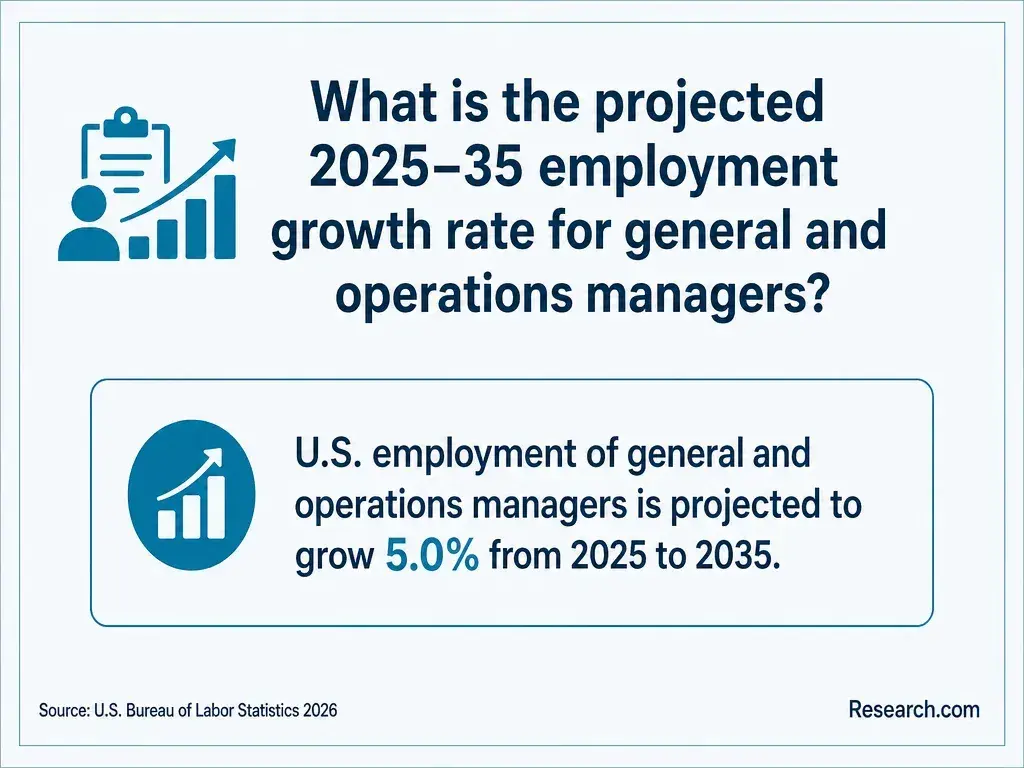
There is no single "Ed.D. salary." Pay follows the occupation, employer, location, and level of responsibility. The U.S. Bureau of Labor Statistics reports a May 2025 median annual salary of $133,000 for training and development managers, with projected employment growth of 6.4% from 2025 to 2035. Those figures describe the occupation, not new graduates or a return on this degree.
For a financial decision, use the pay range for roles you could credibly obtain with your existing experience. Compare that range with your current compensation and the full cost of study. Treat any salary gain as uncertain unless an employer has documented a specific advancement or pay arrangement.
Do Ed.D. Graduates Need Licensure or Professional Certification?
General organizational learning and leadership roles do not have a single Ed.D.-specific license. Employers may value relevant professional certifications, but the degree itself does not award them. Regulated education positions are different: principal, superintendent, teacher, or other state-licensed roles can have separate preparation and experience requirements.
If your goal is a licensed position, obtain the program's licensure disclosure and confirm eligibility with the relevant state authority before committing tuition. Do not assume an accredited, online organizational leadership Ed.D. is a state-approved licensure pathway.
Other Things You Should Know About EdD Leadership
Some schools offer payment plans. Ask the billing office about eligibility, fees, due dates, and what happens if a payment is late; a plan changes timing, not the total obligation.
It may affect the financial information reported for a married student. If the FAFSA does not reflect your present circumstances, ask the financial aid office what documentation it accepts for a professional judgment review.
Possibly, but access and permission do not necessarily continue after employment ends. Ask your advisor what approvals and alternative project arrangements the program permits before relying on one employer as your only project site.
No. Academic leave, course withdrawal, tuition refunds, and federal aid adjustments can follow different rules. Get written guidance from the registrar and financial aid office before changing enrollment.
- Get Temporary Relief: Deferment and Forbearance | studentaid.gov https://studentaid.gov/manage-loans/lower-payments/get-temporary-relief
- Cost of Attendance (Budget) | 2025-2026 Federal Student Aid Handbook https://fsapartners.ed.gov/knowledge-center/fsa-handbook/2025-2026/vol3/ch2-cost-attendance-budget
- Tuition and Financial Aid - UNC-Chapel Hill Online https://online.unc.edu/online-doctoral-programs/online-edd-organizational-learning-and-leadership/admissions/tuition-financial-aid/
- What happens to my financial aid if I enroll part-time or reduce my course load? - Student Financial Aid https://www.washington.edu/financialaid/2026/09/14/what-happens-to-my-financial-aid-if-i-enroll-part-time-or-reduce-my-course-load/
- How Enrollment Affects Your Federal Student Loans | The University of Iowa https://financialaid.uiowa.edu/types-aid/loans/how-enrollment-affects-your-federal-student-loans
- Ed.D. in Executive Leadership - Degrees & Requirements | Columbia University https://www.tc.columbia.edu/organization-and-leadership/edd-in-executive-leadership/degrees--requirements/executive-leadership-edd/
- Time-to-Graduation Too Often Overlooked | Brookings https://www.brookings.edu/articles/time-to-graduation-too-often-overlooked/
- Completion Rates and Time to Degree Completion | Academic Affairs https://academicaffairs.uams.edu/irpa/office-of-institutional-studies/student-outcomes/completion-rates/
- EdD in Educational Leadership | Online Doctorate Degree | Capella University https://www.capella.edu/online-education-degrees/doctor-of-education-program/edd-education-leadership/
- EdD in Educational Leadership Program Costs | USC Rossier https://rossier.usc.edu/programs/doctoral/educational-leadership/educational-leadership-program-costs/