2027 Paying for an Online Ed.D. in Leadership and Learning in Organizations: A Reduced Work Schedule While Studying
Audited and Verified:
Our Editorial and Data Verification Process
Research.com uses government datasets, official education statistics and primary institutional information to support its career and degree guides. Our review process checks factual accuracy, occupational definitions, source dates and the requirements associated with the credentials discussed.
How This Article Was Fact-Checked
Our editorial team verifies salary estimates, employment projections, education requirements and program information against original data providers and official organizations. Salary figures are checked against the relevant occupational definitions and reporting periods. Information about licensure, accreditation and required in-person training is reviewed separately.
Fact-checked and verified on:

Co-Founder and Chief Data Scientist
Reducing your work schedule may create room for an online Ed.D., but it can also make the degree harder to afford. Tuition is only one part of the decision: lost pay, changes to benefits, live classes, and an applied research project may all affect the plan. This guide is for working leaders and learning professionals considering fewer hours while they study. It explains how to test the schedule against actual program requirements and build a budget that still works if the doctorate takes longer than expected.
Key Things You Should Know
- A reduced work schedule can help, but confirm live-class attendance, group meetings, campus visits, and project deadlines before changing your employment arrangement.
- Compare the full cost of each option: tuition and fees, travel, lost earnings, changes to benefits, and any employer reimbursement conditions.
- The Bureau of Labor Statistics reports a $133,000 median annual salary for training and development managers; that occupational figure is not a forecast of an Ed.D. graduate's pay or a basis for assuming the degree will repay its cost.
What Is an Online Ed.D. in Leadership and Learning in Organizations?
An online Doctor of Education (Ed.D.) in leadership and learning in organizations is a practice-oriented doctorate focused on how organizations develop people, lead change, and use evidence to improve their work. Depending on the program, students may study adult learning, organizational culture, leadership development, evaluation, and applied research. The exact degree name and requirements vary by institution.
For someone reducing work hours, the important distinction is between where coursework happens and when doctoral work must happen. Online delivery removes many routine commutes; it does not necessarily remove scheduled classes, team assignments, or an organizational project.
An Ed.D. may fit a leader who wants to investigate and improve a problem in practice. A shorter course or employer leadership program may fit better if the goal is a specific skill rather than doctoral-level inquiry. Compare education doctorate program types and leadership directions against the work you actually want to do.
How Does an Online Ed.D. Compare With a Campus-Based Doctorate?
The format changes how study fits around work, not necessarily the academic standard. Compare the actual attendance and research requirements of each program rather than assuming that online means self-paced or that campus-based study requires a full-time move.
This comparison identifies the scheduling costs most likely to matter when you are negotiating fewer work hours. Individual programs may combine features from both columns.
| Decision factor | Online Ed.D. | Campus-based doctorate |
| Routine attendance | May include required live sessions at fixed times | Usually requires travel to scheduled campus classes |
| Travel | May still require residencies or convenings | Commutes or relocation may be necessary |
| Collaboration | Team meetings may occur outside class hours | In-person access may ease some meetings, but schedules remain fixed |
| Applied research | May be conducted at a workplace or approved partner site | Site access and faculty approval still depend on the program |
If your reduced hours fall on weekdays, ask whether required online sessions meet during that time or after it. A campus option could be more workable if its classes are concentrated on predictable days; an online option could be better if travel is the main obstacle. Request a sample term schedule and the campus-attendance policy before deciding.
How Much Does an Online Ed.D. in Leadership and Learning Cost?
There is no reliable single price for this degree across institutions. Ask each school for its published tuition basis - per credit, term, or program - along with required credits, mandatory fees, expected enrollment pattern, and charges that could continue if your project runs beyond coursework. Compare budget-friendly online education doctorates using the same assumptions, not tuition advertisements alone.
A reduced schedule makes foregone compensation a central cost. Build two budgets for the same period: one for staying at your current hours and one for your proposed hours while enrolled. In the second, include tuition, fees, books and technology, required travel and lodging, caregiving or other replacement support, and any reduction in pay or benefits. Subtract only employer assistance that is confirmed in writing, accounting for reimbursement timing and repayment conditions.
Ask payroll or human resources how the proposed schedule affects health coverage, retirement contributions, paid leave, and tuition assistance. If you would need loans to replace income as well as pay tuition, compare that borrowing with keeping your current hours and choosing a slower or less expensive program. Do not count on a promotion or salary increase to close an otherwise unaffordable gap.
Verify that the institution holds recognized institutional accreditation and that the accreditation covers the school awarding the Ed.D. Confirm the status through the accreditor or the US Department of Education's institutional records, and ask the program whether any additional approval applies to its specific degree. Online delivery by itself is neither a separate accreditation nor evidence of lower academic quality.
Accreditation does not mean a broad organizational leadership doctorate qualifies you for teacher, principal, or superintendent licensure. If your intended job requires a state credential, obtain the program's licensure disclosure and check it with the relevant state authority. This matters especially if reducing work hours only makes financial sense for a particular credential-dependent career move.
Yes, if the reduced schedule protects time you can actually use for doctoral work and remains financially sustainable. The decisive question is not simply how many hours you work; it is whether work, classes, collaboration, and research obligations collide at predictable points in the term.
Before requesting a change at work, test a proposed weekly calendar against a sample course schedule. These questions expose conflicts that an "online" label will not reveal:
- Which live sessions are mandatory, in which time zone, and what happens after a missed session?
- When do group projects and faculty meetings typically occur, and how much scheduling choice do students have?
- Are campus convenings required, and how far ahead are their dates published?
- Can the applied project be completed at your workplace if your duties or access change?
- Can you change course load, pause enrollment, or return after leave without losing your place in a cohort?
Ask your employer separately for a written arrangement covering hours, peak work periods, tuition support, and any permission needed to study an organizational problem. An employer's willingness to reduce your hours is not academic approval for a project or permission to use confidential data.
If you work in higher education, guidance on paying for a doctorate in higher education leadership may help you identify funding questions, but your own institution's benefit policy controls.
A workable plan also needs a fallback: decide in advance whether you would restore work hours, reduce enrollment, seek a different project site, or take an approved leave if income, caregiving, or employer access changes. Obtain the school's written policy before relying on any of those options.
Course titles differ, but relevant study may cover adult learning, organizational change, leadership, research methods, and program evaluation. For a learner working reduced hours, examine the sequence and assessment format as closely as the subjects: a term with intensive team assignments or data collection may require more protected time than one built around individual coursework.
Ask for the course map and the exact culminating requirement. A dissertation in practice, team capstone, and other applied project can have different approval processes and deadlines; an employer assignment does not automatically satisfy any of them.
If a project-based route appeals to you, compare professional education doctorates with applied projects while verifying each program's actual deliverable. Check who provides faculty guidance, when a project site must be identified, and what happens if access to workplace information ends.
Requirements vary. Programs may request a completed graduate degree, transcripts, evidence of professional leadership or organizational work, recommendations, a statement of purpose, and an interview. Some assess whether applicants can identify a practical leadership or learning problem. Neither an education master's degree nor a particular job title should be assumed to be a universal requirement.
If you intend to reduce work before enrollment, ask admissions whether your proposed course load is permitted and whether the program expects current workplace access for applied study. Prior graduate credits may help establish admission eligibility without transferring into doctoral requirements. Get separate, written answers about admission, transfer credit, and enrollment pace before changing your employment arrangement.
Completion time depends on the program's course sequence, permitted enrollment pace, required convenings, and the time needed for its final project or dissertation. A reduced work schedule does not automatically shorten the degree: it creates more potential study time only if required courses are offered when you can take them and project approvals proceed as planned.
Ask for the published plan of study at every pace the school permits, then identify when tuition or fees continue after scheduled coursework. Confirm maximum time-to-degree rules, leave and reentry policies, and whether stepping away from a cohort delays the next available course. These details make a longer-duration budget more useful than an advertised fastest-completion timeline.
The degree may support experienced professionals seeking greater responsibility in learning and development, organizational development, leadership development, consulting, or education administration. It can strengthen the ability to diagnose a learning problem, evaluate an initiative, and lead change. Employers will still assess management experience, sector knowledge, project results, and role-specific qualifications.
Before sacrificing earnings, compare the doctorate with your target job descriptions and advancement opportunities at your current employer. A learning specialist seeking a first management role may gain more immediately from supervising projects and receiving mentorship.
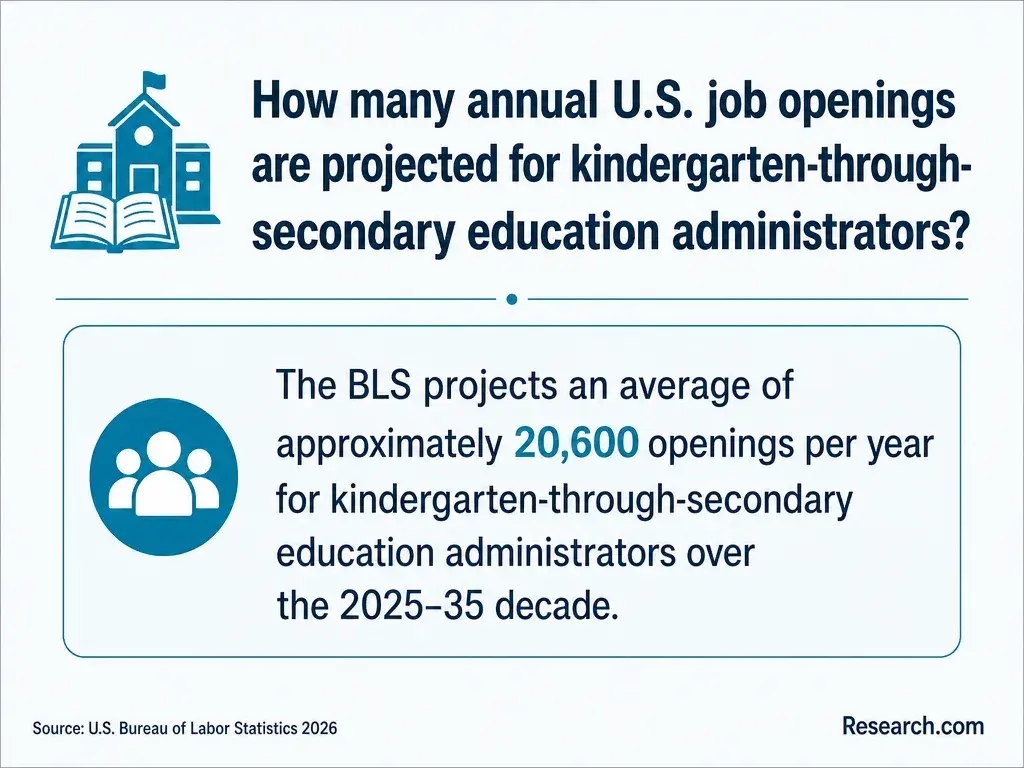
An established leader responsible for organization-wide learning may have a stronger reason to pursue doctoral inquiry. Higher-education employees can examine online Ed.D. pathways for college organizational leadership, while checking whether their target roles require institution-specific experience or other credentials.
What Salary and Job Outlook Can Ed.D. Graduates Expect?
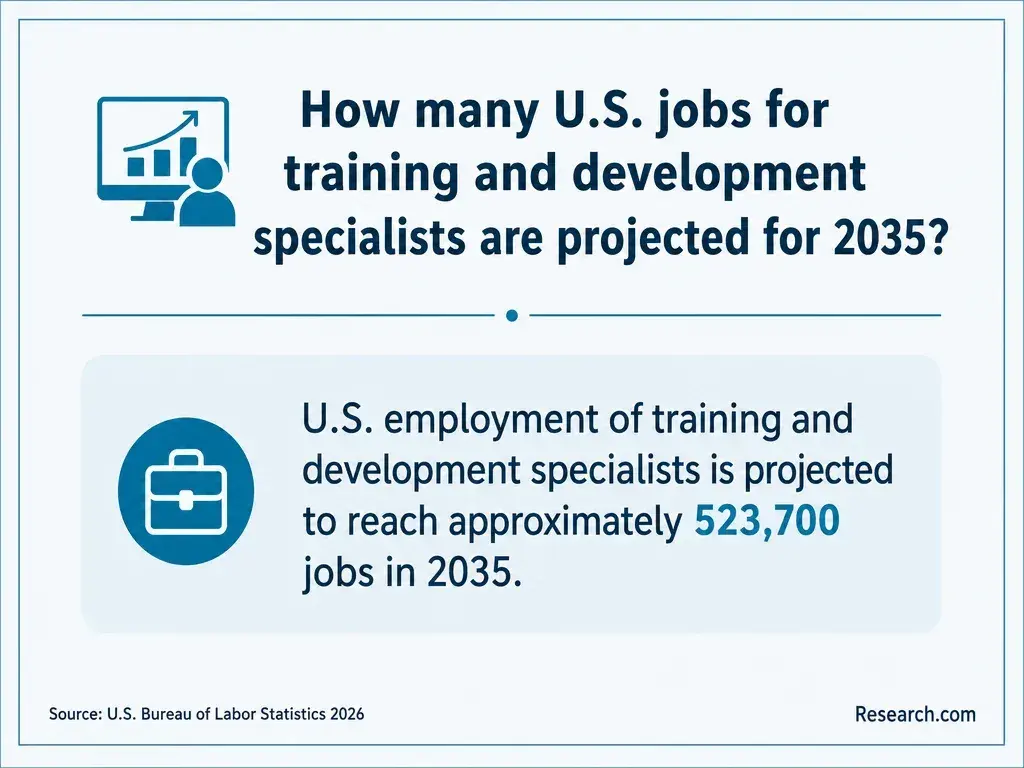
There is no single Ed.D. graduate salary: compensation follows the occupation, employer, location, and level of responsibility. The US Bureau of Labor Statistics reports a May 2025 median annual salary of $133,000 for training and development managers and projects 6.4% employment growth for that occupation from 2025 to 2035. Those figures describe the occupation as a whole, not graduates of this degree or people newly promoted into management.
Use the occupation that matches your realistic next role - not the highest-paying role associated with leadership - to assess a reduced-work plan. Compare local postings, required experience, and your employer's pay structure with the compensation and benefits you would give up during study. If the degree is not required or clearly valued for the work you want, a lower-cost development route may be the sounder financial choice.
Other Things You Should Know About EdD Leadership
No. Employment status and academic enrollment status are separate. The school determines whether your course load counts as full-time or part-time study.
It might. Ask your employer's benefits office to confirm eligibility, premiums, and the effective date of any change before accepting a reduced schedule.
Employment hours alone do not determine eligibility. Federal Direct Loans generally require at least half-time enrollment in an eligible program, as defined by the school, along with other aid requirements. Ask the financial aid office how your proposed course load qualifies.
University rules, employment agreements, and project-site agreements may all matter. Clarify ownership, confidentiality, and permission to share a final paper or portfolio before using employer information.
- Cost of Attendance (Budget) | 2025-2026 Federal Student Aid Handbook https://fsapartners.ed.gov/knowledge-center/fsa-handbook/2025-2026/vol3/ch2-cost-attendance-budget
- Ed.D. Tuition and Financial Aid - Peabody | VU-EDU https://peabodyonline.vanderbilt.edu/edd-in-organizational-learning/tuition-and-financial-aid/
- What does college actually cost? | About the University of Cincinnati https://www.uc.edu/blog/hidden-costs-of-college.html
- Leadership and Learning in Organizations Online Ed.D. | Peabody College of Education and Human Development https://peabody.vanderbilt.edu/academics/edd-programs/online-leadership-learning-organizations/
- How Enrollment Affects Your Federal Student Loans | The University of Iowa https://financialaid.uiowa.edu/types-aid/loans/how-enrollment-affects-your-federal-student-loans
- College Employment and Student Performance | Penn Wharton Budget Model https://budgetmodel.wharton.upenn.edu/p/2021-10-04-college-employment-and-student-performance/
- How Your Course Load Affects Federal Student Aid at Palmer https://www.palmer.edu/palmer-blog/how-your-course-load-affects-federal-student-aid-at-palmer-a-guide-to-loan-proration/