2027 Online Ed.D. in Leadership and Learning in Organizations: Evaluating Research Preparation for Triangulating Findings Across Data Sources
Audited and Verified:
Our Editorial and Data Verification Process
Research.com uses government datasets, official education statistics and primary institutional information to support its career and degree guides. Our review process checks factual accuracy, occupational definitions, source dates and the requirements associated with the credentials discussed.
How This Article Was Fact-Checked
Our editorial team verifies salary estimates, employment projections, education requirements and program information against original data providers and official organizations. Salary figures are checked against the relevant occupational definitions and reporting periods. Information about licensure, accreditation and required in-person training is reviewed separately.
Fact-checked and verified on:

Co-Founder and Chief Data Scientist
An organizational learning initiative can look successful in a survey while producing little change in workplace practice. Leaders need to know how to compare those findings, investigate disagreement, and avoid overstating results. For prospective online Ed.D. students - especially learning and development professionals and leaders planning workplace research - the key decision is whether a program teaches that work in enough depth.
This guide explains what triangulation requires, how to assess research courses and projects, and when a doctorate offers more than targeted methods training.
Key Things You Should Know
- Strong preparation teaches students to align data sources with one research question, assess each source's limitations, and explain both agreement and disagreement.
- A course labeled "mixed methods" is not enough: look for supervised practice integrating qualitative and quantitative evidence in an approved organizational project.
- Before enrolling, confirm access to usable data, faculty guidance, ethical-review procedures, and the program's actual capstone or dissertation requirements.
What is an online Ed.D. in Leadership and Learning in Organizations?
It is a practice-oriented education doctorate focused on how people learn, lead, and implement change in organizations. Students may study adult learning, organizational development, leadership, and applied inquiry while completing coursework online. The exact degree name, curriculum, live-attendance rules, and final project vary by institution.
For a leader who must evaluate a training initiative or organizational change, the degree's value lies in learning to frame a useful question and interpret imperfect workplace evidence - not simply acquiring a doctoral title. A research-focused PhD may fit someone seeking deeper preparation for independent scholarship; a focused evaluation course may be sufficient for a narrower workplace task. When comparing concentrations, distinguish a formal program of study from a few related electives; this guide to reviewing Ed.D. specializations and degree fit can help frame that comparison.
How does an Ed.D. prepare students to triangulate findings across data sources?
Triangulation means examining a question through sources or methods with different strengths and weaknesses. It is more than collecting several datasets: students must establish what each measures, whether they describe comparable people and periods, and how the evidence supports - or challenges - an interpretation.
Consider an illustrative question: Did a supervisor-development program change coaching practice? The table shows possible evidence to examine; it does not report findings from a real study.
| Potential source | What it could show | Important limitation |
| Course participation records | Who completed the program | Completion does not demonstrate changed behavior |
| Supervisor interviews | How participants describe using coaching skills | Accounts may be selective or influenced by expectations |
| Authorized observations or feedback | How coaching appears in practice | Coverage and rating consistency may be limited |
A capable student would plan the comparison before gathering evidence, check whether the sources cover the same supervisors and timeframe, and document missing or contradictory information. Agreement can strengthen an interpretation, but shared biases can make sources agree for the wrong reason. Disagreement may reveal an implementation problem or a weak measure rather than invalidate the project.
Applied work also requires permission to access organizational records, appropriate confidentiality protections, and a determination under the institution's review procedures about whether further research oversight is required. An employer's approval alone does not settle those questions. Compare the supervision and deliverables of professional education doctorates with applied projects rather than assuming every capstone provides the same research practice.
What research methods and analytics courses are included in the curriculum?
Course titles differ, so examine syllabi and assignments rather than assuming that every Ed.D. covers triangulation at the same depth. Useful preparation connects research design, qualitative interviewing or observation, quantitative measurement, program evaluation, and mixed-methods integration. Learning analytics may be relevant when a project uses training-platform records, but access to a dashboard is not training in valid measurement or responsible interpretation.
The sequence matters. Students should be able to formulate a question, evaluate sampling and measure quality, analyze each source, then integrate findings in an evidence matrix or joint display. Ask to see how a required assignment handles conflicting evidence, missing data, alternative explanations, and claims about impact. A pre/post comparison without a credible comparison group, for example, rarely establishes that training caused a change.
Software instruction can help, but competence is not defined by a particular package. The more consequential question is whether faculty provide feedback on the student's design and interpretation before conclusions reach organizational decision-makers.
Delivery mode does not determine research rigor. Either format can teach strong methods if students receive timely faculty feedback, collaborate on designs, and have appropriate access to research support. Online students may be able to investigate a problem at their own workplace, while campus-based students may find in-person meetings easier to schedule; neither advantage guarantees a suitable project site.
For online programs, verify live-session times, group-work expectations, required campus visits, library and software access, and how advisors review sensitive workplace data. Ask how the program supports a student whose employer changes or withdraws project access. Returning learners should also check whether earlier doctoral work affects admission or progression; online Ed.D. study for returning doctoral applicants is a separate question from whether a new program will accept prior credits.
Confirm that the degree-granting institution holds recognized institutional accreditation, then verify that the specific Ed.D. is offered by that institution. Accreditation supports an important baseline of institutional oversight; it does not establish that a program teaches advanced triangulation or provides access to a suitable research advisor.
Check the institution's accreditation disclosure and the accreditor's directory, then ask the program which school or department awards the degree. If a target job requires educator or administrator licensure, verify the program's licensure disclosures and the relevant state authority's rules separately. A broadly focused organizational leadership Ed.D. does not automatically qualify a graduate for school-administrator licensure.
Programs commonly evaluate prior graduate education, professional experience, recommendations, a statement of purpose, and evidence that the applicant can undertake doctoral work. Specific degree, grade, testing, and experience requirements vary; a master's in education, publication record, or particular statistics course should not be assumed universal.
For a methods-focused application, describe an authentic organizational decision, the evidence currently available, and what you do not yet know. Experience evaluating training or leading change can demonstrate readiness without claiming that past work was formal research. Applicants with an Ed.S. should ask whether their credential meets admission requirements and whether any coursework can actually be applied to the doctorate - distinct decisions addressed further in online education doctorate routes for Ed.S. graduates.
Completion time depends on required credits, course sequencing, enrollment pace, and the final project. A workplace study can take longer if data access, organizational approval, or review is delayed. Request the program's published degree plan and ask what happens if the proposed project site becomes unavailable.
For cost, obtain an entry-term estimate that separates tuition and required fees from software, books, campus travel, and any additional terms needed to finish the project. Confirm whether employer support reimburses completed coursework and what happens if employment ends. Compare the full commitment - not an advertised tuition rate alone. Readers considering education-sector roles can also consult this higher education leadership doctoral education funding guide, while verifying that any aid applies to their chosen program.
Relevant work includes learning and development management, organizational development, program evaluation, higher-education administration, and organizational consulting. The strongest fit is often advancement from an existing role: a training leader might use stronger evaluation skills to decide whether learning transfers into practice, while a consultant might improve how they investigate conflicting client evidence.
Employers also assess management experience, sector knowledge, implementation results, and communication skills. A doctorate alone does not establish readiness to direct a department or enter a new profession. If the immediate goal is to evaluate one program more competently, mentored project work or targeted methods training may be a faster, less costly route.
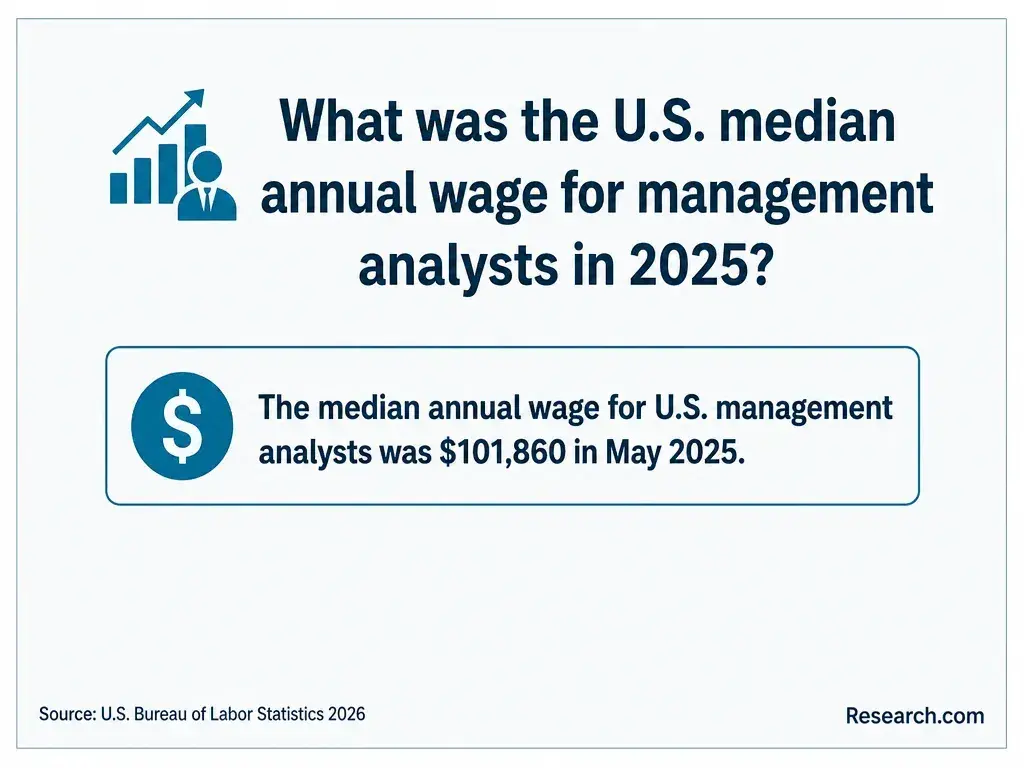
The U.S. Bureau of Labor Statistics reports a May 2025 median annual salary of $133,000 for training and development managers. That is an occupational median, not an expected salary for Ed.D. graduates; management responsibility and relevant experience matter substantially. For someone seeking advancement, the useful comparison is the qualifications for specific openings against their current experience, not the median alone.
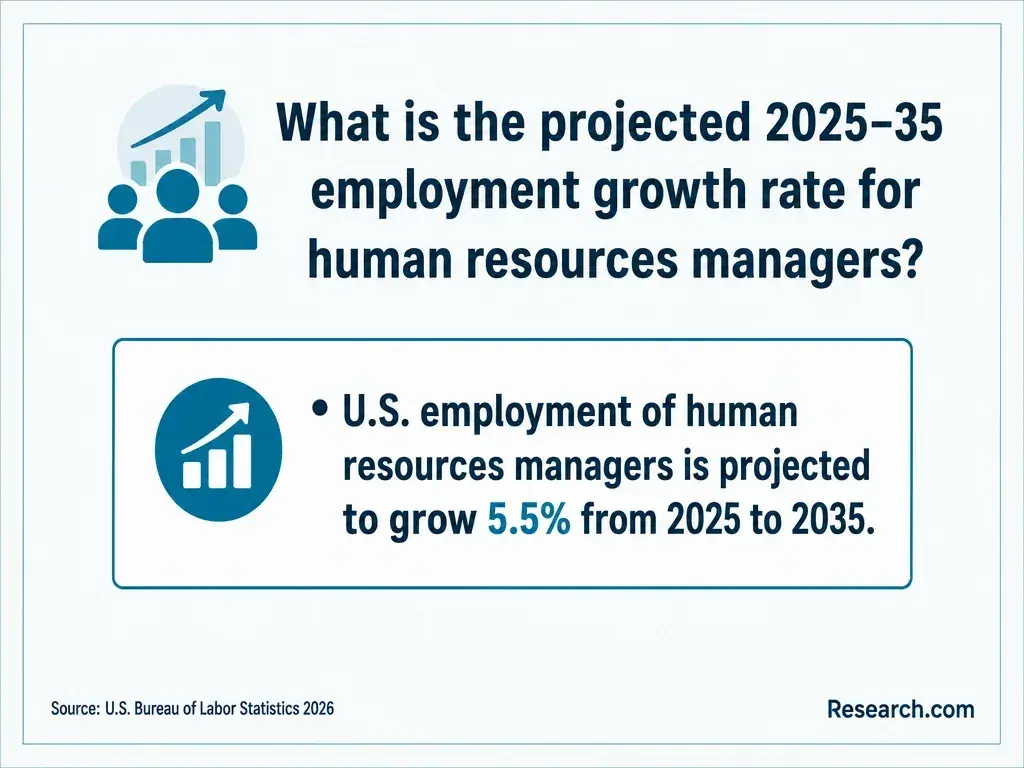
BLS projects employment of training and development specialists to grow 10.8% from 2025 to 2035. That outlook describes an occupation rather than demand for this doctorate, and a specialist role may not require doctoral study. Use job postings and conversations with target employers to test whether advanced evaluation skills, leadership experience, or a particular credential would improve your prospects.
How can you choose a reputable online Ed.D. program?
Start with the research task you want to perform, then request evidence that the curriculum and supervision will prepare you for it. These questions separate genuine integration practice from a program that merely offers several methods courses.
- Which required assignments ask students to reconcile findings across interviews, records, observations, or surveys?
- Who reviews project design, measurement choices, contradictory results, and limits on causal claims?
- What approvals are required before using workplace data, and what is the fallback if access is denied?
- What final deliverable is required, and can the program provide a redacted example or assessment rubric?
Compare written answers across programs alongside accreditation, schedule, total cost, and the match between faculty expertise and your proposed problem. Favor a program that can explain how students handle inconvenient evidence over one that promises an impressive project without clarifying access or oversight.
Other Things You Should Know About EdD Leadership
Not necessarily. Questions answered by the same respondents at the same time may share important biases. Triangulation is more useful when sources contribute meaningfully different perspectives on the same question.
No. A well-supported explanation of disagreement can be more useful than forced consensus. Report what each source can establish and what remains uncertain.
Only if organizational data rules, participant permissions, and program requirements allow the proposed tool and use. Human review remains necessary to check coding decisions and protect context.
That depends on organizational agreements, participant protections, and program rules. Obtain permission before sharing and use an approved, appropriately redacted description when confidential information cannot be disclosed.
- Achieving Integration in Mixed Methods Designs - Principles and Practices - PMC https://pmc.ncbi.nlm.nih.gov/articles/PMC4097839/
- The use of triangulation in qualitative research | PubMed https://pubmed.ncbi.nlm.nih.gov/25158659/
- What Is Ethics in Research & Why Is It Important? | National Institute of Environmental Health Sciences https://www.niehs.nih.gov/research/resources/bioethics/whatis
- Writing Student Learning Outcomes | Student Learning Assessment https://assessment.wisc.edu/student-learning-outcomes/writing-student-learning-outcomes/
- Faculty Guide to Advising Research Degree Students | cornell.edu https://gradschool.cornell.edu/resources/faculty-guide-to-advising-research-degree-students/
- EdD vs. PhD in Education: What’s the Difference? | 5 Public Administration Careers for MPA Graduates https://www.augusta.edu/online/blog/edd-vs-phd-education
- Ethics and international business research: Considerations and best practices - ScienceDirect https://www.sciencedirect.com/science/article/pii/S0969593123001075
- Complementary Analysis of Varied Data Sources | sagepub.com https://methods.sagepub.com/book/mono/integrating-analyses-in-mixed-methods-research/chpt/5-complementary-analysis-varied-data-sources
- PhD vs. EdD in Education: Nine expert tips to help you choose | USC Rossier https://rossier.usc.edu/news/phd-vs-edd-in-education-nine-expert-tips-to-help-you-choose/
- Walden University's Guide to Doctoral Capstone Projects https://www.waldenu.edu/online-doctoral-programs/resource/guide-to-doctoral-capstone-projects