2027 Online Ed.D. in Leadership and Learning in Organizations: Degree Fit for Leaders Tackling AI Tools Adopted Without Shared Learning Standards
Audited and Verified:
Our Editorial and Data Verification Process
Research.com uses government datasets, official education statistics and primary institutional information to support its career and degree guides. Our review process checks factual accuracy, occupational definitions, source dates and the requirements associated with the credentials discussed.
How This Article Was Fact-Checked
Our editorial team verifies salary estimates, employment projections, education requirements and program information against original data providers and official organizations. Salary figures are checked against the relevant occupational definitions and reporting periods. Information about licensure, accreditation and required in-person training is reviewed separately.
Fact-checked and verified on:

Co-Founder and Chief Data Scientist
Teams may adopt AI tools faster than their organization can agree on what employees should learn, which outputs need review, or how to protect sensitive information. For learning and development professionals and organizational leaders, that is a leadership and learning problem - not merely a software rollout.
This guide examines whether an online Ed.D. in Leadership and Learning in Organizations offers useful preparation, what a responsible response to uneven AI adoption could involve, and when a shorter or more technical pathway would be a better investment.
Key Things You Should Know
- An Ed.D. is most relevant when you need to lead cross-functional learning, change, and evaluation - not simply become proficient with an AI tool.
- Shared learning standards should specify acceptable uses, required human review, demonstrable skills, and measures of learning transfer; training alone cannot fix unclear authority or incentives.
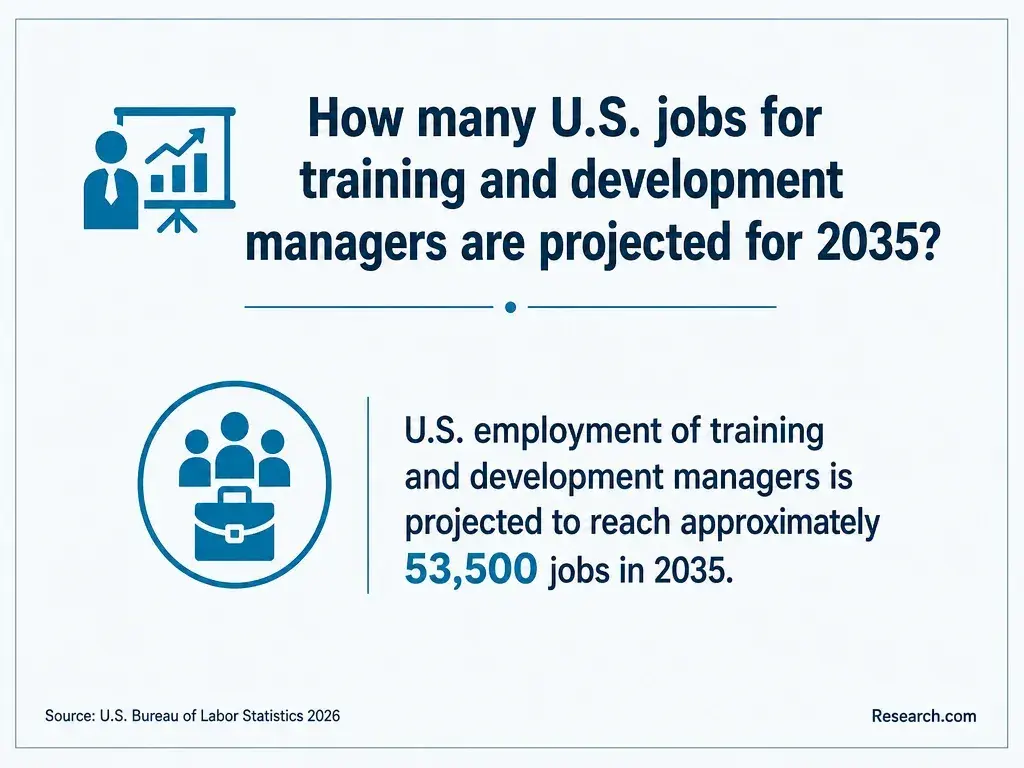
- The U.S. Bureau of Labor Statistics reports a May 2025 median salary of $133,000 for training and development managers, but that occupational figure is not an expected salary or return on an Ed.D.
What is an online Ed.D. in Leadership and Learning in Organizations?
It is a practice-oriented education doctorate focused on how people learn and how leaders improve organizations. Depending on the institution, study may combine adult learning, organizational change, leadership, research methods, and an applied doctoral project. "Online" describes where much of the teaching occurs; it does not establish that classes are self-paced or that campus visits are unnecessary.
The exact degree title and curriculum vary. Some programs emphasize workplaces across sectors, while others focus on educational institutions. For an AI adoption challenge, the useful distinction is whether the program teaches you to diagnose learning and governance problems, work across functions, and evaluate an intervention - not whether its description merely mentions technology.
Is an online Ed.D. in Leadership and Learning worth it for AI-focused leaders?
It can be worth considering if you already influence organizational learning and need deeper preparation to lead sustained, evidence-informed change. It is a weaker fit if your immediate task is to write a tool policy, train one team, or acquire technical AI skills. An Ed.D. does not substitute for information-security, legal, or procurement expertise.
The options below differ in the problem they prepare you to solve. Compare them against your current authority, the work you want to do next, and the time your organization can wait.
| Pathway | Strongest fit | Key limitation for this problem |
| Leadership and learning Ed.D. | Leading organization-wide learning, change, and applied evaluation | Substantial commitment; curriculum may not cover current AI tools in depth |
| Targeted AI governance and learning-design training | Improving a specific rollout or team practice soon | Less depth in organizational research and long-term change |
| Technical or security specialization | Evaluating systems, data protection, and technical controls | May not develop adult-learning or change-leadership capabilities |
If doctoral study fits but budget is decisive, compare total program obligations - not advertised tuition alone - when researching inexpensive organizational leadership doctoral pathways. A cheaper degree that lacks the learning and evaluation work you need may be poor value.
How can this Ed.D. address AI adoption without shared learning standards?
Uneven tool use is a symptom, not a diagnosis. Employees might lack instruction, face conflicting manager expectations, or have no approved way to complete their work. A leadership and learning Ed.D. could help a leader investigate those possibilities and design a response with operations, learning and development, IT, security, and affected employees. It cannot itself authorize tools or resolve a policy dispute.
A workable approach separates learning standards from technical controls. The sequence below gives a leader a starting point, not a claim that one intervention has been proven effective in a particular workplace.
- Define the work: identify which tasks involve AI, who makes decisions about its use, and where errors or sensitive information create material risk.
- Set shared expectations: specify approved uses, prohibited inputs, required human checks, and what employees must be able to explain or demonstrate.
- Design learning around real tasks: use examples, practice, feedback, and manager reinforcement rather than treating course completion as proof of competent use.
- Evaluate and revise: compare an appropriate baseline with later evidence, such as performance on a common task and documented review practices, while checking for uneven effects across teams.
For example, a common rubric could assess whether staff identify an AI-generated claim that needs verification. That measures a defined skill more directly than counting tool logins. Access to work products or employee records requires organizational permission and privacy safeguards; a doctoral project may also require institutional ethical review. If you want to investigate the rollout as academic work, examine professional education doctorates with applied projects and verify each program's actual project, supervision, and approval rules.
Course titles and requirements differ by school. For this challenge, look beyond a general "innovation" course: adult learning and instructional design can support skill development; organizational change can address manager practices and incentives; and research methods or program evaluation can help test whether standards are understood and used.
Review syllabi or course descriptions for opportunities to study learning transfer, measurement quality, stakeholder engagement, and responsible use of organizational data. Ask whether relevant courses are required or merely electives, how often electives run, and whether faculty can supervise an AI-related organizational question. Exposure to learning analytics is not the same as technical preparation to audit an AI system.
Requirements vary by institution and entry term. Programs may request a prior degree or specified graduate study, transcripts, recommendations, a statement of purpose, and evidence of professional experience. A learning and development leader can make a stronger case by describing decisions they have made, people they have brought together, and a real learning problem they can investigate - without claiming results they have not measured.
Ask admissions staff which conditions are mandatory, whether your academic background qualifies, and what research preparation is expected. If you previously completed an education specialist degree, online doctoral program choices after an Ed.S. may help frame your comparison. Credits that establish admission eligibility are not automatically transferable credits that reduce doctoral coursework; request a written evaluation from the institution.
There is no reliable single duration or price for all online Ed.D. programs. Completion depends on required credits, course scheduling, enrollment pace, and the time needed for an approved doctoral project. Published tuition may be charged per credit or term and may exclude fees, travel, lodging, and additional enrollment while finishing a project.
Before applying, request the program's current degree plan and calculate the cost for your likely pace. Check whether employer reimbursement has annual limits, grade conditions, or repayment obligations if you leave. When comparing affordable education doctorate pathways, include time away from work and any required convenings. If your organization needs standards promptly, the opportunity cost of waiting for doctoral coursework may favor targeted development now.
Check the institution's accreditation status with its recognized accreditor and confirm that the degree is awarded by that institution. Accreditation of a university does not establish that this particular doctorate prepares students for a license or certification.
Residency rules are program-specific. Ask for the attendance policy for live classes, any required campus or in-person convenings, group-work expectations, and the doctoral project schedule. A leader coordinating an AI initiative should also consider whether peak project periods will conflict with workplace implementation deadlines. Obtain written clarification about travel, accessibility arrangements, and leave policies before assuming that online study can fit around any schedule.
The degree may support advancement in learning and development, organizational development, talent development, workforce training, or organizational consulting. The work differs: a training manager oversees learning strategy and staff; an organizational consultant diagnoses and advises on performance or change; an instructional designer builds learning experiences. AI adoption creates opportunities in each, but employers will also look for demonstrated projects, sector knowledge, and sound judgment about data and risk.
For an experienced leader, a credible next step may be taking responsibility for cross-functional standards and showing how they were implemented and evaluated. For someone seeking a major career switch, supervised projects and functional experience may matter more immediately than the doctorate. If your goal is university administration rather than workplace learning across sectors, compare organizational leadership Ed.D. study for institutional leadership goals against the requirements of the specific roles you want.
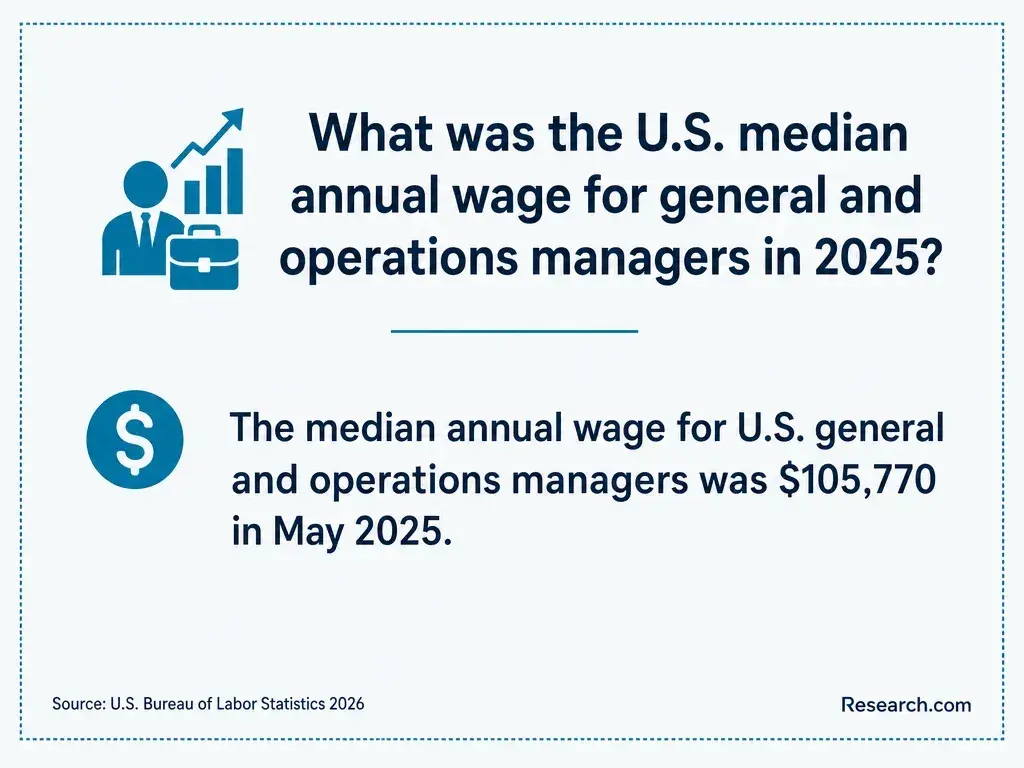
There is no universal Ed.D. graduate salary. Pay depends on occupation, responsibility, experience, employer, and location. The U.S. Bureau of Labor Statistics projects 10.8% employment growth for training and development specialists from 2025 to 2035. That projection describes an occupation, including workers without doctorates; it does not measure demand for Ed.D. graduates or predict an individual promotion.
Use occupational figures to compare target roles, then inspect actual job postings and your employer's pay structure. A doctoral investment is easier to justify when it develops capabilities needed for responsibilities you can realistically obtain, rather than relying on a broad salary median as a promised payoff.
Does this Ed.D. lead to teaching licenses or professional certifications?
Do not assume it does. A broadly focused organizational leadership and learning Ed.D. is an academic degree, not automatically a state-approved route to a teaching, principal, or superintendent license. It also does not automatically confer an AI governance or learning and development certification.
If a regulated role is your goal, ask the program for its licensure disclosure for your state and confirm eligibility with the relevant licensing authority. For an employer-recognized certification, check the certifying organization's separate education, experience, assessment, and renewal requirements.
Other Things You Should Know About EdD Leadership
Usually, the assessment instructions should say whether AI assistance is allowed and what must be disclosed. Otherwise, a passing result may not show whether the employee can perform the intended skill independently.
Offer a clear, nonpunitive way to report workflow needs and uncertainties, while explaining the limits of confidentiality. Investigate why staff use a tool before assuming that more training will solve the issue.
Check whether the examples match approved tools, organizational policies, employee tasks, and accessibility needs. Vendor material can introduce features, but it should not replace your organization's own standards for review and safe use.
Set a review owner and revisit standards when approved tools, work processes, risks, or organizational policies change. Record revisions so employees know which guidance applies to their work.
- Change Management: From Theory to Practice - PMC https://pmc.ncbi.nlm.nih.gov/articles/PMC9462626/
- AI strategies and compliance plan | U.S. General Services Administration https://www.gsa.gov/super-intelligence/resources/ai-strategies-and-compliance-plan
- Guidance on Artificial Intelligence (AI) | CT.gov https://portal.ct.gov/das/ctedtech/commission-for-educational-technology/initiatives/artificial-intelligence
- Admissions and Application Requirements - UNC Online https://online.unc.edu/online-doctoral-programs/online-edd-organizational-learning-and-leadership/admissions/
- What Can You Do With an EdD in Leadership? Top Careers | University of the Cumberlands https://www.ucumberlands.edu/blog/what-can-you-do-with-an-edd-in-leadership
- Explore the Cross-Sectoral Career Impact of an Online EdD | nyu.edu https://leadershipinnovation.steinhardt.nyu.edu/cross-sectoral-career-impact-of-an-online-education-doctorate/
- Change Management Certificate | UMN CCAPS https://ccaps.umn.edu/change-management-certificate
- EDLPS: EDD Program | Florida International University Catalog https://catalog.fiu.edu/programs/EDLPS:EDD/requirements-uz47h
- Decision-making criteria for AI tools in digital education | sciencedirect.com https://www.sciencedirect.com/science/article/pii/S2950550X25000354
- AI for Staff and Business Use | NC State AI Hub https://ai.ncsu.edu/ai-for-staff-and-business-use/