2027 Online Ed.D. in Leadership and Learning in Organizations After a Master of Education in Curriculum and Instruction: Admission and Credit Questions
Audited and Verified:
Our Editorial and Data Verification Process
Research.com uses government datasets, official education statistics and primary institutional information to support its career and degree guides. Our review process checks factual accuracy, occupational definitions, source dates and the requirements associated with the credentials discussed.
How This Article Was Fact-Checked
Our editorial team verifies salary estimates, employment projections, education requirements and program information against original data providers and official organizations. Salary figures are checked against the relevant occupational definitions and reporting periods. Information about licensure, accreditation and required in-person training is reviewed separately.
Fact-checked and verified on:

Co-Founder and Chief Data Scientist
A Master of Education in Curriculum and Instruction can be strong preparation for an online Ed.D. in Leadership and Learning in Organizations, but it does not settle two consequential questions: whether a particular program will admit you and whether it will apply any of your master's credits toward the doctorate.
For educators and learning professionals considering organizational leadership, those decisions affect both eligibility and cost. This guide separates admission from credit transfer, explains what evidence to gather, and shows how to compare programs before committing to an application.
Key Things You Should Know
- A completed M. Ed. in Curriculum and Instruction may meet a program's master's-degree requirement, but the school decides whether your experience and academic preparation fit its Ed.D.
- Credits used to establish admission eligibility are not necessarily transferable doctoral credits. Ask for a written evaluation showing which courses, if any, satisfy specific degree requirements.
- Online delivery does not establish a shorter or cheaper path: required courses, live meetings, project rules, and credit decisions determine the practical commitment.
What Is an Online Ed.D. in Leadership and Learning in Organizations?
An Ed.D. in Leadership and Learning in Organizations is generally a practice-oriented doctorate concerned with how people learn and how leaders improve organizations. Depending on the program, students may study adult learning, organizational change, leadership development, and the evaluation of workplace or educational initiatives. "Online" describes where much of the instruction occurs; it does not necessarily mean self-paced study or an absence of campus visits.
The distinction matters for someone with a curriculum and instruction master's. Your previous degree may emphasize designing and improving learning experiences, while the doctorate may ask you to examine decisions across teams, departments, or whole organizations. It is not automatically a school-administrator preparation program, and the exact award name and requirements depend on the university.
Can You Earn This Ed.D. After a Master's in Curriculum and Instruction?
Yes, potentially. A completed M. Ed. in Curriculum and Instruction is a relevant graduate qualification for many leadership and learning doctorates. Its value is clearest when you can connect curriculum design, professional learning, or instructional improvement to a problem you have helped address in an organization. Admission still depends on the individual program's accepted degrees, professional-experience criteria, academic record, and application review.
Show what you actually did, not just the subject printed on your diploma. For example, describe whether you identified a learning need, worked with stakeholders, led implementation, or assessed results. Classroom teaching can provide useful evidence, but it should not be presented as organization-wide leadership unless your responsibilities support that claim.
If you also completed an education specialist degree, that is a separate credential with its own potential credit questions. Guidance on Ed.D. pathways building on education specialist study can help frame that comparison; ask the doctoral program to evaluate each credential separately.
What Admission Requirements Apply to Online Leadership and Learning Ed.D. Programs?
Requirements vary, so distinguish a published minimum from evidence that makes an eligible applicant competitive. Programs may request transcripts from every graduate institution, a résumé, recommendations, a statement of purpose, and an interview. Some specify relevant professional experience, grades, research preparation, or tests; others evaluate readiness more holistically. A school's admissions office, not a general description of Ed.D. study, determines which rules apply to your entry term.
Before applying, assemble evidence that lets a reviewer assess the transition from curriculum and instruction to organizational leadership:
- Obtain official transcripts and identify the completed degree, graduate-level courses, grades, and any study at other institutions.
- Document responsibilities and decisions you made in curriculum work, staff development, instructional leadership, or organizational improvement.
- Draft a specific practice problem you want to investigate, explaining your role and what evidence is available without claiming results you have not established.
- Ask admissions whether your background meets formal eligibility rules and whether any methods or leadership preparation is required before enrollment.
An academic break does not by itself establish ineligibility. If methods skills are rusty, ask whether the program recommends preparation, requires a prerequisite, or teaches the needed methods within the doctoral sequence.
Possibly, but a completed master's degree does not create a right to transfer its courses. Some programs require doctoral coursework beyond the master's and apply no prior credits; others permit a limited number of approved graduate courses. The key is to find out what decision the school is making when it says your previous study "counts."
These four outcomes have different effects on your degree plan. Request the applicable policy and an individual evaluation rather than relying on an informal estimate.
| How prior study is used | What it means for you |
| Admission eligibility | Your completed M. Ed. meets a degree requirement; no doctoral coursework is necessarily removed. |
| Preparation or prerequisite waiver | A prior course establishes readiness or replaces a prerequisite, but may not reduce required Ed.D. credits. |
| Transfer or course substitution | An approved course satisfies a specified degree requirement, subject to program limits and a degree audit. |
| Unapplied credit | The course appears on your transcript but does not change the doctoral curriculum. |
Send course descriptions or syllabi alongside transcripts, especially for research, evaluation, leadership, and adult-learning courses. Ask about minimum grades, course recency, credits from multiple institutions, quarter-credit conversion, and requirements that must be completed at the doctoral institution. Then request a written degree audit stating the remaining credits and course sequence. Even approved substitutions might not shorten a cohort-based program if required courses run on a fixed schedule.
Previous doctoral coursework raises different policy questions from master's credits. If you left a doctorate after completing coursework, resources on planning an online Ed.D. return after ABD status address that distinct situation; the new institution must still make the credit decision.
Both formats can offer rigorous doctoral study; neither has a universal advantage for a curriculum and instruction graduate. Online study may let you remain employed and investigate a problem in your current organization. Campus-based study may make regular in-person interaction easier. The more important comparison is each program's actual schedule, faculty access, and applied-project requirements.
Ask for a sample term schedule covering live classes, group meetings, and any campus convenings. Confirm whether attendance is mandatory, when courses are offered, and what happens if your work schedule or employer changes. A program that accepts prior coursework can still be a poor fit if its fixed meeting times or project arrangements are unworkable.
Curricula differ, but a leadership and learning Ed.D. may combine adult learning, organizational leadership, change, research methods, and applied evaluation. For an M. Ed. graduate, the useful question is not whether a course title sounds familiar. It is whether the doctorate extends prior instructional knowledge into organizational diagnosis, decision-making, and credible evaluation.
Compare required courses with your transcript. If you already studied curriculum design, look for depth in areas you have not practiced - such as analyzing organizational evidence, leading across stakeholder groups, or evaluating whether an intervention addressed its intended problem. Check which subjects are required rather than electives that may not be offered during your enrollment.
Also verify the final deliverable. A dissertation, dissertation in practice, and applied capstone can involve different expectations for research, supervision, and organizational access. Information on reviewing nontraditional Ed.D. completion requirements can help you form questions, but the prospective program's handbook controls what you must complete.
There is no reliable completion-time or total-cost figure that applies to every online Ed.D. The answer depends on required credits, course availability, enrollment pace, whether prior work is approved, and time needed for the final project. A transferable course may reduce tuition-bearing credits without changing the program's calendar.
Request a term-by-term plan and a written cost estimate based on your proposed enrollment. Include tuition, mandatory fees, materials, required travel, and any costs of continued enrollment while finishing the project. If an employer offers reimbursement, check its annual limits, grade conditions, and repayment terms before treating that support as available funding. For a higher-education career goal, budget planning for higher education leadership doctoral study provides a related financial lens; obtain the actual charges and aid terms from each school.
The degree can support work in learning and development, instructional improvement, organizational development, consulting, or education administration when its curriculum fits the role. Your M. Ed. may already qualify you for some instructional roles. The doctorate is more compelling if your next position calls for broader leadership, applied inquiry, or evaluation responsibilities that you can also demonstrate through experience.
Map a target job's duties against your record before enrolling. A training manager may need evidence of budgets, teams, and learning strategy; a consultant may need a record of diagnosing client problems and communicating recommendations. If you aim for a university leadership position, explore doctoral study in organizational leadership for higher education careers while checking the requirements of the specific jobs you want.
A general leadership Ed.D. does not automatically confer teacher or school-administrator licensure, qualify you for a faculty appointment, or replace relevant management experience. If your immediate goal is a narrower change in practice, an employer leadership assignment or targeted training may be more direct than another degree.
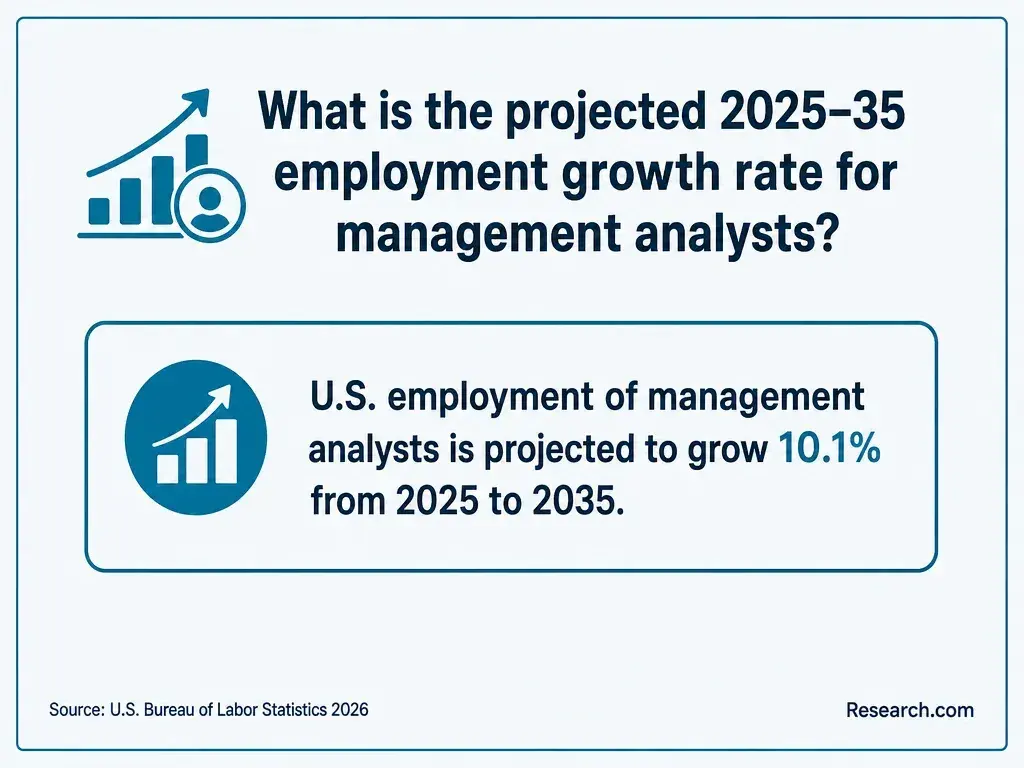
Occupational figures describe jobs, not the earnings of Ed.D. graduates. The U.S. Bureau of Labor Statistics reports a 2025 median annual salary of $133,000 for training and development managers and projects 6.4% employment growth for that occupation from 2025 to 2035. This is a useful reference if your target is learning leadership, but the role typically depends on relevant management experience; obtaining the doctorate does not establish eligibility or predict your pay.
For a sounder financial decision, compare postings for your intended role and location with your current qualifications. Note which employers require a doctorate, which prefer one, and which place greater weight on demonstrated leadership. In public institutions, pay structures and hiring rules may further limit what a new credential changes.
How Can You Choose an Accredited and Reputable Ed.D. Program?
First confirm that the institution holds recognized institutional accreditation and that the advertised Ed.D. is the degree you would actually earn. Accreditation establishes an institutional status; it does not, by itself, mean the doctorate prepares you for a particular license or occupation. Verify any licensure claim with the program and relevant state authority.
For an applicant with an M. Ed. in Curriculum and Instruction, the strongest comparison is a documented one: ask each school for its current admissions criteria, prior-credit policy, curriculum and project handbook, attendance requirements, and cost estimate. Submit the same transcripts and relevant syllabi to each, then compare written answers about eligibility and remaining requirements. If a school cannot yet make a formal transfer decision, treat any projected savings or earlier graduation date as uncertain.
Other Things You Should Know About EdD Leadership
Usually the relevant question is whether your degree and experience meet the program's stated criteria, not whether the titles match. Ask admissions to review your transcript and responsibilities if its eligibility language is unclear.
No. Describe the problem, your role, and the type of evidence available without submitting restricted learner, employee, or organizational records. Seek permission before sharing any protected material.
Possibly, but access to a project site may change. Ask the program how it approves replacement sites and what happens to project work already completed.
That depends on university policy. Before enrolling, ask how a leave affects cohort progression, course availability, financial aid, and any employer tuition support.
- Online Ed.D. in Leadership and Learning in Organizations | VU-EDU https://peabodyonline.vanderbilt.edu/edd-in-organizational-learning/
- What Topics Do EdD Students Research in the EdD Program? | Fairfield University https://www.fairfield.edu/news/insights/education-human-development/what-topics-do-edd-students-research.html
- Advanced Standing Credits | Office of the Provost https://www.provost.pitt.edu/advanced-standing-credits
- The Application Process | Humanities Academic Services Center https://hasc.washington.edu/application-process
- Advanced Standing Policy | Columbia School of Nursing https://www.nursing.columbia.edu/students/policies-and-procedures/advanced-standing
- Leadership and Learning in Organizations Online Ed.D. | Peabody College of Education and Human Development https://peabody.vanderbilt.edu/academics/edd-programs/online-leadership-learning-organizations/
- Doctor of Education (EdD) | National University https://www.nu.edu/degrees/educational-leadership/programs/doctor-of-education/
- Curriculum & Instruction: Ed.D. - Doctor of Education https://education.virginia.edu/academics/programs/curriculum-instruction-edd-doctor-education
- Degree Requirements | Degree Information & Degree Audit | Columbia University https://www.tc.columbia.edu/registrar/students/degree-information--degree-audit/degree-requirements/
- Ed.D. in Professional Leadership Admission Requirements | University of Houston https://www.uh.edu/education/degree-programs/professional-leadership-edd/application-checklist/