2027 Choosing an Online Ed.D. in Leadership and Learning in Organizations Around a Management Role Requiring Weekend Coverage
Audited and Verified:
Our Editorial and Data Verification Process
Research.com uses government datasets, official education statistics and primary institutional information to support its career and degree guides. Our review process checks factual accuracy, occupational definitions, source dates and the requirements associated with the credentials discussed.
How This Article Was Fact-Checked
Our editorial team verifies salary estimates, employment projections, education requirements and program information against original data providers and official organizations. Salary figures are checked against the relevant occupational definitions and reporting periods. Information about licensure, accreditation and required in-person training is reviewed separately.
Fact-checked and verified on:

Co-Founder and Chief Data Scientist
Weekend coverage can make an online doctorate difficult even when every class is delivered remotely. A live Saturday seminar, a team meeting, or a campus convening may conflict with the hours you are responsible for managing staff and operations.
This guide is for working managers considering an Ed.D. in leadership and learning in organizations. It shows you how to test a program's actual schedule, plan reliable coverage, and weigh the academic and financial commitment against your career goals - before you enroll.
Key Things You Should Know
- Online means you can study remotely, not necessarily when you choose. Obtain the live-class, group-work, and convening schedule before committing.
- Choose a coverage plan that works during ordinary weeks and major project deadlines; do not rely on permission to miss required sessions unless the program confirms it in writing.
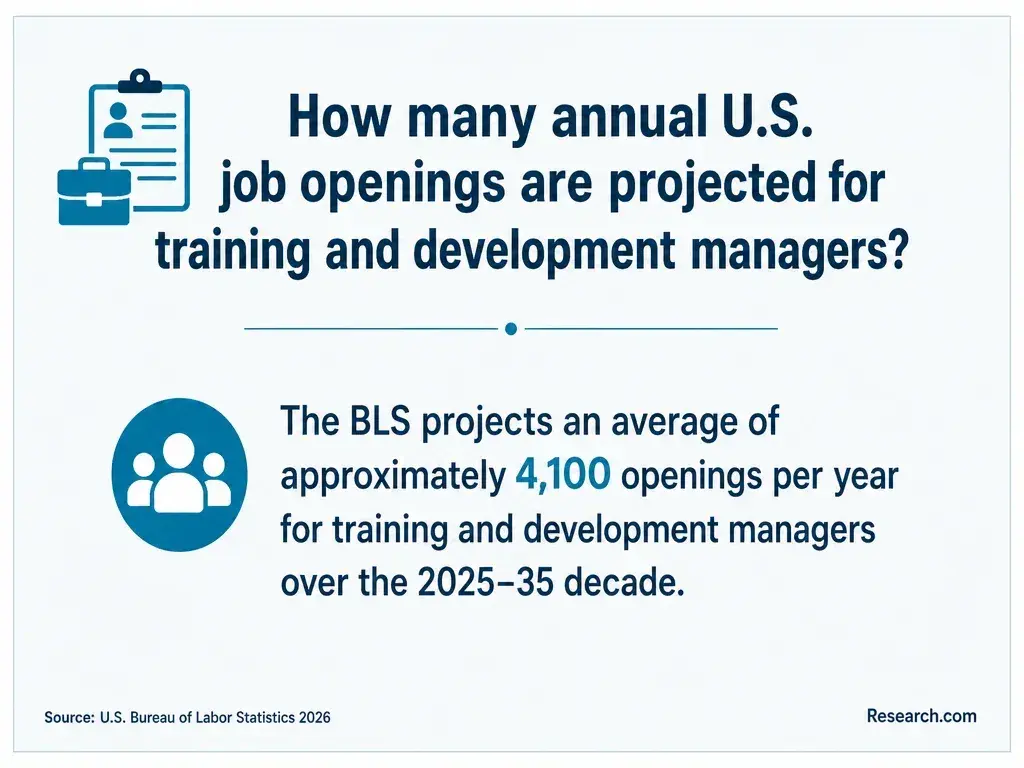
- The U.S. median salary for training and development managers was $133,000 in 2025, but that occupational figure is not an expected Ed.D. graduate salary or a reason to assume the degree will pay for itself.
What Is an Online Ed.D. in Leadership and Learning in Organizations?
An Ed.D. in leadership and learning in organizations is a practice-oriented doctorate focused on how people learn, leaders make decisions, and organizations improve. Programs with similar names may emphasize adult learning, organizational change, talent development, or education administration differently. Check the awarded degree and curriculum rather than assuming a particular focus from the title.
For a weekend manager, the distinction is practical: coursework may draw on a real workplace challenge, but doctoral assignments and research cannot simply be completed during spare moments on duty. A PhD generally places greater emphasis on producing academic research; a shorter leadership-development program may be a better fit if you need a specific management skill rather than doctoral-level inquiry.
How Can You Balance an Online Ed.D. With Weekend Management Coverage?
Start with the hours you must be available, not just the hours you expect to be busy. Being on call can interrupt a live discussion or a research-team meeting even if no shift appears on your calendar. Request a sample term calendar and the attendance policy for the cohort you would enter.
Use these steps to test whether study and coverage can coexist:
- Mark every nondelegable shift, on-call period, and recurring staffing decision on a calendar alongside live classes and required convenings.
- Ask who can make operational decisions when you are in class, and arrange a documented backup rather than an informal promise to "cover if needed."
- Reserve separate, interruptible time for reading and separate, protected time for live meetings, group work, and writing.
- Check whether the coverage arrangement still works during peak operational periods and the final project stage; ask the program about approved pacing or leave options if it does not.
Ask the program director: Are live sessions ever held on weekends? Are recordings an approved substitute for attendance? Who schedules team meetings? What happens if an emergency interrupts a required session? Obtain answers for your entry cohort, not just a general description of "flexible online learning." Even fast-track online education doctorate programs need to be judged against the protected time your role can actually provide.
What Accreditation Should an Online Ed.D. Program Have?
Confirm that the institution is accredited by an accrediting agency recognized by the U.S. Department of Education or the Council for Higher Education Accreditation. Check the institution and accreditor directly, including whether the accreditation covers the period in which you would enroll. Accreditation applies to the institution; it does not, by itself, establish that a leadership doctorate qualifies you for a regulated education role.
For your scheduling decision, also request the program handbook. Accreditation cannot tell you whether weekend attendance, campus visits, or a particular final project is required. Those obligations must be verified with the program.
Relevant study may include adult learning, organizational diagnosis, change leadership, program evaluation, and qualitative or quantitative inquiry. Look for a course sequence that helps you move from a management problem to evidence, a feasible intervention, and an honest assessment of results. A course title alone does not establish how deeply a skill is taught.
Ask what the final doctoral deliverable actually is: an individual dissertation, a dissertation in practice, a team project, or another approved format. Team projects can create meeting obligations outside class; workplace projects can require employer permission and access to suitable data. Use online Ed.D. final project format comparisons to identify questions to ask, then confirm the requirements with each program.
Requirements vary. Programs may ask for a prior graduate degree, transcripts, recommendations, a statement of purpose, and evidence of relevant professional experience. Some may request an interview or writing sample. Do not assume that a management title alone meets an experience requirement - or that an education master's degree is universally necessary.
Describe the decisions you make, people and resources you oversee, and learning or change problems you have encountered. If you hope to study your workplace, explain the proposed setting without promising access, results, or employer approval you do not have. Ask admissions whether your preparation meets its rules and ask the academic program separately what project-site access students need.
Time to completion depends on the required courses, enrollment pace, and final project - not simply the number of online classes. A faster advertised pathway may offer less room to absorb an unexpected weekend staffing shortage. Ask for the published course sequence, maximum completion period, and policies on slowing down or taking leave.
Compare written estimates for tuition and mandatory fees alongside travel, lodging for convenings, and any income lost when coverage requires unpaid leave. For an initial price comparison, budget-friendly online education doctorates can provide candidates to investigate; obtain an entry-term cost estimate from each institution before deciding. If your employer offers reimbursement, verify annual limits, eligible expenses, grade rules, and repayment obligations in the actual policy.
Online study removes routine travel to class, which may help a manager who cannot leave a weekend shift. It does not necessarily remove fixed meeting times or travel altogether. Campus-based study makes travel predictable but may be impractical if attendance conflicts with coverage. Compare the specific schedules available to you rather than assuming either format is more flexible.
A hybrid program with occasional convenings may work if you can arrange coverage well in advance; a fully remote program with frequent live weekend sessions may not. When comparing formats, consider lower-cost online education doctoral programs alongside the cost of coverage, travel, and time away from work - not tuition alone.
Depending on your experience, possible paths include training and development management, organizational development, internal leadership development, consulting, and some higher-education or nonprofit management roles. A manager already responsible for training or change initiatives may be able to apply doctoral work directly; moving into a new function still requires evidence of that function's skills and, often, relevant experience.
Before enrolling, compare target job postings with your current responsibilities. If the gap is facilitation, evaluation, or managing a cross-functional project, targeted training and a supervised workplace initiative may be more direct than an Ed.D. If the gap is sustained, evidence-based organizational improvement at a broader level, doctoral study may be more relevant.
The U.S. Bureau of Labor Statistics reports a 2025 median annual salary of $133,000 for training and development managers and projects 6.4% employment growth for that occupation from 2025 to 2035. These figures describe an occupation, not Ed.D. graduates; pay depends on role, sector, location, and experience. They should not be used as a projected raise from enrollment.
Assess the financial decision against roles you could realistically pursue and the terms of any employer support. If higher-education administration is your goal, guidance on paying for a doctorate in higher education leadership may help frame funding questions, but confirm what your chosen program actually offers.
Does an Ed.D. Require a License or Professional Certification?
Organizational leadership and learning roles generally do not have a single license attached to the Ed.D. The degree itself does not confer a professional certification or qualify someone automatically for teacher, principal, superintendent, or other regulated education positions.
If a target job is regulated, check its state licensing authority and ask the institution whether the specific program meets that state's educational requirements. If it is not regulated, examine employer job requirements instead; substantial leadership experience may matter more than an additional credential.
Other Things You Should Know About EdD Leadership
Possibly, but your authority over them raises consent and confidentiality concerns. Discuss the proposal with faculty and the appropriate employer and institutional reviewers before recruiting anyone or collecting data.
Ownership may depend on your employment agreement, institutional policies, and any project agreement. Clarify intellectual-property and publication terms before using employer materials in doctoral work.
Contact your faculty advisor promptly. A replacement sponsor, revised scope, or different site may be possible, but the program must approve any change to its academic requirements.
You may not need employer involvement for coursework. Disclose the plan when you need schedule coverage, reimbursement, or workplace-project access, and be specific about what you are requesting rather than assuming general support includes those permissions.
- Maximizing the Impact and ROI of Leadership Development | nih.gov https://pmc.ncbi.nlm.nih.gov/articles/PMC11505461/
- Accreditation in the U.S. | ed.gov http://www.ed.gov/laws-and-policy/higher-education-laws-and-policy/college-accreditation/accreditation-in-the-us
- Recognition of Accrediting Agencies | Texas Higher Education Coordinating Board https://www.highered.texas.gov/recognition-of-accrediting-agencies/
- Fast Facts: Time to degree (569) | ed.gov https://nces.ed.gov/fastfacts/display.asp
- The Federal Work-Study Program - FSA Partner Connect https://fsapartners.ed.gov/knowledge-center/fsa-handbook/2024-2025/vol6/ch2-federal-work-study-program
- DBA Admission Requirements: Complete Guide for Applicants | Edgewood College https://online.edgewood.edu/blog/dba-admission-requirements/
- Online Ed.D. in Higher Education | Rockhurst University https://onlinedegrees.rockhurst.edu/programs/online-edd-education-leadership/higher-ed
- 3.06 Class Attendance and Make-up Work - University Policies https://policies.uni.edu/306
- Ed.D. Admissions - Peabody | Vanderbilt University Online https://peabodyonline.vanderbilt.edu/edd-in-organizational-learning/admissions/
- Courses | Organization and Leadership | Columbia University https://www.tc.columbia.edu/organization-and-leadership/courses/