2027 Online Ed.D. in Leadership and Learning in Organizations: Comparing a Doctorate with a Leadership Fellowship
Audited and Verified:
Our Editorial and Data Verification Process
Research.com uses government datasets, official education statistics and primary institutional information to support its career and degree guides. Our review process checks factual accuracy, occupational definitions, source dates and the requirements associated with the credentials discussed.
How This Article Was Fact-Checked
Our editorial team verifies salary estimates, employment projections, education requirements and program information against original data providers and official organizations. Salary figures are checked against the relevant occupational definitions and reporting periods. Information about licensure, accreditation and required in-person training is reviewed separately.
Fact-checked and verified on:

Co-Founder and Chief Data Scientist
An online Ed.D. and a leadership fellowship can both help experienced professionals lead organizational change, but they offer different kinds of development. The distinction matters if you are weighing years of doctoral study against a shorter opportunity built around mentorship, peer relationships, and leadership practice.
This guide compares what each pathway teaches, what it awards, and what it demands of your time and budget. It is designed to help learning and development professionals and emerging organizational leaders choose the option that addresses their next career challenge - not simply the one with the more impressive name.
Key Things You Should Know
- An Ed.D. awards a doctorate after required coursework and doctoral work; a leadership fellowship typically provides structured development and a professional network, not a degree.
- Choose the Ed.D. when sustained study of organizational learning and applied inquiry serves a defined goal; favor a fellowship when mentorship, access, and practice are the immediate needs.
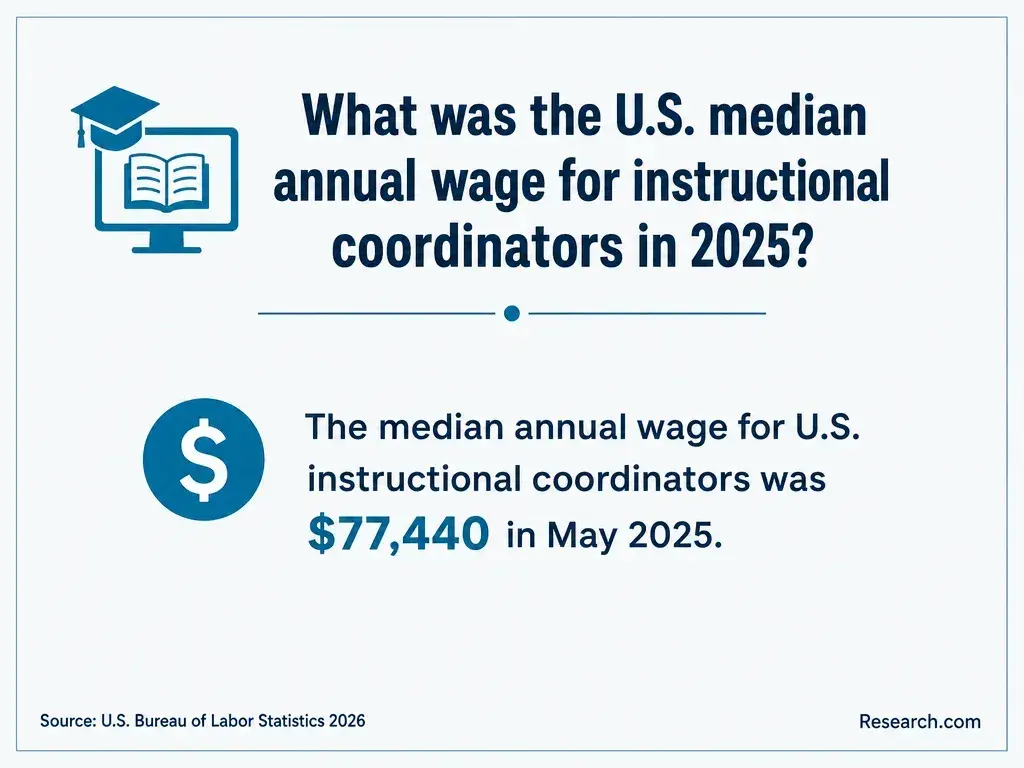
- The Bureau of Labor Statistics reports a $133,000 median annual salary for training and development managers in May 2025, but that occupational median is not a predicted return on either pathway.
What is an online Ed.D. in Leadership and Learning in Organizations?
An online Doctor of Education, or Ed.D., in leadership and learning in organizations is a practice-oriented doctorate concerned with how people learn, how organizations change, and how leaders use evidence to improve results. Depending on the university, students may study adult learning, organizational culture, leadership, evaluation, and research methods before completing a dissertation in practice, capstone, or another approved doctoral project.
"Online" describes where much of the instruction occurs, not necessarily when it occurs. A program may require live classes, team meetings, or campus convenings. Likewise, "leadership and learning" describes a focus, not a standardized degree title or curriculum. Check the exact award and required courses rather than assuming similarly named programs are interchangeable.
How does an Ed.D. compare with a leadership fellowship?
The choice turns on what you need to gain. An Ed.D. provides a formal doctoral course of study and assessed work; a fellowship generally concentrates leadership development into an experience shaped by its sponsor. Fellowships vary considerably: some offer coaching and a cohort, while others center on placements, projects, or access to senior leaders.
The comparison below separates features that affect a working leader's decision. Confirm the terms of any particular fellowship before treating its benefits as assured.
| Decision factor | Online Ed.D. | Leadership fellowship |
| Outcome | Doctoral degree upon successful completion | Usually a fellowship designation or completion recognition, not a degree |
| Learning emphasis | Formal study of leadership, learning, methods, and applied inquiry | Mentorship, practice, peer exchange, or exposure, depending on the sponsor |
| Work product | Program-approved doctoral project or dissertation | May include a workplace initiative, presentation, or no formal research product |
| Commitment | Multiyear academic and financial obligation | Defined program term; fees, stipends, and work-release rules vary |
| Best immediate use | Developing and documenting advanced inquiry into organizational problems | Building relationships, receiving feedback, and practicing leadership in a focused setting |
A fellowship is often the stronger first move if you already have the knowledge for your target role but lack sponsors, cross-functional exposure, or opportunities to lead. An Ed.D. makes more sense when your work repeatedly calls for deeper evaluation, learning design, and change leadership - and you want the doctoral credential. Neither substitutes for demonstrated responsibility. If cost may decide the question, compare fellowship terms with budget-conscious organizational leadership doctoral programs rather than comparing a fellowship's advertised fee with only one university's tuition.
What careers can an online Ed.D. in organizational leadership prepare you for?
For an established learning and development professional, doctoral study may support a move toward training management, organizational development, program evaluation, or consulting. Those roles involve different work: a training manager oversees learning strategy and staff; an organizational development practitioner diagnoses and supports change; a consultant must also win clients and deliver credible recommendations. An Ed.D. can strengthen relevant methods, but it does not replace management experience, a record of implementation, or sector knowledge.
Higher education and public-service leaders may also apply organizational learning skills to staff development or institutional change. Hiring rules, budgets, and advancement paths can differ from those in corporate L&D. If higher education is your target and funding is a constraint, examine paying for a doctorate in higher education leadership alongside the qualifications in actual job postings. Someone seeking an initial instructional design or training role may benefit more directly from a portfolio and supervised experience than from a doctorate.
Online delivery does not, by itself, change the academic level of an Ed.D. Confirm that the institution holds recognized institutional accreditation and that the online offering leads to the doctoral award the university describes. Then compare its required credits, faculty oversight, project expectations, and student services with your needs. Do not assume that institution-level accreditation establishes specialized program recognition or eligibility for a regulated job.
A fellowship should be assessed differently: its value usually rests on the sponsor, selection process, mentors, assignments, and alumni opportunities rather than degree accreditation. Ask what participants actually complete and what recognition they receive. Calling both experiences "leadership programs" does not make their credentials equivalent.
Relevant coursework may cover adult learning and learning transfer, leadership and organizational change, qualitative and quantitative inquiry, and program evaluation. The strongest fit depends on your work. A training leader evaluating whether instruction changes job performance needs measurement and implementation skills; a leader addressing a cross-team change effort may need organizational diagnosis and stakeholder engagement. Course titles alone cannot show how deeply either skill is taught.
Inspect required courses, available electives, their sequence, and the approved doctoral project. If your main aim is advanced instructional design rather than organizational leadership, compare education doctorate concentration and curriculum choices before committing. A course on a topic is not proof that the university awards a formal concentration in it.
Requirements vary by university and entry term. Programs commonly review prior academic work, professional experience, recommendations, and a statement of purpose; some specify a completed master's degree, minimum grades, interviews, or other conditions. An education degree or executive job title is not a universal requirement.
For this comparison, the most useful application question is whether you can identify a consequential leadership or learning problem and show what you have already done to address it. Document your decisions and responsibilities without claiming results you cannot substantiate. A fellowship may instead prioritize nomination, employer support, a particular sector, or potential for leadership growth. Check each option's eligibility rules before investing time in an application.
An Ed.D. is generally a multiyear commitment, while a fellowship has a sponsor-defined term. Neither label supplies a reliable price: doctoral charges may be assessed by credit or term, and fellowships may charge fees, provide support, or require travel and time away from work. Request the current schedule and written charges for the options you are considering.
Compare total exposure, not just advertised tuition. Include required credits and fees, campus travel, project expenses, continued enrollment if completion takes longer, and any reduced earnings. For a fellowship, check travel, unpaid work time, and whether your employer must release you for activities. An employer reimbursement promise is not the same as confirmed funding; read eligibility and repayment conditions. A guide to evaluating the cost of an online education doctorate can help structure the doctoral side of that comparison.
Many corporate learning, organizational development, and consulting roles do not require a license simply because the applicant has an Ed.D. Employers may still prefer particular experience or certifications. School administration is different: a general leadership and learning doctorate does not automatically qualify someone for principal or superintendent licensure. Verify the specific program's licensure disclosures and the relevant state authority's rules before choosing either an Ed.D. or fellowship for a regulated education role.
Pay follows the occupation, employer, location, and level of responsibility - not the Ed.D. or fellowship alone. The Bureau of Labor Statistics reports a May 2025 median annual salary of $133,000 for training and development managers, with 6.4% projected employment growth from 2025 to 2035. That figure describes an occupation whose jobs typically demand relevant experience; it is neither a graduate starting salary nor evidence that doctoral tuition will pay for itself.
Use postings for your target role to test the financial case. If employers consistently ask for leadership results and rarely require a doctorate, a fellowship that helps you secure a substantial assignment may offer more immediate career value. If the roles you want explicitly value doctoral-level inquiry, weigh that preference against the full cost and time required to finish.
How can you choose a reputable online Ed.D. program?
Start with the outcome you cannot obtain easily in your current job. If it is a doctorate and sustained applied research preparation, shortlist Ed.D. programs; if it is mentoring and access to leadership assignments, investigate fellowships first. Then ask admissions staff or fellowship sponsors for documentation on the commitments that could change your decision:
- For an Ed.D., confirm the exact degree, accreditation, live attendance and campus requirements, total required coursework, project format, faculty guidance, and current charges.
- For a fellowship, confirm selection criteria, mentor access, actual assignments, expected work hours, travel, fees or support, and the recognition awarded.
- For either option, ask your employer what time, funding, project access, and career opportunities it will commit to in writing.
Compare answers on the same timeline and against the same target role. If doctoral study remains the better fit, use cost-focused selection of a Doctor of Education program to expand your shortlist, then verify each institution's terms directly. The best choice may also be to pursue a fellowship now and reconsider doctoral study after you have tested your leadership goals in practice.
Other Things You Should Know About EdD Leadership
Not automatically. A university decides whether any prior learning qualifies for credit under its doctoral policies. Request a written evaluation before assuming a fellowship will shorten the degree.
Possibly, if both schedules and participation rules allow it. Check live meetings, travel, project deadlines, and any employer work-release agreement before accepting both commitments.
Some do; others accept individual applications. Read the sponsor's eligibility and selection rules, including any requirement to remain employed in a particular role or sector.
It may provide a starting problem, but academic approval is separate. Ask the Ed.D. program about project scope, supervision, organizational permission, data access, and ethical review before relying on the fellowship assignment.
- Accreditation in the U.S. | ed.gov http://www.ed.gov/laws-and-policy/higher-education-laws-and-policy/college-accreditation/accreditation-in-the-us
- Cost of Attendance (Budget) | 2025-2026 Federal Student Aid Handbook https://fsapartners.ed.gov/knowledge-center/fsa-handbook/2025-2026/vol3/ch2-cost-attendance-budget
- Types of Financial Aid: Grants, Work-Study, and Loans | studentaid.gov https://studentaid.gov/understand-aid/types
- Full Guide to the Doctorate in Organizational Leadership (2025) | Pepperdine University https://gsep.pepperdine.edu/blog/posts/online-edd-in-organizational-leadership-overview.htm
- Admissions and Application Requirements - UNC Online https://online.unc.edu/online-doctoral-programs/online-edd-organizational-learning-and-leadership/admissions/
- EdD vs. PhD in Education: Choosing the Right Program | Goodwin College of Professional Studies https://drexel.edu/soe/resources/career-path/edd-vs-phd/
- EdD in Organizational Change and Leadership | USC Rossier https://rossier.usc.edu/programs/doctoral/organizational-leadership/
- Doctor of Education in Educational Leadership | tarleton.edu https://programs.tarleton.edu/program/doctor-of-education-in-educational-leadership/
- What Is Tuition Reimbursement and How Does It Work? | American InterContinental University https://www.aiuniv.edu/blog/2016/march/what-is-tuition-reimbursement
- What is an Ed. D. in Educational Leadership Degree | nl.edu https://nl.edu/blog/archives/2026/what-is-an-ed-d-in-educational-leadership-degree/