2027 Vanderbilt Ed.D. in Leadership and Learning in Organizations: Comparing Leadership Development and Learning Design Coursework
Audited and Verified:
Our Editorial and Data Verification Process
Research.com uses government datasets, official education statistics and primary institutional information to support its career and degree guides. Our review process checks factual accuracy, occupational definitions, source dates and the requirements associated with the credentials discussed.
How This Article Was Fact-Checked
Our editorial team verifies salary estimates, employment projections, education requirements and program information against original data providers and official organizations. Salary figures are checked against the relevant occupational definitions and reporting periods. Information about licensure, accreditation and required in-person training is reviewed separately.
Fact-checked and verified on:

Co-Founder and Chief Data Scientist
Vanderbilt's Ed.D. in Leadership and Learning in Organizations brings leadership and workplace learning into the same degree. That combination can be valuable - but it does not mean the program provides equal depth in developing leaders and designing instruction.
For learning and development professionals and emerging organizational leaders, the distinction matters when deciding whether doctoral study will strengthen the work they actually want to do. This guide compares the two curricular directions, explains how applied research connects them, and identifies the program details to confirm before making a time or financial commitment.
Key Things You Should Know
- Leadership development focuses on building leaders and changing organizational practice; learning design focuses on creating and evaluating learning experiences. Vanderbilt's interdisciplinary Ed.D. connects the two rather than presenting them as separate degrees.
- Compare course objectives and assignments - not course titles alone - to judge whether you will get enough practice in coaching, change implementation, instructional design, or learning evaluation.
- The U.S. median annual pay for training and development managers was $133,000 in May 2025, but that occupational figure is not a salary prediction for Vanderbilt graduates or a reason by itself to pursue the doctorate.
What is Vanderbilt's Ed.D. in Leadership and Learning in Organizations?
Vanderbilt University's Peabody College offers the Leadership and Learning in Organizations Ed.D. as a practice-oriented doctorate. Its central subject is how organizations develop people, use evidence, and lead improvement. The intended application is broader than school administration: a student might examine workforce training, leadership development, or organizational change in a business, nonprofit, healthcare organization, or public institution.
The important distinction is between an integrated curriculum and a formal specialization. Leadership and learning topics within one Ed.D. do not, by themselves, create separate leadership-development and instructional-design concentrations. If a concentration name matters for a job or professional goal, check what Vanderbilt formally awards. A comparison of types of Ed.D. programs and concentrations can help clarify that distinction.
A practice-focused Ed.D. is generally a better starting point for an experienced professional who wants to investigate and improve organizational practice than for someone whose main goal is a research-faculty career. That distinction does not remove the need for rigorous methods: students should expect to interpret evidence, assess interventions, and communicate limitations.
How does Vanderbilt's Ed.D. compare leadership development and learning design coursework?
In this context, leadership development means helping people exercise judgment, influence, and responsibility more effectively. Learning design means identifying a performance or knowledge need, creating an appropriate learning experience, and assessing whether it helps. Organizational change and applied inquiry connect the two: a well-designed course can fail without managerial support, while a leadership initiative can fail without opportunities to learn and practice.
The comparison below describes the capabilities to look for in Vanderbilt's course descriptions and assignments. It is a decision framework, not a claim that each example is a separately required course or formal track.
| Curricular emphasis | Questions the work addresses | Evidence of useful preparation | Likely limitation if studied alone |
| Leadership development | How should leaders build capability, influence teams, and implement change? | Diagnosis of leadership needs, a development strategy, and an implementation plan | May not provide enough practice building detailed learning materials |
| Learning design | What should people learn, how should they practice, and how will learning transfer to work? | Needs assessment, learning design decisions, and an evaluation plan | May not resolve incentives, authority, or culture problems |
| Applied research and evaluation | What evidence supports the diagnosis, and how credible is a proposed improvement? | Appropriate methods, defensible measures, ethical data use, and careful interpretation | Methods coursework does not replace access to an organization or implementation authority |
Choose the emphasis by the work you want to lead. An L&D manager responsible for succession and manager capability should look closely at leadership, change, and evaluation assignments.
An instructional designer seeking deeper expertise in learning architecture should ask how often students actually design and revise learning experiences - not merely discuss learning theory. Someone who needs advanced development in authoring tools, accessibility testing, or learning-platform administration may need targeted technical training alongside or instead of an Ed.D.
Is Vanderbilt's Ed.D. online, campus-based, or hybrid?
Vanderbilt describes this Ed.D. as an online program. Online delivery addresses where much of the coursework takes place; it does not establish that classes are self-paced or that every requirement can be completed without travel. Before applying, request the entry cohort's calendar and confirm live-class attendance, group-work expectations, any required campus convenings, and whether applied projects can be completed through an outside organization.
Those details affect curricular fit as well as convenience. Leadership development often depends on discussion and feedback from peers, while learning-design work may require collaborative reviews and revision. If your work schedule makes either difficult, ask for a typical term's meeting pattern and the policy for unavoidable conflicts rather than assuming that recordings or independent work will substitute.
The most useful way to read Vanderbilt's curriculum is by course function: leadership and organizational change, learning and development, research and evaluation, and applied doctoral work. Published course titles and requirements can change, so obtain the catalog and degree plan for your proposed entry term before relying on a particular sequence or elective.
Within each area, examine the learning objectives and graded work. A leadership-related course might emphasize organizational diagnosis rather than individual coaching; a learning-related course might emphasize adult learning principles rather than production of an online module. Methods courses should be assessed for the kinds of evidence you will need at work - such as interviews, surveys, or program evaluation - not just for their labels.
Also confirm Vanderbilt's required culminating deliverable, how it is supervised, and whether students complete it individually or with a team. Do not assume that a practice-focused capstone, an employer project, and a traditional dissertation are interchangeable. If the form of that requirement is decisive, a comparison of online Ed.D. programs without a traditional dissertation provides context, but Vanderbilt's own degree requirements control.
Use Vanderbilt's application instructions for the entry term to confirm accepted prior degrees, professional-experience expectations, transcripts, recommendations, written materials, deadlines, and any testing policy. These are institutional decisions; general Ed.D. admissions advice cannot establish an applicant's eligibility.
For this particular curriculum, the strongest preparation to document is more specific than a job title. Explain a leadership or learning problem you have worked on, your actual decision-making responsibility, what evidence you used, and what you still need to learn. Applicants from business, healthcare, technology, government, or other non-education backgrounds can connect their experience to organizational learning without claiming that all training problems are instructional-design problems.
If you have prior graduate coursework, ask separately whether it satisfies an admissions condition and whether any credits could apply to the Ed.D. Neither an earlier degree nor admission establishes transferable doctoral credit or a shorter completion time.
Get Vanderbilt's degree audit or published plan for your intended cohort to confirm the required credits and expected duration. An accurate time estimate also depends on course availability, enrollment pace, any convenings, and the milestones for applied doctoral work. A typical completion estimate should not be treated as an individual guarantee.
When comparing Ed.D. completion timelines, look beyond the advertised number of years. Ask Vanderbilt which terms carry the heaviest course load, when project work begins, and what happens if employment changes or an organizational partner becomes unavailable. Those answers matter more to a working professional than a fast timeline that leaves little room for access approvals or project revision.
A reliable cost estimate requires Vanderbilt's tuition and fee schedule for your entry term, the credits you must complete, and any charges associated with continued enrollment or campus attendance. Do not calculate a program total from an unverified per-credit figure. Ask for an itemized estimate that also identifies travel and lodging if campus convenings are required.
For a working professional, the relevant comparison is net household and career cost, not tuition alone. Confirm whether employer reimbursement covers doctoral study, whether payment comes before or after successful course completion, and whether changing jobs triggers repayment. Compare verified charges with online Ed.D. fees and cost comparisons, while checking that any competing program includes the coursework and applied support you need.
The curriculum is most directly relevant to professionals who already have a foothold in learning, talent development, organizational improvement, or leadership and want greater responsibility for diagnosing problems and guiding change. Potential directions include training and development management, organizational development, workforce-learning leadership, and consulting.
The work differs: a training manager oversees programs and staff; an organizational consultant diagnoses and advises on performance or change.
The degree does not substitute for managing people, delivering learning programs, building a portfolio, or understanding an employer's sector. If your goal is to move from creating courses into directing leadership development, seek assignments that show both learning-design judgment and influence over implementation.
If you primarily need a narrower technical skill or your employer does not value a doctorate for the target role, tuition-focused choices for a leadership doctorate are worth comparing - but so are a certificate, mentorship, or a substantial workplace project.
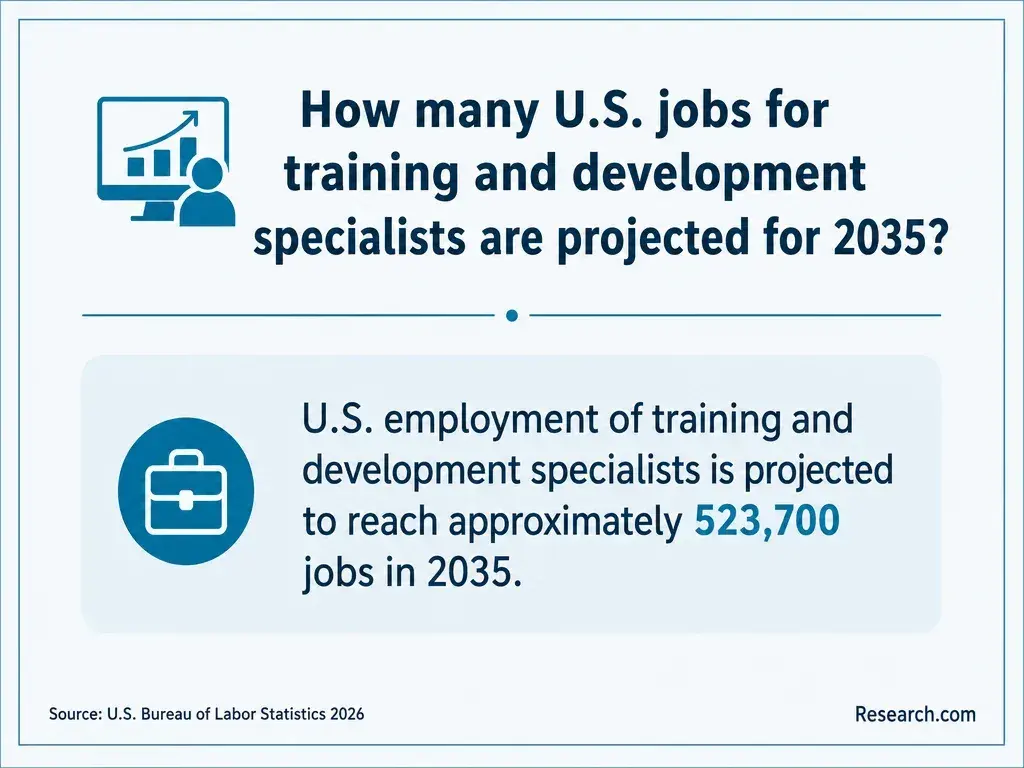
The U.S. Bureau of Labor Statistics reports a May 2025 median annual salary of $133,000 for training and development managers and projects 6.4% employment growth for that occupation from 2025 to 2035. That combination suggests opportunities for experienced professionals who can manage learning functions, but it does not measure Vanderbilt graduate outcomes.
A managerial median reflects workers with varied credentials, industries, locations, and years of experience. Compare it with your current compensation and the requirements of actual target positions. Someone entering L&D from another function should not use a manager's median as an expected first salary or assume the Ed.D. alone qualifies them for the role.
How should students evaluate Vanderbilt's Ed.D. accreditation and professional value?
Check Vanderbilt's current institution-level accreditation status with its recognized accreditor, then evaluate the specific Ed.D. separately: its awarded degree name, required curriculum, faculty guidance, applied-work expectations, and fit with positions you might seek. Institutional accreditation supports recognition of the university; it does not establish a separate instructional-design certification or eligibility for school-administrator licensure.
A useful final test is to collect several real job descriptions and mark which requirements the curriculum addresses, which you already meet through experience, and which require additional practice or credentials. Ask Vanderbilt for course syllabi, a current degree plan, project requirements, and any published graduate outcomes with their definitions.
If your target is a regulated education position, confirm eligibility with the relevant state authority before enrolling. Professional value depends on that match between coursework, demonstrated work, and employer expectations - not the doctorate's title alone.
Other Things You Should Know About EdD Leadership
Do not assume a particular tool is required or taught. Check Vanderbilt's entry expectations and syllabi, then learn any software your target role actually uses through focused practice.
Try a small, authorized project: diagnose a manager-development need or redesign one learning activity. Note which decisions you want to study more deeply and compare them with course assignments.
Only with appropriate organizational permission and safeguards. Ask the instructor and your employer what can be shared, deidentified, or replaced with a permitted example before submitting material.
Often a redacted account of your methods and decisions is more useful than a confidential report. Confirm ownership and sharing rules before putting organizational data or project deliverables in a portfolio.
- Maximizing the Impact and ROI of Leadership Development | nih.gov https://pmc.ncbi.nlm.nih.gov/articles/PMC11505461/
- Design Assessment Methods - opair - Penn State https://opair.psu.edu/assessment/loa-handbook/choose-and-design-assessment-methods/
- Transforming Your Leadership and Management Skills Syllabus | Global Health E-Learning Program https://edgh.washington.edu/courses/transforming-your-leadership-and-management-skills/syllabus/
- Design effective assessments | Portland State University | OAI+ Faculty Teaching Resources https://oaiplus.pdx.edu/design-effective-assessments/
- Online Ed.D. Curriculum - Vanderbilt Peabody College https://peabodyonline.vanderbilt.edu/edd-in-organizational-learning/curriculum/
- Leadership and Learning in Organizations Online Ed.D. | Peabody College of Education and Human Development https://peabody.vanderbilt.edu/academics/edd-programs/online-leadership-learning-organizations/
- Course Objectives & Learning Outcomes | DePaul University, Chicago https://resources.depaul.edu/teaching-commons/teaching-guides/course-design/Pages/course-objectives-learning-outcomes.aspx
- Walden University's Guide to Doctoral Capstone Projects https://www.waldenu.edu/online-doctoral-programs/resource/guide-to-doctoral-capstone-projects
- Doctor of Education in Leadership and Learning in Organizations | Vanderbilt University https://www.vanderbilt.edu/online-learning/program/edd-in-organizational-learning/
- ETI, Teaching Guides, Course Design | usuhs.edu https://www.usuhs.edu/eti/services/teaching-guides/course-design