2027 Is an Online Ed.D. in Leadership and Learning in Organizations a Good Fit for Engineering Team Managers?
Audited and Verified:
Our Editorial and Data Verification Process
Research.com uses government datasets, official education statistics and primary institutional information to support its career and degree guides. Our review process checks factual accuracy, occupational definitions, source dates and the requirements associated with the credentials discussed.
How This Article Was Fact-Checked
Our editorial team verifies salary estimates, employment projections, education requirements and program information against original data providers and official organizations. Salary figures are checked against the relevant occupational definitions and reporting periods. Information about licensure, accreditation and required in-person training is reviewed separately.
Fact-checked and verified on:

Co-Founder and Chief Data Scientist
Engineering team managers already solve technical problems; an online Ed.D. in Leadership and Learning in Organizations addresses a different challenge: helping people and teams learn, adapt, and improve at scale. That distinction matters when you are weighing a multi-year doctorate against a more direct management or technical pathway.
This guide explains what the degree could add to your experience, where it may fall short, and how to evaluate programs, costs, and career opportunities before committing.
Key Things You Should Know
- Best fit: Engineering managers aiming to lead organizational learning, leadership development, or evidence-based change - not those seeking primarily deeper technical expertise.
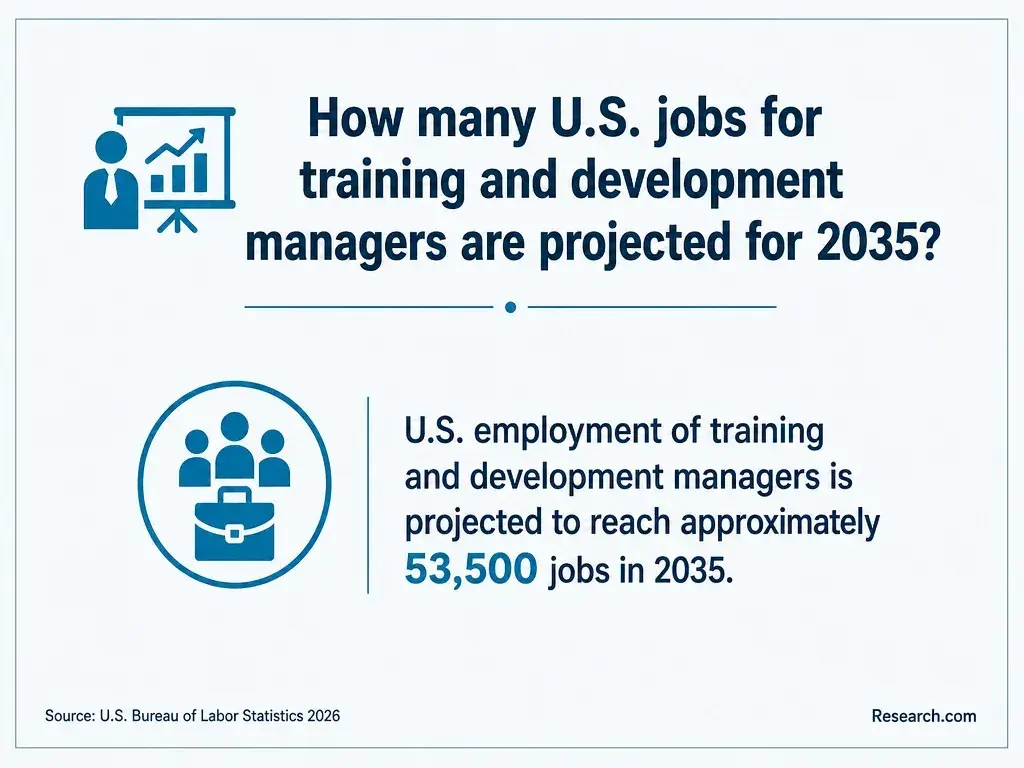
- Career reality: The US median annual pay for training and development managers was $133,000 in May 2025, but that occupational figure is not an Ed.D. graduate salary or a promised promotion.
- Before enrolling: Confirm the program's live-session schedule, applied-project rules, full cost, and whether its curriculum addresses the problems you have authority to work on.
Is an online Ed.D. in Leadership and Learning in Organizations a good fit for engineering team managers?
It can be a good fit when your next goal is to improve how engineering organizations develop people and change their practices. The degree is less directly useful if your main objective is to become a stronger systems architect, secure a routine engineering-management promotion, or acquire a credential your employer does not value.
Consider the difference between two problems. A manager whose team needs training on a new tool may benefit most from targeted instruction and time to practice. A manager responsible for onboarding across many teams, developing technical leads, and evaluating whether those efforts improve performance faces a broader leadership-and-learning challenge. An applied Ed.D. may help with the second problem through organizational diagnosis, adult learning, change leadership, and evaluation.
Fit also depends on authority and access. If you cannot influence the relevant processes or obtain appropriate permission to examine workplace evidence, applying doctoral work to your organization may be difficult. Ask a prospective program whether an external partner or an approved alternative project site is possible. For a sense of how curricula differ, see this guide to comparing academic focuses within Ed.D. programs; a similar-sounding degree title does not establish an engineering-relevant curriculum.
An MBA or employer leadership program may be more direct for general management advancement. A PhD may fit a goal centered on academic research, while a focused certificate or supervised cross-functional initiative may be enough to address a specific learning or change problem.
What does an online Ed.D. in Leadership and Learning in Organizations teach?
A practice-oriented Ed.D. typically examines how adults learn at work, how leaders shape organizational conditions, and how to investigate a problem of practice. For an engineering manager, the value is not simply learning to deliver training. It is learning to distinguish a skills gap from a problem caused by incentives, unclear ownership, workload, or the way teams share knowledge.
Relevant study may include adult learning and learning transfer; organizational culture and change; leadership development; and qualitative, quantitative, or mixed-methods inquiry. For example, an onboarding project could examine which information new engineers need, how mentors support its use, and what evidence would show whether the process is improving. That is a proposed line of inquiry, not proof that onboarding is the cause of any particular performance problem.
Programs vary in methodological depth and project structure. Check required courses and the final deliverable rather than assuming every Ed.D. includes advanced analytics, instructional design, or a particular type of dissertation.
How can an Ed.D. in Leadership and Learning advance an engineering manager's career?
The strongest career case is an expansion of responsibilities you can already demonstrate. An engineering manager who has led onboarding, mentoring, cross-team change, or manager development may use doctoral study to design better initiatives and evaluate them more carefully. The resulting work can support a case for organizational development, technical workforce development, or broader engineering leadership responsibilities.
A move into a dedicated learning-and-development role is possible, but engineering management and learning leadership are not interchangeable. Employers may expect experience with needs assessment, facilitation, program design, budgets, and stakeholder management. Seek opportunities to lead an initiative and document its scope and evaluation before assuming the degree will bridge those gaps. Managers considering a move into university administration can separately explore doctoral study in organizational leadership for higher education careers; that sector has different hiring expectations from engineering firms.
Before applying, identify a target role and review its actual job descriptions. If the missing requirement is executive operating experience, technical depth, or ownership of larger budgets, a doctorate alone is unlikely to supply it.
Course titles and requirements vary, but a relevant curriculum may combine leadership theory, organizational learning, change management, research methods, and applied inquiry. Engineering managers should look beyond titles and inspect assignments: Does a course require a needs assessment, an evaluation plan, or analysis of organizational decisions? Can the work address technical teams without assuming a school-based setting?
Sequence matters as much as subject matter. Methods courses should prepare you for the evidence your final project requires; a leadership seminar by itself does not establish that preparation. Ask for the current course sequence, syllabi where available, elective rotation, and final-project requirements. If a topic is an elective rather than a requirement, confirm that it is likely to be offered during your enrollment.
Some are offered by institutionally accredited US universities, but accreditation must be checked for each school. Confirm the institution's status with its recognized accreditor and verify that the Ed.D. is an awarded degree at that institution. An online delivery format does not, by itself, determine accreditation status.
Do not confuse institutional accreditation with a specialized endorsement of every leadership program - or with eligibility for a professional license. Ask the university for its current accreditation and degree disclosures, particularly if an employer has a specific education-benefit policy.
Requirements vary by program. Schools may evaluate prior graduate study, academic performance, professional experience, recommendations, a statement of purpose, and an interview. An engineering degree is not inherently a barrier: managing technical teams, developing colleagues, and leading organizational improvements can provide relevant experience. Whether a particular degree or amount of graduate coursework is mandatory is a question for the admissions office.
Prepare examples showing what you actually decided, whom you worked with, and how you assessed a leadership or learning challenge. Describe a possible organizational problem without claiming access to data or approval for a doctoral project that you do not yet have. If your prior credential is an Ed.S., resources for comparing colleges for Ed.S.-to-Ed.D. progression may help frame questions; engineering applicants with other graduate degrees should request a program-specific eligibility and transfer-credit evaluation instead. Credits considered for admission do not necessarily shorten the doctorate.
Completion time depends on the program's course sequence, enrollment pace, and final-project requirements. Online study removes some commuting, not necessarily fixed meeting times. Live classes, group work, campus convenings, and project approvals can all affect an engineering manager's schedule - especially during release cycles or organizational changes.
Request the published completion plan and ask which milestones depend on a project partner or faculty approval. If the research deliverable is a concern, review dissertation-free Ed.D. study options to evaluate, while checking what substantial capstone or other final work each option still requires. "No dissertation" does not mean "no applied research" or an automatically shorter path.
There is no reliable single price for this degree type. Compare each program's published tuition basis - per credit, term, or program - against its required credits and likely pace. Add mandatory fees, books or technology, any campus-travel and lodging costs, and the possibility of paying for additional enrollment while finishing a project. Request a written estimate for your intended start term rather than relying on an advertised starting price.
For a working engineering manager, the financial decision also turns on employer support and time. Check reimbursement limits, grade or continued-employment conditions, and whether you can protect study time without reducing earnings. If your goal is specifically higher education leadership, this guide to low-cost higher education leadership doctoral funding options offers a separate comparison; verify that a program's career focus and funding terms fit before treating it as an alternative.
A sensible return-on-investment test compares the full cost with a realistic career change you can pursue, not an assumed raise for earning a doctorate. If a smaller employer-sponsored project would build the same missing experience, consider doing that first.
Engineering managers may remain in engineering leadership or pursue roles in technical learning, organizational development, or consulting. The Ed.D. can add evidence of applied leadership study, but hiring depends on demonstrated work, sector knowledge, and the position's requirements.
The table shows US Bureau of Labor Statistics occupational medians for roles that may intersect with these goals. They describe entire occupations - not starting salaries, pay for engineering managers, or outcomes attributable to an Ed.D.
| Occupation | Median annual pay, May 2025 | Relevance to an engineering manager |
| Training and development manager | $133,000 | Leads workforce learning strategy and programs; employers generally look for relevant functional and management experience. |
| Management analyst | $101,860 | Advises organizations on improvement; consulting ability and a record of solving client problems matter alongside education. |
| Training and development specialist | $69,280 | Designs or delivers learning activities; the role may be a functional entry point but not necessarily an upward pay move for an established manager. |
BLS projects employment of training and development managers to grow 6.4% from 2025 to 2035. That suggests continuing demand for the occupation, not that doctorate holders receive preferential hiring. Compare target job descriptions and compensation with your current engineering role before treating a move into learning leadership as an advancement.
Does an online Ed.D. in organizational leadership require a professional license?
General organizational leadership and corporate learning roles typically do not require a license simply because the worker holds an Ed.D. Earning the degree also does not grant a professional license or certification.
If you intend to become a public-school principal, superintendent, teacher, counselor, or another regulated professional, requirements depend on the role and jurisdiction. Confirm with the relevant licensing authority whether the specific program meets its rules; do not infer eligibility from the words "education" or "leadership" in a degree title. For an engineering manager targeting workplace learning or organizational change, licensure is usually a less important screening question than curriculum fit, project feasibility, and employer expectations.
Other Things You Should Know About EdD Leadership
Only within the employer's permissions and the university's rules. Discuss data access, redaction, storage, and any required research review before collecting or sharing employee or company information.
It can strengthen how you lead learning and change, but it does not replace current engineering expertise. Maintain technical fluency through your work and colleagues while using doctoral study for the organizational problems it is designed to address.
Possibly, but access to the original site may end. Before choosing a program, ask how it handles a change of project site or partner and what approvals a replacement would need.
No. A well-executed project can demonstrate inquiry and recommendations, but employers may separately require responsibility for implementation, budgets, and outcomes. Seek opportunities to build that experience alongside study.
- Accreditation in the U.S. | ed.gov http://www.ed.gov/laws-and-policy/higher-education-laws-and-policy/college-accreditation/accreditation-in-the-us
- Cost of Attendance (Budget) | 2025-2026 Federal Student Aid Handbook https://fsapartners.ed.gov/knowledge-center/fsa-handbook/2025-2026/vol3/ch2-cost-attendance-budget
- 2026 UNC Online EdD in Organizational Learning & Leadership https://online.unc.edu/online-doctoral-programs/online-edd-organizational-learning-and-leadership/
- How Many Hours of Work Per Online Course Credit | ASU Online https://asuonline.asu.edu/newsroom/online-learning-tips/discover-weekly-number-hours-online-students-study/
- Courses | Organization and Leadership | Columbia University https://www.tc.columbia.edu/organization-and-leadership/courses/
- Online Ed.D. in Leadership and Learning in Organizations | VU-EDU https://peabodyonline.vanderbilt.edu/edd-in-organizational-learning/
- Master's in Engineering Management vs. MBA: Which Is Right for Engineers? (2026 Update) | GW Online Engineering Programs https://online.engineering.gwu.edu/masters-engineering-management-vs-mba-which-right-engineers-2026-update