2027 Choosing an Online Ed.D. in Leadership and Learning in Organizations for Leadership in Private Equity Portfolio Companies
Audited and Verified:
Our Editorial and Data Verification Process
Research.com uses government datasets, official education statistics and primary institutional information to support its career and degree guides. Our review process checks factual accuracy, occupational definitions, source dates and the requirements associated with the credentials discussed.
How This Article Was Fact-Checked
Our editorial team verifies salary estimates, employment projections, education requirements and program information against original data providers and official organizations. Salary figures are checked against the relevant occupational definitions and reporting periods. Information about licensure, accreditation and required in-person training is reviewed separately.
Fact-checked and verified on:

Co-Founder and Chief Data Scientist
Leading change inside a private equity portfolio company takes more than delivering training. Leaders may need to integrate acquisitions, develop managers, retain critical talent, and show whether an initiative improves performance. An online Ed.D. in leadership and learning can strengthen those capabilities, but its time and cost must make sense alongside business experience and shorter development options.
This guide is for current and aspiring portfolio-company leaders who want to judge degree fit, compare programs, and identify the evidence they need before enrolling.
Key Things You Should Know
- An Ed.D. is most relevant when your work involves recurring leadership-development, organizational-learning, or change problems across teams or businesses; it is not a substitute for operating or financial expertise.
- Before enrolling, confirm that the program's applied project can use a portfolio company as a site and that you can obtain employer permission and appropriate data access.
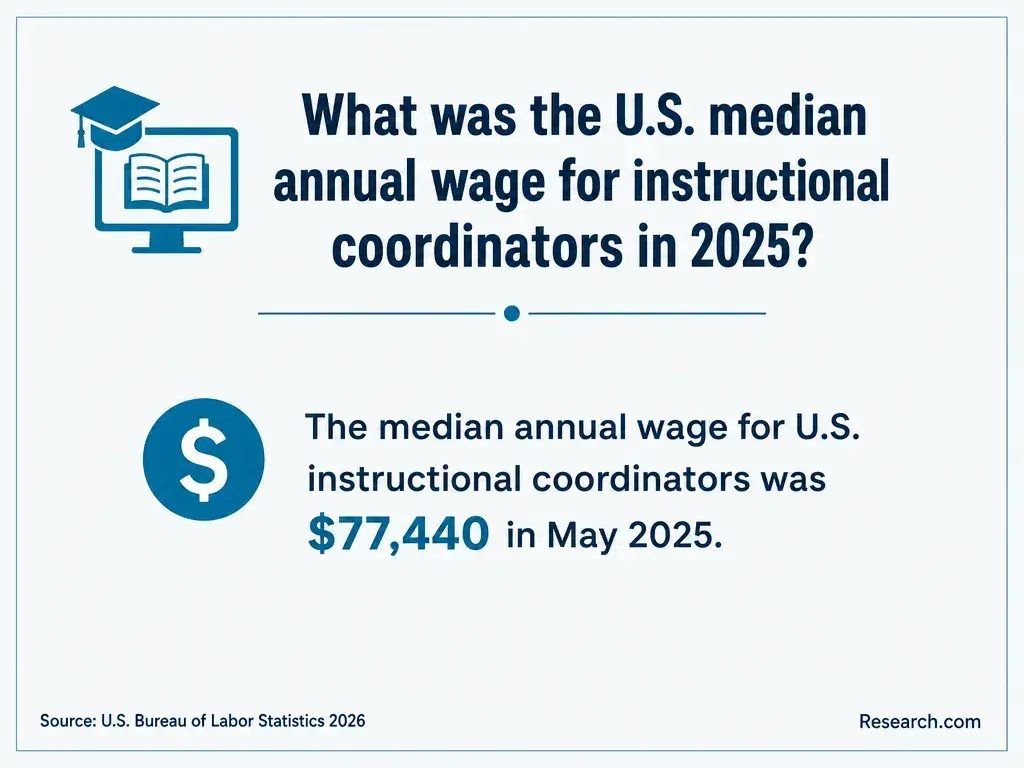
- The U.S. median annual pay for training and development managers was $133,000 in May 2025, according to the Bureau of Labor Statistics (BLS); that occupational figure is not a salary forecast for Ed.D. graduates.
What Is an Online Ed.D. in Leadership and Learning in Organizations?
An online Doctor of Education (Ed.D.) in leadership and learning in organizations is a practice-oriented doctorate concerned with how adults learn, how organizations change, and how leaders use evidence to improve practice. The exact degree name and requirements vary by university. "Online" describes where much of the instruction occurs, not necessarily a self-paced schedule or an absence of campus visits.
For a portfolio-company leader, the degree's strongest potential use is improving the ability to diagnose a workforce or leadership problem, implement a response, and evaluate it responsibly. That differs from learning how to price an acquisition, structure debt, or run a company's finances. An MBA or executive operating experience may address those needs more directly; a business-oriented DBA may fit a leader whose central inquiry concerns business strategy or management research.
How Can an Ed.D. Prepare Leaders for Private Equity Portfolio Companies?
Private equity portfolio companies operate under performance expectations set by their owners, but their needs differ by company and investment strategy. An Ed.D. can help a leader distinguish a skills gap from a problem caused by incentives, processes, staffing, or unclear decision rights. That distinction matters: training employees cannot, by itself, repair a broken operating process.
The comparison below shows where doctoral learning may add value - and where another form of preparation should come first.
| Portfolio-company challenge | Potential Ed.D. contribution | Important limit |
| Developing managers after rapid growth | Assess leadership needs, design development, and evaluate transfer to work | Programs still need executive sponsorship and time to practice |
| Integrating acquired teams | Study communication, knowledge-sharing, and change implementation | Integration decisions may depend on systems, budgets, and governance |
| Improving workforce performance | Test whether a learning intervention addresses a documented gap | Business metrics alone may not establish that training caused a result |
A prospective student should identify a problem they have authority to address, an executive sponsor, and evidence they could lawfully use. Portfolio ownership can change, so ask how the program handles a project site that becomes unavailable. Faculty approval, company permission, data access, and permission to disclose findings are separate decisions.
What Accreditation Should an Online Ed.D. Program Have?
Start by checking that the degree-granting university holds institutional accreditation recognized by the U.S. Department of Education or the Council for Higher Education Accreditation. Confirm the institution and exact degree in the accreditor's directory, rather than relying on a program advertisement. Institutional accreditation is not proof that a doctorate offers a private equity specialization, a professional certification, or eligibility for an education license.
Compare the curriculum and completion requirements after that first check. A lower advertised tuition rate is useful only if the program also fits your work and project needs; a search for leadership doctorate programs with lower tuition should still include accreditation, required travel, and the actual degree awarded.
Relevant study may include adult learning, organizational diagnosis, leadership development, change implementation, research methods, and program evaluation. The best curriculum for this audience connects those subjects to decisions a company must make, such as whether managers are applying new practices or whether teams can share knowledge after an acquisition.
Read required courses and project rules rather than assuming every leadership Ed.D. teaches finance, advanced analytics, or private equity operations. Ask how students learn to choose credible measures, interpret incomplete workplace data, and protect employee confidentiality. A course in evaluation provides preparation; it does not make every subsequent business result evidence of a program's impact.
Requirements vary by institution. Programs may ask for a completed graduate degree, transcripts, recommendations, a statement of purpose, and evidence of relevant professional experience; some set additional academic or testing conditions. A business or other non-education background is not automatically disqualifying. What matters is whether the applicant meets the specific rules and can show readiness for doctoral inquiry.
A portfolio-company applicant should describe decisions they actually made: the organizational problem, stakeholders, their authority, actions, and what evidence was available. They should not imply that an employer has approved a doctoral project merely because a supervisor supports their application. If they have unfinished doctoral work, online all-but-dissertation Ed.D. pathways warrant a separate inquiry; prior credits do not automatically transfer or shorten the new degree.
Completion time depends on required credits, enrollment pace, course sequencing, and the dissertation or other culminating project. Published tuition may be charged per credit, term, or program, so an advertised rate alone cannot establish total cost. Request a written estimate for your entry term that covers required coursework, fees, campus travel, and any continuation charges if the project takes longer than planned.
For a working leader, the larger trade-off may be time away from operations or family, particularly during data collection and writing. Confirm whether employer reimbursement covers doctoral study, what happens if you change companies, and whether repayment is required after departure. Planning a budget for doctoral study in education is a useful starting point, but use the university's current charges and your own employment terms for the decision.
Online study can let a portfolio-company leader remain employed without relocating. It may still require live classes, group meetings, fixed deadlines, or campus convenings. A campus-based program may provide easier in-person access to faculty and peers, but it can be less workable for a leader who travels among operating sites.
Choose based on the schedule you can sustain, not the delivery label. Ask for the live-session timetable, attendance policy, residency dates, and typical project milestones. If speed matters, compare faster routes through an education doctorate against their workload and completion rules; a short advertised timeline is not a guarantee that an employer-based project will finish on schedule.
The most plausible next step is often broader responsibility within a function the student already knows: talent development, organizational development, workforce learning, integration, or change leadership. A portfolio-company executive may use doctoral study to improve how those efforts are led and evaluated. An Ed.D. alone is unlikely to qualify someone for a chief executive role or an investment-firm operating-partner position; employers will also assess operating results, sector knowledge, and financial judgment.
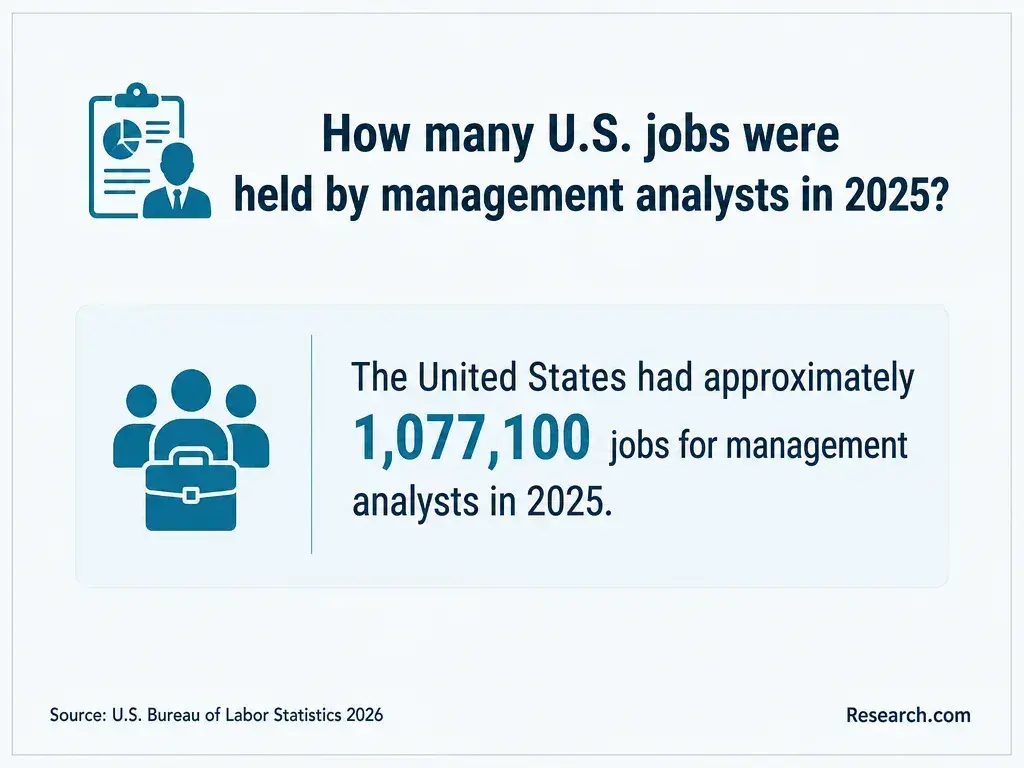
For comparison, BLS projects U.S. management analyst employment to grow 10.1% from 2025 to 2035. That projection describes an occupation that includes organizational consultants, not demand specifically for portfolio-company Ed.D. graduates. If your goal is university administration rather than a portfolio-company role, Ed.D. preparation for organizational change in universities addresses a different employment setting and set of constraints.
There is no reliable single salary for graduates of an organizational leadership Ed.D. working in private equity portfolio companies. Pay depends on the role, company, industry, location, experience, and compensation structure; a doctorate does not determine any of those terms.
BLS reports a May 2025 U.S. median annual salary of $133,000 for training and development managers. Use that figure as context only if the target job genuinely matches that occupation. It does not include a prediction of the pay increase attributable to an Ed.D., and it should not be treated as an executive compensation benchmark. For a financial decision, compare the degree's full cost and time commitment with advancement opportunities your employer has actually identified.
Do Private Equity Portfolio-Company Leaders Need Licenses or Certifications?
General leadership roles in private equity portfolio companies do not carry a universal Ed.D., license, or professional-certification requirement. Requirements depend on the job: a regulated clinical, legal, accounting, or other specialized position may require its own credential, while an employer may prefer particular business experience for an operating role.
Change-management, coaching, or project-management certifications can demonstrate focused preparation, but they are not equivalent to a doctorate and do not confer authority over regulated work. Likewise, a general organizational leadership Ed.D. should not be assumed to qualify its holder for teacher or school-administrator licensure. Check the target job description and, where applicable, the relevant licensing authority before choosing a credential.
Other Things You Should Know About EdD Leadership
Either can provide relevant experience. A portfolio-company role may offer closer access to implementation; an investment-firm role may offer a broader view across businesses. For an applied project, the deciding factor is authorized access to a feasible site and data.
Describe your responsibilities, methods, and lessons without disclosing restricted financial, employee, customer, or transaction information. Ask your employer what can be shared before submitting examples.
Possibly, if the program approves the design and each organization grants the necessary permissions. Multiple sites add coordination and data-governance challenges, so a narrower project may be more feasible.
Start with the gap you need to close. Finance-focused study, executive education, mentorship, or responsibility for a cross-functional initiative may be more direct than an Ed.D. if organizational learning and applied inquiry are not central to your goal.
- Online group projects in higher education - PMC https://pmc.ncbi.nlm.nih.gov/articles/PMC10038701/
- Protecting Personal Information: A Guide for Business | Federal Trade Commission https://www.ftc.gov/business-guidance/resources/protecting-personal-information-guide-business
- Accreditation in the U.S. | ed.gov http://www.ed.gov/laws-and-policy/higher-education-laws-and-policy/college-accreditation/accreditation-in-the-us
- Cost of Attendance (Budget) | 2025-2026 Federal Student Aid Handbook https://fsapartners.ed.gov/knowledge-center/fsa-handbook/2025-2026/vol3/ch2-cost-attendance-budget
- What Can You Do With an EdD in Leadership? Top Careers | University of the Cumberlands https://www.ucumberlands.edu/blog/what-can-you-do-with-an-edd-in-leadership
- Ed.D. in Organizational Leadership & Development | Cornerstone University https://www.cornerstone.edu/programs/ed-d-organizational-leadership-and-development/
- Applied Leadership Capstone Syllabus | Global Health E-Learning Program https://edgh.washington.edu/courses/diploma-applied-leadership-capstone/syllabus/
- 2026 UNC Online EdD in Organizational Learning & Leadership https://online.unc.edu/online-doctoral-programs/online-edd-organizational-learning-and-leadership/
- What Topics Do EdD Students Research in the EdD Program? | Fairfield University https://www.fairfield.edu/news/insights/education-human-development/what-topics-do-edd-students-research.html