2027 Paying for an Online Ed.D. in Leadership and Learning in Organizations: A Founder Comparing Tuition with Business Reinvestment
Audited and Verified:
Our Editorial and Data Verification Process
Research.com uses government datasets, official education statistics and primary institutional information to support its career and degree guides. Our review process checks factual accuracy, occupational definitions, source dates and the requirements associated with the credentials discussed.
How This Article Was Fact-Checked
Our editorial team verifies salary estimates, employment projections, education requirements and program information against original data providers and official organizations. Salary figures are checked against the relevant occupational definitions and reporting periods. Information about licensure, accreditation and required in-person training is reviewed separately.
Fact-checked and verified on:

Co-Founder and Chief Data Scientist
For a founder, paying for an online Ed.D. means committing money and attention that could instead strengthen the business. The degree may improve how you develop leaders, evaluate learning, and manage organizational change - but those benefits are harder to forecast than a tuition bill.
This guide explains how to compare the full cost of a leadership and learning doctorate with a specific reinvestment opportunity, what program details to verify, and when a shorter or less expensive route may serve your company better.
Key Things You Should Know
- Compare the Ed.D. with a defined business investment using available cash, founder time, risk, and the date each option could produce a useful result - not tuition alone.
- Request a written, program-specific cost estimate before committing; published tuition may exclude fees, travel, continued enrollment, and financing costs.
- The U.S. Bureau of Labor Statistics reports a $133,000 median annual wage for training and development managers, but that occupational figure is not a forecast of a founder's earnings or degree return.
What Is an Online Ed.D. in Leadership and Learning in Organizations?
An online Ed.D. in leadership and learning in organizations is a practice-oriented doctorate concerned with how people learn at work and how leaders improve organizational systems. Depending on the program, students may study adult learning, change, leadership development, and applied inquiry. "Online" describes delivery, not necessarily self-paced study or freedom from campus visits.
For a founder, the strongest fit is a persistent challenge the business cannot solve simply by buying training: developing managers as the company grows, improving knowledge transfer, or evaluating whether a workforce initiative works. Programs differ in focus, so compare their actual requirements rather than assuming a leadership course establishes a formal concentration. A guide to Ed.D. specialization choices for professional goals can help frame that comparison.
How Much Does an Online Ed.D. in Leadership and Learning Cost?
There is no reliable universal price for an online Ed.D. The amount a founder must fund depends on the institution's tuition basis, required coursework, pace, fees, and whether completion extends beyond the advertised schedule. Ask each program for an estimate through graduation that identifies what could change.
The table separates charges from less visible business costs. Both matter when the alternative is hiring, improving systems, or preserving operating cash.
| Cost component | What to verify | Founder's comparison |
| Tuition and fees | Per-credit, per-term, or program pricing; required credits; fee changes | Cash unavailable for a named business investment |
| Attendance and completion | Required travel, lodging, technology, and continued-enrollment charges | Unplanned spending and time away from operations |
| Financing | Aid eligibility, loan terms, and payment timing | Future obligations, not just the initial payment |
| Founder time | Live classes, team meetings, and project-intensive periods | Work that must be delegated, delayed, or declined |
Compare written estimates across schools on the same completion assumptions. Lower-tuition pathways to an education doctorate may widen the search, but a lower advertised rate does not establish a lower total cost.
Is an Online Ed.D. Worth the Investment for Working Professionals?
An Ed.D. is worth considering when its expected value exceeds both its full cost and the value of the best feasible use of the same resources. A founder should compare a specific reinvestment - such as a manager-development hire or a process improvement - with a specific doctoral program. Compare likely results, timing, uncertainty, and the cash the business needs to remain resilient.
First, identify the problem you want the degree to help solve and the decisions you would make differently afterward. Then estimate the program's net cash cost from verified charges and confirmed aid, add any financing cost, and account for work you must delegate or forgo. Separately, estimate what the business investment could contribute after its own costs, using conservative assumptions rather than projected revenue alone. If either option depends on uncertain results, test what happens when benefits arrive late or do not materialize.
The degree's benefits may be partly nonfinancial: stronger evaluation methods, credible external perspective, or a longer-term career option. Those can matter, but they should not be disguised as a guaranteed salary increase. Scholarships, loans, and tuition support require individual verification; founders should not treat payment from their own company as free funding. For another view of aid categories and conditions, see higher education leadership doctoral costs after financial aid.
If the company urgently needs cash or execution capacity, reinvestment may be the sounder choice now. If the founder has a durable organizational-learning problem, time to study it, and sufficient business reserves, the Ed.D. may be defensible even without a short-term financial payoff. An executive course, targeted methods training, or an experienced adviser is often the better test before committing to a doctorate.
Check that the degree-granting institution holds institutional accreditation recognized by the U.S. Department of Education or the Council for Higher Education Accreditation. Confirm the institution and credential directly with the accreditor and school; do not infer that a particular online program has separate programmatic accreditation.
Accreditation does not establish that the doctorate qualifies someone for a regulated education role. If you hope to move into school administration, ask the program and relevant state licensing authority whether this exact degree meets their requirements. For a founder primarily seeking organizational capability, also scrutinize faculty guidance and the credibility of the applied work - not accreditation alone.
Relevant coursework may connect adult learning and leadership theory with organizational diagnosis, program evaluation, and research methods. The payoff for a founder lies in applying those tools carefully: distinguish a skills gap from a flawed process, identify evidence before changing a training program, and assess results without claiming that every observed improvement was caused by the intervention.
Ask to see the required course sequence and final-project rules. A useful program should offer enough methodological guidance to examine a real organizational problem, while recognizing that course exposure alone does not make a founder an expert researcher. Company data, employee participation, confidentiality, and any required academic review need separate approval before a workplace project begins.
Admission requirements vary. Programs may ask for a qualifying degree, transcripts, professional experience, recommendations, a statement of purpose, or an interview; the school determines which are mandatory. A founder can often make a stronger case by documenting decisions made, people led, changes implemented, and an organizational problem suitable for doctoral inquiry than by relying on the title "CEO" alone.
Before applying, ask admissions whether your prior graduate education meets eligibility rules and whether any credits would actually apply to the doctorate. Those are different decisions. Also confirm whether the program expects access to an organization for applied work and whether your proposed business setting is suitable.
Completion time depends on the required sequence, enrollment pace, project approvals, and whether courses are offered when needed. An advertised fast track is not a promise that a founder can finish while maintaining the same work schedule. Compare the published curriculum and completion rules with the fastest online Ed.D. formats only after checking what "fast" requires in practice.
Ask when live sessions, group work, and project milestones occur, and what happens if a business disruption forces a pause. A delayed finish can mean additional charges as well as a longer period of divided attention.
An online program can reduce routine commuting and expand the schools a founder can consider. A campus-based program may make in-person collaboration easier. Neither format is inherently cheaper or less demanding: online cohorts can require scheduled attendance and travel, while local campus study may offer a workable evening schedule.
Compare the calendar you would actually live with: required meetings, campus convenings, team availability, faculty access, and weeks when research work peaks. If participation repeatedly conflicts with essential business decisions, delivery format becomes a financial risk, not merely a convenience preference.
A founder may use the degree within the existing business to lead manager development, workforce learning, or evidence-based change. A later move into learning and development leadership, organizational consulting, or education administration is possible, but employers will assess relevant experience and results alongside the credential. A doctorate alone does not confer an executive appointment or educator licensure.
Career value therefore depends on the destination. Someone intending to remain an owner should prioritize capabilities the company can use; someone planning a transition should examine actual job requirements and build demonstrable project experience. For a founder considering a move into university operations, organizational leadership Ed.D. program selection for university staff offers a more role-specific comparison.
What Salaries and Job Outlook Can Ed.D. Graduates Expect?
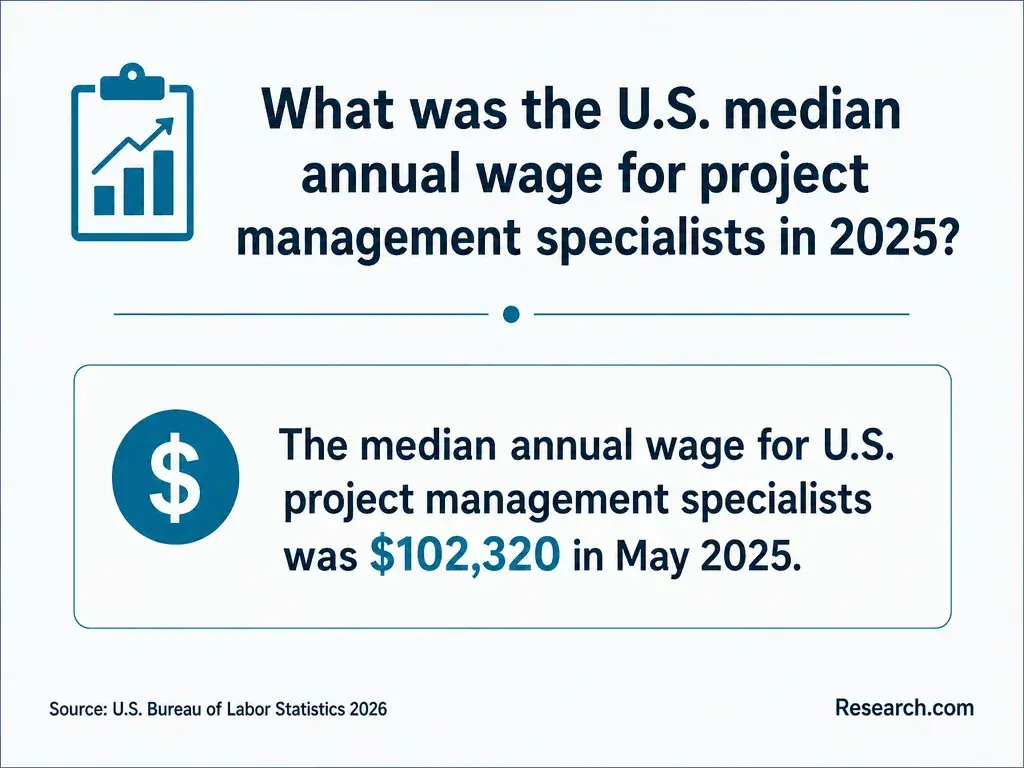
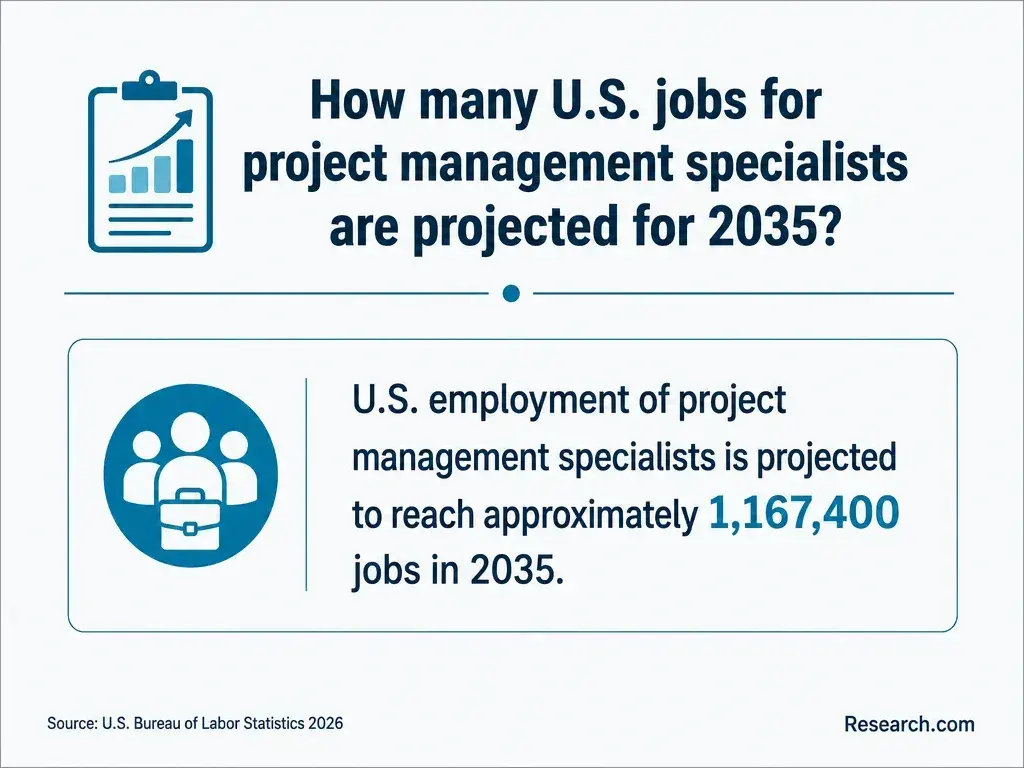
Salary data is a benchmark for occupations, not for Ed.D. graduates or business owners. The U.S. Bureau of Labor Statistics reports a May 2025 median annual wage of $133,000 for training and development managers and projects 6.4% employment growth for that occupation from 2025 to 2035. Those figures describe a role with its own experience and hiring requirements; they cannot be used as the founder's expected raise or the degree's return.
If a career change is part of the financial case, compare your current qualifications with postings for the specific role and location. If you intend to keep running your company, use realistic changes in business performance and your own workload - not an employee salary median - as the basis for the decision.
Other Things You Should Know About EdD Leadership
It may be able to, but payment should be assessed against company cash needs and documented according to its ownership structure and policies. Ask a qualified tax adviser about treatment; company payment does not make the cost disappear.
Not automatically. Check employer or investor agreements, program rules, and data permissions before sharing records. Ask whether a redacted or aggregated account would meet the assignment's requirements.
Ask the program whether your applied project can continue without that workplace and what approval a replacement setting would require. Consider this possibility before choosing a project dependent on company access.
Only if the arrangement aligns with the company's interests and governing agreements. Explain the business purpose, total commitment, time demands, and alternative uses of funds; do not assume investors will value a personal credential as a company asset.
- Employer-offered educational assistance programs can help pay for college | Internal Revenue Service https://www.irs.gov/newsroom/employer-offered-educational-assistance-programs-can-help-pay-for-college
- Introduction to Investing | Investor.gov https://www.investor.gov/introduction-investing
- Cost of Attendance (Budget) | 2025-2026 Federal Student Aid Handbook https://fsapartners.ed.gov/knowledge-center/fsa-handbook/2025-2026/vol3/ch2-cost-attendance-budget
- Types of Financial Aid: Grants, Work-Study, and Loans | studentaid.gov https://studentaid.gov/understand-aid/types
- Online Ed.D. in Higher Education | Rockhurst University https://onlinedegrees.rockhurst.edu/programs/online-edd-education-leadership/higher-ed
- Tuition and Financial Aid - UNC-Chapel Hill Online https://online.unc.edu/online-doctoral-programs/online-edd-organizational-learning-and-leadership/admissions/tuition-financial-aid/
- What does college actually cost? | About the University of Cincinnati https://www.uc.edu/blog/hidden-costs-of-college.html
- Online EdD Admission | UD-EDU https://educationonline.udayton.edu/edd/admission/
- How to Choose a Leadership Development Program | Harvard DCE https://professional.dce.harvard.edu/blog/how-to-choose-a-leadership-development-program/
- A Guide to Business School Accreditation | Alliant University https://www.alliant.edu/blog/guide-business-school-accreditation