2027 Is an Online Ed.D. in Leadership and Learning in Organizations a Good Fit for Union Education Directors?
Audited and Verified:
Our Editorial and Data Verification Process
Research.com uses government datasets, official education statistics and primary institutional information to support its career and degree guides. Our review process checks factual accuracy, occupational definitions, source dates and the requirements associated with the credentials discussed.
How This Article Was Fact-Checked
Our editorial team verifies salary estimates, employment projections, education requirements and program information against original data providers and official organizations. Salary figures are checked against the relevant occupational definitions and reporting periods. Information about licensure, accreditation and required in-person training is reviewed separately.
Fact-checked and verified on:

Co-Founder and Chief Data Scientist
Union education directors must develop stewards, support member learning, and show whether training helps people act effectively - often with limited staff time and budgets. An online Ed.D. in Leadership and Learning in Organizations could strengthen that work, but its value depends on the problems you need to solve, your authority to study them, and the cost of doctoral study.
This guide explains what the degree can add, where it falls short, and how to decide whether a doctorate or a more focused development path is the better investment.
Key Things You Should Know
- An online Ed.D. is most useful when a union education director needs sustained preparation in adult learning, organizational change, and evaluating education across a complex organization - not simply a credential for a promotion.
- Before enrolling, confirm that you can meet live-class and project requirements and obtain appropriate union authorization for any workplace inquiry; online delivery does not guarantee a self-paced degree or access to member data.
- The U.S. Bureau of Labor Statistics reports a $133,000 median annual salary for training and development managers in May 2025, but that broad occupational figure is not a prediction of union pay or an Ed.D. return on investment.
Is an online Ed.D. in Leadership and Learning in Organizations a good fit for union education directors?
Yes, potentially - if your work calls for designing and improving learning systems, leading change across locals or departments, and evaluating results. A practice-oriented Ed.D. can help an experienced director examine those problems systematically while continuing to work. It is a weaker fit if your immediate need is a better steward workshop, a bargaining-specific skill, or a credential your union does not value.
The distinction is between improving a course and improving the conditions under which members learn and use what they learn. A director might find that stewards attend training but cannot apply grievance procedures consistently. Instruction may be part of the problem; mentoring, access to guidance, workload, or local practices may matter too. Doctoral study is potentially valuable when you have the responsibility and time to investigate that broader system rather than assume another class will fix it.
Use your intended outcome - not the prestige of the degree - to compare paths. The options below differ in depth, speed, and the work they are most likely to support.
| Path | Best fit for a union education director | Important limit |
| Leadership and learning Ed.D. | Leading sustained education improvement and practice-focused organizational inquiry | Requires substantial time and expense; does not confer union authority |
| Focused certificate or professional development | Closing a defined gap in facilitation, instructional design, evaluation, or labor education | May not provide the depth needed for organization-wide inquiry |
| Mentorship or supervised union project | Building credibility and experience in a specific union role | Learning depends on available support and project scope |
| Research-oriented PhD | Pursuing scholarly research as a primary goal | May be less aligned with improving a current education operation |
An Ed.D. makes the strongest case when union leadership supports the learning goal, your schedule can accommodate doctoral work, and a credible improvement question extends beyond one workshop. If those conditions are absent, start with a smaller project and revisit the degree after you know what additional preparation you need. For a broader look at degree structures, see comparing Ed.D. tracks before applying.
What does an Ed.D. in Leadership and Learning in Organizations prepare graduates to do?
This kind of Ed.D. generally prepares experienced professionals to connect leadership decisions with how adults learn at work. Depending on the curriculum, graduates may be better equipped to diagnose learning needs, design professional development, lead implementation, and use evidence to improve programs. The degree develops a way to investigate and manage such work; it does not establish that every graduate can perform every specialized labor-relations task.
For a union education director, a useful application might be examining how new stewards learn to handle cases after initial training. That requires distinguishing knowledge gaps from obstacles such as unclear referral processes or insufficient coaching. It also requires working with officers, staff, and members whose priorities may differ. A leadership doctorate can support those judgments, while union-specific bargaining expertise must still come from relevant practice and training.
How can an online Ed.D. strengthen union education leadership and professional development?
The practical opportunity is to build a more coherent path from learning to action. A director could use adult-learning principles to revise steward development, then assess whether participants can apply a procedure in realistic situations - not just whether they liked a session. Organizational-learning coursework may also help the director share effective practices across locals without assuming that each local has identical resources or governance.
An applied project could examine, for example, where newly trained stewards seek help during their first cases and whether existing support meets that need. That is a possible question, not evidence that a particular union has a training failure. Before collecting information, the director would need appropriate organizational permission, a feasible project scope, and faculty guidance on research and ethical review. Member and employee records may have confidentiality restrictions; access for union work does not automatically authorize their use in doctoral research.
The degree's value is highest when findings can inform decisions the director or union leadership can actually make. If the underlying barrier is staffing, governance, or an incentive conflict, better instructional design alone will not resolve it.
Curricula vary, but relevant areas to look for include adult learning, leadership and organizational change, learning design, qualitative and quantitative inquiry, and program evaluation. The question is not whether those terms appear in a course catalog; it is whether required courses and supervised work give you enough practice to address your union's education challenges.
Read course descriptions against a concrete task. If you need to understand why steward learning does not transfer to casework, look for needs assessment and evaluation methods alongside learning theory. If your challenge is coordinating education across autonomous locals, examine coursework in stakeholder engagement and change implementation. Check whether pertinent subjects are required, offered as electives, or merely mentioned; a single course is not a formal specialization or proof of advanced expertise.
Requirements depend on the institution and entry term. Programs may ask for prior graduate study, transcripts, recommendations, a statement of purpose, and evidence of relevant professional experience; some also specify academic thresholds or interviews. Do not assume that an education master's, a union job title, or a fixed number of service years is universally required.
Describe your actual responsibilities: education planning, decisions about resources, collaboration with officers or locals, and changes you helped implement. An application is stronger when it identifies a genuine leadership or learning problem without claiming results you have not measured. Ask admissions staff how they evaluate union leadership experience, whether prior graduate coursework affects eligibility, and whether any credits can separately apply to degree requirements. Admission credit and transfer credit are different decisions.
Neither duration nor total price can be inferred from "online Ed.D." Programs differ in required credits, course sequencing, enrollment options, and the time allowed for a capstone or dissertation. Request the program's published completion plan and ask what happens if a project is delayed by a union election, staffing change, or loss of access to a proposed site.
For a meaningful cost comparison, calculate required tuition and fees using each institution's published charges, then account for books, technology, any required travel and lodging, and continued enrollment during project work. Compare that total with confirmed union education benefits or an employer reimbursement agreement - not an assumed salary increase. Ask whether reimbursement requires particular grades, continued employment, or approval before enrollment. Guides to Ed.D. program costs for prospective doctoral students can help frame the comparison, but obtain a program-specific estimate before committing.
Online study can let a union education director remain in a current role and use local professional experience in coursework. It does not necessarily offer flexible attendance: live seminars, group assignments, fixed deadlines, or campus convenings may still be required. A campus-based program may make in-person faculty and peer interaction easier, but travel or relocation can be impractical for a working director.
Compare the actual weekly meeting schedule, attendance rules, project supervision, library access, and required visits - not just the delivery label. If union meetings or bargaining periods are unpredictable, ask how students handle missed live sessions and whether a leave or reduced course load is permitted. Travel is also part of evaluating the cost of an online education doctorate when a program requires in-person activity.
A union education director generally does not need teacher or school-administrator licensure merely to pursue a broadly focused leadership and learning Ed.D. Admission rules are program-specific, however, and a degree with "education" in its name should not be mistaken for a state-approved licensure pathway.
Likewise, completing the Ed.D. does not automatically award a professional certification or qualify someone for a regulated school position. If your goal includes teaching in a licensed role or becoming a principal or superintendent, check the program's licensure disclosure and the relevant state authority's requirements before applying. For union education work, demonstrated labor expertise and the organization's hiring rules are more immediately relevant than educator licensure.
An experienced director might use doctoral learning to compete for broader union education leadership, workforce development, organizational learning, or consulting responsibilities. Moving into a university or another sector is possible, but employers will evaluate sector knowledge, management experience, and evidence of completed work as well as the degree. Elected union positions have their own processes; an Ed.D. does not confer one.
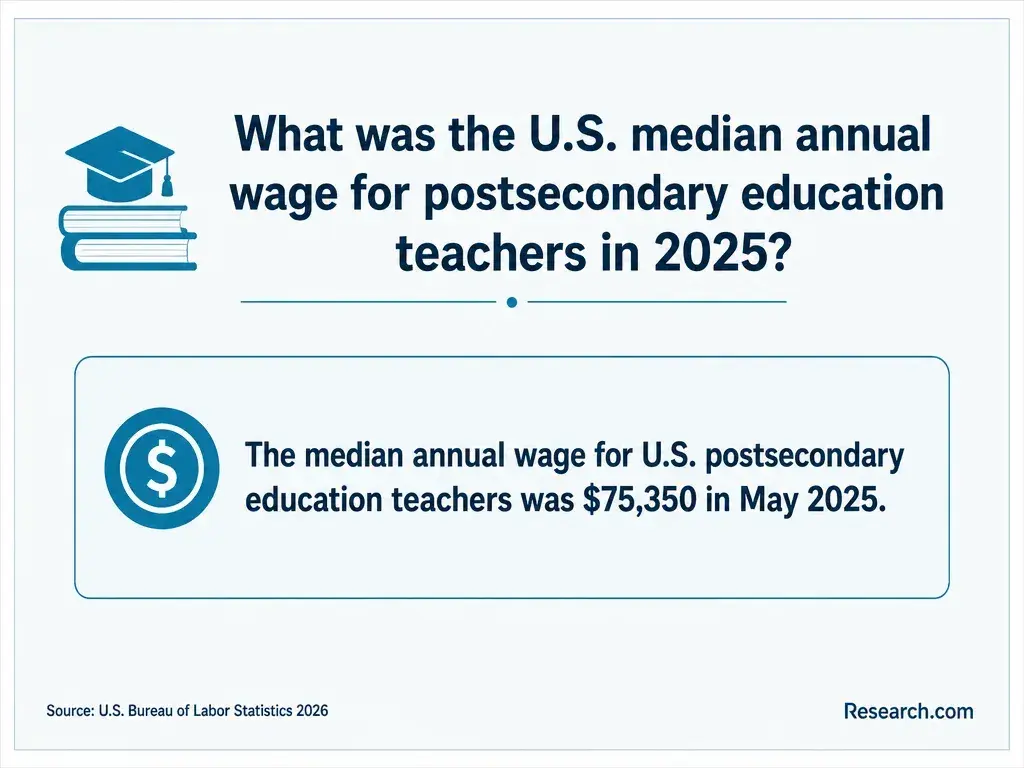
The U.S. Bureau of Labor Statistics reports a May 2025 median annual salary of $133,000 for training and development managers. That occupation can provide context for some learning-leadership jobs, but it is not a union education director salary or a forecast for Ed.D. graduates. Management analysts, an occupational category that includes some organizational consultants, had a $101,860 median; consulting also requires clients and a credible record of results. Compare actual job postings and your union's compensation structure before treating either figure as a financial reason to enroll.
If a university role is your target, examine its distinct hiring expectations rather than assuming union and campus leadership jobs are interchangeable. A resource on organizational leadership Ed.D. program selection for university staff can help clarify that adjacent pathway.
How can you choose an accredited online Ed.D. program?
Start by verifying the institution's accreditation through the accreditor and the institution itself. Then confirm the exact awarded degree, curriculum, delivery requirements, and project rules with the program. Institutional accreditation establishes an important baseline; it does not show that the curriculum suits union education or that the degree grants licensure.
A useful shortlist should survive three practical checks. Ask program staff for written answers where a policy could affect your decision:
- Map required courses and the final project to a union education problem you have authority to address; ask whether an external or changing project site is allowed.
- Confirm live-session times, attendance expectations, campus visits, faculty supervision, and what happens if your work schedule changes.
- Compare published tuition and fees with confirmed assistance, and ask how the institution supports students who cannot use confidential workplace data.
Do not select solely on an advertised tuition rate or the word "online." For an initial price-oriented shortlist, use comparing affordable organizational leadership doctorates, then verify each candidate's degree requirements and full cost directly.
Other Things You Should Know About EdD Leadership
Possibly, but authority and needs may differ among locals. Seek the appropriate approvals and test whether the material works in other settings before adopting it union-wide.
Ownership depends on university policies, employment agreements, and the circumstances in which the materials were created. Clarify reuse, attribution, and sharing rights before including union-developed work in a course or portfolio.
Do not assume participation is unpaid or required. Check union policies, applicable agreements, and the approved evaluation plan, including how participation will remain voluntary when appropriate.
They may help draft or organize nonconfidential content, subject to union and university rules. Do not enter identifiable member information, case details, or restricted bargaining materials into a tool without explicit authorization and appropriate safeguards.
- DAPIP | Homepage - Office of Postsecondary Education (OPE) https://ope.ed.gov/dapip/
- Frequently Asked Questions - NLRB https://www.nlrb.gov/resources/faq/nlrb
- Cost of Attendance (Budget) | 2025-2026 Federal Student Aid Handbook https://fsapartners.ed.gov/knowledge-center/fsa-handbook/2025-2026/vol3/ch2-cost-attendance-budget
- What Topics Do EdD Students Research in the EdD Program? | Fairfield University https://www.fairfield.edu/news/insights/education-human-development/what-topics-do-edd-students-research.html
- Advancing Leadership Education and Development | sagepub.com https://journals.sagepub.com/doi/10.1177/10525629211008645
- Hybrid Ed.D. Program in Higher Education at UF | Student Services https://education.ufl.edu/higher-education/prospective-students/hybrid-edd/
- UNC EdD Online: Organizational Learning and Leadership https://online.unc.edu/online-doctoral-programs/online-edd-organizational-learning-and-leadership/
- Organizational Leadership Courses | Texas A&M University-Commerce Catalogs https://coursecatalog.tamuc.edu/grad/courses/orgl/
- Cost of Attendance - Financial Aid and Scholarships | The University of Utah https://financialaid.utah.edu/tuition-and-fees/cost-of-attendance.php
- About | Adult Learning and Leadership | Organization and Leadership | Teachers College, Columbia University https://www.tc.columbia.edu/organization-and-leadership/adult-learning-and-leadership/about/