2027 Online Ed.D. in Leadership and Learning in Organizations: Comparing Coursework in Burnout and Work Design
Audited and Verified:
Our Editorial and Data Verification Process
Research.com uses government datasets, official education statistics and primary institutional information to support its career and degree guides. Our review process checks factual accuracy, occupational definitions, source dates and the requirements associated with the credentials discussed.
How This Article Was Fact-Checked
Our editorial team verifies salary estimates, employment projections, education requirements and program information against original data providers and official organizations. Salary figures are checked against the relevant occupational definitions and reporting periods. Information about licensure, accreditation and required in-person training is reviewed separately.
Fact-checked and verified on:

Co-Founder and Chief Data Scientist
If you lead workplace learning or organizational change, a course labeled "leadership" may not give you the tools to address burnout. Effective preparation must connect employee experiences to workload, autonomy, management practices, and the way work is organized, not just teach stress-management techniques.
This guide compares the coursework and applied research opportunities that matter most in an online Ed.D. in Leadership and Learning in Organizations. It will help you identify programs that support your intended work, spot gaps in a course catalog, and decide whether doctoral study is necessary for your goal.
Key Things You Should Know
- For burnout-focused work, prioritize organizational diagnosis, work design, change implementation, and evaluation - not a course that addresses only individual resilience.
- Compare required courses and actual project opportunities: a leadership course title alone does not establish that you can study workload, scheduling, or employee well-being in depth.
- A doctorate is not a salary guarantee: the U.S. Bureau of Labor Statistics reports a $133,000 median annual salary for training and development managers in May 2025, across workers with varied credentials and experience.
What is an online Ed.D. in Leadership and Learning in Organizations?
It is a practice-oriented Doctor of Education focused on how people lead, learn, and improve organizations. Depending on the institution, coursework may combine adult learning, organizational change, leadership, research methods, and an applied doctoral project.
"Leadership and Learning in Organizations" is not a standardized degree name or curriculum: confirm the exact award, requirements, and project format at each school.
For an experienced learning and development professional or organizational leader, the degree is most relevant when burnout is part of a larger problem you have the responsibility and access to investigate. If you mainly need to improve a training program or learn a work-design framework, targeted professional development and supervised project experience may be more direct.
Those comparing broader academic directions can review Doctor of Education study areas to compare, then return to the specific courses and projects each institution actually offers.
How does coursework address burnout and work design?
Burnout generally refers to exhaustion, detachment or cynicism, and reduced effectiveness associated with chronic workplace stress. Work design concerns how tasks, workload, decision authority, schedules, support, and roles are structured.
Coursework is useful when it helps a leader distinguish a training gap from a work-system problem. Teaching coping skills may help some individuals, but it does not by itself reduce an unsustainable workload or conflicting priorities.
The comparison below shows what to look for in syllabi and assignments. A program need not use the word "burnout" in a course title, but it should offer a credible route from diagnosis to a feasible organizational decision:
| Coursework emphasis | What it could contribute | What to verify |
| Individual well-being and leadership development | Coaching, supportive management, and recognition of stressors | Whether assignments also examine workload and organizational constraints |
| Organizational diagnosis and work design | Analysis of roles, demands, autonomy, scheduling, and incentives | Whether students can evaluate changes to work processes, not merely propose training |
| Applied research and evaluation | Careful measurement of employee experience and implementation | Whether faculty teach sampling, measurement limits, privacy, and interpretation |
| Change leadership | Stakeholder engagement and practical implementation | Whether projects address manager authority, resources, and unintended consequences |
A strong applied assignment might compare a proposed scheduling change with baseline information about workload and employee experience, while acknowledging that other changes could affect the results. It should not treat a self-reported improvement as proof that a policy caused it.
Access to employee information also requires organizational permission and appropriate privacy and academic oversight; enrollment alone grants no right to collect it.
What careers can an organizational leadership Ed.D. prepare you for?
The closest fits are experienced professionals moving into broader learning and development management, organizational development, workforce improvement, or consulting responsibilities.
A learning leader might use work-design analysis to advise managers on role clarity and learning transfer; an organizational consultant might evaluate whether a change effort addresses workload rather than adding another training requirement.
Career fit depends on what you already do. Someone who has led cross-functional changes can use doctoral work to strengthen diagnosis and evaluation.
Someone entering learning and development from an unrelated function will still need relevant projects, mentoring, and evidence of practical skill. Neither group should assume the Ed.D. alone qualifies them for an executive appointment, clinical well-being role, or school-administrator position.
Programs commonly draw from leadership theory, adult learning, organizational change, and qualitative or quantitative inquiry, but their required courses and elective access differ.
For this topic, the most useful sequence starts with organizational diagnosis, adds work and learning design, and then tests an intervention through evaluation and implementation coursework. Ask for a course map showing when each skill is taught and whether an elective runs during your expected enrollment period.
Examine assignments as closely as titles. An adult-learning course may explain how to design manager training; it may not teach how to change staffing or task allocation. A methods course may teach surveys without providing enough preparation to assess a work-design intervention.
If you have prior specialist-level study, education specialist coursework and doctoral progression offers a related comparison, but only the admitting institution can determine whether previous work satisfies admission conditions or applies toward degree requirements.
Online delivery changes where you attend, not necessarily when you must participate. Live seminars, group assignments, campus convenings, and meetings with an organizational partner can all affect a working professional's ability to complete a burnout-focused project.
Campus programs may make in-person faculty and peer collaboration easier, while online programs may let you remain employed and study a challenge in your own organization. Neither format guarantees access to participants or project approval.
Compare attendance rules, meeting times, travel, faculty guidance, and the final deliverable before favoring a format. In particular, online Ed.D. programs without a traditional dissertation may require another substantial applied project; "no dissertation" does not mean no research, partner coordination, or intensive writing.
Requirements vary by institution and may include an accepted graduate degree or specified graduate study, professional experience, transcripts, recommendations, and a statement of purpose.
Some programs assess applicants' proposed organizational problems or readiness for applied inquiry. An education master's, a particular job title, and prior publications are not universal conditions.
If burnout and work design motivate your application, describe a problem you have actually encountered, the decisions within your authority, and what you still need to investigate. Do not claim a cause or an employer's research approval before establishing it.
Applicants returning after graduate study should distinguish credits considered for admission from credits formally applied to the doctorate; an advisor's written evaluation is more useful than an assumed shortcut.
Time and total cost depend on required credits, pace, tuition structure, fees, project expectations, and whether study includes campus travel. A published per-credit rate alone will not capture lodging, time away from work, or additional enrollment needed to finish a project.
Request a term-by-term estimate for your intended pace, including any continuation charges, before comparing offers.
Employer reimbursement may reduce your personal cost, but confirm annual limits, grade conditions, and repayment obligations. Resources on affordable doctoral education in organizational leadership can help identify programs to investigate; use each institution's current charges and required credits to build your own comparison.
A shorter course or employer-supported improvement project may be a better financial choice if you do not need doctoral-level preparation.
Accreditation must be checked for the institution awarding the degree; an online format does not create a separate assurance of quality. Verify the institution's current accreditation status and any claims about programmatic recognition with the responsible accreditor and university.
A general organizational leadership Ed.D. does not automatically prepare graduates for teacher, principal, superintendent, counseling, or other regulated licensure. If your target role requires a license, obtain the program's written eligibility disclosure and confirm it with the relevant state authority.
For burnout and work-design roles, also ask whether the curriculum develops organizational practice rather than assuming accreditation establishes expertise in that topic.
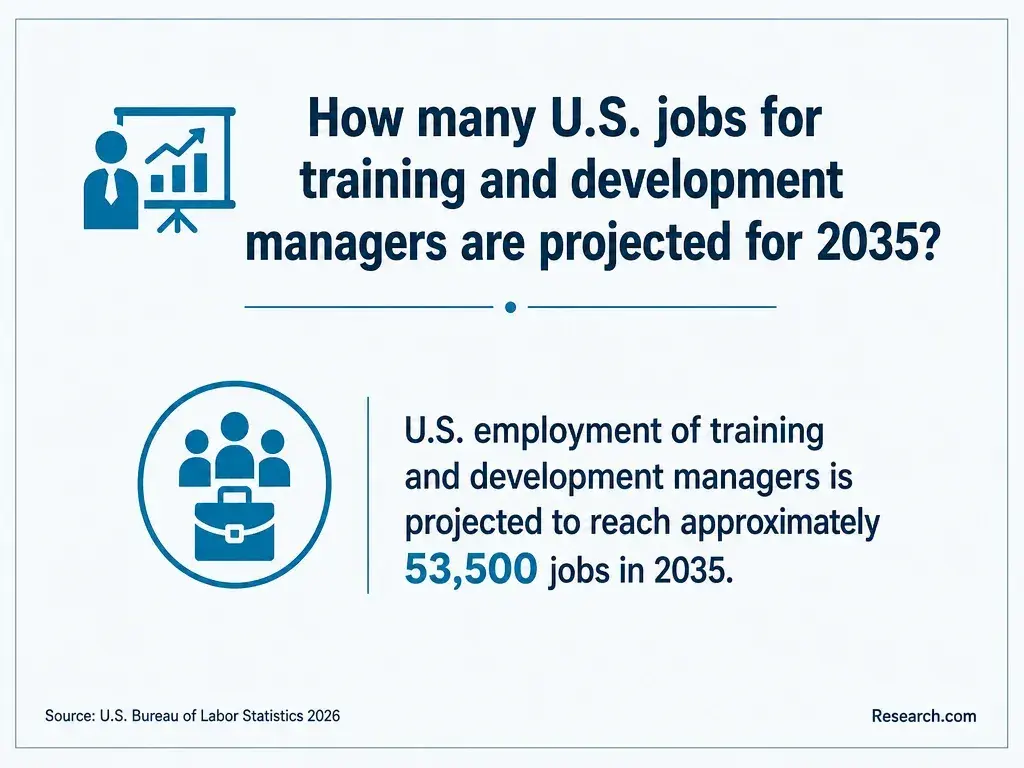
There is no single Ed.D. salary because graduates work in different occupations and sectors. The U.S. Bureau of Labor Statistics reports a May 2025 median annual salary of $133,000 for training and development managers and projects 6.4% employment growth for that occupation from 2025 to 2035.
Those figures describe an occupation, not graduates of a particular doctorate, and management roles generally require substantial relevant experience.
Use occupational data to test whether your target role is plausible, not to calculate an automatic return on tuition. An internal move into workforce improvement, for example, depends on your employer's responsibilities, pay structure, and evidence that you can lead change. Public-sector and nonprofit compensation and advancement rules may differ from those of corporate employers.
How can you choose a reputable online Ed.D. program?
Start with the decision you want to make at work: diagnosing burnout risks, redesigning work, or evaluating an organizational change. Then compare programs against that purpose, using published curricula and direct answers from faculty rather than marketing language.
Online doctorates in education with affordable study routes can broaden an initial search, but a lower advertised price is useful only if the curriculum, schedule, and project requirements fit.
Ask each program for concrete evidence before applying:
- Which required courses teach work-system diagnosis, organizational change, and evaluation, and can students review recent syllabi?
- Can the required doctoral project address workload or work design, and what faculty, employer, data-access, and ethics approvals would it require?
- What live meetings, campus visits, project milestones, and total charges apply to the proposed enrollment path?
If answers reveal only general leadership instruction and individual wellness content, the program may not meet your goal. If you already have authority to improve work processes, a focused course and a carefully evaluated workplace project may serve you better than a doctorate.
Other Things You Should Know About EdD Leadership
Possibly, but your authority over employees creates risks of pressured participation and identifiable responses. Discuss the proposed arrangement with faculty and your organization before collecting information; independent recruitment or aggregated data may be more appropriate.
No. Workplace burnout language should not be used to diagnose an individual or substitute for clinical care. A work-design project can examine organizational conditions while leaving personal health assessment to qualified professionals.
It can if your target job requires demonstrated HR knowledge that the doctorate does not teach. Check job postings and the certification body's eligibility rules rather than assuming either credential replaces the other.
They may suggest questions, but reviewers are self-selected and posts may contain sensitive information. Ask your advisor whether their use fits the project's methods and ethics requirements; do not present them as a representative measure of employee burnout.
- Department Expectations: Curriculum | New York State Education Department https://www.nysed.gov/college-university-evaluation/department-expectations-curriculum
- Workplace Mental Health & Well-Being | hhs.gov https://www.hhs.gov/surgeongeneral/reports-and-publications/workplace-well-being/index.html
- Organizational approaches to reducing burnout risk | cdc.gov https://www.cdc.gov/niosh/learning/publichealthburnoutprevention/module-8/outline.html
- Organizational interventions and occupational burnout: a meta-analysis with focus on exhaustion - PMC https://pmc.ncbi.nlm.nih.gov/articles/PMC10560169/
- 2023 Work in America Survey: Workplaces as engines of psychological health and well-being | apa.org https://www.apa.org/pubs/reports/work-in-america/2023-workplace-health-well-being
- Design Work to Prevent Burnout | MIT Sloan Management Review https://sloanreview.mit.edu/article/design-work-to-prevent-burnout/
- Burnout: a comprehensive review - Springer Nature https://link.springer.com/article/10.1007/s41449-024-00452-3
- Careers Leaders Can Pursue with an Ed.D. | Peabody Online | VU-EDU https://peabodyonline.vanderbilt.edu/edd-in-organizational-learning/edd-careers/
- EdD in Organizational Change and Leadership | USC Rossier https://rossier.usc.edu/programs/doctoral/organizational-leadership/
- Valid and Reliable Survey Instruments to Measure Burnout, Well-Being, and Other Work-Related Dimensions - NAM https://nam.edu/product/valid-and-reliable-survey-instruments-to-measure-burnout-well-being-and-other-work-related-dimensions/