2027 Online Game Programming and Development Degrees With Scholarships for Working Professionals

Co-Founder and Chief Data Scientist
Choosing an online game programming degree is a career and money decision, not just a creative one. The U. S. gaming audience remains large: the Entertainment Software Association reported in 2024 that 61% of Americans ages 5 to 90 play video games. That scale keeps demand alive for technical talent, but competition is real. This guide is for working professionals comparing accredited online programs, scholarships, timelines, skills, and job outcomes. You will learn how to judge value, reduce cost, avoid weak programs, and choose a path that fits your schedule and career target.
Key Things You Should Know
- Online game programming degrees are best for adults who want structured training in C++, C#, engines, graphics, gameplay systems, and collaborative production rather than only broad software theory.
- Cost varies widely; College Board's 2024-25 averages put published tuition and fees at $11,610 for in-state public four-year students and $43,350 for private nonprofit four-year students, before aid.
- BLS data published for 2024 shows software developers had a $133,080 median annual wage, but game-specific roles may pay differently by studio size, location, portfolio quality, and specialization.
What is an online game programming and development degree and who is it best for?
An online game programming and development degree is an undergraduate or graduate program that teaches students how to build interactive software for video games, simulations, mobile apps, virtual production, serious games, and real-time 3D experiences. The strongest programs combine computer science fundamentals with game-specific production skills such as engine scripting, gameplay architecture, physics, graphics, optimization, user experience, and team-based development.
This degree is usually a better fit for working adults who want a portfolio-driven technical path into game development than for students who only want to study game art, narrative design, or esports management. It can also make sense for software developers who already know general programming but need game engine experience and a credential that signals specialization.
The table below compares common degree types so you can match the credential to your current experience, time horizon, and target role.
| Program type | Best fit | Typical focus | Decision note |
| Associate degree in game development | Career changers testing the field or students planning to transfer | Introductory programming, design tools, 2D and 3D projects | Lower commitment, but may not be enough for competitive programming roles without a strong portfolio. |
| Bachelor's in game programming or game development | Working adults targeting entry-level developer, technical designer, or QA automation roles | Programming, engines, math, data structures, graphics, production, portfolio projects | Often the most balanced option for people who do not already have a technical degree. |
| Bachelor's in computer science with game electives | Students who want broader software job flexibility | Algorithms, systems, databases, software engineering, selected game topics | A broader CS degree may travel better outside gaming; an accelerated bachelor's degree computer science online can be a practical alternative for adults prioritizing speed and versatility. |
| Master's in game development or interactive technology | Experienced developers, artists, or designers moving into advanced technical roles | Advanced engines, production leadership, research, immersive media, capstone work | Best when it builds on prior technical ability rather than replacing missing fundamentals. |
Who should avoid this path? If your goal is pure character art, concept art, music, writing, or game marketing, a game programming degree may be unnecessarily technical. If you mainly want a stable software career and are unsure about games, a general computer science or software engineering degree may provide a broader employment base.
How do online game development programs compare to campus-based options for working adults?
For working adults, the main advantage of online game development programs is scheduling control. Many online courses are asynchronous, which means you can complete lectures, coding labs, and project work outside normal business hours. Campus programs may offer more immediate access to labs, motion capture rooms, in-person teams, and local studio networks, but they are harder to fit around full-time work.
The comparison below summarizes the practical trade-offs that matter most when you are balancing a job, family responsibilities, and tuition risk.
| Factor | Online game development program | Campus-based program | What working adults should consider |
| Schedule | Often asynchronous or evening-friendly | Usually fixed class times | Online is usually easier if you work standard hours or travel for work. |
| Team projects | Remote collaboration through version control, chat, and project management tools | In-person studio-style collaboration | Remote teamwork can mirror modern distributed game studios, but you must be proactive. |
| Hardware and software | Student supplies a capable computer and stable internet | Campus labs may provide specialized machines and equipment | Online students should budget for hardware, storage, peripherals, and software subscriptions if not included. |
| Networking | Virtual events, Discord or Slack groups, online showcases, alumni platforms | Local meetups, studio visits, campus events | Online students need a deliberate networking plan instead of relying on proximity. |
| Learning style | Requires self-direction and written communication | More immediate face-to-face feedback | Online works best if you can manage deadlines without frequent reminders. |
Online learning is not automatically easier. Game development courses often require long debugging sessions, group milestones, and iterative portfolio work. The best online programs recreate studio workflows through source control, milestone reviews, peer critique, and capstone projects rather than relying only on recorded lectures.
Which accredited schools offer online game programming degrees with scholarships for professionals?
Accreditation should be your first filter, especially if you plan to use federal financial aid, transfer credits, employer tuition assistance, or a future graduate degree. In the U.S., institutional accreditation from an accreditor recognized by the Department of Education or CHEA is the baseline signal that a school has been externally reviewed.
The schools below are examples of accredited U.S. institutions that have offered online or distance-friendly game programming, game development, game design and development, or closely related interactive media programs. Availability, tuition, delivery format, and scholarship rules can change, so confirm details directly with each school before applying.
| School | Example online game-related program | Accreditation context | Scholarship or aid angle for professionals |
| Southern New Hampshire University | BS in Game Programming and Development | Regionally accredited by NECHE | May offer institutional scholarships, employer partner discounts, military benefits, transfer-credit savings, and federal aid for eligible students. |
| University of Advancing Technology | Game Programming, Game Design, and related technology degrees with online options | Regionally accredited by the Higher Learning Commission | Common aid routes include institutional scholarships, grants, federal aid, and transfer credit review. |
| Full Sail University | Game Development bachelor's degree with online delivery options | Accredited by ACCSC, a recognized national accreditor | Offers various scholarship programs and military benefits; students should compare total program cost and transfer policies carefully. |
| Academy of Art University | Game Development degrees offered online in areas such as programming, design, and art | Regionally accredited by WSCUC | Students may be able to use institutional scholarships, grants, portfolio-related opportunities, and federal aid if eligible. |
| Wilmington University | Game Design and Development or closely related technology programs with online coursework | Regionally accredited by the Middle States Commission on Higher Education | Adult-friendly tuition structures, transfer credits, employer partnerships, and financial aid may reduce net cost. |
A useful way to compare schools is to separate accreditation from reputation. Accreditation tells you whether the institution meets an external quality threshold; reputation tells you whether the program is known, connected, and respected in your target market. You need both, but neither replaces portfolio quality.
What courses and technical skills are typically taught in online game programming curricula?
Online game programming curricula usually combine three layers: core computing, game-specific systems, and production practice. A strong curriculum should help you understand not only how to make a feature work, but also how to optimize it, test it, document it, and integrate it into a larger project.
The table below links common courses to the technical abilities employers often expect in junior game development candidates.
| Course area | What you learn | Why it matters in games |
| Programming fundamentals | Variables, control flow, functions, object-oriented programming, debugging | Creates the foundation for gameplay, tools, UI, and systems work. |
| C++ and C# | Memory, performance, engine scripting, object models, APIs | C++ is common in engine and performance-heavy work, while C# is widely used in Unity development. |
| Data structures and algorithms | Arrays, trees, graphs, sorting, search, complexity | Supports pathfinding, inventory systems, AI behavior, matchmaking, and performance decisions. |
| Game engines | Unity, Unreal Engine, scene systems, prefabs, blueprints or visual scripting, asset pipelines | Studios expect graduates to understand professional engine workflows, not just isolated code exercises. |
| Math for games | Linear algebra, vectors, matrices, trigonometry, probability | Used in movement, cameras, collision, physics, lighting, and procedural systems. |
| Graphics and rendering | Shaders, lighting, materials, optimization, rendering pipelines | Helps programmers work with artists and solve performance problems. |
| Software engineering and version control | Git, testing, documentation, code review, agile workflows | Game projects are team projects; collaboration skills are not optional. |
| Capstone or portfolio studio | Playable projects, milestone reviews, polish, presentation | Hiring managers often evaluate candidates through shipped or playable work. |
AI is also changing what students should learn. Generative tools can support prototyping, dialogue drafts, asset ideation, test cases, and code explanation, but they do not replace programming judgment. Professionals should look for programs that teach responsible AI use, source control discipline, debugging, performance analysis, and intellectual property awareness rather than treating AI as a shortcut.
If you are drawn to analytics-heavy roles such as player behavior modeling, personalization, or machine learning for games, a later move into an online PhD data science program may make sense after you build stronger foundations in programming, statistics, and production experience.
What are the admission requirements and application steps for online game development programs?
Admission requirements vary by school and degree level, but most online bachelor's programs are designed to admit both first-time college students and transfer students. Graduate programs are more likely to expect a prior bachelor's degree, programming experience, a portfolio, or prerequisite coursework in math and computing.
Use the steps below to keep the application process organized and to avoid applying to programs that do not match your background.
- Confirm the degree level you need: associate, bachelor's, certificate, or master's, based on your current education and target role.
- Check institutional accreditation through the school's accreditor and verify that the accreditor is recognized by the U.S. Department of Education or CHEA.
- Review prerequisites in programming, algebra, precalculus, calculus, or computer science, especially for upper-division transfer or graduate admission.
- Ask for a transfer credit evaluation before committing, because prior college credits, military training, certifications, or professional learning may shorten the degree.
- Prepare transcripts, a resume, a personal statement if required, and a portfolio if the program asks for creative or technical work samples.
- Complete the FAFSA if you want federal aid and ask the school separately about scholarships, employer billing, military benefits, and payment plans.
- Request a written degree plan showing remaining credits, estimated time to completion, tuition, fees, and required software or hardware costs.
A common mistake is assuming that passion for games is enough for admission and success. It helps, but math readiness, time management, and persistence through debugging are usually more predictive of whether you can finish technical coursework while working.
How long do online game programming degrees take, and can you study part-time?
Most online bachelor's degrees in game programming require about 120 credits, though transfer students may need fewer. A full-time student can often finish in about four academic years from the start of college, while working adults commonly study part-time and take longer. Accelerated terms can shorten the calendar, but they also compress assignments and may be difficult during busy work seasons.
The table below shows realistic pacing options for working professionals. Exact timelines depend on transfer credits, course availability, math placement, and whether the program uses semester, quarter, or accelerated terms.
| Enrollment pace | Typical course load | Best for | Main trade-off |
| Full-time | About 12 or more credits per term | Students with flexible work schedules or strong employer support | Fastest path, but high workload during project-heavy courses. |
| Part-time | About 6 to 9 credits per term | Most full-time workers and parents | More manageable, but longer time to graduation. |
| Accelerated online terms | Shorter courses with frequent deadlines | Experienced students with strong self-direction | Can reduce calendar time, but leaves little room for falling behind. |
| Transfer-heavy completion path | Upper-division major courses after prior credits are accepted | Adults with previous college coursework | Efficient if credits transfer cleanly; frustrating if many credits are rejected. |
Part-time study is often the safest choice if you are employed full time. Game projects can expand quickly, and a lighter course load gives you more time to polish portfolio pieces instead of submitting unfinished prototypes just to meet deadlines.
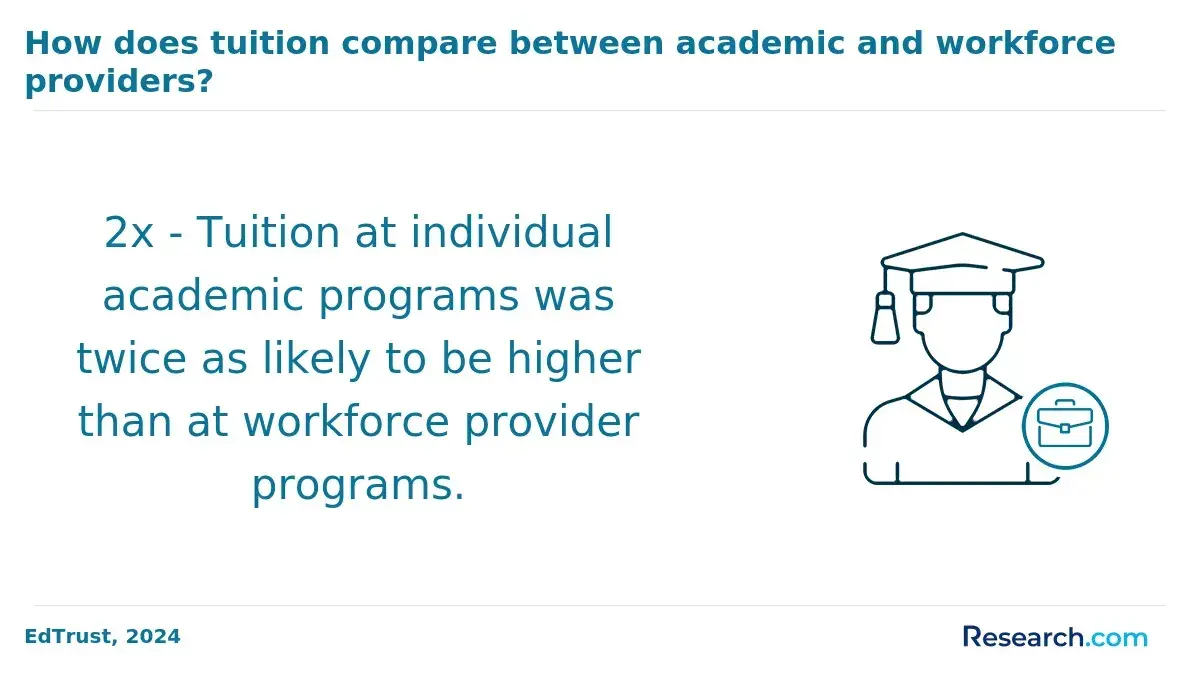
What do online game development degrees cost, and what scholarships or employer aid are available?
Online game development degree costs include more than tuition. You should estimate tuition, mandatory fees, books, engine or software subscriptions if not provided, cloud storage, a capable development computer, peripherals, graduation fees, and the opportunity cost of reducing work hours.
For context, College Board's 2024-25 published tuition and fee averages show how different institution types can change the starting price before grants, scholarships, transfer credits, or employer aid are applied.
- Public four-year, in-state average published tuition and fees: $11,610
- Public four-year, out-of-state average published tuition and fees: $30,780
- Private nonprofit four-year average published tuition and fees: $43,350
Those figures are broad averages, not game-program-specific prices. Your net cost may be lower if you transfer credits, attend part time, receive an institutional scholarship, use military education benefits, or receive employer tuition assistance. It may be higher if the program has specialized technology fees or if you need to upgrade your computer.
Working professionals should compare several aid sources before assuming loans are the only option. The most common routes include the following.
- Institutional merit scholarships based on prior academic performance, portfolio quality, leadership, or transfer GPA.
- Need-based grants and federal aid determined through the FAFSA for eligible students.
- Employer tuition assistance, which may reimburse approved courses or pay the school directly.
- Tax-free employer educational assistance, which can be up to $5,250 per year under current federal tax rules when the employer offers a qualified plan.
- Military and veteran education benefits, including GI Bill benefits and school-specific military tuition policies.
- Professional association, diversity-in-technology, women-in-games, and local community foundation scholarships.
Cost comparison is also about program fit. The same cost discipline you would use when comparing an online animal science bachelor degree applies here: look at total program cost, transfer policies, required equipment, aid renewal rules, and whether the degree supports a realistic career plan.
What game industry jobs can you pursue with an online game programming degree?
An online game programming degree can support several technical and hybrid career paths. The best opportunities usually go to candidates who can show playable projects, clean code, teamwork, and the ability to solve production problems under constraints.
The table below outlines common roles connected to game development training. Job titles vary widely across studios, software companies, simulation firms, education technology companies, and extended reality teams.
| Role | Typical responsibilities | How the degree helps |
| Gameplay programmer | Builds character movement, combat systems, camera behavior, input, abilities, and interactive mechanics | Uses engine scripting, math, debugging, and systems design coursework. |
| Engine or tools programmer | Improves development tools, pipelines, editors, performance, and engine functionality | Requires strong C++, software engineering, and architecture skills. |
| Technical designer | Bridges design and code by scripting mechanics, tuning systems, and prototyping features | Fits students who combine programming ability with design communication. |
| QA automation tester | Creates tests, tracks defects, reproduces bugs, and supports release quality | Can be an entry point for developers who understand coding and production workflows. |
| XR or simulation developer | Builds interactive training, AR, VR, real-time visualization, or serious game applications | Game engine skills transfer well beyond entertainment games. |
| Mobile game developer | Develops gameplay, UI, performance optimization, monetization features, and platform integrations | Benefits from Unity, C#, UI, testing, and analytics exposure. |
Entry-level applicants should not rely on the degree alone. A focused portfolio usually matters more than a long list of class projects. Aim to publish two or three polished samples that show your target specialty, such as a networked prototype, AI behavior demo, optimized 3D scene, tool plug-in, or complete small game.
What salary ranges and job outlook can game programmers and developers expect in the U.S.?
Game programming salaries are difficult to isolate in federal labor data because many game developers are counted under broader software, programming, design, animation, or quality assurance categories. The best way to use salary data is to treat it as a market benchmark, then adjust expectations for location, studio size, experience, specialization, and portfolio strength.
The BLS wage and outlook categories below are useful reference points for U.S. roles that overlap with game programming and development. They are not guarantees for game studio jobs.
| Related BLS category | 2024 U.S. median annual wage | 2023-2033 outlook context | How to interpret it |
| Software developers | $133,080 | Software developers, quality assurance analysts, and testers are projected to grow 17% | Relevant for gameplay, tools, engine, mobile, and simulation developers with strong software skills. |
| Computer programmers | $98,670 | Employment is projected to decline 10% | Shows why narrow coding-only preparation is risky; broader software engineering and engine skills matter. |
| Special effects artists and animators | $99,060 | Employment is projected to grow 4% | Relevant for technical art and real-time visual roles, though programming-heavy jobs may differ. |
The outlook is strongest for professionals who can work across domains: engine development, tools, simulation, XR, AI-assisted workflows, backend services, and performance optimization. A degree can help you build those foundations, but hiring still depends heavily on demonstrated ability and market conditions.
How can working professionals evaluate and choose a reputable online game development program?
A reputable online game development program should be transparent about accreditation, curriculum, faculty experience, technology requirements, student support, portfolio expectations, and total cost. Do not choose based only on flashy game trailers, rankings, or promises about dream jobs.
Use these questions when talking with admissions advisors, faculty, financial aid staff, or current students. Ask for written answers when the answer affects cost, transfer credit, or graduation timing.
- Is the institution accredited by an agency recognized by the U.S. Department of Education or CHEA?
- How many credits will transfer, and will transferred courses count toward major requirements or only electives?
- Which languages and engines are required, and how recently was the curriculum updated?
- Does the program include team-based production, version control, code review, and a capstone portfolio?
- What hardware, software, subscriptions, and fees are required beyond tuition?
- Are courses asynchronous, synchronous, or mixed, and are any live sessions required during work hours?
- What scholarships, employer partnerships, military benefits, and payment plans are available to online students?
- What career services are available for remote students, including portfolio reviews, mock interviews, alumni networking, and internship support?
- Can the school provide outcome information without implying that salaries or jobs are guaranteed?
Red flags include pressure to enroll immediately, vague accreditation language, unclear tuition, refusal to provide a degree plan, limited faculty access, no portfolio requirement, weak transfer-credit transparency, and career claims that sound guaranteed. These warning signs matter in any online degree search, whether you are comparing game development or the best exercise science degree online.
The best choice is the program that fits your target role, budget, schedule, learning style, and risk tolerance. If you need maximum career flexibility, compare game programming against computer science. If you need the fastest affordable path, prioritize transfer credits and employer aid. If you want a studio job, prioritize portfolio quality, team production, and technical depth over brand name alone.
Other Things You Should Know About Game Programming & Development
Applicants usually submit 2 to 4 finished projects, such as playable prototypes, GitHub code samples, or a short game design document. Reviewers often look for evidence of programming skill in C++, C#, Unity, or Unreal Engine, plus clear documentation, teamwork, and problem-solving ability.
Many employers care more about skills, portfolio quality, teamwork, and interview performance than whether courses were online or on campus. Accreditation still matters for financial aid, transfer credit, and graduate study, while your portfolio helps prove job readiness.
Yes, some developers enter through portfolios, modding, bootcamps, QA roles, indie projects, or prior software jobs. However, a degree can provide structure, fundamentals, networking, and eligibility for employers that prefer or require a bachelor's degree.
References
- Top 5 Scholarships for Gamers (2025) and How to Apply https://www.gameindustrycareerguide.com/top-scholarships-for-gamers/
- APPLICATION PROCESS https://colognegamelab.de/study-programs/post-graduate-programs/game-development-research-ma/application/
- Game Developer Salary: Market Overview for Employers | Newxel https://newxel.com/blog/average-game-developer-salary/
- Learn game development | edX https://www.edx.org/learn/game-development
- Masters In Game Design And Game Development Degree Online https://www.computerdegreesonline.org/masters-in-game-design-and-game-development-degree-online/
- Online Game Development Courses: The Path to Mastering Virtual Worlds and Career Success https://macrobiangames.com/blog/online-game-development-courses/
- Game Dev Financing: Explore Different Financial Aid Options https://www.m3dsacademy.com/game-dev-financing-explore-different-financial-aid-options/
- Admissions : Campus Tuition | Full Sail University https://www.fullsail.edu/admissions/tuition
- We help game developers learn and grow https://gamedev.tv/
- Game Design | Vancouver Film School https://vfs.edu/programs/game-design