2027 Online Game Programming and Development Degrees That Prepare Students for Game, XR, or Interactive Software Careers

Co-Founder and Chief Data Scientist
Choosing an online game programming degree is really a decision about software skills, portfolio quality, cost, and career fit. The stakes are high: the U. S. Bureau of Labor Statistics reported a May 2024 median wage of $133,080 for software developers, a broader category that includes many interactive software roles. This guide is for aspiring game developers, XR builders, career changers, and parents comparing online programs. You will learn what these degrees teach, how online formats compare, what reputable schools offer, and how to judge whether a program is worth the investment.
Key Things You Should Know
- Online game programming degrees are strongest when they combine computer science fundamentals, engine-based production, math for graphics and physics, team projects, and a portfolio that shows playable work rather than only coursework.
- Costs vary widely, but College Board data for 2024-25 lists average published tuition and fees at $11,610 for in-state public four-year colleges, $30,780 for out-of-state public colleges, and $43,350 for private nonprofit colleges, before aid and online-specific pricing.
- Game jobs are competitive, so students should evaluate accreditation, transfer credit, faculty industry experience, engine access, capstone quality, internship support, and whether the curriculum also prepares them for adjacent software, simulation, QA, XR, or tools-programming roles.
What is an online game programming and development degree, and who is it best for?
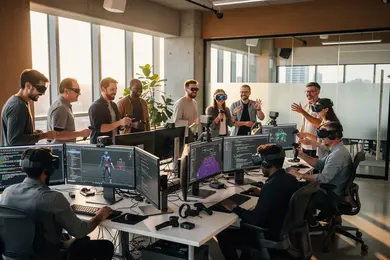
An online game programming and development degree is a college program that teaches students to build interactive software, usually with a focus on video games, real-time engines, simulations, virtual reality, augmented reality, and related user experiences. Unlike a general game design degree, a programming-focused program usually emphasizes coding, data structures, algorithms, graphics, physics, networking, gameplay systems, tools, debugging, and collaborative production.
This degree is best for students who want to write code and solve technical problems, not just imagine game concepts. A strong candidate enjoys math, logic, systems thinking, creative problem-solving, and iterative feedback. Students who want a broader software foundation before specializing may also compare a computer science degree online, especially if they want maximum flexibility across technology careers.
The main degree options differ in depth, timeline, and career flexibility. The table below summarizes common paths so readers can match the credential to their goals rather than choosing by program title alone.
| Credential | Typical focus | Best fit | Limitations to consider |
| Associate degree | Introductory programming, basic game engines, web or mobile fundamentals | Students seeking a lower-cost start, transfer pathway, or entry-level QA and support roles | May not provide enough depth for competitive gameplay programmer roles without additional work |
| Bachelor's degree | Programming, math, engines, software engineering, production, portfolio development | Most aspiring game programmers, XR developers, simulation developers, and interactive software engineers | Requires a larger time and financial commitment |
| Master's degree | Advanced graphics, AI, technical art pipelines, research, systems, production leadership | Career changers with a technical background or developers targeting specialized roles | Not always necessary for entry-level game programming jobs |
| Certificate or bootcamp | Focused tool training in Unity, Unreal Engine, C#, C++, XR, or portfolio production | Students with prior coding experience who need targeted upskilling | Usually lacks the breadth, accreditation, and general education of a degree |
Students should avoid this path if they dislike programming, expect the degree alone to secure a game studio job, or want a purely artistic, narrative, or production-management role. Those goals may fit game art, animation, creative writing, digital media, or project management programs better.
How do online game programming degrees compare to campus-based programs for aspiring developers?
Online and campus-based game programming programs can both prepare students for development careers, but they create different learning environments. The right choice depends on how much structure, collaboration, hardware access, and location-based networking a student needs.
The comparison below highlights practical differences that matter for aspiring developers. It focuses on learning experience and career preparation rather than assuming one format is automatically better.
| Factor | Online game programming degree | Campus-based game programming degree | Decision point |
| Schedule | Often more flexible, with asynchronous lectures and remote projects | Usually follows scheduled class meetings and studio time | Online fits working adults; campus may fit students who need daily structure |
| Collaboration | Uses Git, Discord, learning platforms, video calls, and remote production tools | Allows in-person teams, labs, clubs, jams, and studio spaces | Online students must be proactive about team communication |
| Hardware and labs | Students may need a capable computer, headset, or peripherals at home | Campuses may provide labs, VR rooms, motion capture, and testing spaces | XR students should verify equipment requirements before enrolling |
| Networking | Can include remote career fairs, alumni events, and online portfolio reviews | May offer local studio ties, guest speakers, and in-person showcases | Students targeting a specific regional hub may benefit from campus proximity |
| Cost control | May reduce housing, commuting, and relocation costs | May include higher living costs but more built-in services | Total cost matters more than tuition alone |
Online programs are especially useful for working adults, military students, parents, transfer students, and learners who already have a reliable workstation. Campus programs may be better for students who learn best in a lab setting, want frequent in-person critiques, or need access to specialized equipment such as VR labs, mocap systems, or console development environments.
The trade-off is not simply "online versus campus." A high-quality online program with weekly code reviews, serious capstones, and strong career support can be more useful than a campus program with outdated engines or weak portfolio requirements. Conversely, a campus program with active game jams, studio partnerships, and advanced labs can be worth the extra cost for students who will use those resources heavily.
What accredited U.S. schools offer reputable online game programming and development degrees?
Several accredited U.S. institutions offer online degrees or closely related online programs in game programming, game development, game design and development, interactive media, or simulation. Program names, delivery formats, and accreditation status can change, so students should verify the current catalog, state authorization, and whether the program is fully online before applying.
The table below lists examples of schools commonly considered by online game development students. It is not a ranking; it is a starting point for comparing curriculum fit, accreditation, and technical depth.
| School | Example online program area | Accreditation context | Best-fit student |
| Southern New Hampshire University | BS in Game Programming and Development | Regionally accredited by NECHE | Students who want a bachelor's program with broad online support and a programming-oriented curriculum |
| University of Advancing Technology | Game programming, game design, and related technology degrees | Regionally accredited by HLC | Students seeking a technology-focused school with game, simulation, and emerging-media pathways |
| Wilmington University | Game design and development-related bachelor's study | Regionally accredited by MSCHE | Students comparing flexible online study with applied software and digital media coursework |
| Academy of Art University | Game development and interactive media-related online study | Regionally accredited by WSCUC | Students who want a creative-school environment with game production, art, and development exposure |
| Full Sail University | Game development bachelor's study with online delivery options | Accredited by ACCSC, a national accreditor recognized by the U.S. Department of Education | Students seeking an accelerated, production-heavy format and who understand the transfer and cost implications |
Accreditation matters because it affects federal financial aid eligibility, credit transfer, employer recognition, and graduate school options. Regional accreditation is often the most portable for transfer and graduate admission, but nationally accredited institutions can still be legitimate if they meet a student's goals and financial constraints. The safest approach is to ask receiving schools, employers, or graduate programs how they treat credits from the institution before enrolling.
Students should also look beyond the word "game" in the program title. A reputable program should publish course descriptions, faculty credentials, student work expectations, technology requirements, transfer policies, and a clear pathway to a capstone or portfolio. If those details are difficult to find, that is a sign to ask more questions before committing.
What admission requirements and prior experience are needed for online game programming programs?
Admission requirements vary by school and degree level, but most undergraduate online game programming programs are designed for students entering from high school, community college, military training, or another college major. Prior game development experience helps, but many bachelor's programs do not require a finished game portfolio for admission.
Applicants should expect schools to review several standard materials. These requirements help the school place students correctly and determine whether they are ready for math-heavy and coding-heavy coursework.
- High school diploma, GED, or equivalent documentation for bachelor's admission
- Official transcripts from high school and any colleges previously attended
- Minimum GPA requirements, which vary by institution and may be flexible for adult learners
- Placement or readiness expectations in college algebra, precalculus, or programming foundations
- English proficiency documentation for applicants whose prior education was not in English
- Portfolio, resume, statement of purpose, or interview for some selective or advanced programs
- Transfer credit review for prior college courses, military training, industry certifications, or AP and CLEP exams
The most important preparation is not memorizing a specific engine; it is building comfort with programming logic. Students who have never coded should try an introductory course in Python, C#, JavaScript, or C++ before enrolling. That small step can reveal whether the student enjoys debugging, reading documentation, and breaking problems into small systems.
Graduate programs may expect a bachelor's degree, transcripts, resume, statement of goals, and evidence of technical readiness. A master's program in game development, interactive media, or simulation may admit career changers, but students without prior programming may need prerequisites before they can succeed in graphics, engine architecture, or AI coursework.
What core courses and specializations are included in game programming and XR curricula?
Game programming curricula combine software engineering with real-time interactivity. A strong program should teach students how games and simulations work under the hood, not only how to drag assets into an engine. The best curricula also require students to ship playable projects, because employers often evaluate portfolios as closely as transcripts.
The table below explains common course areas and why each matters. It can help students read catalogs more critically and identify whether a program is technical enough for programming-focused goals.
| Curriculum area | What students learn | Why it matters for careers |
| Programming fundamentals | Variables, functions, object-oriented design, memory concepts, debugging, testing | Forms the base for gameplay, tools, UI, and engine work |
| Data structures and algorithms | Lists, trees, graphs, search, optimization, complexity | Helps developers build efficient systems and perform well in technical interviews |
| Math for games | Linear algebra, vectors, matrices, trigonometry, probability | Supports movement, cameras, physics, graphics, AI, and XR tracking |
| Game engines | Unity, Unreal Engine, Godot, scripting, prefabs, blueprints, scene systems | Connects coding concepts to real production workflows |
| Graphics and rendering | Lighting, shaders, materials, pipelines, performance budgets | Useful for graphics programming, technical art, optimization, and XR |
| Physics and simulation | Collision, rigid bodies, forces, numerical methods, interactions | Important for gameplay systems, training simulations, robotics visualization, and serious games |
| Networking and multiplayer | Client-server design, latency, replication, synchronization, security basics | Prepares students for online games and networked interactive applications |
| Capstone and production | Team development, version control, milestones, playtesting, polish, release planning | Produces portfolio evidence and teaches collaboration under constraints |
Specializations can help students align coursework with a target role. A student interested in VR training systems, for example, should look for XR interaction design, spatial computing, performance optimization, and human factors. A student interested in engine programming should prioritize C++, systems programming, graphics, memory management, and build tools.
AI is also changing the curriculum conversation. Generative tools can speed up prototyping, concept iteration, test-case generation, and code explanation, but they do not replace the need to understand algorithms, performance, debugging, and software architecture. Students should choose programs that teach responsible AI use while still requiring original, working code.
How long do online game programming degrees take, and what do they typically cost?
Most online bachelor's degrees in game programming require about 120 credits. Full-time students often finish in about four years, while transfer students, accelerated learners, and students with prior credit may finish sooner. Part-time students may need longer, especially if they are working while completing math, programming, and project-heavy courses.
Cost depends on tuition, fees, transfer credits, hardware, software, and how long the student remains enrolled. College Board's 2024-25 national averages for published tuition and fees provide a useful benchmark, but online program pricing may differ from campus rates.
- Average published tuition and fees at public four-year in-state institutions: $11,610 for 2024-25
- Average published tuition and fees at public four-year out-of-state institutions: $30,780 for 2024-25
- Average published tuition and fees at private nonprofit four-year institutions: $43,350 for 2024-25
Those figures do not include every online student's real cost. Housing may be lower for online learners who stay at home, but technology costs can be higher if the program requires a game-ready computer, VR headset, external storage, drawing tablet, or paid software licenses. Many programs use student versions of engines and tools, but hardware is often the student's responsibility.
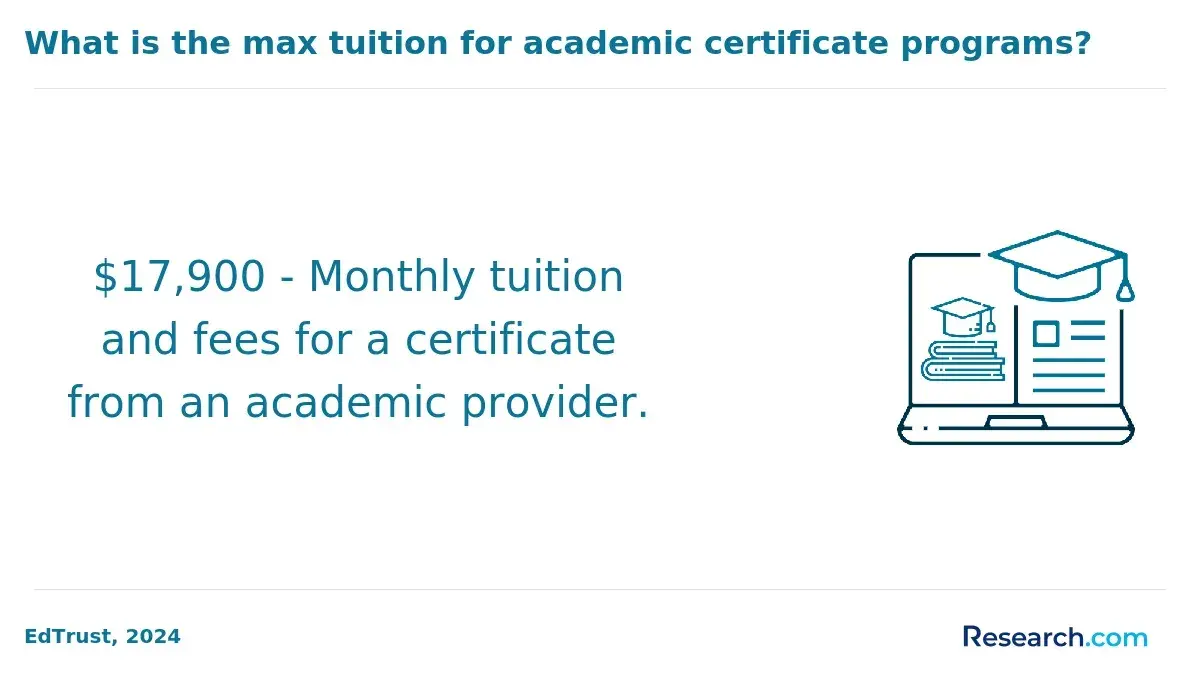
Students can reduce total cost by taking transferable general education courses at a community college, using employer tuition assistance, applying for institutional scholarships, and choosing a program that accepts prior learning or military credit. Loan cost also matters: federal undergraduate direct loans issued for 2024-25 carry a 6.53% fixed interest rate, so borrowing less early can reduce repayment pressure after graduation.
The fastest program is not always the best value. Accelerated schedules can work well for students with prior coding experience and strong time management, but they can overwhelm beginners who need repeated practice. A slower program with strong portfolio feedback may produce better career preparation than a compressed program that leaves little time to build, test, and polish playable projects.
What careers can graduates pursue in game development, XR, and interactive software?
Graduates of online game programming and development programs can pursue roles in entertainment games, XR, simulation, education technology, defense training, healthcare visualization, architecture, product visualization, and general software development. Because game studios can be competitive and project-based, students should prepare for both game-specific and adjacent interactive software roles.
The table below connects common job targets with day-to-day responsibilities. It also shows why a portfolio should include more than one type of project when possible.
| Career path | Typical responsibilities | Portfolio evidence employers may value |
| Gameplay programmer | Build player controls, combat systems, camera behavior, UI interactions, and gameplay features | Playable prototypes with clean code, responsive input, and documented design choices |
| Engine or systems programmer | Work on performance, memory, rendering pipelines, build systems, and platform integration | C++ projects, optimization demos, graphics samples, and technical writeups |
| XR developer | Create VR, AR, or mixed-reality interactions for training, entertainment, education, or enterprise use | Immersive demos showing spatial interaction, comfort considerations, and device performance |
| Tools programmer | Build internal tools that help artists, designers, and developers work faster | Editor extensions, asset pipeline tools, automation scripts, and usability documentation |
| Technical artist | Bridge art and engineering through shaders, rigging tools, procedural workflows, and optimization | Shader graphs, performance-conscious visual effects, pipeline tools, and before-and-after examples |
| Quality assurance analyst or test engineer | Test gameplay, track bugs, reproduce issues, automate tests, and communicate defects | Bug reports, test plans, automation samples, and evidence of analytical problem-solving |
| Simulation developer | Develop interactive training, physics-based systems, digital twins, or visualization tools | Real-time simulations with measurable behavior, data integration, and clear user goals |
Entry-level candidates often begin in QA, junior gameplay programming, technical support, tools scripting, or internships. Advancement usually depends on code quality, shipped projects, teamwork, and the ability to learn production pipelines quickly. A degree can help open doors, but the portfolio shows whether a candidate can build working interactive systems.
Students who enjoy the technical side of games but want less volatility may target adjacent sectors such as training simulation, edtech, digital health, manufacturing visualization, or enterprise XR. These roles may use many of the same engines and skills while being less dependent on consumer game release cycles.
What salary ranges and earning potential exist for game programmers and interactive developers?
There is no single federal salary category for "game programmer," so students should use broader U.S. labor categories as salary proxies. The most relevant comparisons usually include software developers, special effects artists and animators, web and digital interface developers, and software quality assurance analysts and testers.
The table below uses U.S. Bureau of Labor Statistics May 2024 wage data where applicable. These figures are not promises for graduates; they are labor-market reference points that vary by employer, region, experience, specialization, and portfolio strength.
| Role or proxy category | Relevant to game and XR careers | May 2024 median annual wage | How to interpret it |
| Software developers | Gameplay, tools, simulation, XR, engine, and interactive software roles | $133,080 | A useful upper-level proxy for programming-heavy roles, especially outside entry-level game jobs |
| Software quality assurance analysts and testers | Game QA, automation testing, build verification, and test engineering | $102,610 | Relevant for students entering through testing or technical QA pathways |
| Special effects artists and animators | Technical art, real-time visual effects, animation tools, and game art-adjacent roles | $99,060 | Useful for hybrid creative-technical paths, not pure programming roles |
| Web and digital interface designers | Interactive media, UI, web-based games, and digital experience roles | $98,540 | Helpful for students who combine front-end development with interactive design |
Salary potential tends to rise when a graduate can move beyond entry-level implementation into systems, optimization, tools, graphics, AI, networking, or leadership. Location matters too: studios and technology employers in higher-cost metro areas may pay more, but living costs and competition can also be higher.
Advanced study is not required for most game programming jobs, but it can make sense for research-heavy careers in simulation, AI, procedural systems, computer vision, or analytics-driven interactive platforms. Students considering that direction may eventually compare options such as an online data science PhD, although that path is usually better suited to experienced technical professionals than new undergraduates.
What certifications, tools, and technical skills do employers expect from game programming graduates?
Employers usually care less about generic certificates and more about whether a candidate can build, debug, profile, and explain real projects. Still, certifications can be useful when they validate tool fluency, cloud skills, security awareness, or specialization in a widely used platform.
The following skills and tools appear frequently in game, XR, simulation, and interactive software work. Students should use this list to compare curricula and plan portfolio projects.
- Programming languages: C++, C#, Python, JavaScript, and sometimes Lua or Rust depending on the engine and studio
- Engines and frameworks: Unreal Engine, Unity, Godot, custom engines, WebGL, OpenXR, ARKit, and ARCore
- Software practices: Git, code review, unit testing, debugging, profiling, build systems, documentation, and agile production workflows
- Technical domains: linear algebra, physics, rendering, animation systems, networking, UI systems, data structures, algorithms, and performance optimization
- Production tools: Jira, Perforce, Blender, Maya, Houdini, Photoshop, Substance tools, Visual Studio, Rider, and continuous integration tools
- Professional habits: readable code, milestone planning, playtesting, constructive feedback, accessibility awareness, and clear communication with artists and designers
Relevant certifications may include Unity certifications, Unreal Authorized Training credentials, AWS or Azure cloud certifications, CompTIA credentials for technical foundations, or platform-specific XR training. A certificate is most useful when it supports a visible project, such as a multiplayer prototype using cloud services or a VR training demo optimized for a specific headset.
AI skills are becoming more valuable, but students should treat AI as a development aid rather than a substitute for fundamentals. Developers who understand prompt-assisted coding, procedural generation, NPC behavior, analytics, and responsible content workflows may have an advantage, especially when combined with strong software engineering. Students who want to move deeper into machine learning can compare options such as the cheapest online masters in artificial intelligence after they have a solid programming base.
How can students evaluate and choose a high-quality online game programming program?
Choosing a high-quality online game programming program requires more than scanning tuition, rankings, or marketing videos. The best decision comes from matching the program's technical depth, format, cost, support, and outcomes to the career you actually want.
Use the steps below to evaluate programs in a practical order. This sequence helps prevent the common mistake of falling in love with a program before checking whether it is affordable, accredited, and aligned with your target role.
- Confirm institutional accreditation through the school and the U.S. Department of Education-recognized accreditor, then ask how credits transfer to other institutions.
- Read the course catalog and look for programming depth, math, software engineering, engines, graphics, physics, networking, and capstone production.
- Ask whether the program requires individual and team projects that result in playable portfolio pieces.
- Check faculty backgrounds for experience in software development, game production, simulation, XR, technical art, or related research.
- Request a complete cost estimate that includes tuition, fees, hardware, software, books, portfolio tools, and expected time to completion.
- Ask how online students receive feedback on code, design decisions, sprint work, and capstone milestones.
- Review career services, internship access, alumni outcomes, portfolio reviews, employer events, and support for remote job searches.
- Compare transfer credit, prior learning credit, military credit, and part-time policies before assuming the published timeline applies to you.
Red flags deserve special attention. Be cautious if a school cannot clearly explain accreditation, hides total cost, overpromises job placement, uses outdated tools, has little evidence of student work, or treats game development as mostly theory without production. Also be wary of programs that emphasize one engine so heavily that students do not learn transferable software principles.
Good program selection habits apply across online education, even outside technology. For example, a student comparing an online nutritionist degree would also need to check accreditation, career alignment, state requirements, cost, and outcomes; game programming students should be just as careful, even though the licensing issues are usually different.
The best final shortlist usually includes three to five programs: one lower-cost option, one best-fit curriculum option, one flexible schedule option, and one reach option with especially strong portfolio or industry connections. After that, the deciding factor should be evidence: sample courses, student projects, transfer evaluation, written cost estimate, and direct answers from admissions or program faculty.
Other Things You Should Know About Game Programming & Development
It can be worth it if the program is accredited, technically rigorous, affordable for your situation, and produces a strong portfolio. It is less likely to be worth it if you want a game job but avoid programming, math, team projects, or independent portfolio work.
Many employers care more about skills, portfolio quality, code samples, collaboration, and shipped projects than whether the degree was earned online or on campus. Accreditation and school reputation still matter, especially for internships, graduate study, and employers with formal degree requirements.
Game programming, computer science, software engineering, and simulation or interactive media can all work. The best choice is the one that teaches strong programming, data structures, algorithms, math, debugging, version control, and real-time engine development.
Most programs require a Windows 11 or macOS computer with at least 16 GB RAM, a quad-core CPU, and broadband internet for live labs. Students usually install Unity, Unreal Engine, Git, Visual Studio, and a 3D tool such as Blender for coursework and portfolio projects.
References
- What to Look for in a Game Design Program https://www.princetonreview.com/college-advice/game-design/researching-game-design-programs
- Study to become a Game Programmer - Futuregames Warsaw https://futuregames.se/pl/program/game-programmer/
- Decoding Game Development and Programming Salaries: A Comprehensive Guide https://ghanitricks.com/
- 8 Best Game Development Courses for 2025: Build Your Dream Game — Class Central https://www.classcentral.com/report/best-game-development-courses/
- Salaries in game development industry | InGame Job https://ingamejob.com/en/salaries
- M. Des. in Game Design and Extended Reality (XR) https://www.pearlacademy.com/programs/masters-degree/communication-design/mdes-game-design-extended-reality
- Learn Coding & Math Online | Modern Age Coders https://learn.modernagecoders.com/courses
- UWS Creative Computing Technologies Research Group https://uwscct.co.uk/publications
- Game Development Degrees: What You Need to Know https://www.ivywise.com/ivywise-knowledgebase/gaming-majors/
- Game Developer Skills: What You Need to Know to Succeed https://www.dice.com/career-advice/game-developer-skills-what-you-need-to-know-to-succeed