2027 Online Game Programming and Development Degrees That Help Build Scripting Skills

Co-Founder and Chief Data Scientist
Choosing an online game programming degree means deciding whether a structured degree, portfolio path, or shorter certificate best fits your career goals. The demand is real: the Entertainment Software Association reported in 2024 that about 190.6 million Americans play video games, keeping studios, simulation firms, edtech companies, and interactive media teams focused on skilled developers. This guide is for students comparing accredited online programs, scripting-heavy curricula, costs, admissions, timelines, and job outcomes so they can choose a program with clearer return-on-investment expectations.
Key Things You Should Know
- Online game programming degrees are best for students who want software-development depth, especially in C#, C++, Python, Lua, Unity, Unreal Engine, gameplay systems, and portfolio-based production.
- College Board's 2024 pricing data shows average published tuition and fees of $11,610 for in-state public four-year colleges and $43,350 for private nonprofit four-year colleges, so total cost can vary widely by school type and transfer credit.
- BLS data updated in 2024 shows software developer roles have a median annual wage above $130,000, but game-specific jobs are competitive and usually require a strong playable portfolio, not just a diploma.
What is an online game programming degree?
An online game programming degree is a college program that teaches students how to build interactive software for games, simulations, virtual environments, and real-time applications. Unlike general game design programs, which may focus more on story, level design, art direction, and player experience, game programming programs emphasize code, tools, systems, debugging, and performance.
The core difference is the role you are preparing for. A game designer decides how a mechanic should feel; a game programmer makes that mechanic work reliably inside an engine. A game artist creates assets; a technical artist or tools programmer may build scripts that import, optimize, or automate those assets. Because modern games depend on engines and rapid iteration, scripting skills are often the bridge between creative ideas and working prototypes.
Online game programming degrees usually appear under several names. The label matters less than the curriculum, faculty experience, accreditation, and portfolio requirements.
| Program label | Best fit | What to inspect before enrolling |
| Bachelor's in Game Programming | Students who want coding-heavy preparation for gameplay, engine, tools, or simulation roles. | Confirm courses in C++, C#, data structures, algorithms, physics, engine architecture, and collaborative projects. |
| Bachelor's in Game Development | Students who want a blend of programming, production, design, and game engine work. | Check whether the program is programming-led or design-led; titles can be broad. |
| Computer Science with a Game Development Concentration | Students who want broader software career flexibility beyond the game industry. | Look for game-specific electives, engine labs, and portfolio support in addition to core CS courses. |
| Game Design Degree | Students focused on mechanics, levels, narrative, user experience, or systems design. | Make sure it includes enough scripting if your goal is a technical role. |
A degree is most useful if you want a structured pathway, access to faculty feedback, team projects, internships, career services, and a recognized credential. A shorter certificate or self-study path may be better if you already have a degree, want to add Unity or Unreal skills, or need a portfolio refresh rather than a full credential. The same decision logic applies to other specialized programs: before committing, compare cost, career outcomes, and credential value, much as students do when asking whether is a library science degree worth it.
Which accredited schools offer online game development degrees?
Several accredited U.S. institutions offer online or substantially online programs related to game programming, game development, or game design with technical coursework. Accreditation should be checked at the institutional level through the U.S. Department of Education's recognized accreditor listings or the school's official accreditation page before applying.
The table below highlights examples of schools to consider, not a ranking. Use it as a starting point for comparing format, technical depth, and whether the curriculum matches programming-heavy goals.
| School | Example online degree area | Accreditation context | Best for |
| Southern New Hampshire University | Game programming and development | Institutionally accredited by the New England Commission of Higher Education. | Students seeking a flexible online bachelor's path with applied programming projects. |
| University of Advancing Technology | Game programming or game design-related technology degrees | Institutionally accredited by the Higher Learning Commission. | Students who want a technology-focused school with game and emerging media emphasis. |
| Full Sail University | Game development | Accredited by the Accrediting Commission of Career Schools and Colleges. | Students who prefer an accelerated, production-oriented format and can manage an intensive schedule. |
| Academy of Art University | Game development or interactive media-related study | Institutionally accredited by WASC Senior College and University Commission. | Students interested in combining game production with art, design, and media courses. |
When comparing schools, do not assume that "online" means easier or that "game development" automatically means programming-heavy. Ask admissions advisors for course descriptions, sample syllabi, portfolio requirements, software access rules, and whether students complete team-based projects in Unity, Unreal Engine, or a custom engine.
Students who are drawn to game art, UI, motion graphics, or visual storytelling may also want to compare adjacent creative technology paths such as graphic design graduate programs, especially if they prefer visual production over software engineering.
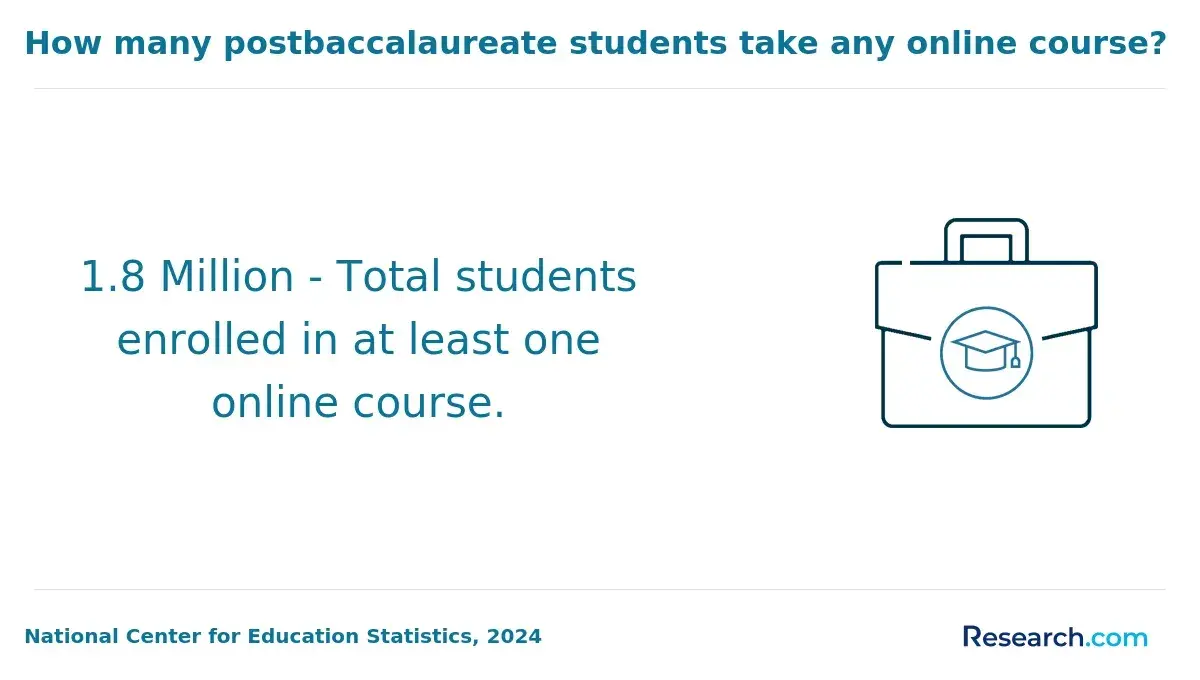
How do online and campus game programming programs compare?
Online and campus game programming programs can lead to similar learning outcomes, but the experience is different. Online programs usually offer more scheduling flexibility, while campus programs may provide easier access to labs, peer collaboration, motion capture spaces, esports facilities, or local studio networks.
The comparison below shows where each format tends to be stronger. The right choice depends on your work schedule, learning style, equipment access, and need for face-to-face collaboration.
| Decision factor | Online program | Campus program | What it means for scripting skills |
| Schedule | Often asynchronous or low-residency, making it easier to study while working. | Usually follows fixed class times and in-person lab schedules. | Online students need strong self-discipline to practice coding consistently. |
| Collaboration | Uses Git, Discord, learning platforms, video meetings, and remote production tools. | Offers in-person team meetings, labs, and informal peer help. | Remote collaboration mirrors many modern software teams, but students must communicate clearly. |
| Equipment | Students may need a capable PC, stable internet, headset, and software licenses. | Campus labs may provide high-end workstations and specialized facilities. | Hardware limitations can slow engine work if your home setup is underpowered. |
| Networking | Depends heavily on virtual events, faculty access, capstones, and online communities. | May offer easier access to campus showcases, guest speakers, and nearby employers. | Portfolio visibility matters more than format, but networking requires more initiative online. |
| Cost control | May reduce commuting and housing costs, though tuition is not always lower. | May include additional housing, transportation, and campus fees. | Lower living costs can improve ROI if the program still offers strong technical outcomes. |
Online study makes the most sense if you are self-directed, can build a weekly coding routine, and want to keep working while earning the degree. Campus study may be better if you learn best through face-to-face critique, need structured lab time, or want a more immersive production environment.
A common mistake is choosing online only because it appears convenient. Before enrolling, test your readiness by completing a small prototype, using version control, and meeting a deadline without in-person reminders. If that feels unmanageable, look for a program with live sessions, smaller classes, tutoring, or structured cohorts.
What courses build scripting skills in game development programs?
Scripting skills are the practical coding skills used to create gameplay events, automate tasks, control characters, manage UI, connect systems, and test features quickly. In game development, scripting often happens inside engines such as Unity and Unreal Engine, but strong programs also teach deeper programming concepts so students are not limited to drag-and-drop tools.
The courses below are especially important because they turn a game idea into working interactive behavior. If a program lacks most of these, it may be more design-oriented than programming-oriented.
| Course area | Typical scripting skill built | Why it matters |
| Introductory programming | Variables, loops, functions, conditionals, debugging, and problem solving. | These fundamentals support every later engine and gameplay course. |
| Object-oriented programming | Classes, inheritance, components, events, and reusable code patterns. | Most game systems rely on modular objects that interact predictably. |
| Unity development | C# scripting for player controls, UI, physics, animation triggers, and game state. | Unity is widely used for indie games, mobile games, VR, AR, and simulations. |
| Unreal Engine development | Blueprint visual scripting, C++ integration, gameplay framework, and optimization. | Unreal is common in high-end games, virtual production, architecture visualization, and simulation. |
| Data structures and algorithms | Efficient storage, search, pathfinding, sorting, and runtime decision-making. | Performance and scalability matter when scenes, enemies, assets, and interactions grow. |
| Game AI | Behavior trees, state machines, navigation, enemy behavior, and decision logic. | AI scripting is central to believable non-player characters and dynamic gameplay. |
| Tools programming | Editor extensions, automation scripts, asset pipelines, and developer utilities. | Studios value programmers who make the entire team faster, not just individual features. |
| Capstone or team production | Version control, code review, sprint planning, bug tracking, and playable delivery. | Employers want proof that you can ship working software with a team. |
Good scripting coursework should result in portfolio artifacts. By graduation, you should have more than assignments; you should have playable prototypes, documented code samples, Git repositories, short demo videos, and at least one polished team project.
Students interested in procedural generation, player analytics, recommendation systems, or AI-assisted development may benefit from extra coursework in statistics, machine learning, and data engineering. If that direction becomes more appealing than game production itself, comparing options such as the best data science masters can help clarify whether a broader technical path offers better career flexibility.
What admissions requirements do online game programming degrees have?
Admissions requirements for online game programming degrees vary by institution and degree level, but bachelor's programs generally look for evidence that the applicant is ready for college-level math, writing, and technology coursework. Most undergraduate programs do not expect applicants to already be professional programmers, though prior coding experience can make the first year easier.
Before applying, gather the materials schools commonly request and ask whether optional items can improve your application or placement level.
- High school diploma, GED, or equivalent credential for first-year applicants.
- Official transcripts from high school and any colleges previously attended.
- Minimum GPA requirement, if the school uses one, plus possible placement review for math or English.
- Application form and fee, although some online schools waive fees during certain periods.
- Personal statement or short essay explaining interest in game programming, software development, or interactive media.
- Portfolio, coding sample, or creative work sample if the program requests or recommends one.
- Transfer credit evaluation for students with prior college, military training, AP, IB, CLEP, or industry coursework.
- English proficiency documentation for applicants whose prior education was not in English.
Math readiness matters more than many applicants expect. Game programming uses algebra, trigonometry, vectors, matrices, probability, and physics concepts. If your math background is weak, ask whether the school offers bridge courses, tutoring, or placement options that do not delay progress unnecessarily.
Red flags include vague admissions promises, pressure to enroll immediately, unclear accreditation statements, and programs that cannot explain how transfer credits apply to major requirements. A reputable school should be able to provide a degree plan, total cost estimate, academic calendar, refund policy, and examples of student work or capstone expectations.
How long do online game programming degrees take to finish?
Most online bachelor's degrees in game programming or game development take about four years of full-time study, but the real timeline depends on transfer credits, course load, term structure, and whether the program uses accelerated sessions. Associate degrees often take about two years, while certificates may take a few months to one year.
The timeline below summarizes common completion paths so you can compare speed against workload and cost. Faster is not always better if it leaves too little time to build a strong portfolio.
| Path | Typical completion time | Best for | Main trade-off |
| Full-time bachelor's degree | About four years | Students who want a complete undergraduate credential and can handle a steady course load. | More time in school, but broader preparation and more portfolio-building opportunities. |
| Transfer-friendly bachelor's degree | About one to three years after transfer, depending on accepted credits | Students with prior college credit or an associate degree. | Transfer credits may cover general education but not always advanced programming courses. |
| Accelerated online bachelor's degree | Shorter than a traditional calendar if courses are compressed | Highly organized students who can code, debug, and submit projects quickly. | Less recovery time between technical courses and a higher risk of shallow portfolio work. |
| Associate degree | About two years | Students seeking lower-cost entry, transfer preparation, or junior technical roles. | May not be enough for some software development roles without additional experience. |
| Certificate or bootcamp-style option | Several months to one year | Students who already have a degree or want a focused engine skill. | Usually narrower than a degree and may carry less weight with employers. |
To avoid timeline surprises, ask whether required courses are offered every term, whether prerequisites can delay progress, and whether capstone courses require a sequence. Also ask how the school handles failed or withdrawn programming courses, because retaking a prerequisite can add a full term or more.
A practical planning approach is to map your weekly time. For a scripting-heavy course, expect substantial hours outside lectures for coding, debugging, asset integration, and testing. If you work full time, part-time enrollment may produce a better portfolio than overloading your schedule and rushing through projects.
How much do online game programming degrees cost?
The cost of an online game programming degree depends on tuition, fees, transfer credits, technology needs, software access, books, and time away from work. Do not compare schools on tuition alone; compare the total amount you are likely to pay to finish the credential.
College Board's 2024 Trends in College Pricing data provides a useful benchmark for published tuition and fees at U.S. colleges. These figures are not game-program-specific, but they help frame the range students may encounter.
- Public four-year, in-state average published tuition and fees: $11,610 for 2024-25.
- Public four-year, out-of-state average published tuition and fees: $30,780 for 2024-25.
- Private nonprofit four-year average published tuition and fees: $43,350 for 2024-25.
- Public two-year in-district average published tuition and fees: $4,050 for 2024-25.
Online students may save on housing and commuting, but they can face other expenses. A game development student may need a capable Windows PC, graphics card, external storage, controller, headset, drawing tablet if taking art courses, and paid software or cloud services if not included by the school.
Use the checklist below when asking schools for cost information. It helps reveal the difference between advertised tuition and actual completion cost.
- Ask for a full program cost estimate, not just cost per credit.
- Confirm how many credits you still need after transfer evaluation.
- Ask whether tuition differs for online, out-of-state, military, or part-time students.
- Check technology fees, graduation fees, course material fees, and proctoring fees.
- Find out whether required software is included or discounted.
- Ask whether scholarships are renewable and what GPA is required to keep them.
- Compare federal aid eligibility, employer tuition assistance, military benefits, and payment plans.
- Estimate opportunity cost if an accelerated schedule reduces your work hours.
The lowest-cost option is not always the best value, and the most expensive option is not automatically stronger. A cost-effective program should combine recognized accreditation, solid scripting curriculum, transfer-friendly policies, career support, and portfolio outcomes that match your intended role.
What jobs can you get with a game programming degree?
A game programming degree can lead to roles inside game studios, but it can also support jobs in simulation, training, education technology, virtual production, defense contracting, healthcare visualization, AR and VR, and general software development. This matters because game jobs can be competitive and project-based, while adjacent industries may offer more stable hiring cycles.
The table below connects common roles to what you would actually do. Use it to decide whether you need a programming-heavy degree, a broader computer science path, or a more design-focused program.
| Job title | Typical responsibilities | Skills employers commonly look for |
| Gameplay programmer | Build player controls, combat systems, camera behavior, UI interactions, and gameplay features. | C++, C#, Unity, Unreal, debugging, math, and strong prototype work. |
| Engine programmer | Work on rendering, physics, memory, tools, optimization, and low-level systems. | Advanced C++, algorithms, computer graphics, performance profiling, and systems thinking. |
| Tools programmer | Create internal software that helps designers, artists, and developers work faster. | Scripting, Python, C#, editor extensions, pipeline automation, and user-centered thinking. |
| Technical designer | Bridge design and engineering by scripting mechanics, balancing systems, and implementing content. | Game design sense, scripting, engine fluency, documentation, and rapid iteration. |
| QA automation tester | Write tests, reproduce bugs, automate workflows, and improve release reliability. | Testing frameworks, scripting, bug tracking, communication, and attention to detail. |
| XR or simulation developer | Build interactive training, AR, VR, or real-time visualization applications. | Unity or Unreal, 3D math, optimization, device testing, and user experience awareness. |
Entry-level candidates usually stand out through evidence, not claims. A strong portfolio should show playable builds, clean code, version control history, short explanations of your technical decisions, and what you personally contributed to team projects.
Common mistakes include applying only to major game studios, showing only finished visuals without code, ignoring non-game interactive roles, and using group projects without clarifying your contribution. If you are comparing career return across majors, resources on fields outside game development, such as high-paying jobs with environmental science degree, can help you think more broadly about how degree choice connects to labor market options.
How much do game programmers earn in the United States?
Game programmer salaries vary by role, employer, location, technical specialization, and experience. The BLS does not publish a single "game programmer" wage category, so the best approach is to compare related U.S. occupations such as software developers, computer programmers, web developers, QA analysts, and special effects artists.
The wage figures below are useful benchmarks, not promises. They show how game-related programming skills may map to broader labor categories used in U.S. employment data.
| Related occupation | Recent U.S. wage or outlook context | How it relates to game programming |
| Software developers | BLS information updated in 2024 lists median annual pay above $130,000 for software developers. | Closest broad category for programmers building production software, tools, engines, or interactive systems. |
| Software quality assurance analysts and testers | BLS projections updated in 2024 group these roles with software developers and show strong overall employment growth for the category. | Relevant for QA automation, gameplay testing tools, and release reliability roles. |
| Computer programmers | BLS data updated in 2024 shows this category has weaker projected growth than software development roles. | Important caution: coding-only roles may be less resilient than roles involving design, architecture, tools, and product development. |
| Special effects artists and animators | BLS data updated in 2024 places this creative technology occupation below top software developer wages but still within a skilled technical-creative labor market. | Relevant for students combining scripting with animation, technical art, real-time effects, or virtual production. |
The main takeaway is that broader software skills improve flexibility. A graduate who can write clean code, use engines, understand algorithms, work with version control, and communicate with designers can pursue more than one labor market. A graduate whose experience is limited to a single game mod or visual scripting tool may have fewer options.
Location also matters. Large game and technology markets often offer higher pay, but they may also have higher living costs and stronger competition. Remote work can widen the search, but junior remote roles are often competitive because employers must trust that new hires can solve problems independently.
What certifications help game programming graduates stand out?
Certifications can help game programming graduates signal specific tool knowledge, but they rarely replace a degree, internship, shipped project, or strong portfolio. The best certification depends on the role you want: gameplay programming, engine development, technical art, cloud-connected games, QA automation, or production support.
Consider certifications that validate tools employers recognize or skills that complement your portfolio. The table below summarizes practical options and where they fit.
| Certification or credential area | Best for | How to use it wisely |
| Unity certifications | Students targeting Unity gameplay, mobile, indie, XR, or simulation projects. | Pair the credential with playable C# projects and a Git repository. |
| Unreal Engine training or badges | Students focused on Unreal gameplay, Blueprint scripting, virtual production, or high-fidelity 3D work. | Show both Blueprint logic and C++ understanding when possible. |
| AWS, Azure, or cloud fundamentals | Students interested in backend services, multiplayer infrastructure, analytics, or live operations. | Use it to support a multiplayer or cloud-connected portfolio project. |
| CompTIA or entry-level IT credentials | Students who want broader technical support, QA, systems, or operations options. | Helpful for flexibility, but less directly relevant to gameplay programming than engine work. |
| Autodesk or digital content creation credentials | Technical artists or tools programmers working with art pipelines. | Most useful when paired with scripts that automate asset workflows. |
Before paying for a certification, search job postings for your target role and count how often the credential appears compared with required skills such as C++, C#, Unity, Unreal, Python, Git, debugging, optimization, and shipped projects. If postings emphasize portfolio evidence over certificates, spend more time building a polished demo.
A smart sequence is to finish a course, build a project, document the project, then add a certification if it strengthens the story. The credential should confirm what your portfolio already shows.
Other Things You Should Know About Game Programming & Development
It can be worth it if the program is accredited, technically rigorous, reasonably priced, and helps you build a portfolio with playable projects. It may not be worth the cost if the curriculum is light on programming, transfer policies are weak, or you only need one engine-specific skill.
Not always. Some programmers enter through portfolios, mods, indie projects, bootcamps, or computer science experience. However, a degree can help with fundamentals, internships, employer screening, and broader software roles if the game industry hiring market is competitive.
Most online game programming degrees require Python, C#, and JavaScript, with C++ often used in advanced engine courses. Programs usually assign at least 12 to 18 credits in scripting, game engines, and interactive systems, and some require a portfolio or basic programming prerequisite before admission.
References
- Game Engineer Certifications: Best Credentials to Advance Your Career | Teal https://www.tealhq.com/career-paths/game-engineer-certifications
- Best Game Programming Certifications This Year https://gamedevacademy.org/best-game-programming-certifications/
- Online Game Development Courses: The Path to Mastering Virtual Worlds and Career Success https://macrobiangames.com/blog/online-game-development-courses/
- Full Guide on Game Developer Salary in 2025 - Qubit Labs https://qubit-labs.com/game-developers-salaries-guide/
- Is Game Programming a Good Career Path? Opportunities, Salary, Outlook - Champlain College https://www.champlain.edu/blog/stories/game-programming-career-path/
- Game Programming Bachelor’s Degree at University of Advancing Technology https://www.uat.edu/game-programming-degree
- Online Game Development Courses | Learn from Top Game Devs https://www.cgspectrum.com/courses/game-development
- Top Colleges for Game Development/Design or Animation https://discussions.unity.com/t/top-colleges-for-game-development-design-or-animation/612982
- Game Development Degrees: What You Need to Know https://www.ivywise.com/ivywise-knowledgebase/gaming-majors/
- Game Developer salary in US https://builtin.com/salaries/us/game-developer