2027 Online BA in Psychology - Addictions: Keeping Broad Research Skills Within an Addictions Focus
Audited and Verified:
Our Editorial and Data Verification Process
Research.com uses government datasets, official education statistics and primary institutional information to support its career and degree guides. Our review process checks factual accuracy, occupational definitions, source dates and the requirements associated with the credentials discussed.
How This Article Was Fact-Checked
Our editorial team verifies salary estimates, employment projections, education requirements and program information against original data providers and official organizations. Salary figures are checked against the relevant occupational definitions and reporting periods. Information about licensure, accreditation and required in-person training is reviewed separately.
Fact-checked and verified on:

Co-Founder and Chief Data Scientist
An addictions focus can make a psychology degree feel more relevant to recovery services—but it can also crowd out the statistics, research methods, and broader theory that keep future options open. This guide is for prospective and returning undergraduates who want both subject-matter depth and transferable research skills. It explains what to look for in the curriculum, how online study affects research experience, and where the degree does and does not lead professionally. Use it to decide whether an addictions-focused BA, a general psychology BA, or a more directly vocational route best fits your goal.
Key Things You Should Know
- Protect the psychology core: compare statistics, research design, measurement, and opportunities to complete a supervised project before choosing an addictions focus.
- A standard full-time bachelor's plan takes about four years; transfer credits may shorten it only if they satisfy the receiving school's actual degree requirements.
- An addictions-focused BA can support research and nonclinical service roles, but it does not itself authorize counseling, diagnosis, or independent treatment.
What is an online bachelor's degree in psychology with an addictions focus?
It is a psychology bachelor's degree that pairs broad study of behavior and psychological science with coursework on substance use, prevention, recovery, and service systems. The focus might be an officially recorded concentration, a set of electives, or an informal emphasis; those are not interchangeable credentials. Confirm what the diploma and transcript will actually say.
The strongest fit for a student who wants to retain research options is a program that builds on—not replaces—the general psychology major. Compare accredited college pathways in addiction psychology by looking beyond the concentration label to their required methods courses and research opportunities.
A general psychology BA may be preferable if its flexible electives let you combine addiction studies with advanced statistics or a faculty-led project. A substance use counseling program may be more direct if your primary goal is a particular state credential, provided its curriculum meets that state's rules.
What careers can you pursue with an online psychology degree in addictions?
With relevant experience, graduates may seek nonclinical positions in recovery outreach, prevention programs, referral coordination, human services, or research support. Duties vary: a program assistant might organize outreach and document service activity, while a research assistant might clean data, track study procedures, and summarize literature. Employers may require additional training, a background check, or a credential for particular duties.
Choose experience that demonstrates the kind of work you want to do. For a research-oriented path, seek supervised work involving literature searches, survey administration under an approved protocol, or basic analysis. For community services, documented experience with referrals, respectful communication, and confidentiality may be more relevant. Neither path makes a BA graduate an independent therapist.
If your target is specifically a counseling job, weigh the role's credential requirements with substance abuse counseling bachelor's program value comparisons; a less expensive degree is poor value if it does not meet the requirements for the job you intend to pursue.
Is an online psychology addictions degree accredited and professionally recognized?
Check the college's institutional accreditation with its recognized accreditor, then check whether any separate approval applies to your intended occupation. Institutional accreditation speaks to the institution; it does not certify that an addictions concentration qualifies graduates for a state counseling credential. APA accreditation is not the standard to expect for a general undergraduate psychology BA.
Ask the school for the exact degree and concentration designation, then ask your state's addiction-counselor credentialing authority whether the coursework would count toward its education requirements. Request an answer about the specific credential, not a general assurance that the degree is "recognized." The same distinction applies when reviewing forensic psychology degree program quality checks: institutional standing, academic focus, and eligibility for regulated work are separate questions.
Course titles vary, but the decision is whether the curriculum gives addiction studies a sound psychological-science foundation. Look for developmental, social, biological, and abnormal psychology alongside statistics and research methods. Addiction-related electives may address substance use across the lifespan, prevention, recovery systems, or the evaluation of interventions. Studying a screening instrument or treatment approach academically is not permission to use it clinically.
For broad research preparation, check whether students can move from introductory statistics to research design, measurement, and an advanced project without scheduling conflicts. An especially useful assignment would require a student to define a research question, assess evidence quality, and explain why an observed association does not establish causation. If the major leaves little room for that sequence, a general BA with addiction electives may serve your goal better.
Students considering later specialization can compare this undergraduate foundation with other fields' graduate offerings, including accelerated forensic psychology master's costs and outcomes. The useful comparison is not which topic sounds more specialized; it is whether your BA preserves the method preparation needed to change research interests later.
A standard full-time bachelor's schedule is about four years, but an individual timeline depends on accepted credits, course availability, enrollment pace, and the order of prerequisites. Online delivery does not remove a statistics prerequisite or guarantee that an advanced research course runs every term.
Ask for a term-by-term degree plan showing when methods, addiction electives, and any capstone are offered. If you are comparing an accelerated schedule, three-year online forensic psychology degree options provide another specialization to examine—but verify that a faster pace still leaves room for substantive research practice. A compressed schedule can be a disadvantage if the only feasible project is a rushed final assignment.
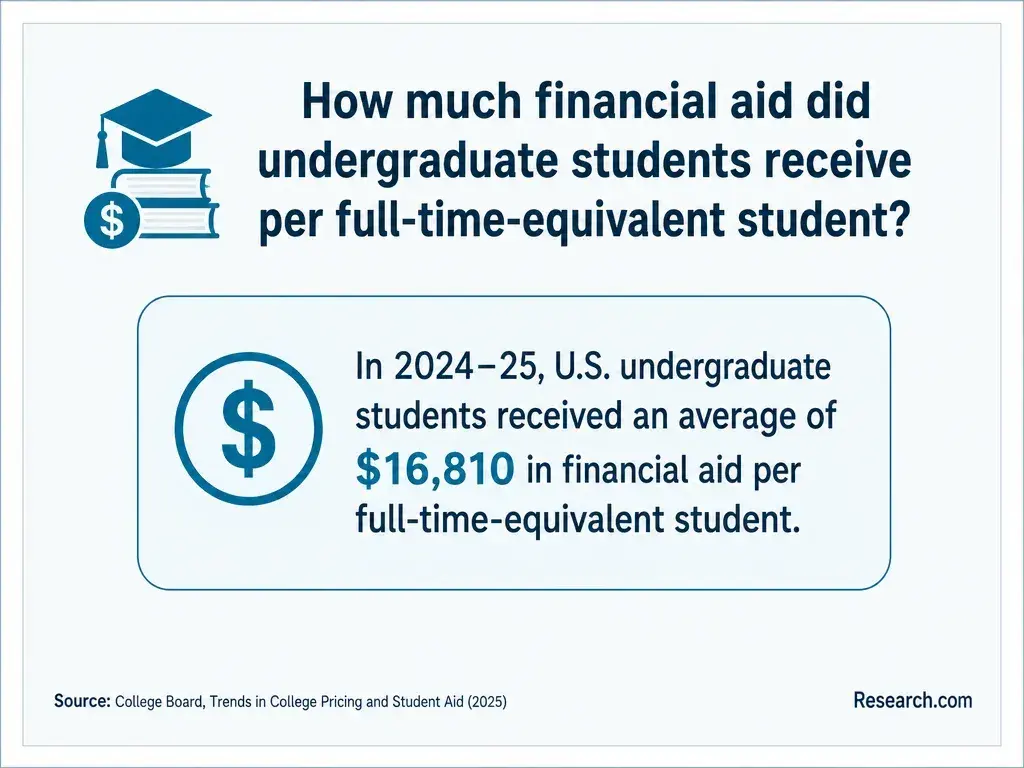
There is no reliable single price for this degree type. Compare each school's charge per credit or term, required fees, remaining credits after evaluation, and costs associated with any placement or campus visit. The relevant total is the cost of completing your degree plan, not an advertised starting tuition rate. Unpaid field experience and reduced work hours can matter as much as course charges.
For potential grants, loans, and other funding, consult online substance use counseling bachelor's aid resources, then confirm your chosen institution's eligibility and enrollment rules with its financial aid office. Before borrowing for an addictions focus, compare its added cost with a general psychology BA plus targeted electives or supervised experience.
Undergraduate entry typically involves an application and prior academic records, but a college may set separate conditions for admission to its psychology major or concentration. Transfer applicants need a further distinction: a school can accept a course for credit without applying it to statistics, research methods, or another major requirement.
Submit transcripts early and request a written degree audit that identifies unmet prerequisites and residency requirements. For help framing questions about equivalencies and appeals, peruse transfer credit reviews for psychology applicants. Do not calculate a completion date or total cost from credits marked "accepted" until the school shows where they apply.
Online study can provide access to the same kinds of academic subjects, but access to research is program-specific. A campus student may have more convenient contact with a lab; an online student may instead work with faculty remotely on literature reviews, coding, or approved datasets. Neither format guarantees mentorship, and an asynchronous course can still have scheduled meetings or group deadlines.
Before enrolling, ask who supervises online research projects, whether students can join ongoing studies, how often faculty meet with them, and whether any placement or residency requires travel. Use these answers—not delivery mode alone—when choosing an online psychology program. If research participation is central to your next step, a campus or hybrid option with confirmed faculty access may be worth the scheduling trade-off.
State addiction-counselor credentials differ in required education, supervised experience, examinations, and permitted duties. A psychology BA with addiction electives may count toward some requirements in a particular jurisdiction, but its title alone proves nothing about eligibility. Peer-support credentials are a distinct route with their own training and lived-experience rules where applicable.
Start with the state authority responsible for the exact credential and request its current education and supervision standards. Compare those standards course by course with a prospective program, and get clarification on any gaps before enrolling. If you ultimately want broader clinical counseling practice, investigate a qualifying graduate route rather than treating undergraduate addiction coursework as a substitute; online mental health counseling master's timelines can help frame the additional time commitment, while state licensure rules determine eligibility.
What salary and job outlook can psychology addictions graduates expect?
No occupation-wide wage figure is an expected salary for graduates of this BA. The US Bureau of Labor Statistics reports pay and employment projections for occupations, not for an addictions concentration. Its substance abuse, behavioral disorder, and mental health counselors category is relevant to the field, but many jobs in that category require qualifications beyond a psychology bachelor's degree; it should not be used as a BA starting-salary estimate.
For a realistic comparison, identify local job postings whose duties and credential requirements you can meet, then compare their stated pay with your likely education costs. Comparing affordable psychology colleges online can help narrow the cost side of that calculation. Research support and community-service jobs may also offer valuable experience even when their immediate pay does not justify taking on substantial debt.
Other Things You Should Know About Psychology
Yes. A well-scoped literature review or study proposal can show question formulation, measurement choices, evidence appraisal, and clear discussion of limitations - even when addiction is the subject.
Possibly, subject to the dataset's terms and your instructor's rules. "Public" does not mean every analysis or republication is unrestricted; check permissions and avoid attempts to identify individuals.
Ask what tasks undergraduates actually perform, how supervision works for online students, and what you could responsibly present in a writing sample or portfolio.
Explain the research skills you used and the questions you learned to investigate. Name the addictions coursework separately from any formal concentration, and do not present classroom study as clinical experience.
- Evidence-Based Practices Resource Center | samhsa.gov https://www.samhsa.gov/libraries/evidence-based-practices-resource-center
- Common Comorbidities with Substance Use Disorders... - NCBI https://www.ncbi.nlm.nih.gov/books/NBK571451/
- Frequently Asked Questions - California Board of Psychology https://www.psychology.ca.gov/licensees/faq.shtml
- How to Become a Licensed Psychologist | Texas Behavioral Health Executive Council https://bhec.texas.gov/texas-state-board-of-examiners-of-psychologists/applying-for-a-psychology-license/how-to-become-a-licensed-psychologist/
- Substance use disorders and addictions series | apa.org https://www.apa.org/education-career/training/substance-use-disorders-series
- Substance Abuse and Addictions Concentration, Counseling and Applied Psychological Science Degree, BS | ASU https://degrees.asu.edu/bachelors/major/ASU00/LSCAPSAABS/counseling-and-applied-psychological-science-substance-abuse-and-addictions
- Mixed Methods Research | harvard.edu https://catalyst.harvard.edu/community-engagement/mmr/
- Course Descriptions | Psychological Science https://psychology.uark.edu/undergraduate/course-descriptions.php
- Online Bachelor's Degree in Psychology | Drexel University Online https://www.online.drexel.edu/online-degrees/arts-and-science-degrees/bs-psychology/index.aspx
- Online Psychology Degrees | Bachelor's (BA) Programs https://www.snhu.edu/online-degrees/bachelors/ba-in-psychology