2027 Online BA in Psychology - Mental Health Admissions with a Pending Final Semester Transcript: What to Ask Before Applying
Audited and Verified:
Our Editorial and Data Verification Process
Research.com uses government datasets, official education statistics and primary institutional information to support its career and degree guides. Our review process checks factual accuracy, occupational definitions, source dates and the requirements associated with the credentials discussed.
How This Article Was Fact-Checked
Our editorial team verifies salary estimates, employment projections, education requirements and program information against original data providers and official organizations. Salary figures are checked against the relevant occupational definitions and reporting periods. Information about licensure, accreditation and required in-person training is reviewed separately.
Fact-checked and verified on:

Co-Founder and Chief Data Scientist
Your final semester is underway, but the online psychology BA application deadline may arrive before your grades do. For transfer and returning students interested in mental health, that timing raises more than a paperwork question: a school might review your application now while postponing admission, credit evaluation, or course registration until it receives your final transcript. This guide explains which decisions can happen before your semester ends, what to ask each admissions office, and how to avoid committing to a program before you know which credits count toward the degree.
Key Things You Should Know
- You may be able to apply with an in-progress transcript, but the program must confirm its policy and the deadline for your final official record.
- Admission, transfer-credit acceptance, application of credits to the psychology major, and graduation eligibility are separate decisions.
- Before paying a deposit, get written answers about conditions, a degree audit, course availability, total remaining requirements, and the consequences if a final grade changes.
Can You Apply to an Online Psychology BA With a Pending Final Transcript?
Often, yes - but only the receiving institution can confirm its policy for your entry term. An in-progress transcript shows completed courses and current enrollment; a final official transcript shows the semester's posted grades and, when applicable, an awarded associate degree. A school may review the first document and require the second before finalizing admission, transfer credit, or registration.
Ask admissions whether you can submit the application now, what evidence of current enrollment it accepts, and the exact date by which the final transcript must arrive. If you are finishing a prerequisite or associate degree, ask whether its successful completion is a condition of admission. Transfer applicants comparing specializations can use guidance on evaluating forensic psychology degree admissions as a reminder to check each program's actual entry rules rather than assuming every online psychology BA follows the same policy.
What Admissions Documents Do Online Psychology Bachelor's Programs Require?
Requirements vary by institution and by whether you apply as a first-year, transfer, or returning student. A typical review may involve an application, transcripts from every college attended, and a high school record or proof of an earlier credential when the school requires it. Some programs also request an essay or evidence of good standing. Ask which records must be official at application and which may follow later.
For your pending semester, assemble a current transcript, course descriptions or syllabi for potentially disputed psychology and statistics courses, and documentation of any degree you expect to receive. Tell admissions about prior enrollment even if those credits seem unrelated. If you are comparing a general major with bachelor's study in addiction psychology online, request the document requirements for each specific option; a concentration may have additional entry rules.
How Can You Verify an Online Psychology Program's Accreditation?
Check the institution's current accreditation status and the scope of that accreditation through the accreditor and the US Department of Education's recognized-accreditor information. Confirm that the institution - not merely a separately named learning platform - awards the BA. Then ask whether the online program falls within the institution's approved offerings and whether any state authorization limits your enrollment location.
Do not mistake institutional accreditation for a promise that a mental-health concentration qualifies you for clinical practice. The American Psychological Association does not accredit general psychology bachelor's programs. Professional accreditation becomes relevant when you evaluate a particular later credential; comparing degrees in addiction counseling, for example, calls for checking the accreditor and state credential rules applicable to the specific counseling pathway.
"Conditional" and "provisional" are institutional policy terms, not interchangeable guarantees. One school might allow registration while awaiting final grades; another might issue an offer but block registration or aid processing. Get the conditions in writing before you accept.
These questions distinguish a workable offer from one that could delay your start:
- What final grade, GPA, prerequisite, or completed credential must I document, and by what date?
- May I register, receive a completed transfer evaluation, and have financial aid reviewed before the final transcript arrives?
- What happens if a course is dropped, its grade changes, or my current school posts the final record late?
- Who can confirm that my pending courses will satisfy specific major or general-education requirements rather than count only as electives?
Request an updated degree audit after the final transcript is evaluated. If you are exploring forensic psychology bachelor's completion planning, the same principle applies: an advertised pace is not your personal completion timeline until the school has applied your credits to its requirements.
Expect general education alongside psychology foundations, research methods, statistics, and upper-level study such as developmental, social, biological, or abnormal psychology. A mental-health focus may add coursework on psychological disorders, addiction, prevention, or service systems. Ask whether that focus is a formally recorded concentration, a suggested elective grouping, or simply a description of available courses.
Your pending courses matter most when they sit early in a sequence. A statistics course accepted for elective credit, for example, may still fail to satisfy the major's statistics prerequisite. Send the syllabus to the psychology department or transfer-evaluation office and ask for a written equivalency decision. If later specialized study interests you, planning a forensic psychology master's in less than two years should start with checking its actual preparation requirements - not assuming that a BA concentration covers them.
Neither answer is reliable until the school completes a degree audit. Credits can be accepted yet apply only as electives; major prerequisites, upper-level requirements, minimum credits earned at the institution, and course scheduling can all extend the timeline. Ask for a term-by-term plan that identifies when required online courses run, including any live sessions, field experiences, or campus visits.
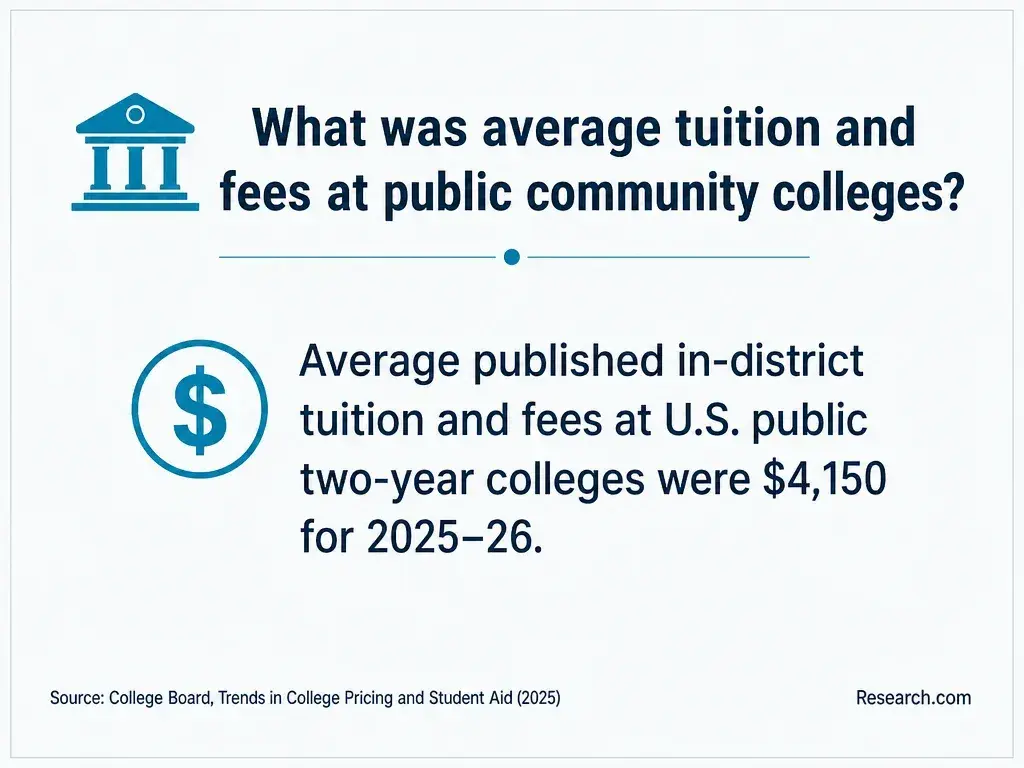
For a useful cost comparison, request the tuition rate that applies to your residency and enrollment status, mandatory fees, expected remaining credits, and any separate costs for materials, travel, or an internship. Ask financial aid how your anticipated course load and pending transcript affect eligibility and disbursement. Economical online psychology program choices are worth comparing, but a lower advertised tuition rate may not produce the lower remaining cost if fewer of your credits satisfy requirements.
An online BA awarded by the same accredited institution can represent the same degree level, but do not assume identical courses, support, or experiences. Compare the catalog requirements and diploma designation, then ask how online students access statistics help, faculty advising, research opportunities, and career services. "Online" also does not necessarily mean asynchronous: group projects, live classes, or approved placements can create fixed commitments.
If graduate study is a possible next step, ask prospective graduate programs about their prerequisites and how they evaluate online coursework. Their answer matters more than a blanket claim that formats are equivalent. Likewise, forensic psychology one-year program value considerations concern a separate graduate decision; the immediate BA decision is whether its teaching format lets you complete strong methods coursework and relevant experience.
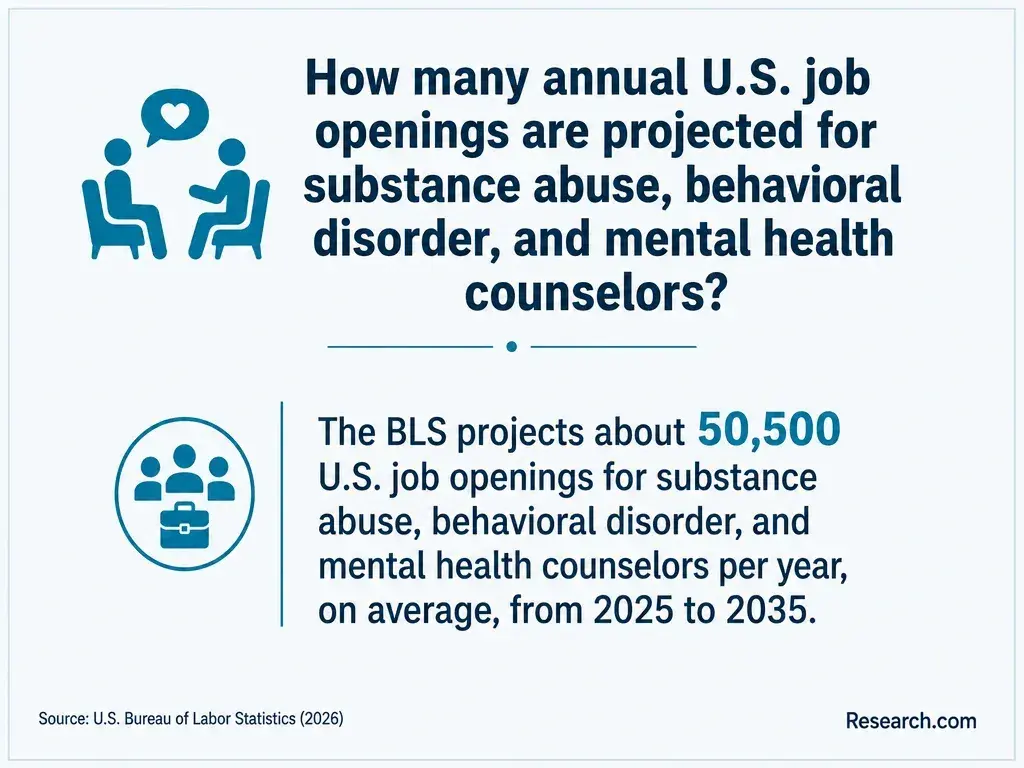
A psychology BA can support applications for nonclinical roles such as human-services assistant, intake coordinator, research assistant, or community-program staff member. Actual duties and hiring standards vary: an employer may prioritize documentation skills, data handling, language ability, or direct service experience over a mental-health concentration. Ask the program how students obtain supervised, nonclinical experience and whether a placement is required, optional, or available to online students.
Study of addiction or mental health can help you understand service settings, but it does not authorize counseling or diagnosis. If substance-use services are your specific goal, weighing tuition against substance abuse counseling career outcomes requires checking the target job's state credential rules and supervised-experience requirements. A shorter, state-recognized training route may be more direct for some support roles.
A psychology BA can provide academic preparation for further training, but it does not by itself qualify someone to practice psychotherapy, diagnose conditions, independently administer restricted assessments, or use a protected clinical title. Counseling, clinical social work, psychology, and other regulated professions have different degree, supervised-practice, examination, and state-board requirements.
If licensure is your goal, identify the intended profession and state before choosing a BA concentration. Check that regulator's rules and the entry requirements of qualifying graduate programs. For example, accelerated clinical counseling degrees and study length are relevant only if the specific graduate program meets the educational rules where you intend to seek licensure; faster study does not remove required supervised training.
What Are the Salary and Job Outlook for Psychology Graduates?
There is no single salary or job-growth figure for "psychology BA graduates." The US Bureau of Labor Statistics reports figures by occupation, not by undergraduate major. To assess an offer, look up the closest occupation in its Occupational Outlook Handbook, then compare the reported duties and typical entry requirements with the job you actually want. An occupation-wide median is not a starting salary or a prediction of what this degree will earn you.
For an education-investment decision, compare likely local job requirements with your school's written estimate of remaining credits and costs. If the role requires graduate education, include that additional commitment; graduate psychology tuition and program value are separate questions from whether you can afford to finish the BA. Do not borrow on the assumption that a mental-health concentration alone will lead to a licensed role or a particular wage.
Other Things You Should Know About Psychology
Possibly. Ask whether the school permits deferral, how long an offer remains valid, and whether tuition, curriculum, or admission conditions could change for the later term.
Do not assume so. Read the school's fee and withdrawal policy before submitting payment, and ask whether an eligible fee waiver is available.
That depends on the catalog and available courses. Ask an advisor whether changing the designation adds requirements or delays graduation.
Yes, students can contact the institution's disability-services office to discuss its process and available accommodations. Start early so you understand how approved arrangements apply to online classes and any placements.
- DAPIP | Homepage - Office of Postsecondary Education (OPE) https://ope.ed.gov/dapip/
- Requirements Related to the Practice of Counseling - NCBI https://www.ncbi.nlm.nih.gov/books/NBK259170/
- Transcript submissions - UC Admissions https://admission.universityofcalifornia.edu/how-to-apply/applying-as-a-transfer/after-you-apply/transcript-submissions.html
- Conditions of Admission FAQs | ucsc.edu https://admissions.ucsc.edu/resources-support/conditions-admission-faq
- What Degree Do I Need to Become a Counselor or Therapist? | Palo Alto University https://paloaltou.edu/resources/blog/what-degree-do-i-need-become-counselor-or-therapist
- Undergraduate Transfer Credit Policy | University of the Pacific https://www.pacific.edu/about-pacific/administrative-offices/office-of-the-registrar/undergrad-transfer-policy
- Types of counseling certifications: what you need to start practicing | Counseling | Capella University Blog https://www.capella.edu/blog/counseling/types-of-counseling-certifications-what-you-need-to-start-practicing/
- Undergraduate Transfer Credit - Stanford Student Services https://studentservices.stanford.edu/my-academics/earn-my-degree/undergraduate-degree-progress/test-transfer-credit/undergraduate
- Program: Psychology, B.A. | csuohio.edu https://catalog.csuohio.edu/preview_program.php
- Provisional and Conditional Admission to the Graduate School | University of Louisiana at Lafayette https://louisiana.edu/graduateschool/admissions/after-you-apply/provisional-and-conditional-admission-graduate-school