
2027 Online BA in Psychology - Mental Health Admissions with Professional References from More Than Five Years Ago: What to Ask Before Applying
Audited and Verified:
Our Editorial and Data Verification Process
Research.com uses government datasets, official education statistics and primary institutional information to support its career and degree guides. Our review process checks factual accuracy, occupational definitions, source dates and the requirements associated with the credentials discussed.
How This Article Was Fact-Checked
Our editorial team verifies salary estimates, employment projections, education requirements and program information against original data providers and official organizations. Salary figures are checked against the relevant occupational definitions and reporting periods. Information about licensure, accreditation and required in-person training is reviewed separately.
Fact-checked and verified on:

Co-Founder and Chief Data Scientist
If you are returning to college after years in the workforce, your strongest professional references may come from supervisors who knew you more than five years ago. Whether those references work for an online BA in psychology depends on the school's application rules, not a universal cutoff.
This guide helps you distinguish an old working relationship from an old letter, ask admissions for a usable answer before applying, and assess whether a mental health-focused psychology degree fits your career goal.
Key Things You Should Know
- There is no universal five-year limit on professional references for online psychology bachelor's admission; the program's current instructions control.
- A newly written letter from someone who supervised you more than five years ago may be treated differently from a letter written five years ago. Ask which dates matter.
- A psychology BA can prepare you for nonclinical mental health support work, but it does not qualify you to diagnose conditions or provide psychotherapy independently.
What does an online BA in psychology prepare you to do in mental health?
A psychology BA develops knowledge of behavior, development, research, and mental health as an academic subject. Combined with relevant experience, it may support applications for nonclinical roles involving outreach, service navigation, intake administration, referrals, or program support. Employers determine the qualifications and permitted duties of each position.
A mental health or addictions focus may make electives more relevant to a particular service setting, but it is not treatment training or a professional credential.
If recovery services interest you, compare bachelor's study in addiction psychology online with the actual requirements of jobs in your state. Your earlier work in community services, education, healthcare administration, or another field may also provide evidence of skills that a degree alone cannot demonstrate.
Can older professional references meet online psychology program admission requirements?
Possibly. Some bachelor's programs do not request recommendations at all; others ask for professional or academic recommenders, and some specify how recent the relationship or letter must be. Neither a reference's age nor an applicant's time away from school creates a universal admissions bar.
Clarify what "older" means. A former supervisor who last worked with you more than five years ago can write a new, detailed recommendation.
A letter drafted years ago may fail a requirement for a current submission, even if its author remains an acceptable recommender. An office may also require the recommender, not the applicant, to submit the letter through its application system.
For returning students, references are only one part of the application decision. If you have previous college study, use guidance on planning a psychology degree with previous college study, then request an official evaluation from each school. Admission, acceptance of a credit, and application of that credit to the psychology major are separate decisions.
What should you ask admissions offices about references more than five years old?
Contact the admissions office for the specific online BA and entry term before paying an application fee. Describe both when the recommender knew your work and when the letter would be written; otherwise, an answer about "old letters" may not resolve your situation.
These questions should produce a policy you can act on:
- Are recommendations required for my applicant category, or only for certain transfer, scholarship, or special-admission reviews?
- Is there a recency limit on the working relationship, the letter's date, or both?
- Will a former supervisor who knew me more than five years ago qualify if they submit a newly written letter?
- If not, can a current manager, volunteer coordinator, instructor, or other professional contact substitute, and who approves exceptions?
- What must the recommender address, and how and when must they submit it?
Ask for the answer by email or request a link to the policy that applies to your entry term. A useful older recommender can describe specific responsibilities and observed strengths; give them an updated résumé and your intended course of study, but do not ask them to imply they observed work they did not see.
If your eventual goal is licensed counseling, check that next program's admissions rules separately. Comparing tuition-conscious mental health counseling degree choices is useful only after confirming that each option meets your intended state's educational requirements; approval of an older reference for a BA does not carry over to graduate admission.
No. The American Psychological Association does not accredit bachelor's psychology programs. Check the institution's accreditation status with its recognized institutional accreditor and verify that the online BA is awarded by that institution.
Institutional accreditation matters for considerations such as federal aid eligibility and further study, but it does not establish that a particular psychology concentration meets a licensing requirement.
Apply the same distinction if you later consider a specialty degree. For example, a short forensic psychology master's intensive study option should be evaluated for its actual curriculum and outcomes, not described as APA-accredited simply because it teaches psychology. Professional accreditation, where applicable, depends on the type and level of program and the credential you intend to pursue.
Expect a mix of general education and psychology courses. Major requirements commonly cover foundational psychological science, statistics, research methods, and areas such as development, social behavior, cognition, and biological or behavioral processes.
Mental health-related courses may examine psychopathology, substance use, prevention, or service systems without preparing students to deliver treatment.
For an applicant returning to school, the decisive question is which requirements remain after an official degree audit. A previous statistics course might receive elective credit without satisfying the major's methods sequence. Ask whether prerequisites delay enrollment in upper-level courses and whether any internship, capstone, or live meeting requires a fixed schedule.
If your target is substance-use-disorder counseling rather than broad psychology study, compare the BA's courses with choosing an addiction counseling degree route. State credential rules, not a course title or concentration name, determine whether the education advances that goal.
Your remaining credits, course sequence, enrollment pace, and the school's residency rules determine completion time. A school may accept prior credits yet still require additional psychology courses offered in a particular order.
Request a written degree audit and a sample term-by-term schedule before relying on an advertised completion timeline.
For cost, compare the price of the remaining required coursework, not tuition per credit alone. Include mandatory fees, books or software, possible travel, and any unpaid applied experience. Ask financial aid staff how your planned enrollment pace affects aid eligibility and whether employer assistance is available.
If you are weighing a different undergraduate route, guidance on financial aid for substance abuse counseling bachelor's degrees can help frame the funding questions, but your school must confirm your individual aid package.
An online BA awarded by the same institution can lead to the same academic credential as a campus BA, but that does not mean the learning experience or practical opportunities are identical.
Compare access to faculty, research participation, advising, internships, and career services. Ask whether the transcript or diploma identifies the delivery format if that matters to you.
Online also does not necessarily mean self-paced. Live classes, group projects, proctored assessments, and placements can constrain a working adult's schedule.
When choosing an accelerated psychology degree route, verify the weekly workload and course availability rather than assuming a shorter calendar makes the program easier to combine with employment or caregiving.
Requirements depend on the job and state. Nonclinical outreach, intake, and service-coordination positions may be open to bachelor's applicants, sometimes with additional experience or employer training.
Independent psychotherapy, diagnosis, and other regulated clinical work require the applicable professional education, supervised experience, examinations, and state authorization; a psychology BA alone does not provide them.
Counseling, social work, psychology, and addiction counseling are distinct pathways. If therapy is your objective, identify the state and license first, then verify which degree programs meet its rules. Planning the time and cost of a counseling master's is more relevant to that objective than assuming a mental health-focused BA is itself a clinical qualification.
Depending on your existing education, the BA may be useful preparation, an unnecessary second bachelor's degree, or one step before further training.
Potential jobs include behavioral-health program assistant, intake coordinator, community outreach worker, victim-services assistant, or research support worker. Titles are not standardized: one employer may require a bachelor's degree while another prioritizes direct service experience, a background check, or a specific credential.
Your previous professional experience may be particularly valuable when a role involves documentation, communication, or coordinating services.
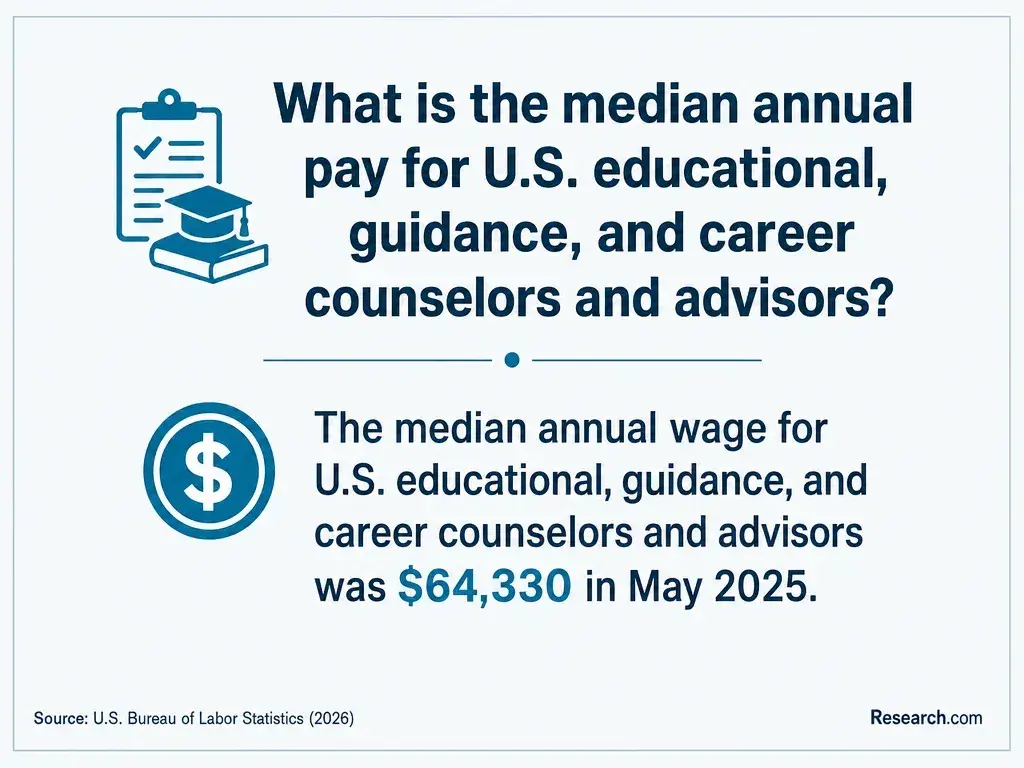
Do not treat the wage for a broad occupation as the expected salary from a psychology BA. For a useful salary comparison, choose a specific job title and location, inspect current postings, and compare them with the corresponding US Bureau of Labor Statistics occupational data, noting its wage reference year and whether the occupation includes workers with different qualifications.
Forensic-related support work illustrates why duties matter more than an attractive concentration name. Forensic psychology admissions and education planning can inform a longer-term choice, but a psychology BA does not confer investigative authority, qualify someone to conduct forensic evaluations, or make them a forensic psychologist.
How can you evaluate an online psychology program's quality and outcomes?
Start with evidence tied to your decision: current admission instructions, institutional accreditation, an official transfer evaluation, required-course schedules, total remaining cost, and access to advising and applied learning.
Ask how the school supports students returning after a long academic gap and whether faculty can later provide academic recommendations if you pursue graduate study.
Request completion and career information for the online psychology program where available, including the period measured and which students were counted. A school-wide employment claim cannot show what happened to psychology graduates, and an outcome reported only for respondents may omit graduates who did not reply.
Compare the program against your next step, not against marketing promises. If you anticipate a later specialized master's, even planning a forensic psychology master's in less than two years requires a separate check of prerequisites, scheduling, costs, and career relevance.
Before applying to the BA, get written answers about your older references and a degree audit; those two documents address the most immediate risks of an avoidable rejection or an unexpectedly long route to graduation.
Other Things You Should Know About Psychology
Often, if the program accepts professional recommenders and the supervisor can describe your work firsthand. Confirm whether the school requires a current organizational affiliation or email address.
Follow the application's instructions and make an informed choice. Waiving access may reassure a recommender that the letter is confidential, but it does not change the school's eligibility rules for that recommender.
Ask admissions whether the recommender can submit from a new work address or a personal email. Make sure the letter identifies when and where they supervised you.
That depends on the application system and the school's deadline policy. Contact admissions promptly rather than assuming a submitted or late letter can be exchanged.
- Roles & related school programs | mass.gov https://www.mass.gov/info-details/roles-related-school-programs
- Registered Mental Health Counselor Intern | floridasmentalhealthprofessions.gov https://floridasmentalhealthprofessions.gov/registered-mental-health-counselor-intern/
- Labor Relations Selection Reference Check Guidelines | CalHR Website https://www.calhr.ca.gov/labor-relations-selection-reference-check-guidelines
- Requirements Related to the Practice of Counseling - NCBI https://www.ncbi.nlm.nih.gov/books/NBK259170/
- Recommendation letters | Helpful resources | The Ohio State University https://gpadmissions.osu.edu/resources/recommendation-letters.html
- How Do Transfer Credits Work When You Go Back to School? | Whitworth Online https://online.whitworth.edu/news-articles/how-do-transfer-credits-work-when-you-go-back-to-school/
- Bachelor of Psychology Online Degree | University of Florida Online https://ufonline.ufl.edu/degrees/undergraduate/psychology/
- Recommendation Information for Referees | Penn CURF https://curf.upenn.edu/fellowships/how-can-i-prepare-apply/recommendation-information-for-referees
- Educational Requirements for LMHC in Massachusetts | William James College https://www.williamjames.edu/academics/counseling/clinical-mental-health-counseling-ma-online/licensure/LMHC-requirements-Massachusetts.html
- Preparing to Use Your Bachelor's Degree in Psychology | apa.org https://www.apa.org/education-career/guide/bachelors


