2027 Online BA in Psychology - Mental Health: Choosing a Degree for Nonclinical Work in a Multidisciplinary Care Team
Audited and Verified:
Our Editorial and Data Verification Process
Research.com uses government datasets, official education statistics and primary institutional information to support its career and degree guides. Our review process checks factual accuracy, occupational definitions, source dates and the requirements associated with the credentials discussed.
How This Article Was Fact-Checked
Our editorial team verifies salary estimates, employment projections, education requirements and program information against original data providers and official organizations. Salary figures are checked against the relevant occupational definitions and reporting periods. Information about licensure, accreditation and required in-person training is reviewed separately.
Fact-checked and verified on:

Co-Founder and Chief Data Scientist
A multidisciplinary mental health team needs people who coordinate services, support clients, document needs, and connect communities with care - not only licensed clinicians. If you want to contribute in a nonclinical role, an online psychology BA may provide useful preparation, but its value depends on the job you want and the experience you can gain while studying.
This guide explains what the degree teaches, where its boundaries lie, and how to compare programs against employer requirements, supervised opportunities, cost, and more direct alternatives.
Key Things You Should Know
- An online psychology BA can prepare you for nonclinical support and coordination work; it does not qualify you to diagnose conditions or provide psychotherapy.
- For many entry-level roles, relevant supervised experience and employer-required training matter alongside the degree.
- Compare programs on access to both. A bachelor's degree commonly requires about 120 semester credits, but transfer decisions, tuition, and required placements determine your actual time and cost.
What is an online BA in psychology focused on mental health?
An online BA in psychology focused on mental health is an undergraduate psychology degree that pairs broad study of behavior and research with coursework about mental disorders, prevention, recovery, or service systems. "Mental health focus" might mean an official concentration, a group of electives, or simply a program description. Check the catalog to see which designation, if any, appears on the transcript.
For a prospective care-team worker, the distinction matters less than whether the program teaches evidence literacy, respectful communication, and the boundaries of support work. A forensic specialization, for example, serves a different set of interests; comparing forensic psychology degree formats and academic requirements can help clarify why a specialization's name should not substitute for a review of its actual courses. Neither focus grants clinical authority.
Can a bachelor's degree in psychology lead to nonclinical mental health careers?
Yes, a psychology bachelor's degree can support entry into some nonclinical mental health jobs, particularly when paired with experience in human services, community outreach, disability services, or healthcare administration. On a multidisciplinary team, a graduate might help clients navigate appointments and resources, record service contacts, or communicate referrals to qualified colleagues. Employers determine job qualifications, and duties must stay within agency policy and state law.
Start with the population and tasks you want to serve. Someone already working in a nonprofit may benefit more from an approved work-based project or targeted training than from repeating introductory coursework. Someone changing careers may need direct client-facing experience before a degree becomes a competitive advantage. If recovery services interest you, review addiction recovery job families and distinguish peer or outreach positions from substance-use counseling roles that require a state-recognized credential.
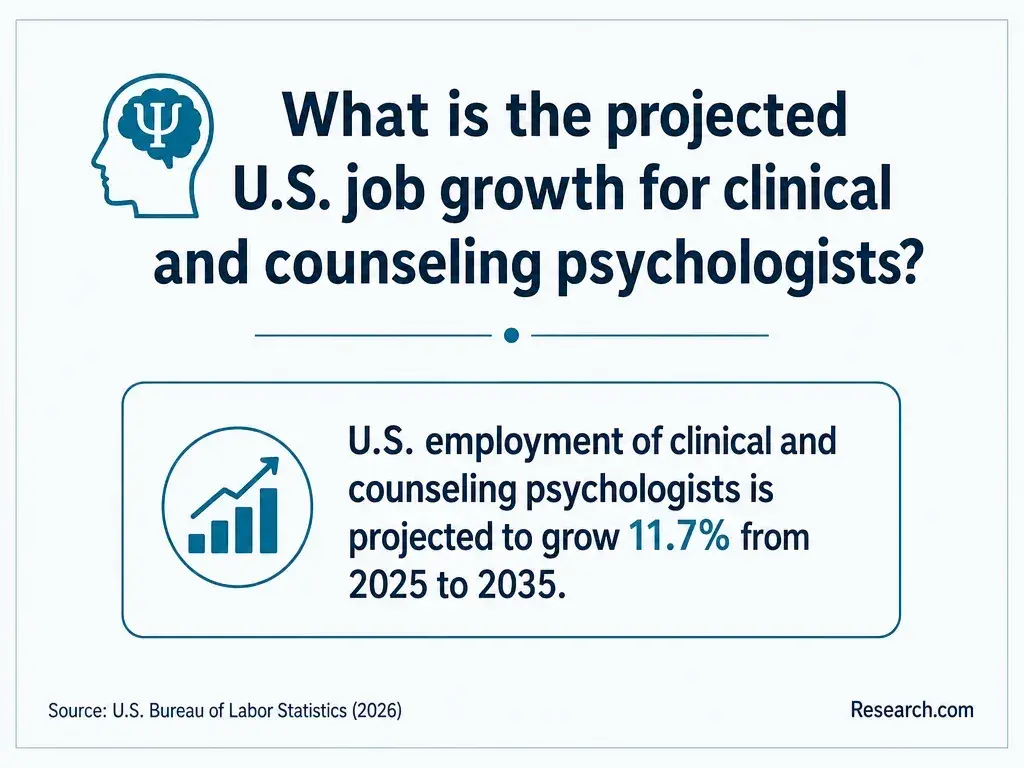
What jobs can you get with an online psychology bachelor's degree?
Job titles vary substantially by employer. The comparison below focuses on tasks a bachelor's graduate might encounter, not jobs for which every psychology graduate automatically qualifies.
| Potential role | Typical nonclinical contribution | Qualification to check |
| Intake or referral coordinator | Collects administrative information and connects people with services | Employer's documentation, privacy, and crisis-escalation training |
| Case aide or human services worker | Supports service plans, appointments, and resource navigation | Experience requirements and whether the position requires another credential |
| Community outreach worker | Explains available services and helps build access and trust | Community experience, language skills, and travel requirements |
| Research or program assistant | Helps organize surveys, records, or evaluation activities | Methods skills, data permissions, and supervision |
Read postings for duties rather than relying on titles. "Behavioral health specialist," for instance, may describe support work at one agency and a credentialed role at another. Likewise, graduate study is not automatically a shortcut to clinical work: planning a forensic psychology master's in less than two years would answer a different educational question, not establish eligibility to treat clients on a care team.
Look for a foundation in developmental and social psychology, research methods, statistics, and scientific writing. Mental-health-related offerings may cover psychopathology as an academic subject, health psychology, substance use, community prevention, or the organization of services. Courses about symptoms or assessment teach concepts; they do not authorize students to assess or diagnose patients.
For care-team readiness, prioritize assignments that require you to interpret evidence, explain a referral pathway, communicate across disciplines, and protect confidential information. Ask whether an internship or capstone is available, who approves a site, and whether a current job can meet its learning objectives. A forensic elective is not necessarily a formal concentration; students considering that route should also examine forensic psychology bachelor's completion planning before assuming specialized courses will fit their degree sequence.
An online BA can be reputable when the institution holds recognized institutional accreditation and the program offers sound instruction and student support. Verify the institution and its accreditation status through the accreditor or the US Department of Education's accreditation records, then confirm that the particular online BA is available to students in your location. The American Psychological Association does not accredit general psychology bachelor's programs; do not mistake a claim about institutional accreditation for approval of a clinical pathway.
Compare published course requirements, faculty access, advising, transfer policies, and opportunities for supervised experience - not a ranking alone. An online psychology programs ranked by affordability comparison can identify schools to investigate, but request each school's current tuition schedule and ask how online students obtain career support and approved placements.
Requirements differ for first-year and transfer applicants. Schools commonly request prior transcripts and evidence of secondary-school completion or previous college study; particular programs may have additional GPA or major-entry rules. Ask admissions whether entry to the university also means entry to the psychology major.
If you have previous credits, obtain a written degree audit showing which courses fulfill general education, psychology, statistics, research methods, and remaining residency requirements. Accepted credit does not necessarily replace a required course. Use planning a psychology degree with previous college study to frame questions for a transfer evaluator, but rely on the receiving institution's decision before estimating a graduation date.
A full-time student entering without college credit often plans around a roughly 120-credit bachelor's degree and about four academic years. Your timeline can differ because of accepted transfer credits, part-time enrollment, course availability, and the sequence of methods courses or any approved experience. An advertised accelerated format does not necessarily shorten required field hours or eliminate prerequisites.
Compare costs using the credits you still need, not a school's headline rate. Include tuition, mandatory fees, books, technology, possible site travel, and any income lost to an unpaid placement. Request an aid estimate and a term-by-term plan before committing. Accelerated undergraduate psychology program choices are worth considering if their course load and placement schedule remain workable alongside employment or caregiving.
Online study can make lectures and reading easier to fit around work, but it does not make every obligation remote or self-paced. Live discussions, group assignments, exams, research meetings, and supervised site work may have fixed times. Campus study may offer more direct access to local research teams and service organizations; online programs can be equally relevant to a care-team goal when they help students arrange credible local experience.
Ask for the actual course schedule and placement policy, including whether evening or weekend sites are permitted and who finds the supervisor. If your goal is substance-use support rather than a broad psychology BA, compare the full financial implications of each route; financial aid planning for a substance use counseling bachelor's addresses a more specialized option, whose educational fit and credential implications still require separate verification.
There is no single license for all mental health support workers. Some entry-level coordination and outreach jobs rely on employer training and supervision; peer-support and addiction roles may require state-recognized certification, documented lived experience, training, or supervision. Requirements depend on the jurisdiction, employer, job title, and actual duties. Check the state authority or certifying body and a current job posting before enrolling for a specific role.
A psychology BA alone does not permit psychotherapy, independent diagnosis, or use of a protected clinical title. If your goal changes to licensed counseling, compare programs designed to meet the applicable state's educational requirements rather than assuming the BA is sufficient. Even shortening the path through a clinical counseling master's cannot bypass required supervised experience, examinations, or other state rules.
What salary and job outlook can psychology bachelor's graduates expect?
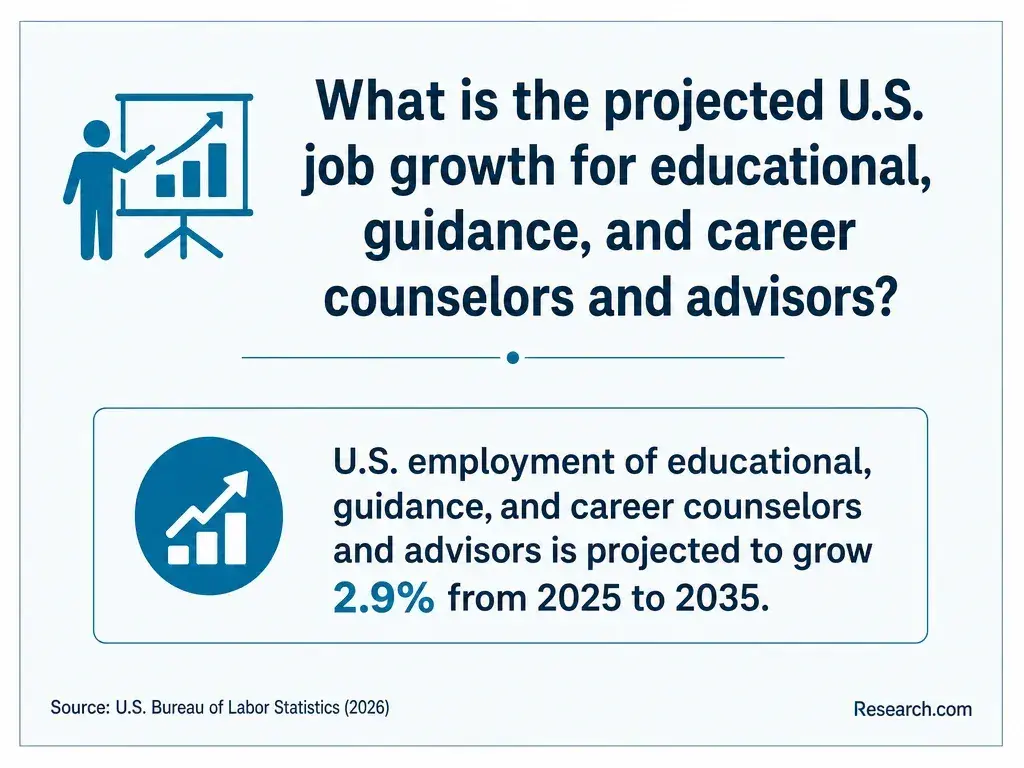
No single salary describes psychology bachelor's graduates in multidisciplinary care. The US Bureau of Labor Statistics groups many relevant entry-level jobs under social and human service assistants, but its occupation-wide wage and employment projections include workers with varied education and experience. They are a labor-market reference, not a predicted offer for an online BA graduate. For any target job, compare the latest Bureau of Labor Statistics occupation data with local postings that specify pay, credentials, shifts, and advancement requirements.
Evaluate return on investment against the role you can realistically enter. If you already qualify for support work, experience and employer-funded training may be more economical than another degree. If you ultimately need a licensed role, account for the cost of qualifying graduate education as a separate decision; comparing tuition assistance for mental health counseling study can inform that later calculation, but it should not be treated as a projected payoff from the BA.
Other Things You Should Know About Psychology
Possibly. Look for aide, outreach, administrative, or other entry-level postings that accept your current qualifications, and ask whether the employer offers supervision or tuition assistance.
They can be valuable in outreach and service navigation. Ask employers whether the role requires a documented language proficiency level or a qualified interpreter for particular conversations.
No. Many support roles involve in-person contact, local referrals, or site visits. Check the work location and travel expectations in each posting.
Do not include identifiable client information or materials you lack permission to share. Use an original, hypothetical referral map or a publicly sourced evidence brief instead.
- Requirements Related to the Practice of Counseling - NCBI https://www.ncbi.nlm.nih.gov/books/NBK259170/
- Peer Support Specialist | Louisiana Department of Health https://ldh.la.gov/page/peer-support-specialist
- Behavioral Health - Think Cultural Health - HHS.gov https://thinkculturalhealth.hhs.gov/education/behavioral-health
- Interprofessional collaboration between social workers... - PMC https://pmc.ncbi.nlm.nih.gov/articles/PMC10675993/
- Work-Based Learning: Information for Employers | skagit.edu https://www.skagit.edu/internships-learning-into-action/for-employers.html
- What Can You Do with a bachelor's in Psychology? | UMass Global https://www.umassglobal.edu/blog-news/can-you-do-a-bachelors-psychology-top-careers-skills-build-your-future
- How to search for internships and jobs - Career Center https://careercenter.missouristate.edu/Students/How-to-search-for-internships-and-jobs.htm
- Psychology and Behavioral Health Associate Degree Online | The Pennsylvania Institute of Technology https://www.pit.edu/programs/psychology-and-behavioral-health/
- The Emerging Field of Behavioral Health Paraprofessionals | National Governors Association https://www.nga.org/publications/the-emerging-field-of-behavioral-health-paraprofessionals/
- Behavioral Health Career Roadmap NYC | Mayor's Office of Community Mental Health https://mentalhealth.cityofnewyork.us/workforce-career-roadmap