
2027 Online BA in Psychology - Addictions for Bank Branch Staff: Choosing a Program Without Leaving Your Job

Co-Founder and Chief Data Scientist
A bank branch schedule can make an online psychology degree look appealing, but "online" does not necessarily mean coursework fits around opening hours, closing duties, and unpredictable customer demand. If you want to study addiction and recovery without leaving your job, the right program depends on its actual schedule, remaining degree requirements, cost, and connection to your career goal.
This guide shows bank branch staff how to compare those factors - and when a shorter credential or workplace training may be the better investment.
Key Things You Should Know
- Choose by the schedule you must meet - not the "online" label. Check live classes, placement hours, course availability, and leave policies before applying.
- A psychology BA with addictions coursework teaches the subject but does not itself authorize addiction counseling, diagnosis, or psychotherapy.
- Ask each school for a transfer-based degree audit and an itemized estimate of remaining costs; accepted credits do not necessarily satisfy major requirements.
What is an online bachelor's degree in psychology with an addictions focus?
An online BA in psychology with an addictions focus is an undergraduate psychology degree that includes study of substance use, behavior, prevention, and recovery. The focus might be an officially recorded concentration, a minor, or a set of electives; those are not interchangeable credentials. A BA generally combines psychology with general education and electives, although requirements vary by school.
For bank staff, the distinction matters because a general psychology BA may offer more scheduling choices, while a formal addictions concentration may require specialized courses offered less often. Compare each program's catalog and transcript designation rather than relying on its marketing name. A guide to distance learning psychology degree options can help you identify formats to investigate, but the university's current catalog controls your requirements.
Is an online psychology addictions degree accredited and recognized?
Start with the institution's accreditation status and confirm that it applies to the school awarding the degree. Then check whether the degree and addictions focus appear in the current catalog. Institutional accreditation supports recognition for purposes such as credit evaluation and federal-aid eligibility; it does not establish that a graduate qualifies for a state addiction-counselor credential.
Do not look for APA accreditation as a test of an ordinary psychology BA: APA accreditation covers specified professional psychology training, not general undergraduate psychology degrees. Likewise, an attractive specialization label is not proof of professional recognition. Even when comparing another specialty, such as choosing forensic psychology study by cost and entry criteria, the same distinction between institutional accreditation, a documented curriculum, and credential eligibility applies.
What careers can you pursue with an addictions-focused psychology bachelor's degree?
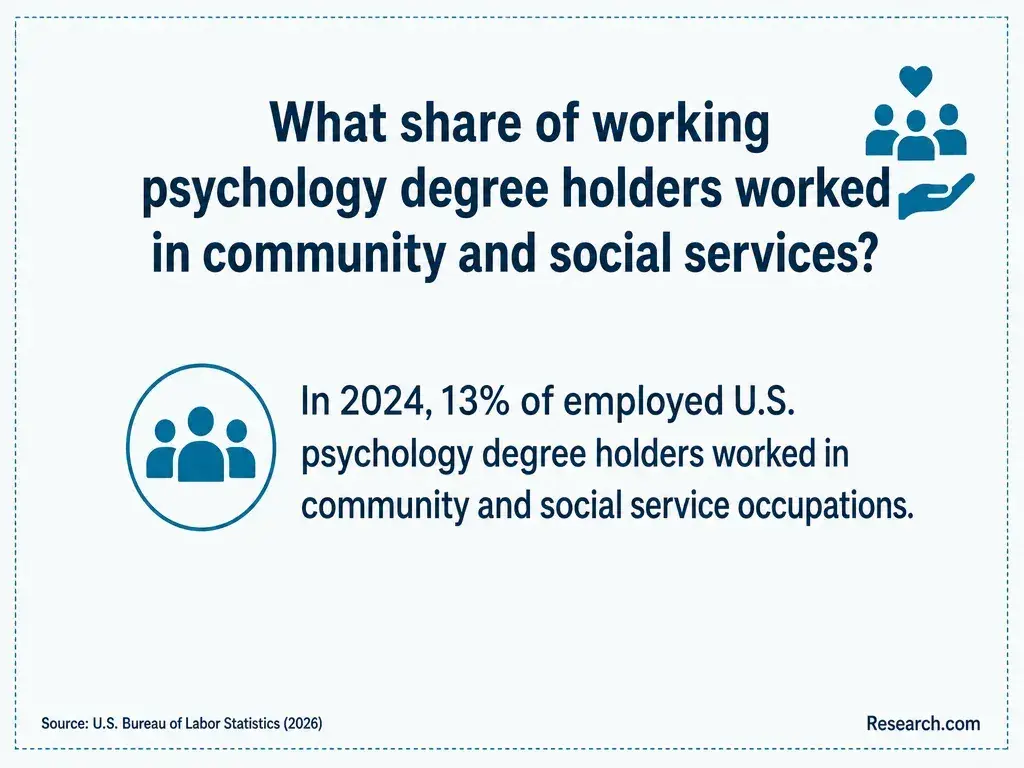
Branch employees already practice customer communication, careful documentation, confidentiality, and referral to appropriate specialists. Those skills can support a transition to nonclinical roles, but employers may also require human-services experience, training, or a specific credential. The comparison below separates plausible directions from duties a psychology BA alone does not authorize.
| Direction | How branch experience may help | What to check |
| Recovery-service intake or program support | Explaining processes, documenting requests, and directing people to appropriate resources | Employer requirements, supervised duties, privacy training, and whether the role requires a state credential |
| Community outreach or service coordination | Working with diverse customers and coordinating follow-up | Relevant service experience and the organization's referral and safeguarding procedures |
| Banking or financial-wellness work | Existing product, compliance, and customer-service knowledge | Whether a degree is valued for the specific internal role or targeted training would be more useful |
For a substantial move into recovery services, compare job postings with recovery services employment pathways. An addictions elective may strengthen your understanding, but supervised experience and the employer's actual duties often matter more than the concentration name.
Build a study plan around your branch's busiest periods, not an ideal week. Ask when assignments are due, whether exams have fixed windows, and how often live meetings occur. An asynchronous lecture may still come with scheduled group work or an internship during standard business hours.
Before committing, test the program against these practical constraints:
- Get the term-by-term course rotation, including any addictions course offered infrequently.
- Ask whether an internship or capstone is required, who approves sites, and whether evening or weekend hours are feasible. Do not assume branch work qualifies as a placement.
- Check part-time enrollment, maximum time to finish, leave policies, and how a pause affects course sequencing or aid.
- Review your employer's education-assistance terms, including eligibility, grade rules, payment timing, and any repayment obligation.
If you already have a bachelor's degree, verify that a second BA is necessary before starting one. Evaluating shorter graduate psychology degree options may be relevant for some goals, although a general psychology master's is not a substitute for qualifying addiction-counselor training.
Expect foundational psychology, statistics, research methods, and courses addressing areas such as development or social behavior. Addictions-focused study may cover substance-use research, prevention, recovery systems, and ethical issues. The exact mix - and whether an applied experience is required - depends on the catalog.
For a bank employee, statistics and methods are useful for judging claims about interventions rather than treating a compelling story as evidence of effectiveness. Compare the required curriculum with online addiction counseling coursework and admissions if your goal is specifically counselor preparation. Similar course titles do not mean two degrees meet the same state credential rules, and studying counseling techniques does not grant permission to provide treatment.
Online psychology bachelor's programs commonly distinguish first-year applicants from transfer applicants and request prior academic records. A school may admit you to the university before confirming how previous courses apply to the psychology major. Ask for an official evaluation showing general education, major, elective, and remaining residency requirements - not merely a count of accepted credits.
If counseling is your eventual goal, check the entry requirements of qualifying graduate programs before selecting BA electives. Accelerated online master's preparation in mental health counseling is a distinct pathway with its own admissions and professional requirements; admission to a psychology BA does not establish eligibility for it.
Completion time depends chiefly on credits that satisfy degree requirements, course sequencing, and the workload you can sustain while employed. A faster advertised pace is of little value if a required addictions course is unavailable when you need it.
Calculate cost from the school's written estimate of remaining tuition and mandatory fees, then account for books, technology, and any placement-related travel or lost work hours. If you are comparing schools, use the same expected enrollment pace for each estimate. Planning a budget for an online psychology degree is a starting point; an individualized degree audit and the applicable tuition schedule are more useful for deciding what you would actually owe.
Online study removes routine campus travel, but it may offer fewer convenient local placements or face-to-face research opportunities. Campus study can make those opportunities easier to access while imposing fixed travel and class times. Neither format is automatically more compatible with a branch job: compare the required activities, not just the delivery label.
Keep academic level and specialty separate when browsing online options. For example, one-year online forensic psychology master's options are graduate programs in another subject, not a quicker version of an addictions-focused BA. For this decision, a useful comparison is whether you can attend every required session and complete any approved experience without abandoning your employment schedule.
A psychology BA with addictions coursework is not a license. State addiction-counselor credentials can require specified education, supervised experience, examinations, and other conditions; requirements and permitted duties vary by state and credential level. Licensed mental health counseling, clinical social work, and psychologist roles follow different qualifying education and practice pathways.
Before enrolling for a regulated role, take the exact program title and course list to the relevant state board's published rules and ask the program for a written explanation of where graduates may still have gaps. Budget for subsequent training as well as the BA: mental health counseling program charges beyond tuition illustrate why the full professional pathway can cost more than its first degree.
What salaries and job outlook can addictions psychology graduates expect?
There is no single salary or job-growth rate for "addictions psychology graduates." The U.S. Bureau of Labor Statistics reports occupation-wide wages and projections, not outcomes for this concentration. Its substance abuse, behavioral disorder, and mental health counselor category can inform a counselor career comparison, but many positions in that category have credential requirements beyond this BA. It should not be used as an expected starting salary for an intake or program-support job.
For a realistic return-on-investment comparison, collect pay ranges from local postings you could qualify for after graduation, alongside any required experience or certification. Compare those opportunities with staying in banking and pursuing an internal move. If a specific substance-use counseling credential is the goal, undergraduate substance use counseling study on a budget is worth examining separately - but only after checking your state's credential rules.
Other Things You Should Know About Psychology
You can discuss scheduling or education assistance without disclosing a personal reason for your academic interest. Check what information an assistance application actually requires.
Do not share identifiable customer information or bank records. Use public sources or hypothetical examples unless both your employer and instructor expressly approve a compliant alternative.
Review assignment windows and the school's withdrawal or leave deadlines early. Contact your instructor and advisor before missed work affects your options.
Possibly. If the target role does not require a degree, compare its stated qualifications with employer training or a focused course before paying for a full BA.
- Answers to Questions Transfer Students Ask | pa.gov https://collegetransfer.pa.gov/Student/Common-Questions
- Employer-offered educational assistance programs can help pay for college | Internal Revenue Service https://www.irs.gov/newsroom/employer-offered-educational-assistance-programs-can-help-pay-for-college
- Cost of Attendance (Budget) | 2025-2026 Federal Student Aid Handbook https://fsapartners.ed.gov/knowledge-center/fsa-handbook/2025-2026/vol3/ch2-cost-attendance-budget
- Financial Information | Northern Virginia Community College Academic Catalog https://catalog.nvcc.edu/financial-information/
- Transfer Credit/GPA Guidelines - Pitt Admissions https://admissions.pitt.edu/transfer/transfer-credit-gpa-guidelines/
- Register Part-Time: Reduced Course Load | nyu.edu https://www.nyu.edu/students/student-information-and-resources/student-visa-and-immigration/current-students/visa-and-academic-changes/register-part-time.html
- How to Become a Licensed Substance Abuse Counselor | University of Wisconsin Flexible Option https://flex.wisconsin.edu/stories-news/how-to-become-a-licensed-substance-abuse-counselor/
- Applied Psychology: Addictions Studies, B.S. - CPS, CPSO | University of New Hampshire https://www.unh.edu/program/bachelor-science/applied-psychology-addictions-studies
- What Is Tuition Reimbursement? How It Works for Grad School | University of Kansas https://admissions.ku.edu/blog/what-is-tuition-reimbursement
- Requirements & Deadlines | umich.edu https://admissions.umich.edu/apply/transfer-applicants/requirements-deadlines


