2027 Online MS in Psychology - Forensic Psychology for Psychology of Victim Participation: Which Courses Should You Look For?
Audited and Verified:
Our Editorial and Data Verification Process
Research.com uses government datasets, official education statistics and primary institutional information to support its career and degree guides. Our review process checks factual accuracy, occupational definitions, source dates and the requirements associated with the credentials discussed.
How This Article Was Fact-Checked
Our editorial team verifies salary estimates, employment projections, education requirements and program information against original data providers and official organizations. Salary figures are checked against the relevant occupational definitions and reporting periods. Information about licensure, accreditation and required in-person training is reviewed separately.
Fact-checked and verified on:

Co-Founder and Chief Data Scientist
A forensic psychology master's program can teach a great deal about crime without adequately preparing you to study why victims participate in - or disengage from - justice processes. If your goal is victim services, justice-system research, or program evaluation, the course titles alone are not enough.
You need to examine what students learn about trauma, memory, procedural fairness, research methods, and ethical engagement. This guide identifies the courses and applied experiences worth prioritizing, then shows how to check whether an online program fits your schedule, budget, and intended role.
Key Things You Should Know
- Prioritize victimology, trauma and memory, legal psychology, and research methods; look for assignments that examine participation without blaming victims or treating disclosure as a simple measure of credibility.
- Ask whether applied projects use appropriately authorized data and qualified supervision. An online course about interviewing is not permission to conduct forensic interviews or clinical assessments.
- Compare the full degree against the job you want: a nonclinical forensic psychology MS may support research or victim-service work, but it does not by itself qualify you as a licensed psychologist.
What is forensic psychology of victim participation?
In this context, victim participation means a person's involvement in processes such as reporting an incident, seeking services, providing information, attending hearings, or engaging with a restorative process when appropriate and voluntary. Forensic psychology studies how behavior and psychological evidence relate to legal settings. Together, these subjects examine how trauma, memory, trust, safety, practical barriers, and institutional responses can influence participation.
Participation is not a test of whether harm occurred. A person may avoid reporting or leave a process because of safety concerns, caregiving demands, language access, prior experiences with authorities, or a desire not to relive events. A useful program treats these as questions for careful research and service design - not as reasons to infer that someone is unreliable.
Students entering from another discipline need not assume they must first earn a specialized bachelor's degree. Existing coursework in psychology, criminal justice, social work, public health, or research methods may provide a foundation. Someone still choosing an undergraduate route can compare faster forensic psychology bachelor's degree pathways against a broader major with strong methods courses; speed matters less than preparation for the intended master's curriculum.
Which courses should an online forensic psychology master's program include?
The strongest curriculum combines knowledge of victims' experiences with the ability to evaluate evidence and work within legal and professional boundaries. Course names vary, so compare syllabi, required assignments, and how often electives are actually offered.
The following priorities are more useful than a forensic-sounding concentration label.
- Victimology and justice-system responses: Study reporting, service access, victim rights, institutional responses, and barriers to continued participation.
- Trauma, cognition, and memory: Examine stress, attention, recall, and the limits of generalizing laboratory findings to an individual witness. Academic study is not training to diagnose trauma.
- Psychology and law: Learn how interviews, evidence, courtroom procedures, and procedural fairness affect people involved in a case.
- Research design, statistics, and measurement: Learn to distinguish participation from outcomes such as satisfaction or safety, assess selection bias, and interpret findings without causal overclaiming.
- Ethics and culturally responsive practice: Address confidentiality, accessibility, informed consent, safeguarding, and the risks of pressuring someone to disclose or participate.
If electives are limited, favor methods and victimology over a second survey course on crime. A student interested in substance use among victim-service clients may also benefit from addiction-related study, but should distinguish that academic background from a counseling qualification. For earlier-stage students, addiction psychology undergraduate degree selection addresses a different decision than choosing graduate forensic electives.
How does an online MS in forensic psychology prepare students for victim-focused careers?
Preparation is strongest when coursework produces evidence of skills an employer can assess: a literature review on reporting barriers, a critique of an interview study, or a proposed evaluation of a referral process. A capstone may be more useful than a broad elective if it gives you faculty feedback on a realistic question and a writing sample you can share without revealing confidential information.
For a nonclinical placement, ask who approves the site, who supervises the work, and what tasks are permitted. Intake support, resource navigation, research assistance, and evaluation may be appropriate with training and oversight; therapy, diagnosis, and independent forensic evaluation are different activities. An existing justice-system or nonprofit job may supply a project setting, but employment alone does not satisfy a program's placement rules or authorize use of client records.
If you are still completing a bachelor's degree, establish what preparation you already have before paying for graduate-level specialization. Transfer credit reviews for psychology applicants can help frame questions about prior coursework, although the admitting institution decides whether any course meets its requirements.
Look beyond a course that catalogs types of crime. For victim participation, the most revealing topics are decisions and conditions over time, whether to report, what happens at first contact, how a person receives updates, and what makes continued involvement feasible or unsafe. Coursework should address variation across age, disability, language, community context, and relationships to the person accused.
Good assignments also distinguish a person's choices from institutional outcomes. A lower hearing-attendance rate, for example, cannot be interpreted responsibly without considering notice, transportation, safety, scheduling, and who was included in the data. Students should learn when a survey, administrative record, or interview can answer a question - and what each source misses. Work involving identifiable records or direct contact requires appropriate agency permission and any applicable ethics review.
If your aim is an entry-level support role rather than graduate research or advancement, compare the MS with supervised experience and narrower training before committing to tuition. Psychology college costs for online students can provide context if you are still weighing undergraduate preparation; it should not be mistaken for a price estimate for a forensic MS.
The meaningful difference is often access to people and sites, not where lectures appear on a screen. Either format can teach research methods well; either can fall short if students cannot obtain feedback, a viable project, or relevant experience. Use the comparison below to identify questions for each program rather than assuming one format is inherently stronger.
| Feature | Online program: verify | Campus-based program: verify |
| Class participation | Live-session times, group-work expectations, and faculty access | Meeting schedule and access to instructors outside class |
| Applied experience | Whether local or remote sites are allowed and who arranges approval | Whether nearby agency relationships lead to available placements |
| Research support | Remote supervision, data access, and capstone feedback | Lab availability, advisor capacity, and project access |
| Practical costs | Technology, possible travel, and local placement expenses | Commuting, relocation if needed, and placement expenses |
For a working student, "asynchronous" does not necessarily mean self-paced: deadlines, live meetings, and site hours may still be fixed. Compare published requirements for your entry term and ask to see a recent course schedule. Broader distance learning psychology degree options can orient an initial search, but the forensic program's actual supervision and course offerings should decide the comparison.
First, confirm that the institution holds recognized institutional accreditation and that it awards the exact MS you are considering. Then inspect the catalog for the degree's stated purpose and any claims about professional eligibility. Institutional accreditation supports an essential quality check; it does not establish that a particular curriculum qualifies graduates for licensure.
Do not reject a nonclinical forensic psychology MS merely because it lacks American Psychological Association accreditation: APA program accreditation applies to specified professional psychology doctoral programs and related training, not general forensic psychology master's degrees.
Conversely, do not assume a course in counseling turns that MS into a licensure-track counseling degree. If counseling is the intended occupation, compare the relevant program recognition, state educational rules, and supervised-training requirements; a clinical mental health counseling master's pacing guide addresses that distinct pathway.
Requirements belong to the specific institution, not to the forensic psychology field as a whole. Programs commonly review a completed bachelor's degree, academic record, statement of purpose, and recommendations, but psychology and statistics prerequisites, tests, interviews, minimum grades, and experience expectations differ. An applicant with a criminal justice, social work, or other non-psychology background should distinguish required prerequisites from courses merely recommended for success.
Before applying, compare your transcript with the program's current catalog and ask admissions whether an introductory psychology or statistics course must be finished before enrollment. Use your statement to connect existing experience to a focused interest, such as barriers to victim-service access, without claiming clinical expertise you do not have. If an accelerated schedule appeals to you, check prerequisites and course sequencing first; evaluating shorter graduate psychology degree options is less useful if you must add preparatory courses before starting.
There is no reliable single duration or price for this degree type. Compare each school's required credits, course rotation, part-time limits, capstone or thesis schedule, and any approved placement. A short advertised timeline may assume continuous enrollment and a course load that is difficult to combine with work or caregiving.
Request a written estimate that separates tuition from mandatory fees and accounts for books, technology, travel or site expenses, and additional terms if a project takes longer. Ask whether the tuition rate changes with enrollment status and whether employer assistance has grade or repayment conditions. Cost-conscious options for a psychology master's can help you assemble a comparison list; calculate the likely total using each program's current charges and your realistic pace.
For victim-participation interests, plausible targets include victim-services advocate, program coordinator, research assistant, and evaluation or policy-support roles. Duties may involve explaining available resources, coordinating referrals, documenting service activity, analyzing participation data, or communicating findings. Hiring criteria vary: some positions accept a bachelor's degree plus relevant experience, while others prefer graduate methods training or require agency-specific preparation.
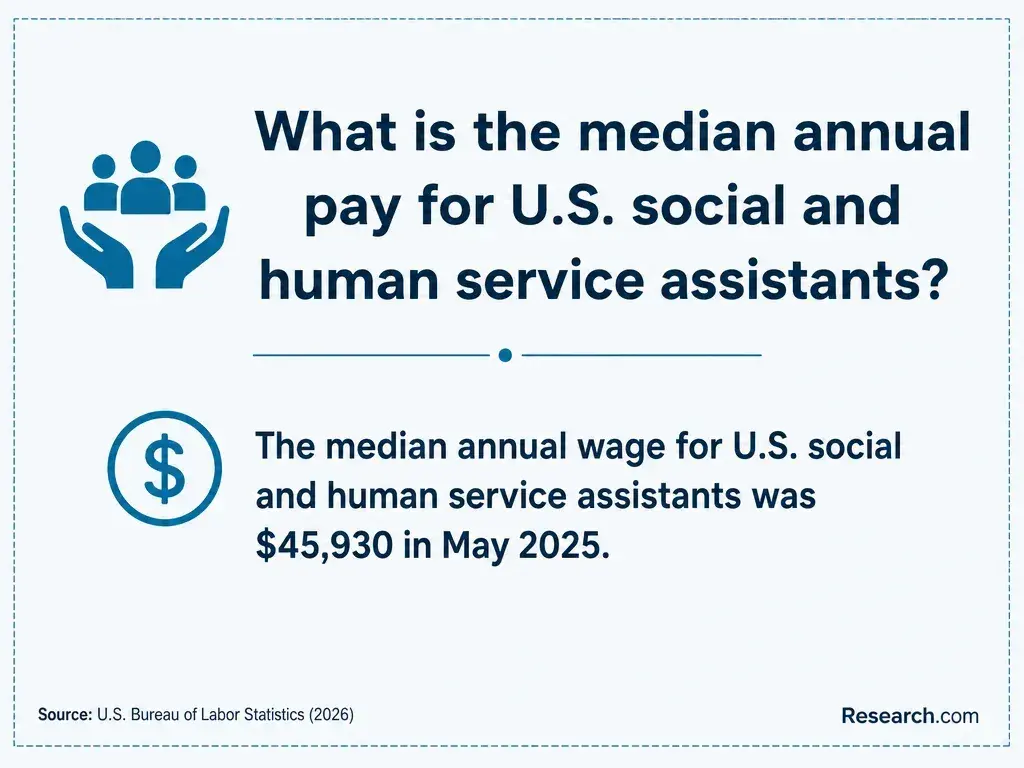
There is no defensible "forensic psychology MS salary" that covers these jobs. For wage comparisons, start with the specific job title, location, and employer, then consult the closest occupation in the U.S. Bureau of Labor Statistics Occupational Outlook Handbook. Its occupation-wide median is not a prediction of an individual graduate's pay; public-sector pay schedules and nonprofit budgets may matter more to an actual offer. Likewise, an opening labeled "forensic psychologist" generally calls for credentials beyond a nonclinical MS.
If you already work in victim services or a justice agency, compare the degree with the qualifications for the position you want next. For an experienced employee, a methods-heavy MS may strengthen evaluation or advancement applications; for someone seeking initial advocacy work, supervised experience and employer training may be the more direct route. Faster forensic psychology master's study for working professionals is worth considering only after checking whether the pace leaves room for the experience your target role values.
Does an online forensic psychology master's degree lead to licensure or certification?
Not by virtue of its title or online format. A nonclinical forensic psychology MS does not, by itself, authorize psychotherapy, diagnosis, independent psychological assessment, or use of the protected title "psychologist." Requirements for those activities depend on the occupation and jurisdiction and may include a different qualifying degree, supervised experience, examinations, and licensure.
Victim-advocacy employers may instead require role-specific training, background checks, or a particular credential. Before enrolling, take the exact job description to the relevant state board, certifying body, or employer and ask whether this program satisfies any stated requirement. If it does not, decide whether its research and applied coursework still justify the cost. Forensic psychology one-year program value considerations are particularly important when a shorter degree does not advance the credential you actually need.
Other Things You Should Know About Psychology
Yes. A literature review, analysis of appropriately accessible public data, or proposal for a service evaluation can address participation. Direct interviews require a sound design, permissions, and applicable ethics review.
Not always. A well-supervised capstone can demonstrate research reasoning. Choose a thesis when its depth, advisor support, and time commitment fit your intended next step.
Ask whether they supervise victim-focused projects, what data students can realistically access, how often they provide feedback, and what happens if a proposed agency partnership falls through.
Usually only with appropriate permission and careful removal of confidential material. A public-facing methods summary or fictionalized template may be safer than agency records, even when names have been removed.
- ethical standards - Office for Victims of Crime (OVC) https://ovc.ojp.gov/sites/ovc/files/model-standards/6/ethical_standards_3.html
- Trauma-Informed Care: A Sociocultural Perspective - NCBI https://www.ncbi.nlm.nih.gov/books/NBK207195/
- Criminal Division | Victim Impact Statements https://www.justice.gov/criminal/criminal-vns/victim-impact-statements
- Accreditation and Eligibility Requirements for Distance Education | Knowledge Center https://fsapartners.ed.gov/knowledge-center/library/dear-colleague-letters/2023-05-18/accreditation-and-eligibility-requirements-distance-education
- System-based victim advocates identify resources and... - PMC https://pmc.ncbi.nlm.nih.gov/articles/PMC9837801/
- Trauma-Informed Approaches and Programs | samhsa.gov https://www.samhsa.gov/mental-health/trauma-violence/trauma-informed-approaches-programs
- Trauma-Informed Forensic Mental Health Assessment | nyls.edu https://digitalcommons.nyls.edu/cgi/viewcontent.cgi
- Online Forensic Psychology Master's Degree | ASU Online https://asuonline.asu.edu/online-degree-programs/graduate/master-science-forensic-psychology/
- Online MS in Forensic Psychology | Walden University https://www.waldenu.edu/online-masters-programs/ms-in-forensic-psychology
- Crime Prevention & Criminal Justice Module 11 Guidelines for Stand-alone Course | unodc.org https://www.unodc.org/e4j/en/crime-prevention-criminal-justice/module-11/guidelines-for-stand-alone-course.html