2027 Online BA in Psychology - Mental Health After Sophia Learning Coursework: Compare Transfer Credit and Remaining Coursework
Audited and Verified:
Our Editorial and Data Verification Process
Research.com uses government datasets, official education statistics and primary institutional information to support its career and degree guides. Our review process checks factual accuracy, occupational definitions, source dates and the requirements associated with the credentials discussed.
How This Article Was Fact-Checked
Our editorial team verifies salary estimates, employment projections, education requirements and program information against original data providers and official organizations. Salary figures are checked against the relevant occupational definitions and reporting periods. Information about licensure, accreditation and required in-person training is reviewed separately.
Fact-checked and verified on:

Co-Founder and Chief Data Scientist
Sophia Learning coursework can shorten an online psychology degree - or leave the courses that matter most untouched. If you are returning to college with Sophia credits and want a BA with mental-health coursework, the deciding document is a school-approved degree audit, not a transfer-credit total.
This guide explains how to compare credit acceptance, remaining psychology requirements, residency rules, cost, and career fit. You will be better equipped to choose a program before paying for more courses that may not advance your degree.
Key Things You Should Know
- Sophia courses may be accepted for transfer without satisfying psychology-major, mental-health, or residency requirements; obtain a course-by-course degree audit before enrolling.
- Compare the credits remaining in each requirement category, not just the credits awarded. A typical 120-credit bachelor's framework is only a starting point; the school's audit controls your actual balance.
- A psychology BA with mental-health coursework supports nonclinical preparation but does not qualify you to diagnose conditions, provide psychotherapy, or practice as a licensed counselor or psychologist.
How does Sophia Learning coursework transfer to an online psychology bachelor's degree?
Sophia Learning offers self-paced courses that participating colleges may evaluate for transfer. Sophia is not the institution awarding your BA. The receiving college decides whether to accept each course, how many credits to award, and which degree requirement - if any - it satisfies. A college's general acceptance of Sophia coursework is not approval of every course for every psychology degree.
Expect general education and free electives to be the most useful categories to investigate first. A course resembling introductory psychology or statistics needs a separate equivalency decision before you count it toward the major or a prerequisite. Research methods may require specific content or an institutional course sequence. Previously earned college, associate-degree, military, or other credits can also affect transfer limits and duplicate-course rules.
Before buying another Sophia course, send the psychology department and transfer-credit office its exact title, course description, syllabus, credit recommendation, and completion record. Ask for written confirmation of its requirement placement, not merely its transferability. When choosing an online psychology program, compare that written placement alongside the curriculum and scheduling rules.
Which online BA in psychology programs accept Sophia Learning credits?
There is no reliable blanket list of online BA in psychology - mental health programs for which every Sophia course will count. Institutional partnerships and published equivalency guides can identify promising schools, but a guide may apply to a different catalog year, degree, or concentration. Some online psychology degrees are BS rather than BA programs; others offer mental-health electives without awarding a formally named concentration.
Use the following comparison to narrow candidates before requesting individual evaluations. It separates a school's public transfer information from the decision you actually need.
| Program evidence | What it establishes | What still needs confirmation |
| Sophia named in a school transfer guide | The school has published some course mappings | Whether mappings apply to your BA, catalog, and entry term |
| Maximum transfer-credit policy | An upper limit on credits the school may accept | Major, upper-level, and residency requirements still outstanding |
| Mental-health concentration listed in the catalog | A defined curricular option exists | Its required courses and whether Sophia satisfies any of them |
| Individual degree audit | How evaluated courses fit your proposed degree | Whether it is final and what could change before graduation |
If your goal is addiction-related study rather than a general mental-health focus, compare the actual coursework and credential implications of accredited addiction psychology undergraduate education. The best transfer fit may be a different major or concentration - but do not treat an addiction course or concentration as a counseling credential.
How many psychology degree credits remain after transferring Sophia coursework?
The useful calculation is required credits minus applicable, nonduplicative credits, subject to each category's rules. An accepted Sophia credit that fills an already-completed elective slot may increase the credits shown on a transcript without reducing the courses you must take. Likewise, a school may require certain upper-level psychology courses or a minimum number of credits completed through that institution.
Ask each school for an audit showing the following balances. Keeping them separate exposes the difference between an attractive transfer total and a shorter path to graduation.
- General education still unmet after all prior coursework is evaluated.
- Psychology core, statistics, research methods, and any prerequisites still unmet.
- Mental-health concentration courses or electives still unmet.
- Upper-level, institutional-residency, and total-degree credits still unmet.
If a course appears in the wrong category, request a documented substitution or transfer appeal before registering for a replacement. If Sophia credits leave most of the major untouched, compare the remaining BA cost against your longer-term plans, including the possible cost of low-cost master's degrees in psychology if graduate study is genuinely part of your goal. A lower-cost BA is not necessarily the cheaper overall pathway if it delays essential preparation.
Check the degree-granting institution's institutional accreditation through the accreditor and the U.S. Department of Education's recognized-accreditor information. Online delivery does not change which institution awards the degree. Sophia coursework, however, is evaluated under that institution's transfer policy; institutional accreditation does not make every Sophia course transferable.
Do not look for APA accreditation as a test of a general psychology BA: APA accreditation applies to specified professional psychology training programs, not ordinary bachelor's majors. For a later licensed-counseling goal, investigate the recognition and state educational rules relevant to the qualifying graduate program. A comparison of lower-cost accredited counseling degree pathways is more relevant to that decision than a BA's mental-health label.
Future transfer remains a separate decision. Another college or graduate program may evaluate credits, prerequisites, and grades differently. If further study is likely, ask prospective programs whether they require graded college coursework in statistics, research methods, or particular psychology subjects before relying on Sophia to cover that preparation.
After general education transfers, many students still need a substantial psychology major: research methods and statistics, foundational areas such as development and social or biological psychology, upper-level electives, and perhaps a capstone. A mental-health focus may add coursework on psychopathology, health behavior, community services, or substance use. The catalog determines which courses are required rather than optional.
Sequence matters as much as credit count. Statistics may precede research methods, and research methods may precede a capstone. If a required upper-level class runs infrequently, a student with relatively few credits left could still face a longer calendar timeline. Ask whether courses are asynchronous, whether live meetings or group work are required, and whether a capstone or placement needs an approved site.
Choose electives for the next step you intend to take. A future research applicant benefits from rigorous methods and opportunities to demonstrate research skills; someone considering community support work may value service-system knowledge and supervised nonclinical experience. If your interests shift toward legal settings, comparing forensic psychology curricula and career fit can help you assess electives without assuming a forensic course confers investigative or clinical authority.
Admission to the university, acceptance into the psychology major, and approval of transfer credits are distinct decisions. Schools commonly request an application and transcripts from prior colleges; requirements for prior-credit minimums, GPA, high-school records, and transfer evaluation vary. Sophia completion records may be submitted through a process separate from ordinary college transcripts.
Apply with records from all prior institutions, not just Sophia. Then ask admissions when you can receive a major-specific audit, which catalog will govern your degree, and whether a transfer decision can be revised. If you already hold a bachelor's degree and primarily need a state-recognized addiction credential, a second BA might be less direct than appropriate addiction counseling education options online. Check your state's credential rules before choosing that alternative.
Neither duration nor price follows directly from the number of Sophia credits awarded. Your timeline depends on requirements remaining, course sequencing, courses offered per term, and the pace you can sustain. Ask for a term-by-term plan showing when each remaining required course is available; online access alone does not guarantee flexible scheduling.
For a meaningful cost comparison, multiply the credits or terms you must actually take at each institution by its applicable tuition rate, then add required fees, books, and any placement or travel expenses. Compare Sophia subscription costs only for courses the school has confirmed will advance your degree. Ask the financial-aid office how transferred credits, enrollment intensity, and satisfactory academic progress affect your aid; this matters even if the courses themselves seem inexpensive.
If your longer-term goal requires another degree, budget for that separately rather than treating the BA as the final expense. For example, one-year forensic psychology graduate tuition comparisons can illustrate why a short advertised graduate timeline still needs a full cost and career-fit check. Do not add graduate tuition to your BA comparison unless that particular next degree is necessary for your goal.
A psychology BA with mental-health coursework can support applications for nonclinical roles such as human-services assistant, community outreach worker, program assistant, intake support worker, or research support staff. Actual eligibility depends on the employer, duties, prior experience, and any state-required credential. These jobs may involve documentation, referrals, service coordination, or data collection - not independent diagnosis or psychotherapy.
To make the degree useful, match an intended job posting to evidence you can build while enrolled: responsible communication, research and statistics coursework, supervised projects, relevant employment, or an approved internship. Protect client confidentiality and clarify supervision before undertaking work in a service setting.
A student aiming for forensic-adjacent work should distinguish victim services or corrections-support jobs from licensed forensic assessment. A later specialization may be worth investigating through comparing shorter online forensic psychology master's pathways, but neither a BA concentration nor a short master's program automatically grants forensic-practitioner status.
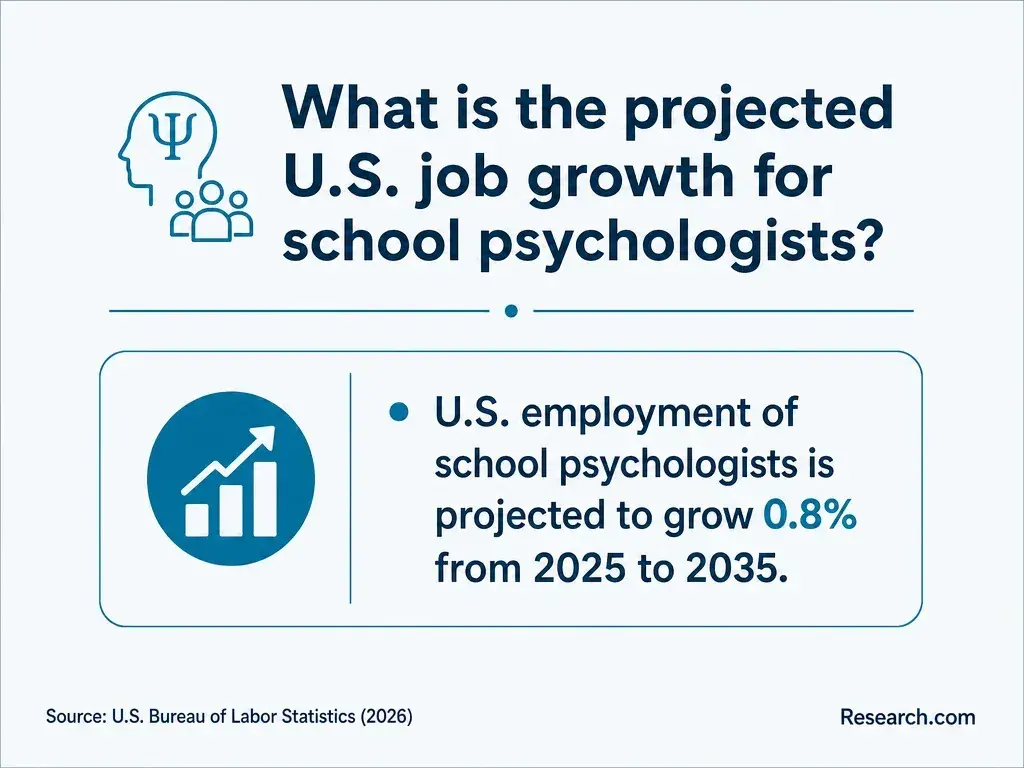
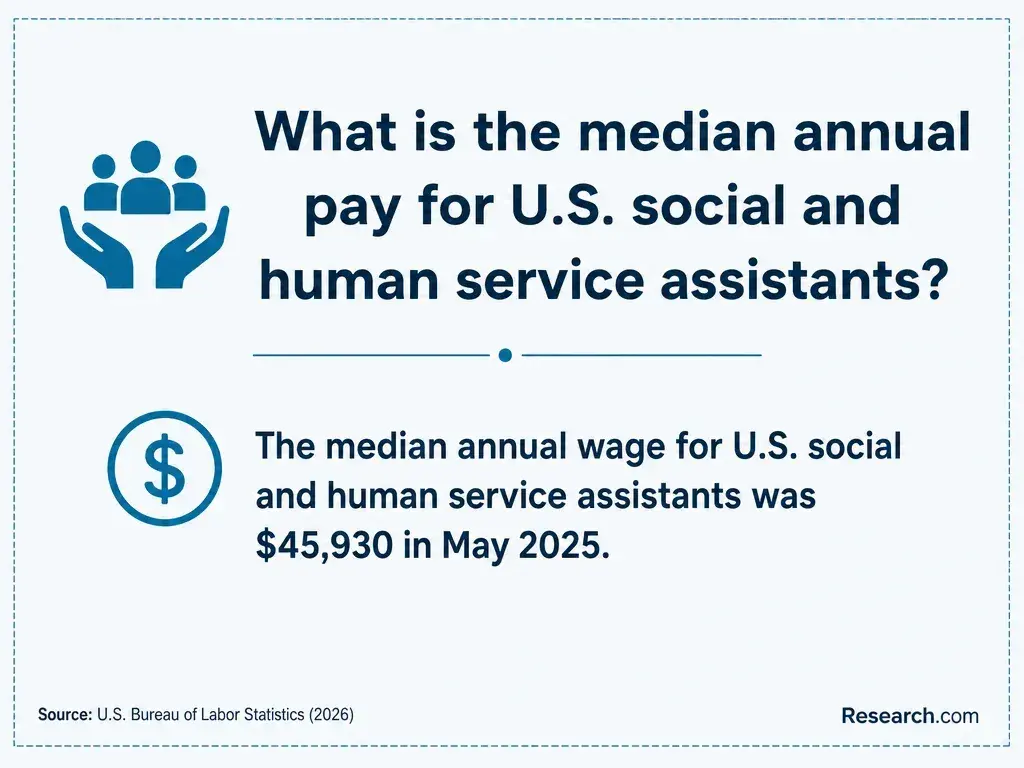
There is no single salary or employment-growth figure for graduates of an online psychology BA. The appropriate comparison is a specific occupation, not the degree name. The U.S. Bureau of Labor Statistics Occupational Outlook Handbook reports pay and projections for occupations such as social and human service assistants; those occupation-wide figures include workers with different education and experience levels and are not a forecast of your starting pay.
Use current local postings for your target role to check pay, required credentials, schedules, and whether the BA earns a preference over a less costly qualification. Then weigh that evidence against your audited remaining tuition and time. If a job you want requires graduate education, compare the added expense of low-cost master's degrees in psychology only after confirming that a nonclinical psychology master's - not a qualifying professional degree - is relevant to the position.
What licensing or graduate education follows a psychology bachelor's degree?
A psychology BA is undergraduate preparation, not a license to practice psychology, counsel clients, or perform independent clinical assessments. Becoming a licensed professional may require a specific graduate degree, supervised experience, examinations, and state-board approval. Requirements differ for counselors, clinical social workers, psychologists, and addiction counselors; the mental-health wording on a BA does not make those pathways interchangeable.
If counseling is your goal, check the intended state board's educational criteria and compare qualifying graduate programs, including fast-track online clinical counseling master's options. Verify accreditation where applicable, placement obligations, and whether the program meets that state's rules before prioritizing speed. If your goal is research or nonclinical advancement instead, review graduate prerequisites and seek strong statistics, methods, writing, and research experience during the BA.
Other Things You Should Know About Psychology
Usually, wait if you can. A written course-by-course evaluation reduces the risk of paying for a course that duplicates credit or fills no remaining requirement.
Submit the syllabus and ask the transfer-credit office about an equivalency review. A matching title is not required for consideration, but similar-sounding titles do not establish equivalence.
Many colleges have a transfer-credit appeal or academic-substitution process. Ask which office handles it, what documentation is needed, and whether the psychology department must approve a major substitution.
It can affect how a prospective graduate program evaluates prerequisites or academic preparation. Ask that program whether it accepts the specific transferred course and whether it expects a graded college course instead.
- Frequently Asked Questions for Mental Health Counselors | nysed.gov https://www.op.nysed.gov/professions/mental-health-counselors/faqs-education-requirements
- Transfer Equivalency Process | Transfer & Transition Services https://transfer.fiu.edu/transfer-101/transfer-equivalency/transfer-equivalency-process/
- Transfer Credit - Transfer - Office of Undergraduate Studies | The University of Utah https://transfer.utah.edu/transfer-credit.php
- Sophia Learning Partnership | ACE https://ace.edu/strategic-partners/sophia-learning/
- Transfer Policy | Miami Academic Transfer Evaluation System https://mates.miami.edu/transfer-policy/index.html
- Transfer Credit Evaluation - Transfer Student Resources https://transfer.ncsu.edu/transfer-credit-evaluation/
- Transfer Credit Resources - UT Admissions https://admissions.utexas.edu/apply/transfer-students/transfer-credit-resources/
- Non-Traditional Credit | Ohio University https://www.ohio.edu/admissions/transfer-credits/non-traditional-credit
- Practicum Education Manual - VI. Practicum Education Placement Policies, Procedures, and Processes https://socialwork.wayne.edu/practicum/manual/policies
- Access No-Cost Gen Eds Through Sophia Learning | Strayer University https://www.strayer.edu/tuition-and-financial-aid/sophia-learning/