2027 Online BA in Psychology - Addictions for Motivational Interviewing Foundations for Recovery Work: Which Courses Should You Look For?

Co-Founder and Chief Data Scientist
An addictions-focused psychology BA can teach why people change behavior, but a course that mentions motivational interviewing may offer little chance to practice it. If you hope to work in recovery services, the distinction matters: academic knowledge, supervised support work, and authorization to provide counseling are different things.
This guide identifies the courses and learning experiences worth seeking, shows how to inspect an online program's actual requirements, and explains when a counseling credential or shorter training route may fit your goal better.
Key Things You Should Know
- Prioritize addiction science, behavior change, counseling ethics, research methods, and a motivational interviewing course with observed practice and feedback - not just readings.
- A typical bachelor's degree requires about 120 semester credits, but transfer decisions and course sequencing determine how many you must complete and how long it takes.
- An addictions concentration or motivational interviewing elective does not itself qualify you to diagnose, provide psychotherapy, or practice as an addiction counselor; check your state's rules for the job you want.
What Is an Online Psychology Degree in Addictions and Motivational Interviewing?
Usually, it is a psychology BA with addictions-related courses, not a separately awarded degree in motivational interviewing. Motivational interviewing, or MI, is a collaborative communication approach that helps people explore their own reasons for change. A program might teach it in a dedicated course, an addiction counseling course, or a broader helping-skills elective. The degree title alone cannot tell you which.
Psychology supplies the study of behavior, motivation, development, and research. Addictions coursework applies that foundation to substance use, recovery, and service systems. For a career changer or someone already working in community services, the useful question is which gaps the degree fills beyond existing client-support experience. When evaluating psychology degree programs for online learning, read the degree map and recent course descriptions rather than relying on a concentration label.
Online lectures may be asynchronous while skills labs, group role-plays, or an approved placement occur at fixed times or in person. Ask how often the relevant courses run and whether an online student can complete every required practice activity from their location.
Which Courses Should an Addictions Psychology Bachelor's Program Include?
The strongest course mix connects psychological science to ethically bounded, observable helping skills. Course titles differ across schools, so compare catalog descriptions, syllabi, prerequisites, and whether each course is required or merely offered as an elective.
This comparison separates foundational knowledge from the practice component that is especially important for an MI-focused goal.
| Course area | Relevant learning | What the title alone may not establish |
| Statistics and research methods | Evaluating studies, outcomes, and claims about interventions | Experience with addiction-service data or program evaluation |
| Learning, motivation, and social psychology | Understanding behavior change and social context | Ability to conduct an MI conversation |
| Addiction psychology or substance-use studies | Substance use, recovery, prevention, and treatment systems | Preparation for a particular state counseling credential |
| Developmental and abnormal psychology | Lifespan context and academic understanding of mental disorders | Authority to assess or diagnose a client |
| Helping skills or motivational interviewing | Listening, open questions, reflective responses, and practice feedback | Supervised proficiency unless performance is observed |
| Ethics, culture, and community services | Confidentiality, boundaries, accessibility, and referrals | Approval to perform regulated clinical duties |
For MI specifically, seek a sequence that moves from behavior-change theory to demonstration, recorded or live role-play, structured feedback, and revision. Ask whether instructors assess how students respond to ambivalence, rather than grading only a quiz about MI terminology. An optional supervised, nonclinical placement can add context, but confirm its tasks, site approval, and supervision before counting on it.
If your target is a regulated counseling position, compare this psychology curriculum with accredited addiction psychology undergraduate education only after identifying the credential rules that apply to that position. A concentration can be academically valuable without satisfying those rules.
How Does Motivational Interviewing Support Recovery Work?
MI helps a person discuss change without being argued into it. Practitioners use attentive listening, reflections, and questions to understand the person's priorities and ambivalence. In recovery settings, these skills may support engagement and informed choices; they are not a substitute for assessment, treatment planning, medication, or emergency response.
For example, a recovery-support worker might ask what a client values about their current routine and what concerns them about it, then reflect both sides without prescribing a decision. Whether that worker may conduct a formal counseling session depends on the role, supervision, and state rules. Training should also cover what to do when someone needs a referral or presents an urgent safety concern.
MI is learned through feedback on actual communication, not by memorizing a script. If you need a pathway designed specifically for counseling rather than broad psychology study, compare choosing an addiction counseling degree route against your state's educational requirements before enrolling.
First, verify that the university has institutional accreditation recognized by the U.S. Department of Education or the Council for Higher Education Accreditation. Confirm that it covers the institution offering the degree, and ask the school about any state authorization that affects enrollment or placements where you live. Institutional accreditation matters for academic recognition and federal aid eligibility, but does not certify MI training quality or establish counseling-license eligibility.
Do not expect American Psychological Association accreditation for a general psychology BA: APA's professional accreditation does not cover that degree type. If you later consider a counseling master's, check the recognition relevant to that specific program and the rules of the state where you intend to practice. A lower-priced, nonclinical psychology master's may be worthwhile for another goal, but lower-tuition psychology master's options should not be treated as interchangeable with licensure-oriented counseling programs.
First-year applicants generally need the school's required secondary-school credentials; transfer applicants typically submit transcripts from each college attended. Schools may have separate requirements for admission to the university and entry into the psychology major. Ask whether an addictions concentration has its own application, prerequisite courses, or minimum grades rather than assuming admission to the university includes it.
For returning students, the consequential document is a written degree audit. It should show not just which credits are accepted, but which fulfill statistics, research methods, psychology-major, general education, and remaining residency requirements. The receiving institution decides equivalencies. If speed is a priority, even advice about accelerating a forensic psychology bachelor's degree illustrates a transferable lesson: an advertised completion timeline is useful only after your own credits and required course sequence have been evaluated.
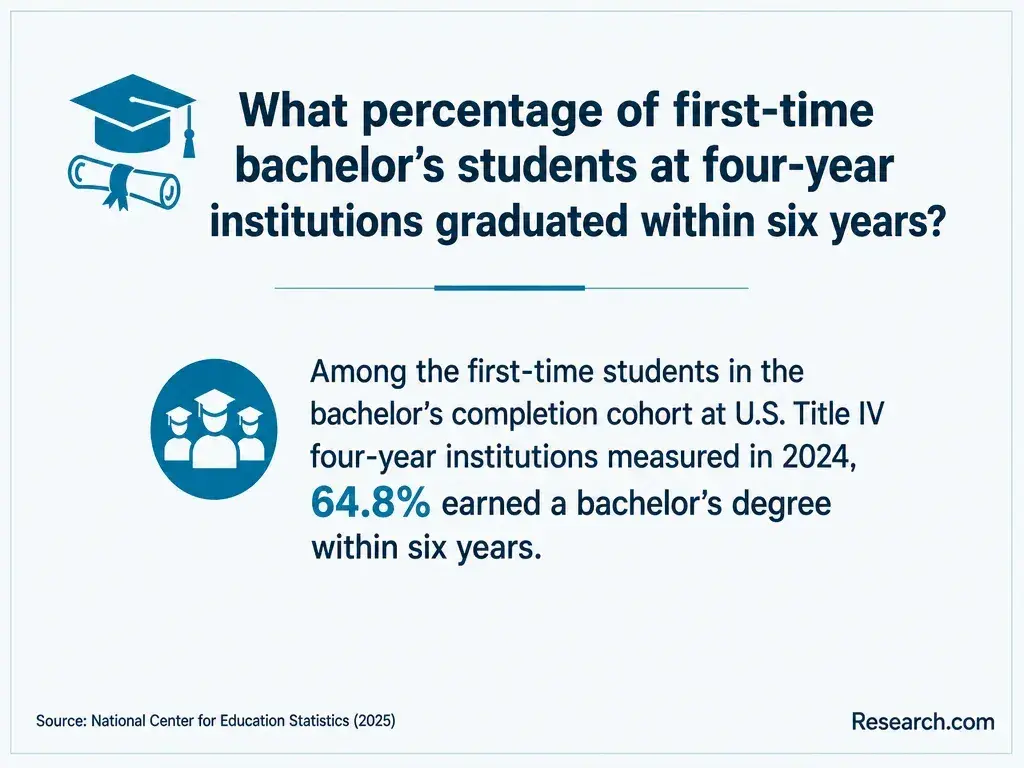
A conventional full-time bachelor's path is often planned around four academic years and roughly 120 semester credits. Your remaining time depends on accepted credits that actually meet requirements, enrollment pace, course availability, and any placement. An MI elective offered infrequently can delay an otherwise completed major; an intensive online term may also be a poor fit if its role-plays require scheduled partners.
Ask for a term-by-term plan showing when statistics, methods, addiction coursework, and MI practice are offered. Confirm any live meetings, campus visits, or site hours before choosing an accelerated schedule. Comparisons about comparing forensic psychology master's programs by study length concern a different degree level; they should not be used to estimate the time needed for this BA or for a later counseling credential.
Calculate cost from the credits remaining on your approved degree audit and the school's published tuition and mandatory fees for your enrollment category. Add books, technology charges, and possible travel or reduced work hours for a placement. A lower per-credit price may not be the lower-cost choice if more courses must be repeated or an essential elective is delayed.
Request a cost estimate for your actual course plan, then confirm aid eligibility and enrollment requirements with the financial aid office. Federal aid, grants, scholarships, and employer assistance depend on individual and program conditions; none should be assumed in a budget. For options specific to this field, see funding an online bachelor's in substance abuse counseling, while checking that any aid discussed applies to your chosen psychology program.
Depending on the employer and state, graduates may seek nonclinical work in recovery outreach, service coordination, program support, intake administration, prevention, or research assistance. These roles can involve explaining resources, documenting contacts, arranging referrals, or helping evaluate services. The employer - not the degree title - sets hiring criteria, and some positions require relevant experience or an additional credential.
For an early-career applicant, supervised experience demonstrating respectful communication, accurate documentation, confidentiality, and referral judgment may be more persuasive than an MI course title alone. Someone already employed at a community organization should ask whether a suitable project or approved placement can build those skills without assuming their current duties automatically count for academic credit.
A psychology BA is not a license to provide psychotherapy or diagnose substance-use disorders. Likewise, one-year online forensic psychology master's options address a different specialization; a faster additional degree is not necessarily a more direct route into recovery work than relevant experience or a state-recognized credential.
Requirements depend on the state, credential level, and exact job duties. A state may distinguish entry-level or supervised substance-use counseling credentials from authority to practice independently. Education in specified subjects, supervised experience, an examination, and continuing education may be required. Peer-support certification is another distinct pathway; it is not the same as counselor licensure.
Before choosing courses, find the state board or certifying authority responsible for your intended job title. Ask it whether a psychology BA qualifies as an acceptable degree, which addiction-specific courses count, how supervised hours must be earned, and whether an online program's location affects eligibility. Get clarification on required documentation before paying for electives selected solely for credential purposes.
If your goal is broader licensed mental-health counseling, investigate qualifying graduate programs rather than assuming a psychology BA or general psychology MS completes that training. Accelerated accredited clinical mental health counseling programs are a separate route whose curriculum, placements, accreditation, and state fit still require individual verification.
What Are the Salary and Job Outlook for Addiction Counseling Careers?
The U.S. Bureau of Labor Statistics groups substance abuse counselors with behavioral disorder and mental health counselors in its Occupational Outlook Handbook. That occupation-wide category is useful for investigating national wages and projected employment, but its figures are not the expected pay or hiring probability for someone with an addictions-focused psychology BA. It includes workers with different credentials, duties, locations, and experience.
For a useful comparison, identify the exact local job title you can qualify for, then review current postings for its credential, supervision, and pay requirements. Compare that evidence with the full cost of any additional training. Discussions of shorter online counseling master's financial comparisons can help frame a later-degree decision, but should not be read as salary outcomes for this BA or as a substitute for state-specific eligibility checks.
Other Things You Should Know About Psychology
If you already qualify for your support role and only need introductory MI skills, a workshop with observed practice and feedback may be more direct. It will not replace a degree or credential that your employer or state requires.
The underlying collaborative approach can inform remote conversations, but cues, privacy, and safety procedures differ by medium. Choose training that practices the format you will actually use.
Yes, at an educational level. Understanding how medication can fit into recovery helps support workers communicate accurately and make appropriate referrals; prescribing and clinical decisions belong to qualified professionals.
Keep the syllabus, assessed learning objectives, and feedback on simulated work if sharing is permitted. Do not include identifiable client conversations or recordings without explicit authorization.
- Motivational interviewing for substance abuse - PMC https://pmc.ncbi.nlm.nih.gov/articles/PMC8939890/
- Chapter 3 - Motivational Interviewing as a Counseling Style | nih.gov https://www.ncbi.nlm.nih.gov/books/NBK571068/
- Earn Your B.S. in Addiction Studies Online | SUNY Empire https://sunyempire.edu/academics/undergraduate-academics/addiction-studies.html
- Bachelor of Arts in Psychology - Texas State's online programs https://online.txst.edu/degrees/undergraduate/ba-psychology/
- Online Bachelor's Degree in Psychology in Addictions | Purdue Global https://www.purdueglobal.edu/degree-programs/psychology/bachelor-psychology-addictions/
- Applied Psychology: Addictions Studies, B.S. - CPS, CPSO | University of New Hampshire https://www.unh.edu/program/bachelor-science/applied-psychology-addictions-studies
- Understanding Motivational Interviewing https://motivationalinterviewing.org/understanding-motivational-interviewing
- MI Skill Building: How To Recognize, Respond To, and Elicit Change Talk - IRETA https://ireta.org/resources/mi-skill-building-how-to-recognize-respond-to-and-elicit-change-talk/
- Best Online Bachelor's Degrees In Psychology Of 2026 https://www.psychology.org/rankings/best-online-bachelor-degree-programs/