2027 Online BA in Psychology - Mental Health: How to Compare a General Studies Degree Versus a Psychology Major

Co-Founder and Chief Data Scientist
If you want to work in mental health services, the fastest route to a bachelor's degree may not be the best preparation - and a psychology major may not be necessary for the job you want. This comparison is for students choosing between an online BA in psychology and a general studies degree, particularly those returning with prior credits.
It explains what each route teaches, which nonclinical roles may be accessible, and where graduate education or a professional license changes the decision. You'll leave with a way to compare actual degree audits rather than degree titles alone.
Key Things You Should Know
- Choose the psychology major when its research methods, statistics, and mental-health coursework fill gaps relevant to your target role or future degree - not because the major itself permits therapy.
- A general studies degree can be the better route to nonclinical service work if more prior credits apply and you can add relevant courses and supervised experience.
- Compare remaining requirements, not accepted credits alone: a bachelor's degree commonly requires about 120 semester credits, but each school decides how transfer work satisfies its degree and residency rules.
What is the difference between a general studies degree and a psychology major?
A psychology major follows a defined sequence in psychological science, usually including research methods and statistics. General studies is a broad degree that lets students combine coursework across subjects; its psychology content depends on the electives they choose. Either may lead to a BA, but neither degree title establishes a mental-health concentration or a clinical qualification.
The comparison matters most when previous coursework is involved. The same transferred course might count toward a general studies elective but not a psychology major requirement. Ask each school for a degree audit showing requirements still outstanding, course availability, and residency credits - not just the number of credits it will accept. Guidance on transfer credit reviews for psychology applicants can help you frame those questions.
This table compares the degrees as academic routes, not promises about a particular school or employer.
| Decision factor | Psychology major | General studies degree |
| Required depth | Structured psychology and research coursework | Varies with the student's course choices |
| Use of varied prior credits | May leave major requirements unfinished | May accommodate more electives |
| Graduate preparation | Often offers a clearer route to psychology prerequisites | Can work if required courses are deliberately included |
| Clinical authority | None from the BA alone | None from the degree alone |
Is an online psychology bachelor's degree better for mental health careers?
It is better when the coursework and experiences match the next step. For an applicant who needs psychology, statistics, and research preparation for graduate study, a psychology BA may provide a more coherent foundation. For someone seeking outreach, administrative, or service-coordination work, a general studies degree paired with relevant experience may be just as useful - or faster to finish.
Compare job postings and future program prerequisites before enrolling. If your goal is licensed counseling, neither undergraduate option replaces a qualifying graduate program and its supervised training. Include the later degree in your financial comparison; budget planning for mental health counseling study is more relevant to that goal than comparing bachelor's tuition alone.
Online delivery is a separate consideration. An asynchronous lecture may fit around work, while live discussions, group research, or a local internship may not. Confirm the actual schedule and whether any site-based experience is required or optional.
Can a bachelor's degree in psychology lead to mental health careers?
Yes, but usually in nonclinical or supervised support roles, subject to employer and state requirements. Potential work includes behavioral-health program support, intake administration, outreach, referrals, research assistance, and some case-coordination positions. Staff in these roles may help people access services, document approved activities, or support a care team; they do not independently diagnose conditions or provide psychotherapy because they studied psychology.
For a specific opening, read the duties alongside the minimum qualifications. A position involving substance-use services, for example, may require a state credential, relevant experience, or supervision regardless of the applicant's major. Students weighing that route can use a substance use counseling undergraduate tuition versus salary outlook comparison, then check the credential rules for the state where they intend to work.
Practical evidence can matter more than the concentration printed on a transcript: experience with respectful client communication, accurate documentation, referrals, and confidential information can help demonstrate readiness for an entry-level support role.
Psychology majors commonly study introductory psychology, development, social behavior, biological or cognitive foundations, statistics, and research methods. Mental-health-related offerings may include abnormal psychology, health psychology, or substance-use topics. Course names, required sequences, and whether "mental health" is an official concentration vary by school.
Look beyond the number of relevant-sounding electives. Statistics and methods teach students to evaluate evidence; a course about disorders teaches subject matter, not diagnosis. If addiction services are your intended field, compare the actual curriculum with planning a degree focused on addiction counseling and with your state's requirements for any credential you hope to pursue.
Request a course map that identifies prerequisites and how often required classes run. A student missing statistics may have to complete it before research methods, affecting the graduation date even when enough total credits have transferred.
A general studies graduate can pursue nonclinical openings that accept a bachelor's degree in a range of fields. Depending on the employer, these may include program assistant, outreach coordinator, victim-services support worker, or administrative intake roles. Relevant electives in psychology, sociology, public health, and writing can strengthen the degree, but job-specific training and experience remain important.
General studies may be particularly useful if you already have service experience and need a completed bachelor's credential to apply for advancement. Its weakness is that flexible electives can leave gaps: check whether your target job or future graduate program expects statistics, research methods, or particular human-services coursework. For justice- or victim-services interests, planning a shorter undergraduate forensic psychology degree offers a comparison, but forensic coursework itself grants no investigative or clinical authority.
The requirements depend on the profession and state. Licensed mental health counselors and clinical social workers generally need a qualifying graduate degree, supervised experience, and other state-required steps. Licensed psychologists typically follow a doctoral professional-training pathway, although titles and rules vary by jurisdiction. Some peer-support or addiction-service roles instead use distinct state certifications or credentials.
A psychology BA or general studies BA can be a starting point, not a license. A general psychology master's degree is also not automatically a substitute for a licensure-qualifying counseling or social work program. If counseling is the goal, examine program recognition, required placements, and state-board criteria before considering clinical mental health counseling master's pacing; a shorter advertised timeline does not remove supervised-practice obligations.
Completion depends on credits that apply to the degree, course sequencing, enrollment pace, and the school's residency requirement. A bachelor's degree commonly totals about 120 semester credits; a transfer student's remaining workload cannot be determined from that total alone. Online programs may also charge technology fees or require travel for an optional or required experience.
To compare costs, obtain each school's written remaining-course plan and multiply the required credits by its applicable tuition rate, then add mandatory fees, books, and any placement or travel expenses. Account for aid eligibility and whether a slower pace changes household costs. Accelerated psychology study for returning students is worth considering only after confirming that the schedule and remaining requirements are manageable; speed is not a saving if it means repeating work or pausing enrollment.
Schools typically review prior transcripts and their own undergraduate admission criteria. Transfer admission to the university does not necessarily mean admission to the psychology major, and accepted credits do not necessarily satisfy its requirements. Some programs set additional major-entry or course-grade rules; general studies programs may have different eligibility policies.
Submit transcripts from every prior institution and ask for separate decisions on admission, transfer equivalencies, major requirements, and graduation requirements. If graduate psychology study is a possibility, review the intended programs' prerequisites before selecting undergraduate electives. Fast-track graduate psychology programs can be a starting point for comparing next steps, but admission requirements and clinical-licensure relevance must be checked program by program.
Check that the degree-granting institution holds institutional accreditation recognized by the U.S. Department of Education or the Council for Higher Education Accreditation, using the accreditor's own listing to confirm its current status and scope. Then verify the exact degree name, online format, and any concentration directly with the school.
Do not reject an undergraduate psychology program because it lacks APA program accreditation: APA accreditation does not cover general psychology bachelor's degrees. Conversely, institutional accreditation alone does not establish that a later counseling program meets a particular state's licensing rules. If that is your destination, review accelerated counseling study and accreditation requirements separately from the bachelor's comparison.
What are the salaries and job outlooks for psychology-related careers?
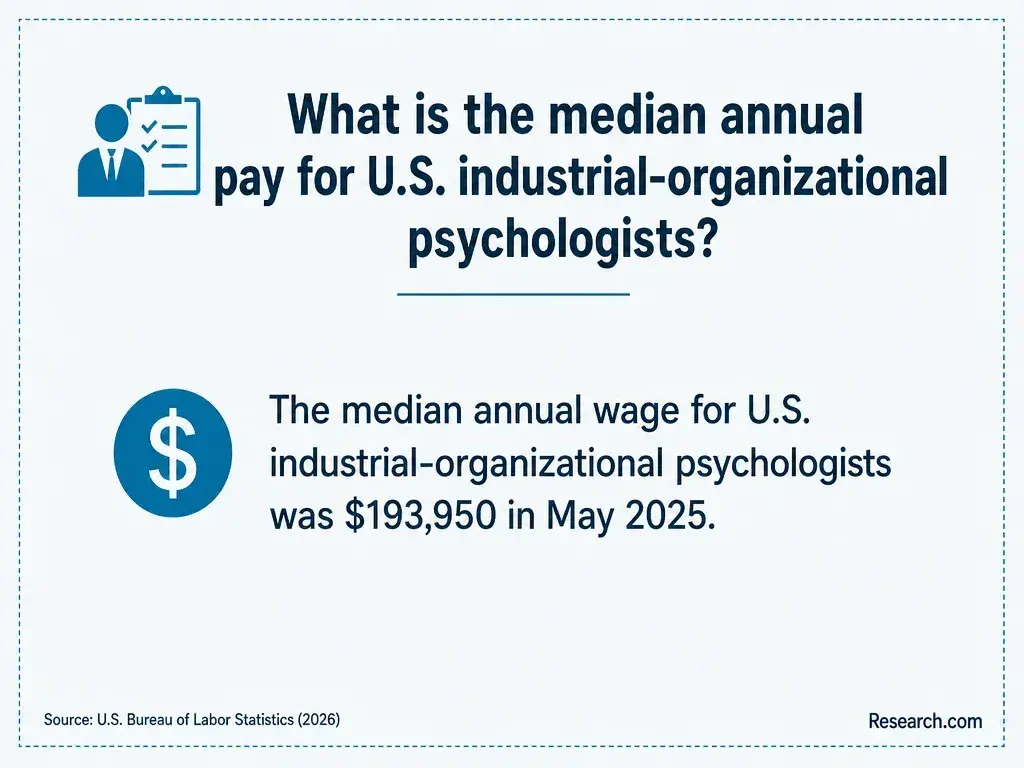
There is no single salary or growth rate for "psychology-related careers." An intake assistant, a community-services coordinator, a licensed counselor, and a psychologist are different occupations with different qualifications. U.S. Bureau of Labor Statistics occupational medians and projections can inform a comparison, but they describe workers in defined occupations - not earnings promised to graduates of either bachelor's degree.
Start with a job title you would realistically qualify for, then compare its posted local pay and requirements with the remaining cost of each degree. If your plan depends on becoming a licensed counselor, include graduate tuition, completion time, and supervised-training demands; comparing counseling master's tuition with completion time addresses that later investment. A higher occupational median for a licensed role is not evidence that a psychology BA, by itself, has a higher return than general studies.
Other Things You Should Know About Psychology
Not necessarily. Ask whether the focus is an officially recorded concentration, a transcript notation, or simply a set of electives.
Possibly, but obtain approval before relying on it. The school may require specific learning objectives, supervision, and duties beyond your regular job.
Policies vary. Ask whether a placement is required, who locates and approves sites, and whether the school can support students in your area.
It may be if your target job values relevant coursework and your existing major meets its degree requirement. For graduate study, compare the minor's courses with each program's prerequisites rather than relying on the minor's name.
- Frequently Asked Questions for Mental Health Counselors | nysed.gov https://www.op.nysed.gov/professions/mental-health-counselors/faqs-education-requirements
- Accreditation in the U.S. | ed.gov http://www.ed.gov/laws-and-policy/higher-education-laws-and-policy/college-accreditation/accreditation-in-the-us
- Psychology B.A. Sc. (Online) | University of Minnesota Duluth https://academics.d.umn.edu/psychology-basc-online
- Find the Right Online Degree Program by Using a Comparison Framework | Columbia Southern University https://www.columbiasouthern.edu/blog/blog-articles/2026/august/find-the-right-online-degree-program
- Program: General Studies Requirements | msudenver.edu https://catalog.msudenver.edu/preview_program.php
- Online Bachelor's in Psychology | University of Kansas https://online.ku.edu/undergraduate-programs/online-bachelors-psychology
- Online Psychology B.A. or B.S. Degree Completion Program | gsu.edu https://online.gsu.edu/program/psychology-ba-or-bs-completion-program/
- Considering Graduate School | Department of Psychology | Illinois State https://psychology.illinoisstate.edu/academics/undergraduate-advising/considering-graduate-school/
- What Degree Do I Need to Become a Counselor or Therapist? | Palo Alto University https://paloaltou.edu/resources/blog/what-degree-do-i-need-become-counselor-or-therapist