2027 Online BA in Psychology - Mental Health: When a Short Certificate Is Not a Substitute for a Degree
Audited and Verified:
Our Editorial and Data Verification Process
Research.com uses government datasets, official education statistics and primary institutional information to support its career and degree guides. Our review process checks factual accuracy, occupational definitions, source dates and the requirements associated with the credentials discussed.
How This Article Was Fact-Checked
Our editorial team verifies salary estimates, employment projections, education requirements and program information against original data providers and official organizations. Salary figures are checked against the relevant occupational definitions and reporting periods. Information about licensure, accreditation and required in-person training is reviewed separately.
Fact-checked and verified on:

Co-Founder and Chief Data Scientist
A short mental health certificate may help you enter support work or build a specific skill, but it cannot do every job a psychology bachelor's degree does - and neither credential alone qualifies you to practice counseling independently. This distinction matters if you are choosing between a faster, narrower option and an online BA that requires a larger investment.
This guide is for prospective students, career changers, and human-services workers. It explains what each route can prepare you for, where licensed careers require further education, and what to verify before enrolling.
Key Things You Should Know
- A short certificate can teach a defined support skill, but it does not replace a bachelor's degree when an employer or graduate program requires one.
- An online psychology BA with a mental health focus can support nonclinical career entry and graduate-school preparation; it does not authorize diagnosis or psychotherapy.
- For licensed counseling, compare the full path - qualifying graduate education, supervised experience, and state requirements - not just the speed of an undergraduate program or certificate.
What Is an Online BA in Psychology With a Mental Health Focus?
It is a bachelor of arts degree in psychology that combines broad study of behavior and psychological research with coursework related to mental health. Depending on the school, "mental health" may be an officially named concentration, a group of recommended electives, or simply a description of the curriculum. Ask which designation, if any, appears on the transcript.
The BA's value is its breadth: students can study development, social behavior, statistics, and research methods alongside mental disorders and service systems. A short certificate usually addresses a narrower task or population.
That makes a certificate useful for targeted professional development, but not interchangeable with a degree for jobs requiring a bachelor's or for graduate programs requiring an undergraduate credential. If you're doing psychology degree planning for prospective online students, compare the major requirements as well as the mental health electives.
Is a Short Mental Health Certificate Enough for a Career in Counseling?
Not if "counseling" means independently providing psychotherapy as a licensed professional counselor. A brief certificate does not replace the qualifying graduate program, supervised experience, examinations, and other conditions set by the state where you intend to practice. A psychology BA does not replace them either.
A certificate may still be the better first purchase if your immediate goal is a defined, nonclinical responsibility - such as learning referral procedures for an existing outreach job. Check whether an employer recognizes it and whether it is a course-completion certificate or a credential issued under a separate certification process.
If your goal is licensed counseling, assess the complete graduate pathway, including placement obligations, rather than treating shorter graduate counseling programs by cost and duration as substitutes for state eligibility checks.
What Can You Do With a Bachelor's Degree in Psychology and Mental Health?
If you already have community-service, administrative, or caregiving experience, the BA may help you compete for nonclinical roles such as behavioral-health program assistant, intake coordinator, victim-services advocate, or research support worker. Duties can include scheduling, documenting services, explaining referral options, collecting approved program data, and working under agency procedures.
Employers may also require experience, background checks, or role-specific training; the degree alone does not secure a position.
Compare the work itself before choosing a credential. Someone interested in exploring work in addiction recovery services might find a supervised support role and a state-recognized credential more direct than a general BA. Someone seeking broader eligibility for bachelor's-level positions or later graduate study may benefit more from the degree. In either case, classroom knowledge about disorders is not permission to diagnose, assess independently, or provide therapy.
Look for institutional accreditation recognized by the U.S. Department of Education. Verify the institution's current status in the Department's accreditation database and confirm that the accreditation covers the institution offering the online degree. This matters for academic credibility and can affect federal aid and how other schools evaluate transfer or graduate applications. Accreditation does not guarantee that another institution will accept particular credits.
Do not expect APA accreditation for a general psychology BA; APA accreditation applies to specified professional psychology training programs, not ordinary undergraduate majors. This distinction holds even when comparing faster forensic psychology undergraduate options. A specialization's name, whether forensic or mental health, is separate from institutional accreditation and professional licensure eligibility.
Expect the psychology core to address research methods, statistics, development, and psychological theory. Mental health-related offerings may cover abnormal psychology, health psychology, substance use, or community services. Course titles are less useful than syllabi: look for evidence appraisal, culturally responsive practice, ethical boundaries, and writing that accurately distinguishes screening, referral, and treatment.
For a counseling goal, check the prerequisites of the specific future graduate program; a BA's mental health focus does not automatically satisfy them. For a substance-use support goal, compare the BA's breadth with low-cost substance use counseling undergraduate degree pathways and your state's credential rules. Coursework about therapy or addiction is academic preparation, not authorization to deliver treatment.
Requirements depend on whether you apply as a first-year or transfer student. Schools commonly request prior academic records, but eligibility, deadlines, and any separate admission to the psychology major are institution-specific. Returning students should submit transcripts from every prior college and request an official degree audit - not just an estimate of accepted credits. A course can transfer as elective credit without meeting a psychology, statistics, or general-education requirement.
If counseling is your eventual goal, use that audit to identify academic gaps early. Graduate counseling programs set their own admissions and course requirements, while their clinical training follows a different sequence from an undergraduate BA. Reviewing clinical counseling master's course sequencing can help you frame questions for admissions staff; only the graduate program can confirm what preparation it will accept.
A conventional full-time bachelor's path spans several academic years; a transfer student's remaining time depends on credits that apply to the degree, course sequencing, and enrollment pace. An accelerated calendar does not erase unmet requirements. Before choosing among accelerated undergraduate psychology program choices, ask for a term-by-term plan based on your evaluated record.
Online delivery also does not mean every hour is self-scheduled. Check for live classes, group meetings, research activities, or an approved placement with fixed hours. Those obligations can determine whether the proposed timeline works alongside employment or caregiving.
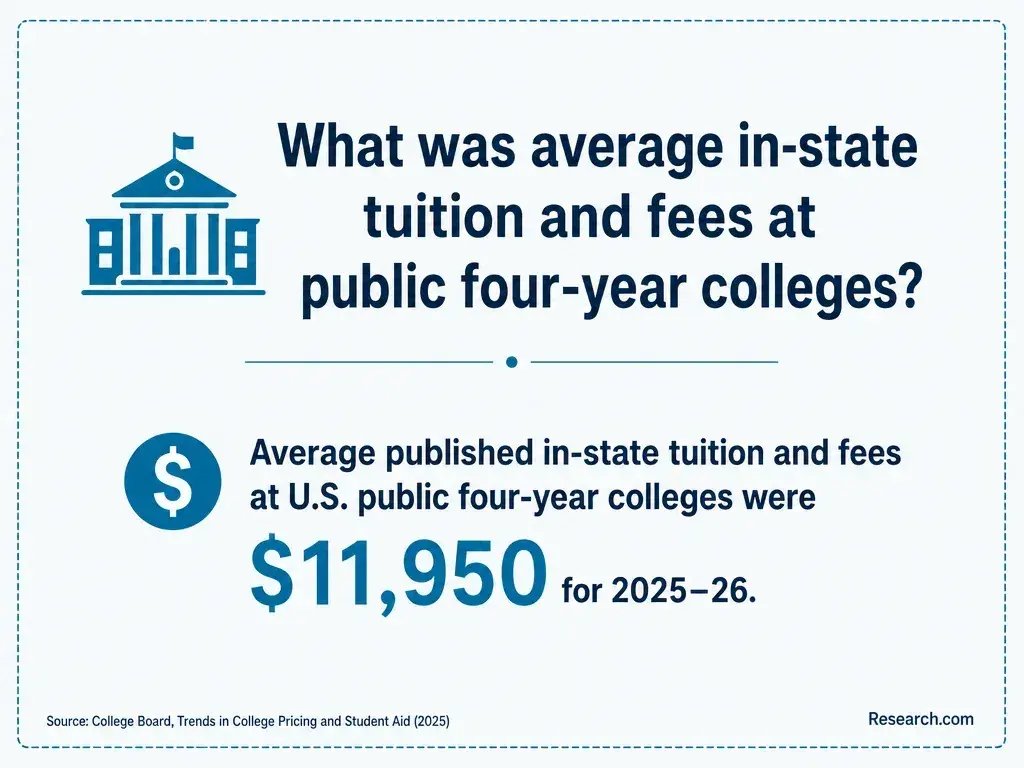
No single price represents all online psychology BAs. Compare the school's current tuition schedule and required fees against a written estimate of your remaining degree requirements. Include books, technology charges, possible travel or placement costs, and the cost of taking fewer courses per term. Accepted transfer credits save money only when they reduce requirements you would otherwise have to complete.
If your objective requires graduate education, budget for that next credential separately. An inexpensive BA followed by an unsuitable graduate program is not a bargain. Likewise, low-cost master's degrees in psychology should not be assumed to meet counseling licensure requirements. Ask each school for its current net-cost and aid information, and ask the relevant licensing board whether the intended professional program meets its educational rules.
Requirements attach to the occupation and jurisdiction, not to a mental health-themed degree title. Licensed professional counselors generally need qualifying graduate education and supervised post-degree experience; psychologists follow a distinct, typically doctoral, licensing pathway. Clinical social work, marriage and family therapy, and substance-use counseling have their own rules.
Some peer-support and recovery roles use state-recognized certifications, while many administrative or program-support roles do not require a clinical license.
Check the state board or credentialing authority for the exact title and duties you want before enrolling. Even shorter graduate degree timelines in forensic psychology do not establish eligibility for counseling or psychologist licensure. The relevant test is whether the particular program satisfies the applicable authority's requirements, not how closely its subject matter sounds related to mental health.
How Do You Choose a Reputable Online Psychology Degree Program?
Start with the outcome you need: a bachelor's credential for nonclinical work, preparation for a particular graduate program, or a targeted skill better learned through a certificate. Then obtain answers in writing. The following checks expose differences that an attractive program description may hide:
- Confirm institutional accreditation, the exact degree name, and whether the mental health focus is formally recorded.
- Request a degree audit showing which transfer courses fulfill requirements and when remaining courses are offered.
- Ask which activities require live attendance, campus visits, or an approved local site, and who arranges supervision.
- Compare the full remaining cost and ask for evidence about student support and completion outcomes, including how those outcomes were measured.
- If licensure is your long-term goal, confirm the next professional program's prerequisites and check eligibility with the state licensing authority.
These questions are especially important when comparing a general BA with clinical counseling degree formats and completion estimates. The BA may be a sound foundation, but it is not the professional counseling degree. If your existing education already meets your target job's requirements, a focused certificate plus relevant supervised experience may be the more efficient choice.
Other Things You Should Know About Psychology
Possibly. Ask for the actual weekly schedule and any fixed-time or site-based requirements, then choose a course load you can sustain.
That depends on its education-benefit policy. Check eligible programs, reimbursement limits, grade conditions, and any obligation to remain employed.
It may help you build experience, but it counts for academic credit only if the institution approves it under a specific credit or placement policy.
Compare required courses and the prerequisites for your intended next step. The BA-versus-BS label alone does not determine career eligibility or clinical authority.
- Behavioral Health Career Descriptions | samhsa.gov https://www.samhsa.gov/about/careers/behavioral-health-workforce/careers-by-state/descriptions
- GAC - Chapter 135-5 REQUIREMENTS FOR LICENSURE https://rules.sos.ga.gov/gac/135-5
- DAPIP | Homepage - Office of Postsecondary Education (OPE) https://ope.ed.gov/dapip/
- Requirements Related to the Practice of Counseling - NCBI https://www.ncbi.nlm.nih.gov/books/NBK259170/
- 4 Psychology Certifications with a Bachelor's | University of Bridgeport https://www.bridgeport.edu/news/bachelors-in-psychology-certifications/
- Online Bachelor of Arts in Psychology | UML GPS https://gps.uml.edu/degrees/undergrad/online-bachelors-psychology-degree.cfm
- General Psychology | Online Bachelor's Degree | Capella University https://www.capella.edu/online-psychology-degrees/bs-psychology-program/bachelors-general-psychology/
- What Is the Difference Between Psychologists, Psychiatrists and Social Workers? | apa.org https://www.apa.org/ptsd-guideline/patients-and-families/psychotherapy-professionals
- Online Bachelor's Degree in Psychology | Purdue Global https://www.purdueglobal.edu/degree-programs/psychology/bachelor-degree-psychology-online/
- Can I Become a Counselor With a Bachelor's Degree? | George Fox University https://www.georgefox.edu/counseling-programs/articles/without-bachelors.html