2027 Online BA in Psychology - General Psychology for Patient Navigators: Choosing a Program Without Leaving Your Job
Audited and Verified:
Our Editorial and Data Verification Process
Research.com uses government datasets, official education statistics and primary institutional information to support its career and degree guides. Our review process checks factual accuracy, occupational definitions, source dates and the requirements associated with the credentials discussed.
How This Article Was Fact-Checked
Our editorial team verifies salary estimates, employment projections, education requirements and program information against original data providers and official organizations. Salary figures are checked against the relevant occupational definitions and reporting periods. Information about licensure, accreditation and required in-person training is reviewed separately.
Fact-checked and verified on:

Co-Founder and Chief Data Scientist
Patient navigators already help people overcome barriers to care. An online BA in general psychology may deepen that work, but the degree has to fit around appointments, changing shifts, and a paycheck you cannot set aside.
This guide is for working navigators weighing whether a bachelor's degree is worth pursuing and, if so, how to choose one. It focuses on the courses and applied experience that matter to navigation, the scheduling and cost questions to settle before enrolling, and the career opportunities a psychology BA can - and cannot - open.
Key Things You Should Know
- A general psychology BA can strengthen communication, behavioral-science, and research skills, but patient navigation jobs do not universally require this major.
- Before enrolling, verify the degree audit, course rotation, live-session and placement requirements, and total remaining cost - not just whether classes are advertised as online.
- A psychology BA does not authorize diagnosis or therapy; compare its cost with targeted training or a different credential if your goal is a specific promotion or regulated role.
What Is an Online BA in General Psychology for Patient Navigators?
It is a broad undergraduate psychology degree completed primarily online, not a dedicated patient-navigation qualification. General psychology typically combines the study of behavior and development with research methods, statistics, and electives. A BA may leave room for courses in health, communication, or social services, but the actual curriculum depends on the school.
For a navigator, the degree makes the most sense when an employer requires a bachelor's for advancement, when broader behavioral-science skills support the desired work, or when graduate study is a considered next step. If the immediate goal is to improve referral coordination or learn a particular health system, employer training may be faster and less costly. When selecting an online psychology bachelor's program, compare its requirements against the jobs you want rather than assuming any psychology major is designed for navigation.
How Can a Psychology Bachelor's Degree Prepare You for Patient Navigation?
Navigation involves explaining options, identifying practical barriers, making referrals, documenting follow-up, and working with care teams. Developmental and social psychology can sharpen a navigator's understanding of how circumstances affect behavior; research methods can help them judge claims about outreach or service improvements. Neither substitutes for local referral knowledge, language access practices, or supervised experience with patients.
A useful program lets working students connect coursework to approved, nonclinical tasks - for example, developing a literature-based resource guide or evaluating a publicly available outreach tool. Ask whether an assignment can address a navigation problem without using patient records. Workplace data, patient contact, and any proposed research require the appropriate employer permissions and academic oversight; a class project is not permission to access protected information.
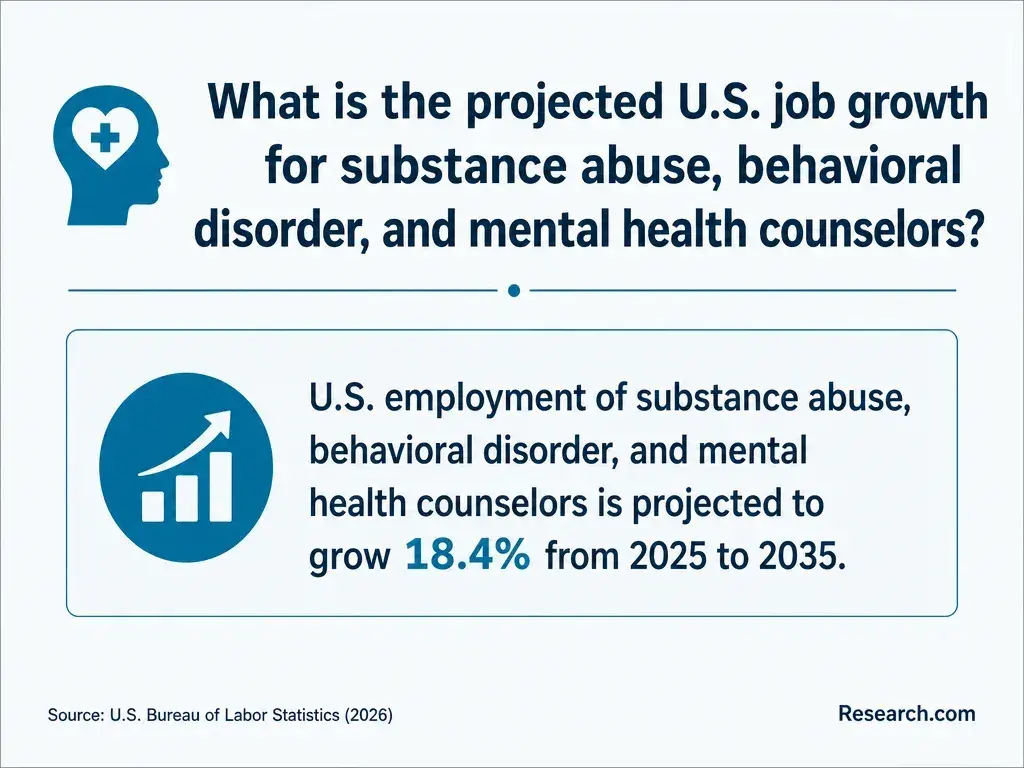
If your intended move is specifically into working in substance use recovery support, compare that role's employer and state credential requirements with what a general psychology BA teaches. Related coursework may help, but it does not replace required recovery-support training or supervision.
What Accreditation Should an Online Psychology Program Have?
Check that the institution holds recognized institutional accreditation and that its status covers the school awarding the online degree. Confirm the school and accreditor in the U.S. Department of Education or Council for Higher Education Accreditation directories, then ask the institution whether the particular online BA is included in its approved offerings.
Do not reject a general psychology BA because it lacks American Psychological Association accreditation: APA accreditation is not the standard for general undergraduate psychology majors. Conversely, institutional accreditation does not establish that a BA meets requirements for a licensed profession. If your long-term aim is counseling, examine the requirements of the intended graduate program and state board; online clinical counseling graduate completion options are a different educational decision from choosing a general psychology BA.
Expect introductory psychology, statistics, research methods, and study across areas such as development, cognition, social behavior, and biological or behavioral health. General education and upper-division psychology requirements also affect the remaining workload. Health psychology, cultural psychology, or community-focused electives can be especially relevant to navigation, but check whether they are offered online often enough to fit your graduation plan.
The most useful comparison is between required learning and an attractive elective that might not run when you need it. Ask an advisor for a term-by-term course sequence, including prerequisites and any capstone, group project, or field experience. If your goal is specifically substance-use counseling rather than broad navigation, undergraduate substance use counseling study on a budget is a separate comparison; its title or coursework alone does not establish state credential eligibility.
Yes, potentially - but "online" describes where much of the instruction happens, not when work is due. A self-paced video lecture may still be paired with weekly deadlines, scheduled exams, live discussions, group meetings, or daytime supervision. Rotating clinic shifts make those details more important than an advertised accelerated timeline.
Before committing, request sample syllabi and ask whether live attendance is required, how long courses run, whether students can reduce their course load, and what happens after a shift change or leave of absence. If a capstone or internship is required, obtain written guidance on whether your existing job can qualify and who must approve it. Compare that realistic schedule with household obligations and your employer's education-assistance rules.
Do not use timelines for another degree level as a proxy for feasibility. For example, under-two-year forensic psychology graduate program options do not indicate how quickly a working navigator can finish the undergraduate credits they still need.
Requirements differ for first-time and transfer applicants. Schools may request prior transcripts and evidence of secondary-school completion or college study; admission to the university does not necessarily settle admission to a major or satisfaction of its prerequisites. Returning students should ask for an official evaluation showing which credits meet general education, psychology, statistics, and remaining residency requirements.
Send transcripts from every prior institution and request a written degree audit before choosing a start date. A course accepted for elective credit might not replace required research methods, and a prerequisite offered infrequently can delay completion. If speed is central to your decision, compare your audit - not a headline completion claim - with shorter routes through forensic psychology bachelor's coursework; that specialty is worth choosing only if its curriculum also fits your goals.
The answer depends chiefly on credits that apply to the degree, the pace you can sustain while employed, and when required courses run. Compare schools using the same starting transcript and a written plan. Tuition alone misses fees, materials, required travel, and any unpaid time needed for an approved experience.
This comparison separates the charges you can estimate now from conditions that may change your final cost.
| Cost or time factor | What to verify with each school |
| Remaining coursework | Official degree audit, major requirements, and course rotation |
| Direct charges | Tuition basis, mandatory online fees, materials, and graduation charges |
| Work-related costs | Required live attendance, travel, placement hours, and possible lost shifts |
| Funding | Actual aid offer, enrollment conditions, and employer reimbursement terms |
Use each school's estimate of remaining requirements to calculate a personal total, then compare affordable online psychology degree programs against that total. The lowest advertised tuition may not be the least expensive path if fewer prior courses apply or required classes delay graduation.
For an experienced navigator, the most credible next move may be a more responsible version of familiar work: navigation team coordination, community outreach, intake support, or program support. A BA may meet an employer's bachelor's-degree requirement, while your record of referrals, documentation, patient communication, and teamwork demonstrates role readiness. Promotion still depends on the job description and hiring process.
Other psychology-adjacent positions may be possible, but their required experience and credentials vary. Before choosing electives, collect postings for the jobs you want and identify the qualifications you lack. A specialized degree is not automatically a better return: forensic psychology master's degree career return considerations concern a different labor market and should not be treated as evidence of likely outcomes for patient navigators.
There is no reliable single salary or growth rate for "psychology BA graduates" or for all patient navigators. Navigator titles span healthcare and community-service employers, and published occupational categories may combine people with different duties and credentials. A national occupational median is therefore not an estimate of what your employer would pay you after graduation.
For a useful comparison, start with postings for the exact navigator, coordinator, or outreach roles you could pursue in your area. Record their stated pay ranges, degree requirements, and experience requirements, then compare the potential change with your remaining education cost and time. Use the Bureau of Labor Statistics occupational descriptions and outlook for the closest matching duties as broader context, not as a promised raise. If a later graduate degree is part of your plan, assess online psychology master's completion planning as an additional investment, not an automatic salary step.
Do Patient Navigators Need Licensure or Professional Certification?
There is no single professional license required for every job called patient navigator. Requirements depend on the employer, duties, setting, and state. Some positions favor or require a particular certification, clinical credential, or prior experience; others train staff for nonclinical coordination. Check actual postings and the responsible state authority rather than relying on a job title alone.
A general psychology BA does not authorize psychotherapy, diagnosis, or independent clinical assessment. If a proposed advancement role involves regulated counseling or substance-use treatment, identify its required education, supervised practice, and credential before enrolling. If that leads you toward a different undergraduate pathway, comparing grants for undergraduate addiction counseling study can inform the funding side of the decision, but financial aid and professional eligibility must be checked separately.
Other Things You Should Know About Psychology
Not necessarily. Those are specialized administrative skills; check the curriculum and seek employer or targeted training if they are central to your job.
It can be valuable when employers serve patients in those languages. Describe your actual duties and proficiency accurately; do not assume language skills replace any required interpreter qualification.
Avoid identifiable details and follow your employer's confidentiality rules. You can usually explain what the work taught you without recounting a patient's private circumstances.
Ask the registrar and financial aid office about leave, course availability upon return, and how a break could affect aid or employer reimbursement before withdrawing.
- Education - Think Cultural Health - HHS.gov https://thinkculturalhealth.hhs.gov/education
- Requirements Related to the Practice of Counseling - NCBI https://www.ncbi.nlm.nih.gov/books/NBK259170/
- Accreditation in the U.S. | ed.gov http://www.ed.gov/laws-and-policy/higher-education-laws-and-policy/college-accreditation/accreditation-in-the-us
- (225 ILCS 15/) Clinical Psychologist Licensing Act. | ilga.gov https://www.ilga.gov/Legislation/ILCS/Articles
- Cost of Attendance (Budget) | 2025-2026 Federal Student Aid Handbook https://fsapartners.ed.gov/knowledge-center/fsa-handbook/2025-2026/vol3/ch2-cost-attendance-budget
- Types of Financial Aid: Grants, Work-Study, and Loans | studentaid.gov https://studentaid.gov/understand-aid/types
- Estimate Costs and Aid | WVU Hub | West Virginia University https://hub.wvu.edu/planning-and-resources/estimate-costs-and-aid
- Online Bachelor's in Psychology | University of Kansas https://online.ku.edu/undergraduate-programs/online-bachelors-psychology
- What Can I Do With A Bachelor's In Psychology? | Midway University https://www.midway.edu/blog/blog-bachelors-in-psychology.html
- Transfer Credit - University of Maine at Presque Isle https://catalog.umpi.edu/content.php