2027 Online BA in Psychology - General Psychology After an AA in Psychology: Compare Transfer Credit and Remaining Coursework
Audited and Verified:
Our Editorial and Data Verification Process
Research.com uses government datasets, official education statistics and primary institutional information to support its career and degree guides. Our review process checks factual accuracy, occupational definitions, source dates and the requirements associated with the credentials discussed.
How This Article Was Fact-Checked
Our editorial team verifies salary estimates, employment projections, education requirements and program information against original data providers and official organizations. Salary figures are checked against the relevant occupational definitions and reporting periods. Information about licensure, accreditation and required in-person training is reviewed separately.
Fact-checked and verified on:

Co-Founder and Chief Data Scientist
An AA in psychology can put a bachelor's degree within reach, but a school may accept your credits without applying all of them to its online general psychology BA. That difference can add courses, cost, and semesters.
This guide is for transfer and returning students comparing degree-completion options. It explains how to read a transfer evaluation, estimate the coursework left, and check scheduling, accreditation, and career fit - so you can compare offers using requirements you will actually have to finish.
Key Things You Should Know
- An AA does not automatically complete the first half of a BA: compare credits accepted with general education, psychology-major, elective, and residency requirements satisfied.
- For an illustrative 120-credit BA, 60 applicable transfer credits leave 60 credits - about 20 three-credit courses - before accounting for any unmet requirements or different course values.
- Get a written, program-specific degree audit and a course schedule before committing; only the receiving school can approve equivalencies, substitutions, and graduation requirements.
How Do Transfer Credits Work From an AA in Psychology to an Online BA?
Transfer credit works in two stages. The university first decides whether to accept a course for credit. Its psychology department and degree-audit rules then determine whether that course satisfies a requirement - such as statistics, research methods, general education, or a major elective. Accepted credit that counts only as a free elective may not shorten the path to graduation.
An AA designed for transfer may have an articulation agreement that identifies courses and general education requirements the receiving school will honor. Confirm that the agreement applies to your community college, AA, psychology major, online BA, and entry term. Compare that agreement with the individual evaluation; neither the credential's name nor an informal admissions estimate settles a disputed course equivalency. When comparing online psychology programs and academic pathways, ask each school for its own audit rather than assuming the same AA produces the same result everywhere.
Send official transcripts from every college attended and retain syllabi for statistics, research methods, and other courses whose content may need departmental review. Ask the registrar or transfer-credit office about credit acceptance, the psychology department about major equivalencies, and your degree advisor about substitutions and the final audit. Check minimum grades, repeated-course rules, credit recency, quarter-to-semester conversion, and the number of credits that must be earned at the university. If an evaluation seems wrong, request the school's formal appeal process before enrolling in a replacement course.
How Many Courses Remain After an AA in Psychology?
There is no reliable course count based on the AA alone. A useful estimate starts with the BA's total-credit requirement, subtracts applicable transfer credits, and then checks whether remaining major, general education, upper-division, and residency requirements can all fit within that balance. For illustration, 60 applicable credits toward a 120-credit degree leave 60 credits, or roughly 20 three-credit courses. That is a calculation, not a completion promise.
The comparison below shows why two students with the same number of accepted credits can receive different graduation plans.
| Audit result | What it means for remaining coursework |
| Statistics satisfies the BA's required course | The student can move to courses that depend on statistics, subject to the program's sequence. |
| Statistics transfers as an elective | The student may still need the required statistics course or an approved substitution. |
| AA fulfills a general education block | Fewer general education requirements may remain, but major and university rules still apply. |
| Credits exceed an elective allowance | Some accepted credits may not reduce the credits or courses needed to graduate. |
Request a term-by-term plan showing each remaining course and its prerequisite. If you are considering addiction-focused undergraduate psychology degrees instead of a general major, obtain a separate audit: a concentration's required courses may change how your AA credits apply.
Is an Online BA in General Psychology Accredited?
Accreditation belongs first to the institution. Check the university's current institutional accreditation and the accreditor's recognition through the U.S. Department of Education or the Council for Higher Education Accreditation. Confirm that the online BA is offered by that institution; do not treat a school's accreditation as proof that every course will transfer or that the BA leads to a license.
The American Psychological Association does not accredit general undergraduate psychology BAs. Professional accreditation can matter later if you apply to a different kind of program. For example, an accredited mental health counseling program cost guide concerns a distinct graduate-training decision, not an accreditation label your general psychology BA needs. Ask a prospective graduate program which undergraduate courses it expects rather than assuming the BA's accreditation alone establishes eligibility.
An online general psychology BA typically combines psychological science with university-wide coursework. The transfer-sensitive requirements are often statistics, research methods, a sequence of upper-division psychology courses, and a culminating seminar, research project, or capstone where required. Subject coverage may include development, social behavior, cognition, biological foundations, and psychopathology. Exact courses and prerequisites vary by school.
Look beyond the course titles. A prior introductory psychology course may transfer cleanly while a statistics course taught for another major needs review; research methods may require statistics first. Check whether required courses run every term and whether "online" includes live meetings, proctored exams, group work, or an in-person experience. An elective on addiction does not establish a formal concentration or qualify its student to provide treatment. If addiction services are your intended field, compare the actual coursework and credential implications with substance abuse counseling bachelor's fees and career prospects rather than choosing on a course title alone.
Having an AA may qualify you to apply as a transfer student, but it does not guarantee admission to the university or, where separately reviewed, the psychology major. Schools set their own application deadlines, minimum GPA and course-grade rules, transcript requirements, and policies for students with incomplete associate degrees. An admission offer is also separate from the final transfer-credit evaluation.
Before accepting an offer, ask admissions which requirements apply to your completed AA, and ask the department whether any psychology, statistics, or research-methods courses are needed before upper-division enrollment. If your long-term aim is counseling, do not mistake BA transfer admission for admission to a professional master's program. Evaluating a shorter clinical mental health counseling master's is a separate step after checking that program's bachelor's-degree and prerequisite rules.
Completion time depends on the approved audit and on when required courses are offered, not simply on how many credits the school accepts. With roughly 20 three-credit courses remaining in the illustration above, a student taking five courses per term would need fewer terms than one taking two. Prerequisites, course availability, and required university credits can lengthen either plan.
Ask an advisor to map your remaining courses against actual upcoming online offerings. If you work or provide care, identify fixed meeting times, group-project deadlines, and any required campus or placement visits before choosing a pace. A compressed BA schedule is not automatically advantageous if it weakens preparation for a later professional degree; clinical counseling degree formats and completion estimates illustrate that a subsequent program has its own scheduling and training obligations.
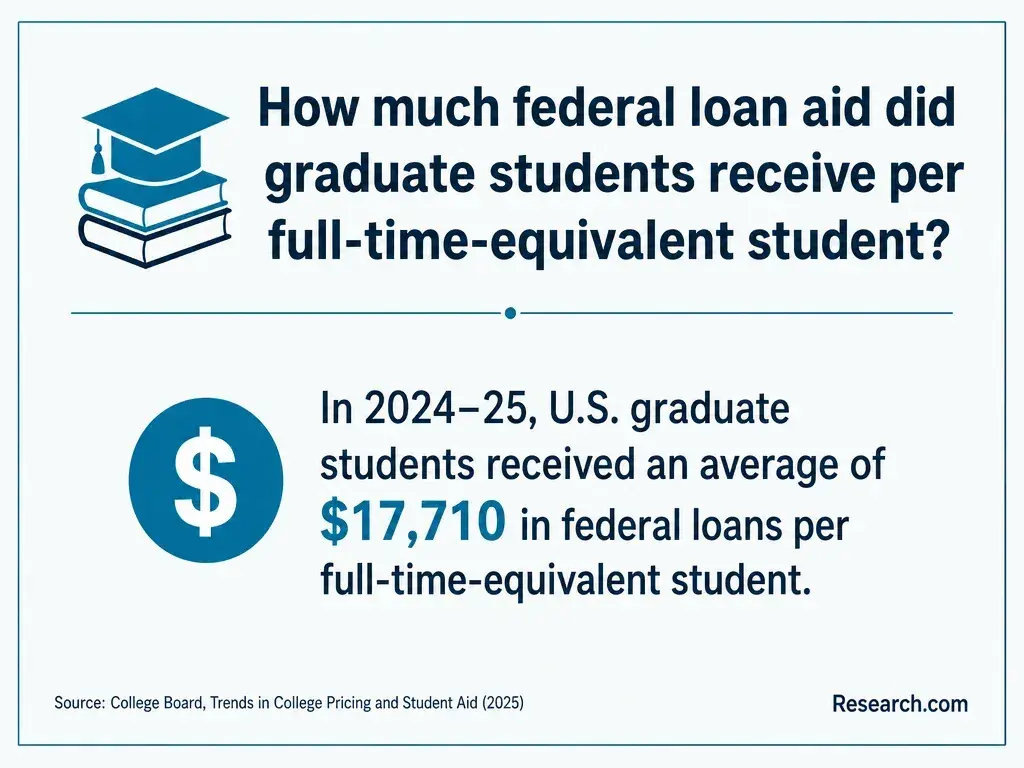
To compare costs, price the remaining credits on your approved audit, not the number advertised as transferable. Multiply those credits by the applicable tuition rate, then add mandatory online, technology, course, and graduation fees. Confirm whether tuition differs by residency or enrollment pace and whether books, travel, or an unpaid experience could add costs. A lower per-credit price can be offset by more required credits.
Request a written cost estimate tied to your audit and ask the financial-aid office how enrollment intensity, satisfactory academic progress, and previously used aid affect eligibility. If further study is necessary for your target role, compare the combined educational commitment; a guide to short counseling master's formats and career planning addresses costs the BA estimate cannot capture. Do not budget for a transfer award, employer reimbursement, or federal aid until its terms are confirmed.
A general psychology BA can support applications for nonclinical roles in human services, community outreach, program support, research assistance, recruiting, and other work involving communication or data. Employers may also require relevant experience, technical skills, background checks, or a different degree. Your strongest option may be a role that combines the BA with work you have already done - for example, community-service experience plus documented program-evaluation skills.
Use electives and supervised, nonclinical projects to build evidence for a target job, rather than treating the major as a job credential. Research assistants may help collect and organize data under supervision; service coordinators may document needs and connect people with resources. Neither role is independent diagnosis or therapy. Likewise, forensic psychology graduate occupations and salary considerations describe a different educational level; a general BA alone does not confer forensic assessment authority.
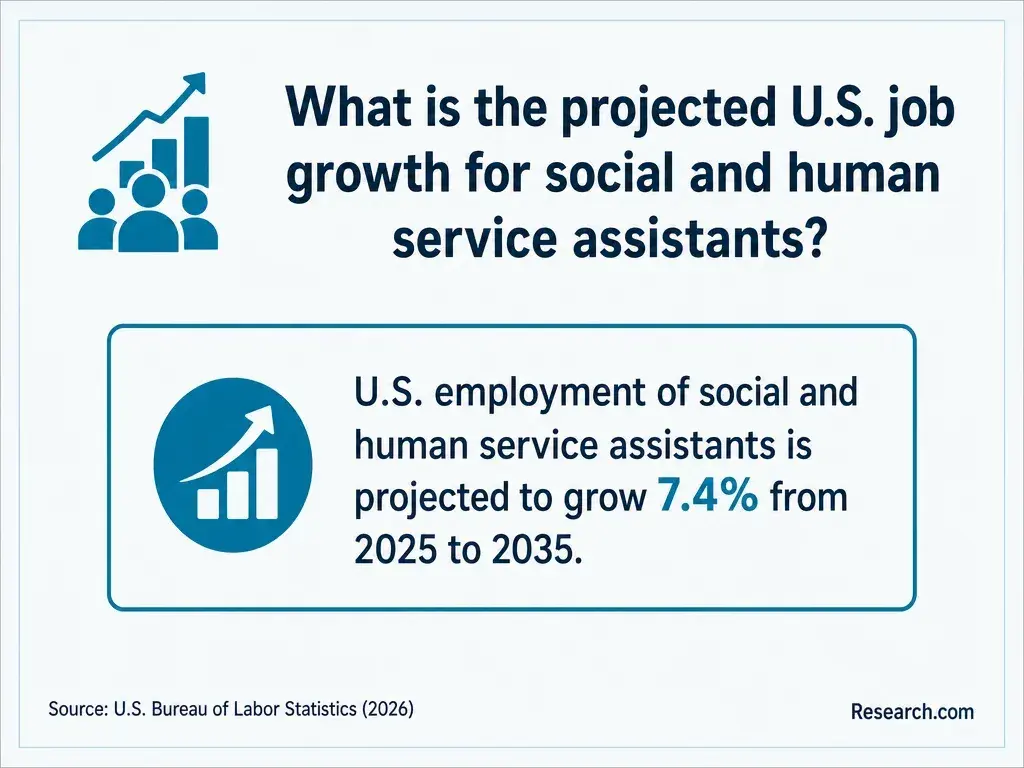
There is no single salary or job-growth figure for "psychology BA graduates": the degree leads to different occupations, and employers pay for roles rather than majors. As one relevant benchmark, the U.S. Bureau of Labor Statistics reported a $41,410 median annual wage in May 2023 for social and human service assistants. That occupation includes workers with varied education and experience; its median is not an entry salary or a prediction of what your BA will earn.
For a useful comparison, identify local job postings you would qualify for, then consult the latest BLS wage and employment projections for those named occupations. Check whether the posting requires experience, a certification, or graduate education. If a specialized graduate degree is under consideration, compare its added cost and time with evidence for the specific role - not with an assumed raise. That distinction also applies when reviewing faster forensic psychology master's study for working professionals.
Can a Psychology BA Lead to Licensure or Graduate School?
A general psychology BA can provide academic preparation for graduate school, especially when the transcript includes statistics, research methods, strong writing, and relevant upper-division coursework. Graduate programs set their own prerequisites and admissions standards; a psychology major is neither universally required nor sufficient. Students interested in research should ask about faculty projects and recommendations, while those seeking a regulated profession should check the requirements of the specific graduate program and state licensing board.
The BA itself does not authorize psychotherapy, diagnosis, independent psychological assessment, or use of a protected professional title. A general psychology master's may also differ substantially from a degree designed for counseling or another licensed role. If speed is important, compare fast-paced master's study in psychology against the actual qualifications for your goal; a shorter nonclinical degree is not a substitute for required professional training.
Other Things You Should Know About Psychology
Usually you can submit transcripts from each college for review. The receiving university decides which courses it accepts and how they apply, including any repeated-course or transfer-limit rules.
Compare both scenarios with the prospective university. Completing the AA may help under an applicable articulation agreement, but waiting may not help if remaining AA courses will not satisfy BA requirements.
Some schools evaluate documented prior learning or military education. Ask what records are required and whether any award would satisfy a degree requirement rather than only add elective credit.
Ask whether the school can issue a preliminary evaluation and when it requires a final official transcript. Do not rely on the preliminary audit as confirmation that the course or completed AA has been awarded credit.
- Definitions | Transfer Credit Ohio https://transfercredit.ohio.gov/educational-partners/educational-partner-initiatives/articulation-transfer-policy-policy/articulation-transfer-policy-definitions
- Texas Core Curriculum Application Guide https://reportcenter.highered.texas.gov/agency-publication/miscellaneous/waar-faq-texas-core-curriculum/
- School-Determined Requirements | 2024-2025 Federal Student Aid Handbook https://fsapartners.ed.gov/knowledge-center/fsa-handbook/2024-2025/vol1/ch1-school-determined-requirements
- How Transfer Credits Work | Lackawanna College https://www.lackawanna.edu/college-transfer-credits-guide/
- Transfer Credit | Department of Psychology https://psychology.columbia.edu/content/transfer-credit
- Psychology BS Major Requirements | brooklyn.edu https://students.brooklyn.edu/knowledge-base/psychology-bs-major/
- Articulation Agreements | kumc.edu https://www.kumc.edu/academic-and-student-affairs/departments/registrars-office/admissions/articulation-agreements.html
- How Many Credits Do You Need to Graduate College? | snhu.edu https://www.snhu.edu/about-us/newsroom/education/how-many-credits-to-graduate-college
- Psychology Pathway (full-time) | valenciacollege.edu https://valenciacollege.edu/students/degree-pathways/aa-psychology-ft.php
- Transfer Students - Arts & Science - New York University https://as.nyu.edu/departments/psychology/undergraduate/transfer-students.html