
2027 Pros and Cons of Being a Mental Health Therapist: Is It Worth It?

Co-Founder and Chief Data Scientist
Choosing a career as a mental health therapist means weighing meaningful client impact against a long training path, licensing rules, emotional intensity, and business or workplace pressures. The work can be deeply purposeful, but it is not a simple “helping profession” with guaranteed balance or income. Therapists must learn clinical skills, manage risk, meet state requirements, protect client confidentiality, and maintain their own well-being while supporting people through anxiety, trauma, grief, relationship conflict, addiction, and other complex concerns.
This guide is for prospective counseling, psychology, social work, and marriage and family therapy students who want a realistic view of the profession before investing years in education. It explains what mental health therapists do, the major pros and cons, typical education and licensure steps, job outlook, salary considerations, work settings, legal and ethical responsibilities, and practical ways to avoid burnout. It also helps readers compare whether therapy is the right career path—or whether a related helping profession may be a better fit.
Quick Answer: Is Being a Mental Health Therapist Worth It?
Being a mental health therapist can be worth it for people who want purpose-driven work, can handle emotionally demanding conversations, and are prepared for graduate school, supervised clinical hours, state licensure, and ongoing training. The strongest benefits are meaningful client impact, flexible career settings, specialization options, and strong labor demand. The biggest drawbacks are burnout risk, lengthy credentialing, irregular schedules, documentation demands, insurance or private-practice challenges, and the emotional weight of repeated exposure to client distress.
- Best fit: People who are emotionally steady, curious about human behavior, comfortable with boundaries, and willing to keep learning throughout their careers.
- Potential poor fit: People seeking fast entry into a high-income career, minimal paperwork, predictable emotional demands, or work that ends cleanly at the end of each day.
- Typical path: A bachelor’s degree, a counseling-related master’s degree or doctoral degree, supervised clinical experience, licensing exams, and continuing education.
- Key trade-off: The career offers high personal meaning, but it requires strong self-care, supervision, ethical judgment, and realistic expectations about pay, workload, and time to licensure.
- What mental health therapists do
- Major pros and cons of the profession
- Education needed for licensure
- How long the path usually takes
- State licensing requirements to verify
- Job outlook and demand
- Common work environments
- Average salary and pay factors
- Legal and ethical responsibilities
- Fast-track counseling pathways
- Career advancement options
- Work-life balance strategies
- Caseload management tips
- Specialized education for therapists
- Online PsyD programs and clinical advancement
What does a mental health therapist do?
A mental health therapist helps clients understand, manage, and change patterns that affect their emotional health, relationships, behavior, and daily functioning. The role usually involves assessment, treatment planning, psychotherapy, documentation, risk evaluation, referrals, and collaboration with other professionals when a client needs medical, psychiatric, educational, or social support.
In a typical week, a therapist may conduct intake sessions, provide individual or group therapy, help clients develop coping strategies, document progress notes, consult with supervisors or colleagues, and respond to crisis concerns within the limits of their role. Therapists do not simply “give advice.” They use evidence-informed approaches to help clients clarify goals, process difficult experiences, practice new skills, and make changes that are realistic for their lives.
The term mental health therapist can include several licensed roles, including professional counselors, clinical social workers, marriage and family therapists, and psychologists. When comparing a clinical psychologist vs. mental health counselor, the main differences often involve degree level, assessment authority, training model, and scope of practice. Both may provide therapy, but their licensing boards, education routes, and professional responsibilities can differ.
| Therapist responsibility | What it usually involves | Why it matters |
| Assessment | Gathering client history, symptoms, goals, strengths, risks, and support systems | Helps determine whether therapy is appropriate and what care plan is needed |
| Treatment planning | Setting goals, choosing interventions, and updating the plan as clients progress | Gives therapy direction and supports ethical, measurable care |
| Psychotherapy | Using counseling methods to help clients process concerns and build skills | Forms the core of direct client care |
| Documentation | Writing notes, maintaining records, and tracking clinical decisions | Supports continuity of care, billing, legal compliance, and accountability |
| Referral and collaboration | Coordinating with physicians, psychiatrists, schools, case managers, or community resources | Ensures clients receive support beyond what one therapist can provide |
What are the pros and cons of being a mental health therapist?
The advantages and disadvantages of therapy work are closely connected. The same client depth that makes the career meaningful can also make it emotionally draining. The same autonomy that attracts therapists to private practice can also bring billing, marketing, insurance, and legal responsibilities. A realistic decision requires looking at both sides.
| Potential benefit | What it can look like in practice | Trade-off to consider |
| Meaningful client impact | Helping people manage distress, improve relationships, recover from trauma, or build healthier coping skills | Progress is often gradual, and outcomes are not fully within the therapist’s control |
| Flexible career settings | Working in private practice, hospitals, schools, clinics, government agencies, telehealth, or nonprofit programs | Each setting has different documentation, productivity, crisis, and schedule expectations |
| Professional autonomy | Choosing specialties, treatment approaches, populations, and, in private practice, scheduling structure | More independence often means more administrative and business responsibility |
| Ongoing intellectual growth | Learning new therapy models, ethics updates, cultural considerations, and specialty interventions | Continuing education is not optional; it is part of competent practice |
| Possible stable earning path | Income may improve with experience, licensure, specialization, and private practice development | Pay varies widely by location, employer, insurance participation, caseload, and credentials |
Pros of being a mental health therapist
- The work can be personally fulfilling. Therapists often see clients move from crisis, confusion, or emotional pain toward better coping, clearer boundaries, and improved functioning. That sense of contribution is one of the profession’s strongest draws. Students who want a healthcare career with direct human impact may also compare therapy with nursing pathways, including the clinical nurse specialist education requirements.
- There are many practice environments. Therapists may work in private practice, hospitals, schools, community mental health centers, residential programs, telehealth companies, employee assistance programs, universities, correctional settings, or agencies serving veterans and families.
- Specialization is possible. Therapists can focus on trauma, addiction, couples therapy, child and adolescent care, grief, eating disorders, family systems, forensic work, behavioral intervention, or other areas after appropriate training.
- Private practice can offer more control. Therapists who build their own practice may have more influence over schedule, clinical niche, fees, referral sources, and work style. This autonomy appeals to clinicians who want independence and entrepreneurial responsibility.
- The field encourages lifelong learning. Good therapy requires reflection, supervision, consultation, research awareness, and skill development. For many professionals, that keeps the work engaging over time.
Cons of being a mental health therapist
- Emotional fatigue is a real risk. Repeated exposure to trauma, grief, crisis, family conflict, self-harm risk, and severe stress can contribute to burnout or compassion fatigue if therapists do not maintain boundaries and support systems.
- The education and licensing path is long. Most independent clinical roles require graduate education, supervised post-graduate hours, exams, and state approval before full licensure.
- The job can feel isolating. Therapy sessions are confidential and focused on the client, so clinicians must seek appropriate supervision and consultation rather than carrying difficult cases alone.
- Client dynamics can be challenging. Therapists may work with clients who are ambivalent, angry, guarded, disengaged, or in crisis. Strong clinical judgment and emotional regulation are essential.
- Schedules are not always predictable. Evening sessions, weekend appointments, crisis coverage, cancellations, no-shows, and urgent documentation can disrupt personal time.
- Private practice is also a business. Independent clinicians must manage billing, marketing, scheduling, insurance panels, taxes, records, malpractice coverage, and compliance. Therapists who want stronger business skills may find it useful to explore business degree concentrations or targeted business coursework.
Who should consider this career?
- People who can listen closely without rushing to fix everything
- Students who are ready for graduate school and supervised training
- Professionals who value ethical responsibility and confidentiality
- People who can tolerate ambiguity, slow progress, and emotionally complex conversations
- Future clinicians who are willing to receive supervision, feedback, and personal support
Who may want a different path?
- People who want to enter the workforce quickly without graduate education
- Students who are uncomfortable with crisis work, trauma content, or emotional intensity
- People who prefer highly structured tasks with immediate, visible results
- Professionals who dislike documentation, compliance requirements, or licensing rules
- Students seeking guaranteed high income immediately after graduation
What education is required to become a licensed mental health therapist?
Most licensed mental health therapy careers require a bachelor’s degree followed by a graduate degree in counseling, social work, marriage and family therapy, psychology, or a closely related field. The exact route depends on the license you want, the state where you plan to practice, and whether your goal is counseling, social work, marriage and family therapy, or psychology.
Bachelor’s degree: The first academic step is usually a bachelor’s degree from an accredited institution. Psychology, sociology, human services, social work, and related behavioral science majors can provide useful preparation, but many graduate programs also consider applicants from other majors if they complete required prerequisites. Students interested in faith-integrated counseling or ministry-related helping roles may also explore affordable online Christian leadership degree programs as an early academic foundation, while still verifying what graduate counseling programs and state boards require.
Master’s degree: For many therapist roles, a master’s degree is the core professional credential. Common options include counseling, clinical mental health counseling, marriage and family therapy, and social work. Programs usually cover counseling theories, ethics, assessment, diagnosis, human development, group work, cultural factors, research, and supervised practice. Many counseling programs seek CACREP accreditation, while social work programs commonly rely on CSWE accreditation for licensure preparation.
Doctoral degree: Some students pursue doctoral study for advanced clinical work, assessment, leadership, research, or academic careers. An online psychology doctorate program may be relevant for students comparing psychology pathways, although psychologist licensure and clinical practice requirements must be checked carefully by state. Students considering doctoral training can also review guidance on how to get a PhD in psychology to understand the difference between research-oriented and practice-oriented routes.
Practicum and internship: Graduate programs include supervised field experiences. A practicum is often an early, closely supervised placement, while an internship usually involves more direct client contact and broader clinical responsibility.
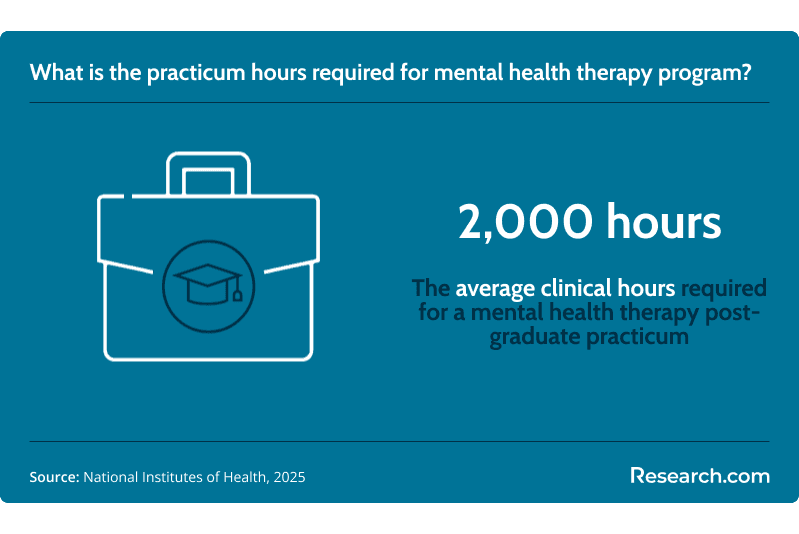
Post-graduate supervised experience: After the degree, candidates typically complete supervised clinical hours before independent licensure. The number varies by state and license type, often ranging from 2,000 to 4,000 hours.
Licensing exams and application: Candidates usually take national or state exams, submit transcripts and supervision verification, complete background checks, and pay required fees. Common counseling exams include the National Counselor Examination and the National Clinical Mental Health Counseling Examination, depending on state rules.
| Education route | Best for | Important caution |
| Master’s in clinical mental health counseling | Students seeking counselor licensure and direct therapy practice | Confirm that the curriculum meets the requirements of the state where you want to practice |
| Master of social work | Students interested in therapy plus case management, systems work, medical settings, or community practice | Clinical licensure usually requires additional supervised experience after graduation |
| Marriage and family therapy degree | Students focused on couples, families, relational patterns, and systemic therapy | LMFT requirements differ by state and may not match LPC or LCSW rules |
| Doctoral psychology degree | Students interested in psychologist licensure, advanced assessment, clinical leadership, research, or teaching | Doctoral study is longer and more expensive, and online formats must be evaluated carefully for licensure fit |
How long does it take to become a mental health counselor or therapist?
The full path to becoming a licensed mental health counselor or therapist commonly takes 6 to 8 years after high school. That timeline generally includes four years for a bachelor’s degree, two to three years for a master’s program, and one to three additional years for supervised post-graduate clinical hours, licensing exams, and application processing.
An online bachelor’s or graduate program may help some students manage work, family, or location constraints, but online delivery does not remove licensure requirements. Students asking whether is an online psychology degree any good should focus less on the format alone and more on accreditation, curriculum, faculty qualifications, field placement support, transfer policies, and whether the degree satisfies the expectations of the state licensing board.
After graduation, candidates must complete supervised clinical hours. These hours can range from 2,000 to 4,000 hours depending on the state and license type. The supervision stage is not a formality; it is where new clinicians learn to handle documentation, risk assessment, treatment planning, ethical dilemmas, and difficult client presentations with professional support.
| Stage | Typical time commitment | What to verify before enrolling or applying |
| Bachelor’s degree | Usually four years of full-time study | Prerequisites for graduate programs and transfer credit policies |
| Master’s degree | Usually two to three years of full-time enrollment | Accreditation, practicum requirements, internship placement support, and state alignment |
| Post-graduate supervision | Often one to three years | Required hours, supervisor qualifications, temporary license rules, and direct-client-hour minimums |
| Exams and full licensure | Several additional months may be needed | Required exam, state jurisprudence test, application deadlines, fees, and background check rules |
What are the key licensing requirements for mental health therapists by state?
Mental health therapist licensing is controlled at the state level in the United States. That means a degree that works for one state or license may not automatically satisfy another state’s requirements. Before choosing a program, students should identify the exact license they want—such as LPC, LCSW, LMFT, or psychologist—and compare the program curriculum against the licensing board rules in the state where they plan to work.
Common state licensing components
- Graduate degree: Most states require at least a master’s degree in a relevant mental health field. Students looking for a faster undergraduate start may review an accelerated psychology degree, but a bachelor’s degree alone usually does not qualify someone for independent therapy licensure.
- Accreditation expectations: Counseling boards may prefer or require CACREP-accredited programs, while social work boards commonly look for CSWE-accredited degrees. Marriage and family therapy and psychology boards have their own standards.
- Required coursework: State boards often specify courses in ethics, human development, diagnosis, treatment planning, multicultural counseling, research, assessment, group counseling, and professional practice.
- Practicum and internship: Graduate fieldwork must typically include supervised direct client contact and approved site supervision.
- Post-graduate supervised hours: Candidates commonly complete 2,000 to 4,000 hours under a board-approved supervisor, though the exact requirement varies.
- Exams: Professional counselors may take the National Counselor Examination (NCE) and/or the National Clinical Mental Health Counseling Examination. Social workers often take ASWB exams, and marriage and family therapists may take the Marital and Family Therapy National Examination.
- State law or ethics exam: Many states require a jurisprudence or ethics exam focused on local rules.
- Background check and fees: Applicants usually submit fingerprints or background screening materials, official transcripts, supervision documentation, exam scores, and licensing fees.
Students comparing cost-conscious options can review affordable counseling social psychology programs online, but affordability should never be the only criterion. A low-cost program that does not support licensure in your target state can become more expensive in the long run.
| Question to ask before choosing a program | Why it matters |
| Does this program meet licensure requirements in my intended state? | Licensing boards, not schools, decide whether your education qualifies |
| Is the program accredited by the relevant professional body? | Accreditation can affect licensure eligibility, employer acceptance, and transfer options |
| Who arranges practicum and internship placements? | Students may struggle if they must find approved clinical sites without school support |
| Does the curriculum include diagnosis, ethics, assessment, and treatment planning? | Missing required coursework can delay licensure |
| What exam pass support does the program provide? | Exam preparation can affect the speed of moving from graduation to licensure |
What is the job outlook for mental health therapists in the coming years?
The employment outlook for mental health-related counseling roles is strong. According to the U.S. Bureau of Labor Statistics figures cited here, employment for substance abuse, behavioral disorder, and mental health counselors is projected to grow by 19% until 2033, compared with the 4% average growth rate for all occupations. That projection corresponds to an estimated 42,000 annual job openings for these counselors over the decade.
Marriage and family therapists are also projected to see growth, with an expected increase of 15% over the same period. Another commonly cited BLS projection listed employment for substance abuse, behavioral disorder, and mental health counselors as growing by 18% from 2022 to 2032.
Demand is supported by broader recognition of mental health needs, expanded telehealth delivery, integrated behavioral health models, school and college counseling needs, addiction treatment demand, and ongoing workforce shortages in rural and underserved areas. Even so, job availability and pay can vary significantly by state, employer, license level, population served, and whether a therapist works in agency employment or private practice.
Current trends affecting the therapy profession
- Telehealth is now part of mainstream care. Many clients expect virtual options, and therapists need to understand privacy, licensing, emergency planning, and cross-state practice restrictions.
- Employers increasingly value specialization. Training in trauma, substance use, family systems, child and adolescent therapy, behavioral interventions, or culturally responsive care can improve fit for certain roles.
- Documentation and compliance demands remain high. Therapists must balance clinical presence with timely notes, treatment plans, insurance requirements, and legal recordkeeping.
- AI tools may affect administration, not replace clinical judgment. AI-assisted scheduling, documentation support, and screening tools may reduce some administrative burden, but therapists remain responsible for ethical decision-making, diagnosis, risk assessment, privacy, and client care.
- Workforce shortages do not eliminate competition for desirable jobs. Roles with strong pay, flexible schedules, high-quality supervision, or low caseloads may still be competitive.
Where do mental health therapists typically work?
Mental health therapists practice in many settings, and each setting changes the rhythm of the job. A school-based therapist may focus on student functioning and family coordination, while a hospital therapist may work with acute symptoms, discharge planning, and multidisciplinary teams. A private-practice therapist may have more schedule control but also more business responsibility.
| Work setting | Typical clients or focus | Best fit for therapists who want | Common challenge |
| Private practice | Clients seeking outpatient therapy for anxiety, relationships, trauma, life transitions, or other concerns | Autonomy, specialization, flexible scheduling, and entrepreneurial control | Billing, marketing, insurance, taxes, and inconsistent referrals |
| Hospitals and clinics | Patients with mental health concerns connected to medical needs, crisis care, or recovery | Team-based healthcare and structured clinical systems | Fast pace, complex cases, and coordination demands |
| Community mental health centers | Clients who may face severe symptoms, limited resources, or barriers to care | Mission-driven work and broad clinical exposure | High caseloads and administrative pressure |
| Schools and colleges | Students managing stress, family issues, developmental challenges, academic pressure, or social concerns | Youth-focused work and collaboration with educators | Balancing confidentiality, family involvement, and institutional policies |
| Nonprofit and community agencies | Families, children, veterans, unhoused populations, survivors of violence, or other specific groups | Population-specific service and advocacy | Funding limits and heavy demand for services |
| Residential treatment facilities | Clients needing structured support for mental health, substance use, or daily functioning | Intensive care environments and coordinated treatment teams | Crisis management and emotional intensity |
Therapists interested in addiction treatment may also consider pathways connected to becoming a substance abuse counselor, since substance use counseling overlaps with many mental health practice settings.
What is the average salary for a mental health therapist?
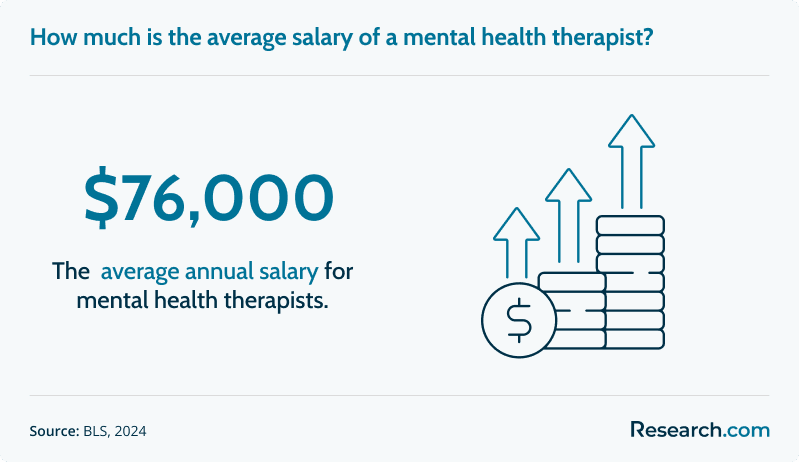
The average salary for a mental health therapist in the United States in 2025 is approximately $76,000 to $78,500 per year. Entry-level therapists typically start around $44,900 to $50,500 annually, while those with extensive experience of 10–20+ years can earn between $78,500 and $90,000 or more. Some sources report an average hourly wage of about $36.65, which translates to roughly $76,000 annually.
Pay depends on more than the job title. Location, employer type, license level, years of experience, payer mix, caseload size, specialization, and whether the therapist works in private practice can all affect earnings. The salary figures cited here also note higher pay in locations such as Napa, California ($78,660) and states such as Alaska ($63,900).
| Salary factor | How it can influence earnings |
| Licensure status | Fully licensed clinicians usually have more employment and reimbursement options than associate-level clinicians |
| Work setting | Hospitals, government roles, agencies, schools, telehealth platforms, and private practices may use different pay models |
| Location | Cost of living, state funding, insurance reimbursement, and local demand affect compensation |
| Specialization | Training in high-need areas may improve marketability, though it does not guarantee higher pay |
| Private practice structure | Income can rise with a strong referral base, but expenses and unpaid administrative time must be considered |
What are the legal and ethical considerations in mental health therapy?
Mental health therapists work under strict legal and ethical obligations. These duties protect clients, guide professional decision-making, and reduce risk for both the clinician and the organization. Core responsibilities include confidentiality, informed consent, accurate documentation, scope-of-practice limits, mandated reporting, emergency procedures, cultural competence, and appropriate boundaries.
In the United States, therapists must understand privacy requirements such as HIPAA and follow state-specific rules on recordkeeping, telehealth, consent for minors, duty to warn or protect, and mandatory reporting. Therapists also need professional liability or malpractice insurance, regular ethics training, and consultation when cases involve risk, dual relationships, subpoenas, custody conflict, abuse allegations, or unclear boundaries.
Students interested in family systems and relational practice may examine an affordable online MFT degree, but they should confirm how the program teaches ethics, law, documentation, crisis response, and state licensure preparation.
| Ethical or legal area | Therapist responsibility | Common mistake to avoid |
| Confidentiality | Protect client information and explain limits clearly | Assuming confidentiality is absolute in crisis, abuse, or court-related situations |
| Informed consent | Explain services, risks, fees, privacy rules, cancellation policies, and client rights | Using vague intake paperwork clients do not understand |
| Scope of practice | Work only within training, license, and competence | Offering specialized treatment without adequate preparation |
| Documentation | Keep timely, accurate, clinically relevant records | Writing notes too late or including unnecessary personal detail |
| Telehealth | Use secure systems and follow state licensing rules | Serving clients across state lines without verifying legal authority |
How can fast-track programs expedite your journey to becoming a mental health counselor?
Fast-track counseling options can shorten parts of the academic journey through accelerated terms, year-round coursework, combined degree planning, transfer credits, or flexible online delivery. They may help motivated students move through prerequisites and graduate coursework more efficiently, especially if they already have relevant undergraduate credits or professional experience.
However, no fast-track program can responsibly bypass clinical competency, supervised practice, or state licensure rules. Students should be cautious about any program that implies they can become independently licensed without meeting required coursework, practicum, internship, exams, and supervised post-graduate hours. For a closer look at accelerated routes, review How fast can you become a counselor?.
When a fast-track option may make sense
- You already hold a bachelor’s degree and meet most prerequisites
- The program clearly aligns with your target state’s licensing requirements
- You can handle an intensive academic and clinical workload
- The school provides strong field placement support
- You understand that post-graduate supervised hours still take time
When to be cautious
- The program is unclear about accreditation or licensure outcomes
- Clinical placements are left entirely to students without support
- The advertised timeline ignores supervised post-graduate hours
- The tuition is low but the program does not meet state requirements
- The school cannot provide transparent information about curriculum, supervision, or exam preparation
What are the opportunities for career advancement in mental health therapy?
Mental health therapists can advance by deepening clinical expertise, moving into supervision, building a private or group practice, entering program leadership, teaching, consulting, conducting research, or specializing in high-need populations. Advancement is not limited to becoming a manager; many clinicians progress by becoming highly skilled specialists in a focused area of practice.
Some therapists pursue additional credentials to work with specific populations or intervention models. For example, clinicians interested in behavior analysis may compare affordable BCBA master programs online if that specialization aligns with their goals and licensing context.
| Advancement path | What it may involve | Best fit for |
| Clinical specialization | Advanced training in trauma, couples work, addiction, child therapy, grief, or other focus areas | Therapists who want deeper expertise without leaving direct care |
| Clinical supervision | Supervising associate-level clinicians or interns after meeting board requirements | Experienced therapists who enjoy mentoring and quality improvement |
| Private practice ownership | Managing referrals, billing, compliance, marketing, and service delivery | Clinicians who want autonomy and can handle business operations |
| Program leadership | Overseeing clinical teams, services, budgets, policies, and outcomes | Therapists interested in systems-level impact |
| Teaching or training | Adjunct instruction, workshops, continuing education, or staff development | Clinicians who enjoy explaining concepts and developing other professionals |
How can mental health therapists achieve a healthy work-life balance?
Work-life balance is not a luxury for therapists; it is part of ethical, sustainable practice. A therapist who is chronically exhausted, overbooked, unsupported, or emotionally depleted is more likely to make mistakes, lose empathy, or struggle with clinical judgment.
Strong boundaries are the foundation. Therapists need clear office hours, realistic response-time policies, protected breaks, limits on after-hours communication, and a plan for emergencies. Private-practice clinicians should communicate cancellation policies, between-session contact rules, and crisis procedures before problems occur.
Self-care also has to be scheduled rather than treated as optional. Sleep, exercise, personal relationships, hobbies, spiritual practices, mindfulness, time outdoors, and personal therapy can all support emotional resilience. Professional support matters too. Regular supervision, peer consultation, and continuing education help therapists process difficult cases and avoid isolation.
Technology can support balance when used thoughtfully. Electronic health records, secure messaging, automated reminders, billing tools, and scheduling systems may reduce administrative load. But technology can also blur boundaries if therapists feel constantly reachable, so clear communication policies are essential.
What are effective strategies for managing a therapist's caseload?
Caseload management affects both therapist well-being and client care. Seeing too many clients, accepting every referral, or failing to reserve time for documentation can quickly lead to rushed sessions, late notes, emotional fatigue, and lower-quality care.
- Set a realistic weekly client limit. The right number depends on setting, client acuity, session length, paperwork demands, supervision requirements, and the therapist’s experience level.
- Use block scheduling. Reserve specific times for sessions, progress notes, treatment plans, billing, consultation, supervision, and breaks.
- Build buffer time between sessions. Even short breaks can help clinicians reset emotionally, complete quick notes, and prepare for the next client.
- Distribute high-acuity cases. Avoid clustering the most complex or emotionally intense clients into one day when possible.
- Monitor cancellations and no-shows. Patterns may signal access issues, poor fit, unclear expectations, or the need to adjust scheduling policies.
- Use administrative tools wisely. Practice management software, EHR systems, automated reminders, and billing support can reduce nonclinical workload.
- Know when to refer out. Accepting a case outside your competence or capacity can harm both the client and therapist.
| Common caseload mistake | Better approach |
| Accepting every new client to avoid turning people away | Use a capacity threshold and maintain referral options |
| Scheduling back-to-back sessions all day | Add documentation and recovery time between appointments |
| Waiting until the end of the week to write notes | Complete notes as close to the session as possible |
| Ignoring emotional warning signs | Use supervision, consultation, time off, and personal support early |
| Keeping cases that require a higher level of care | Refer or coordinate care when client needs exceed outpatient scope |
How can mental health therapists expand their expertise through specialized education?
Specialized education helps therapists stay current, serve specific populations more effectively, and respond to complex clinical needs. Options include continuing education workshops, certificate programs, supervised training in a therapy model, advanced graduate study, peer consultation groups, and professional conferences.
Areas of specialization may include trauma-informed care, child and adolescent therapy, couples counseling, family systems, substance use treatment, forensic psychology, grief counseling, crisis intervention, behavioral interventions, or culturally responsive practice. Therapists interested in legal, correctional, investigative, or court-adjacent settings may consider a masters in forensic psychology online, while confirming how that degree fits their license and career goals.
How to choose a specialization
- Start with the client population you most want to serve
- Check whether the training is recognized by employers, boards, or professional associations
- Look for supervised practice, not only lectures or self-paced content
- Evaluate whether the specialization improves client care, employability, or practice focus
- Avoid collecting credentials that do not connect to a clear professional goal
Are online PsyD programs a valuable path for advancing clinical expertise?
An online PsyD may be useful for some therapists seeking advanced clinical training, leadership preparation, or deeper study of psychological assessment and intervention. A Doctor of Psychology degree usually emphasizes applied clinical practice rather than purely academic research, although program design varies.
Students comparing online PsyD programs should be especially careful about accreditation, internship requirements, residency expectations, state psychologist licensure rules, cost, faculty qualifications, and clinical placement support. A flexible format can be helpful, but convenience should not outweigh licensure alignment or training quality.
| Question to ask about an online PsyD | Why it is important |
| Does the program meet psychologist licensure requirements in my state? | Doctoral psychology licensure rules are state-specific and can be strict |
| How are practicum and internship placements arranged? | Clinical training quality affects competence and eligibility |
| Are there in-person residency or campus requirements? | Online programs may still require face-to-face components |
| What is the total cost, including fees and travel? | Doctoral study can be expensive, and ROI depends on career goals |
| What career outcome am I pursuing? | A PsyD may be unnecessary if your goal can be achieved through master’s-level licensure and targeted training |
What graduates say about mental health therapy training
- : "“My therapy training changed the way I understood distress, behavior, and resilience. The evidence-based coursework gave me structure, while supervised practice taught me how to sit with clients in difficult moments without rushing the process. The program was demanding, but it prepared me to offer support with both skill and compassion.” -Nicole"
- : "“The most valuable part of the program was learning how much strength people can build when they have the right support. Studying different therapy approaches and practicing under supervision helped me develop a clearer professional purpose. I left the program knowing this work would challenge me, but also knowing why it matters.” -George"
- : "“The program taught diagnosis and treatment planning, but it also forced me to develop self-awareness. That personal work was essential. It helped me understand my reactions, maintain boundaries, and approach complex cases with more confidence and humility.” -Marge"
Common mistakes to avoid before becoming a mental health therapist
| Mistake | Why it creates problems | Better decision |
| Choosing a program without checking state licensure rules | You may graduate without meeting required coursework or fieldwork standards | Contact the state licensing board and compare requirements before enrolling |
| Focusing only on tuition | A cheap program may lack placement support, accreditation fit, or licensure alignment | Compare total cost, accreditation, outcomes, supervision support, and transfer policies |
| Assuming online programs are automatically accepted | Format alone does not determine licensure eligibility | Verify accreditation, field placement structure, and state approval |
| Underestimating emotional strain | Burnout can begin during internship or associate licensure if support is weak | Build supervision, peer consultation, personal therapy, and sustainable scheduling habits early |
| Expecting private practice to solve all work-life problems | Private practice adds business, billing, marketing, and compliance duties | Learn practice management before leaving agency employment |
| Assuming salary outcomes are guaranteed | Income varies by location, setting, license, caseload, and reimbursement | Research local job postings, supervision pay, benefits, and private-practice expenses |
Questions to ask before committing to this career
- Am I prepared for graduate education and supervised clinical training before full licensure?
- Which license do I want: LPC, LCSW, LMFT, psychologist, or another credential?
- Does my preferred program meet requirements in the state where I plan to practice?
- How will I handle repeated exposure to trauma, crisis, grief, and client distress?
- Do I prefer agency employment, school settings, hospitals, telehealth, or private practice?
- What salary range is realistic in my location and desired work setting?
- How much supervision and consultation will I need to feel clinically supported?
- What boundaries will I set around scheduling, communication, documentation, and time off?
- Would another helping profession better match my goals, timeline, or tolerance for clinical risk?
Key Insights
- Being a mental health therapist offers meaningful, high-impact work, but the emotional demands are substantial and require deliberate boundaries, supervision, and self-care.
- The typical path includes a bachelor’s degree, a graduate degree, supervised clinical hours, licensing exams, and continuing education; the full journey often spans 6 to 8 years.
- State licensure rules should drive program choice. Accreditation, coursework, practicum, internship, and post-graduate supervision requirements vary by license and location.
- The average salary for a mental health therapist in the United States in 2025 is approximately $76,000 to $78,500 per year, but actual pay depends on setting, location, license status, specialization, and caseload structure.
- Employment demand is strong, with cited BLS projections showing 19% growth until 2033 for substance abuse, behavioral disorder, and mental health counselors and 15% growth for marriage and family therapists over the same period.
- Private practice can provide autonomy, but it also requires business skills, legal compliance, documentation systems, referral development, and financial planning.
- Fast-track and online programs can improve flexibility, but they do not eliminate clinical training, supervised hours, or state licensing requirements.
- The best decision is not simply whether therapy is a “good” career. It is whether the training timeline, emotional demands, ethical responsibility, pay range, and day-to-day work match the life and career you want.
References:
- American Psychological Association (2020). Careers in Psychology workforce data tool
- Bureau of Labor Statistics (2022). Occupational Outlook Handbook
- Center for Collegiate Mental Health (2021). 2021 Annual Report
- National Alliance on Mental Health Illness (2020). Mental Health by the Numbers
- National Board for Certified Counselors (2022). About NBCC
Other Things You Should Know About the Pros and Cons of Being a Mental Health Therapist
In 2027, licensing requirements for mental health therapists typically include a master's degree in counseling or psychology, completion of supervised clinical hours (commonly 2,000-3,000), and passing a state-recognized exam, such as the National Counselor Examination. Requirements may vary by state.
To maintain a mental health therapist license in 2027, most jurisdictions require 20–40 hours of continuing education units (CEUs) every two years. These credits must include specific courses on ethics and other approved professional development topics mandated by relevant licensing boards.
Most states require 2,000 to 4,000 hours of supervised post-degree clinical experience before full licensure. These hours are usually completed over 2 to 3 years and must be documented by a board-approved supervisor, such as an LPC, LMFT, or LCSW, depending on the state board.


